Château des Comtes de Bryas: A Historic Château in Fumay, France


Site at a Glance
- Rating
- 4.7
- Popularity
- Very Low
- Country
- France
- Primary era
- Early Modern
- Eras represented
- Early Modern
- Civilizations
- French
- Site type
- Domestic
- Remains
- Castle
On this page4 sections
History
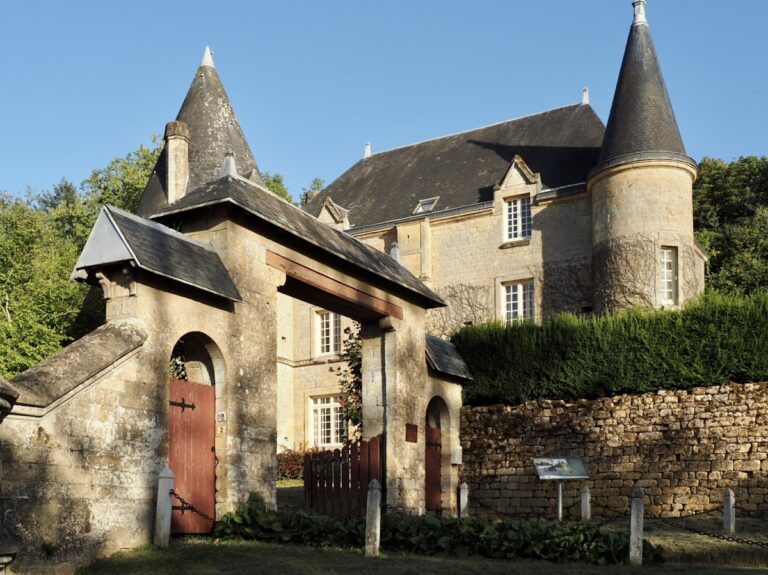
The Château des Comtes de Bryas is a seventeenth-century château in Fumay, France, built by the Bryas family, the town’s lords, during the final quarter of the seventeenth century. It occupies the site of an earlier fort demolished under Louis XIII, king of France from 1610 to 1643. A vaulted room from that fort survives beneath the present terrace.
From Noble Residence to Industrial Use
In 1815, the building was sold to a local entrepreneur, who established a lead-white factory there. Lead white was a white pigment historically produced from lead compounds. The industrial phase continued after the Moulin Sainte-Anne Slate-Mining Company acquired the château in 1835. The company used it as its headquarters until its assets were sold off in 1946.
Municipal Ownership and Protection
Fumay acquired the Château des Comtes de Bryas in 1952. The building subsequently accommodated municipal services, a post office, and a tax office. It was listed as a historic monument in 1972, a French heritage-protection status for buildings and sites considered to have historical or architectural importance.
Remains
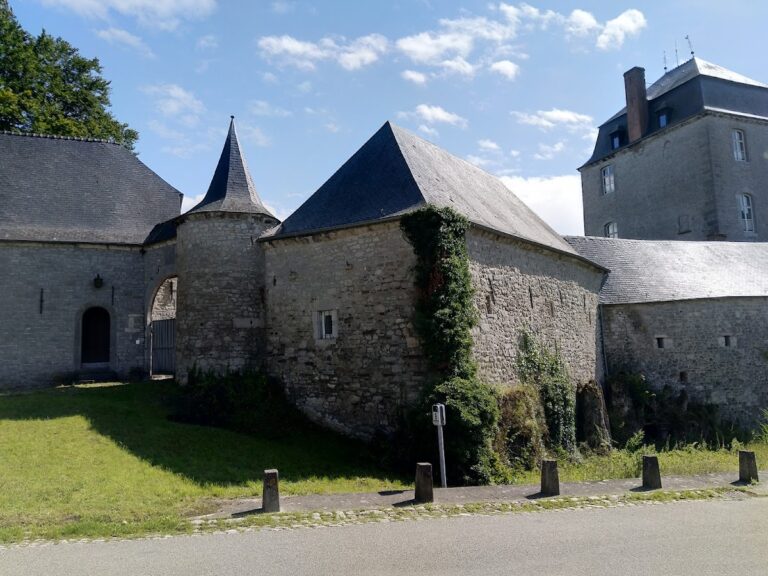
The château’s principal facade is built of brick and structured with blue-stone chainwork, formed by prominent bands of stone blocks. Its central bay is crowned by a triangular pediment. At either side, the pavilions have inverted-tulip-shaped roofs with faceted domes, enclosed lantern structures, and octagonal spires. Purple slate from Fumay covers the roof.
On the right side of the building, a stepped path descends toward the former Moulin Sainte-Anne slate quarry. Slate is a fine-grained stone extracted for roofing and other uses. Miners once used this route to reach the quarry. Along the path, the retaining walls of the Belle-Rose slate quarry can be seen across the Meuse.
Nearby sites