Château de la Morinerie: A Historic Residence in Écurat, France


Site at a Glance
- Rating
- 4.7
- Popularity
- Very Low
- Country
- France
- Primary era
- Early Modern
- Eras represented
- Early Modern
- Civilizations
- French
- Site type
- Domestic
- Remains
- Castle
On this page5 sections
History
Château de la Morinerie is a historic residence in Écurat, France. Its present form reflects rebuilding around 1670 and the addition of a wing in 1690, within an early modern architectural tradition marked by military influence. The property developed through the ownership of local officials, legal figures, and merchants connected with Saintes and the surrounding Saintonge region.
From the Senné Family to the Duvals
The first known owner was Pierre Senné, sieur de La Fourest, who served as captain of the bridges, gates, and towers of Saintes. In 1593, he lived at La Morinerie, then described as a noble residence in the parish of Écurat.
The residence entered the Duval family through the marriage of Charles Duval, sieur de Varaise, and Catherine Senné in 1618. Charles Duval was identified in 1618 and 1620 as concierge of the royal prisons of Saintes.
Rebuilding and Later Inheritance
Guillaume Duval, a royal prosecutor in the Saintes electoral jurisdiction, rebuilt the residence around 1670, replacing an older building. He also ordered the demolition of earlier structures to make room for a new wing completed in 1690.
The property later passed by inheritance to Louis-Nicolas Poitevin, a royal councillor and prosecutor in the Saintes electoral jurisdiction. His descendants included Charles-Louis Poitevin, lord of Moléon in Rouffiac, and Jacques-Nicolas Poitevin, a lawyer of the Parliament of Bordeaux who became lord of La Morinerie.
Modern Ownership and Protection
In 1895, Jacques-Nicolas Poitevin’s descendants sold La Morinerie to Gaston Charrier, a brandy merchant and mayor of Plassay. The château was listed as a historic monument on 3 December 1969, a French legal designation protecting culturally important buildings and sites. Its gardens entered the preliminary inventory of remarkable gardens in 2003.
Remains
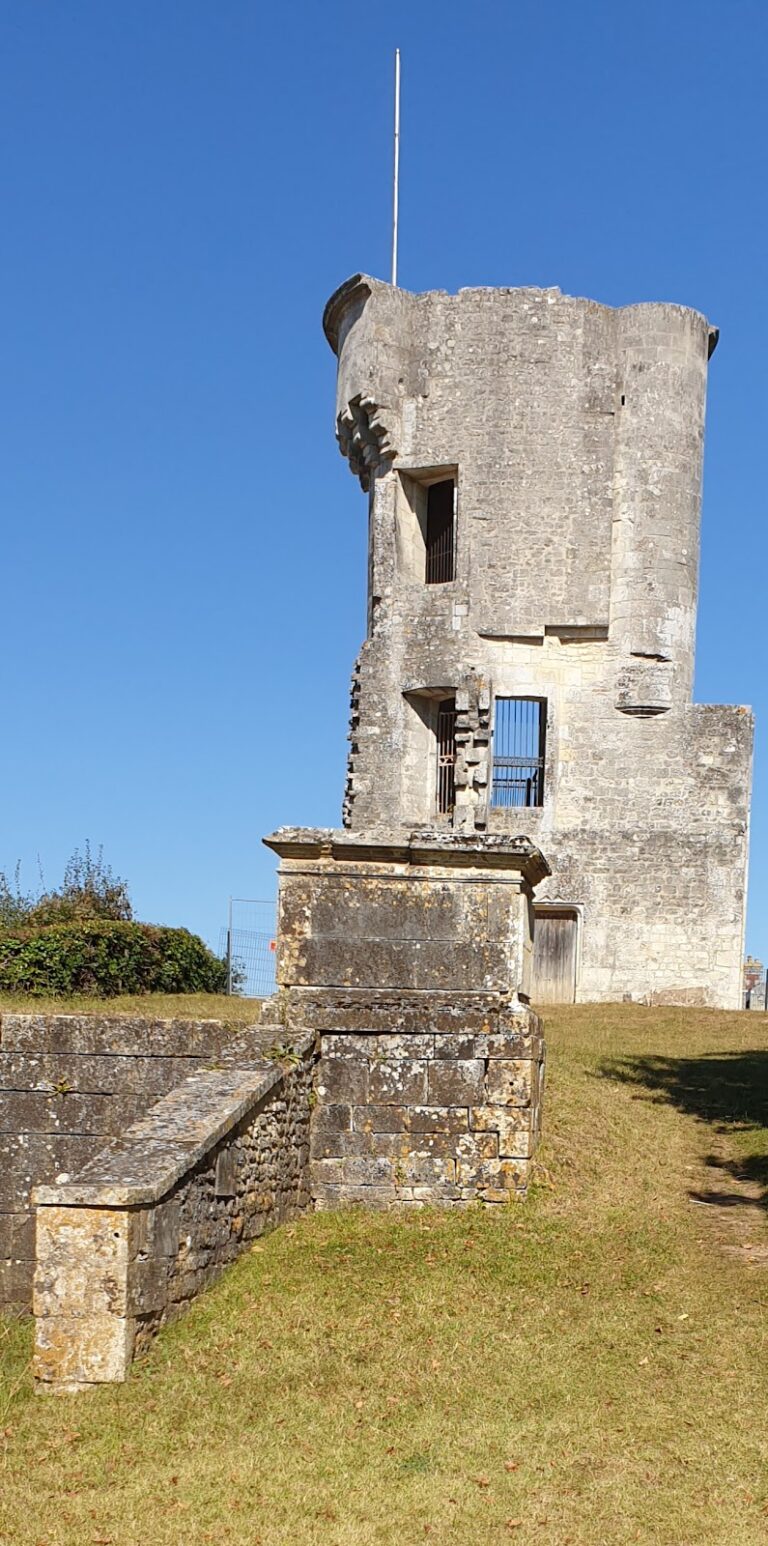
Château de la Morinerie has architecture with a military influence, organized around a main building, a western pavilion, and a later service wing. Built in 1690, the wing measured approximately 94 feet in length and 18 feet in width. It began beside the pavilion at the western end of the main building and contained a wine store, cellar, and bakehouse, with fitted-out attics above. Its construction followed Guillaume Duval’s demolition of older buildings on the site, linking the surviving residence to the major rebuilding phase of the late seventeenth century.
Nearby sites