Château de la Rue (Lalinde): A Historic French Castle


Site at a Glance
- Rating
- 5
- Popularity
- Very Low
- Country
- France
- Primary era
- Medieval
- External website
- Open
- Eras represented
- Medieval, Early Modern
- Civilizations
- French
- Site type
- Military
- Remains
- Castle
On this page6 sections
History
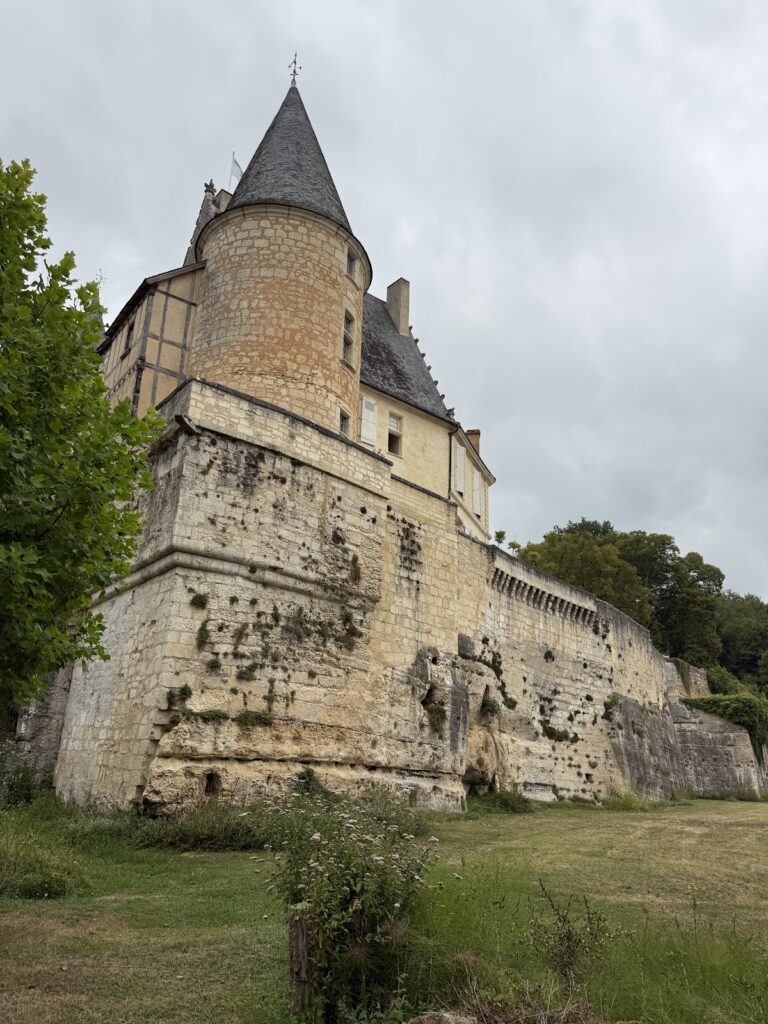
Château de la Rue is a French castle near Lalinde in the Dordogne department of southwestern France. Its oldest parts date from the thirteenth century, when it belonged to the archbishops of Bordeaux. The castle later became a protected historic monument through registration on 12 October 1948.
Medieval ownership and damage
During the five centuries that followed its association with the archbishops of Bordeaux, ownership passed through the families of Abzac, d’Escodeca, Aubusson, Gouffier de Gonor, and Lostanges. The castle suffered damage on several occasions, including during the Hundred Years’ War, a prolonged series of conflicts between the English and French crowns fought mainly in France from 1337 to 1453.
Sixteenth-century restoration and name
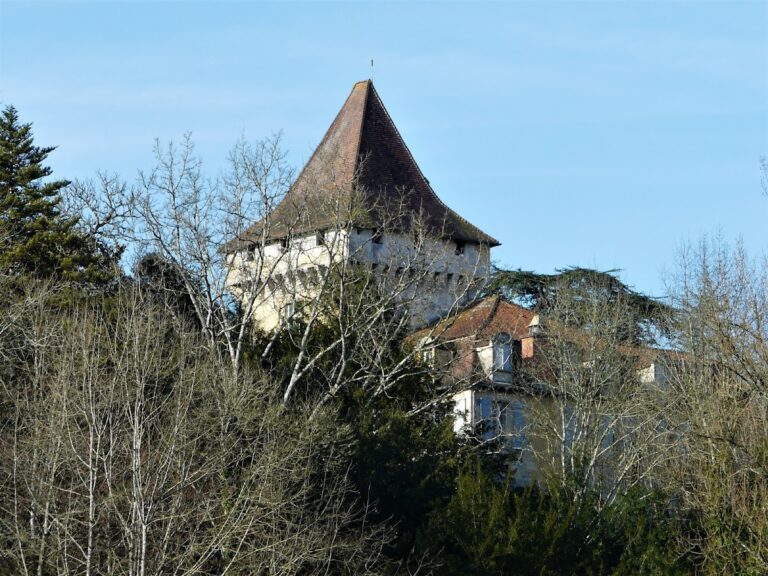
Château de la Rue was completely restored in the sixteenth century. This rebuilding phase included the erection of its hexagonal tower, which became a major feature of the surviving complex. The name “la Rue” refers to the castle’s proximity to an ancient route that crossed the village of Drayaux. The castle remains privately owned.
Remains
The castle stands on an artificial feudal mound, or motte, in the Périgord Pourpre, a traditional subregion of southwestern France known for its vineyards and purple-hued landscapes. It lies south of the Dordogne department and north of the village of Drayaux. Its fortified enclosure forms a quadrilateral aligned with the four cardinal directions, while the buildings are grouped around the northern corner.
Enclosure and entrance defences
The enclosure walls are particularly high along the southeast and southwest sides. They retain vestiges of machicolations, projecting openings or parapets from which defenders could observe and attack people below the walls. On the northeast side, the entrance was protected by a barbican, an outer defensive structure guarding an entrance. A drawbridge crossed the moat in front of it and provided access to the castle.
Buildings and hexagonal tower
The main buildings occupy the northern corner of the fortified enclosure. At their southern end, the hexagonal tower rises above the complex. A spiral staircase runs through the tower, which was erected during the sixteenth-century restoration. Together, the enclosure, entrance defences, grouped buildings, and tower preserve the castle’s fortified arrangement.