Castelo de Albufeira: Medieval Fortress and Muslim Citadel in Portugal


Site at a Glance
- Rating
- 4
- Popularity
- Very Low
- Country
- Portugal
- Primary era
- Medieval
- Eras represented
- Medieval, Early Modern
- Civilizations
- Portuguese
- Site type
- Military
- Remains
- Castle
On this page11 sections
History
Muslim settlement and fortress
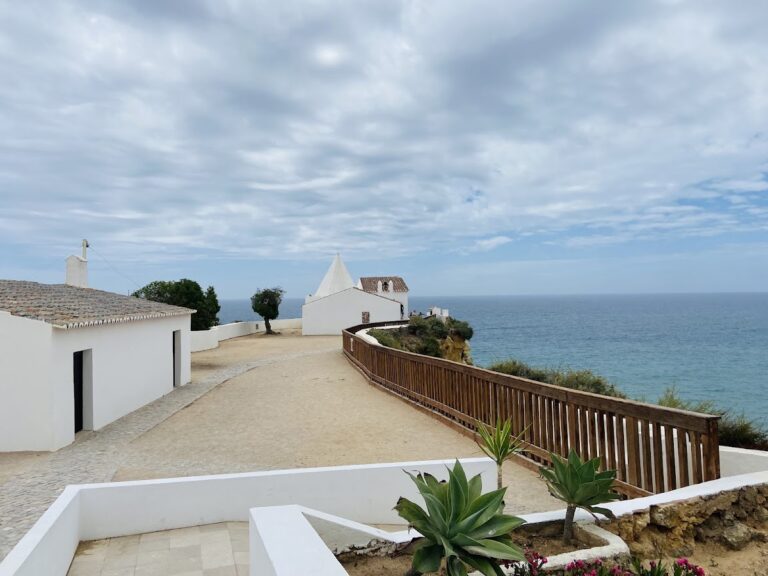
Castelo de Albufeira is a medieval castle in Portugal, developed from a Muslim fortified settlement on the rocky escarpment of Albufeira’s historic center. Listed as a twelfth-century construction, it occupied a strategic position above a harbor and a lagoon that formerly lay in the lower part of the settlement. Fishing, agriculture, and trade supported the community’s growth, while the defenses helped it remain under Muslim control longer than many other settlements in the Algarve.
The settlement was probably fortified from the eighth century onward, during the Muslim conquest of the Iberian Peninsula. It was known as Baltum and later as al-Buhera, an Arabic-derived name interpreted either as “Castle of the Sea” or “lagoon.” The latter interpretation refers to the former lagoon below the rocky settlement. The Muslim community was enclosed by walls, with a castle dominating the fortified area.
Christian conquest and royal interventions
After the Christian conquest of Faro, al-Buhera was taken in 1250 by the forces of Afonso III, the Portuguese king who completed the conquest of much of the Algarve. On 1 March 1250, Afonso III granted the castle and its domains to the Order of Avis, a Portuguese military religious order involved in the Christian expansion of the kingdom, through its master Martinho Fernandes.
The defenses may have been restored after the conquest, although the extent of that work is not known. Rebuilding or reconstruction is associated with Denis I in 1319, Peter I in 1363, Ferdinand I in 1378, and Manuel I in 1504. These successive Portuguese kings governed during the later thirteenth, fourteenth, and early sixteenth centuries. Under Manuel I, Albufeira received a charter on 20 August 1504, and the defenses are thought to have been strengthened during this period.
Earthquake, war, and urban change
The town and castle were severely damaged by the earthquake of 1755, a major earthquake in the southwestern Iberian region that generated a destructive tsunami along the Portuguese coast. Waves exceeded ten metres along this part of the coast, and only 27 houses remained standing in the town. The parish church collapsed while people had taken refuge inside, causing 227 deaths. Further earthquakes continued to affect the region until August 1756.
In 1833, during the Portuguese Civil War of 1828–1834, Albufeira was surrounded and captured by forces led by José Joaquim de Sousa Reis, known as Remexido. He was a Miguelist guerrilla captain and a supporter of Miguel I of Portugal. The fighting caused extensive material damage and approximately 27 deaths on both sides.
Little of the medieval town wall survived the nineteenth and twentieth centuries. Much of the remaining walling was demolished in the 1960s during construction of the Hotel Sol e Mar. The property is owned by the Portuguese state and survives as fragmentary remains. The surviving wall sections were not classified, and no public classification process was underway.
Remains
Fortifications and entrances
The medieval castle had a quadrangular plan with a tower at each corner. This fortified perimeter corresponded to the earlier Muslim citadel, which occupied the top of the rocky escarpment. The lower lagoon may have helped defend the settlement’s landward side. The castle and town were entered through three gates arranged around the walled community.
Square Gate and Sea Gate
The principal entrance was the Square Gate, also called the West Gate, beside present-day Republic Square. On the northern side, the Sea Gate, or Beach Gate, provided another route into the settlement. A section of its associated wall survives along present-day Joaquim Pedro Samora Street, forming part of the fragmentary remains of the former defenses.
Porta de Sant’Ana
Porta de Sant’Ana gave access to the Chapel of Sant’Ana. The chapel stood somewhat lower down, on the right side of the present Fiscal Guard post, and disappeared in the earthquake of 1755. From the eighteenth century onward, devotion to Saint Anne continued in another church under the same dedication.
Clock Tower and associated structures
Clock Tower
The Clock Tower is now incorporated into the Santa Casa da Misericórdia building on Bernardino de Sousa Street. Santa Casa da Misericórdia is a Portuguese charitable religious institution traditionally associated with charity and social assistance. The tower was originally one of the Muslim towers defending the Square Gate. It stands in the castle wall beside the former gate of the parade ground and formerly housed the old jail. An iron crown supporting the hour bell was added in the nineteenth century.
Infrastructure remains
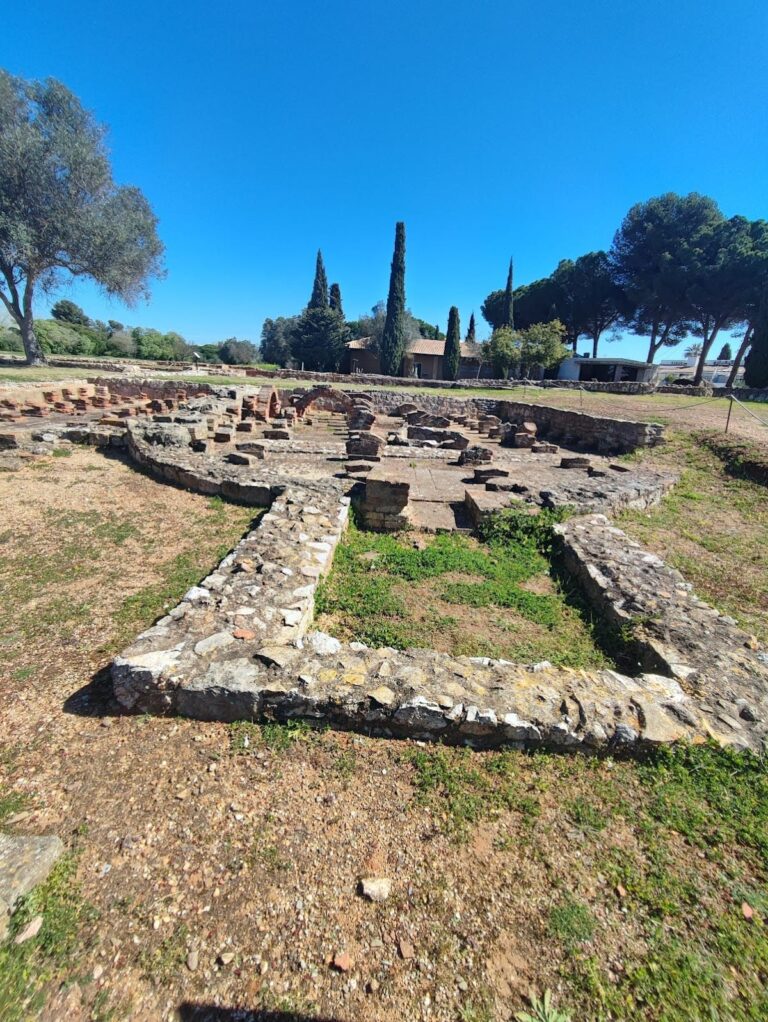
Remains of aqueducts, bridges, and roads are associated with the settlement’s earlier development. These structures formed part of the infrastructure connected with its economic activity. Together with the surviving wall sections and incorporated Clock Tower, they preserve fragments of the settlement that grew around the castle.