Moselflesche: A Prussian Fortress Outwork in Koblenz
Site at a Glance
- Rating
- 3.6
- Popularity
- Very Low
- Country
- Germany
- Primary era
- Modern
- Eras represented
- Modern
- Civilizations
- Kingdom of Prussia
- Site type
- Military
- Remains
- Fort
On this page9 sections
History
Moselflesche is a Prussian fortress outwork in Koblenz, Germany, built from 1816/17 to 1822 on the southern side of Petersberg, an elevation on the left bank of the Moselle. It formed part of the Fortress of Koblenz and the defensive system of Feste Kaiser Franz, the principal work of the fortress, and took its name from the river.
Construction and fortress service
The fortification was connected to Feste Kaiser Franz by a covered passage, a protected route linking defensive works. Bubenheimer Flesche was connected to the same main work in a similar way. Moselflesche occupied a position within the wider Prussian defense system around Koblenz.
Decommissioning and dismantling
After the fortifications were decommissioned in 1890, the site was reused for a garrison steam laundry and for the clothing office of the VIII Army Corps, a major military formation. In 1903, most of the above-ground fortifications, including the reduit, a fortified rear building or keep, and the rampart, were removed.
At the end of 1918, the entire site and its buildings passed to the City of Koblenz. American and later French occupying forces initially claimed the complex, preventing the city from using it until after 1930. Following the First World War, Article 180 of the Treaty of Versailles required German fortifications to be dismantled or disarmed. In accordance with this policy, a shoulder caponier, a protected position projecting into or covering a ditch, and its associated blockhouse were removed from approximately late March or early April through July 1922.
Military reuse and wartime damage
In 1936, the Wehrmacht, Nazi Germany’s armed forces from 1935 until the end of the Second World War, took over the complex. It was renamed Langemarck Barracks and initially housed Pioneer Battalion 34. The barracks burned out after an air raid during the Second World War, although the damage did not require demolition.
On 28 December 1944, a direct hit struck the covered passage between Moselflesche and Feste Kaiser Franz while it was being used as an air-raid shelter. More than thirty people were killed.
Postwar uses and protection
After the war, the French Army used the complex as Quartier Général Frère. When French forces withdrew in 1969, the site returned to the City of Koblenz. Some buildings accommodated the city vehicle-registration office until 1977, and since 1980 the buildings have housed the Bundeswehr Technical Study Collection.
The remains are protected cultural monuments under the monument-protection law and are listed in the monument register of Rhineland-Palatinate. Since 2002, they have formed part of the UNESCO World Heritage Site Upper Middle Rhine Valley. A section of the former Moselflesche was stabilized and repaired from late 2014 to spring 2015 because of the danger of collapse, with the work carried out in consideration of monument-protection requirements.
Remains
Moselflesche was arranged as a west-facing fortification with a long northern face and a shorter face running parallel to the Moselle. A semicircular reduit stood on the eastern gorge side. The surviving fabric represents only part of the former work after the removal of most above-ground defenses in 1903 and the dismantling of further works in 1922.
Southern face and defensive wall
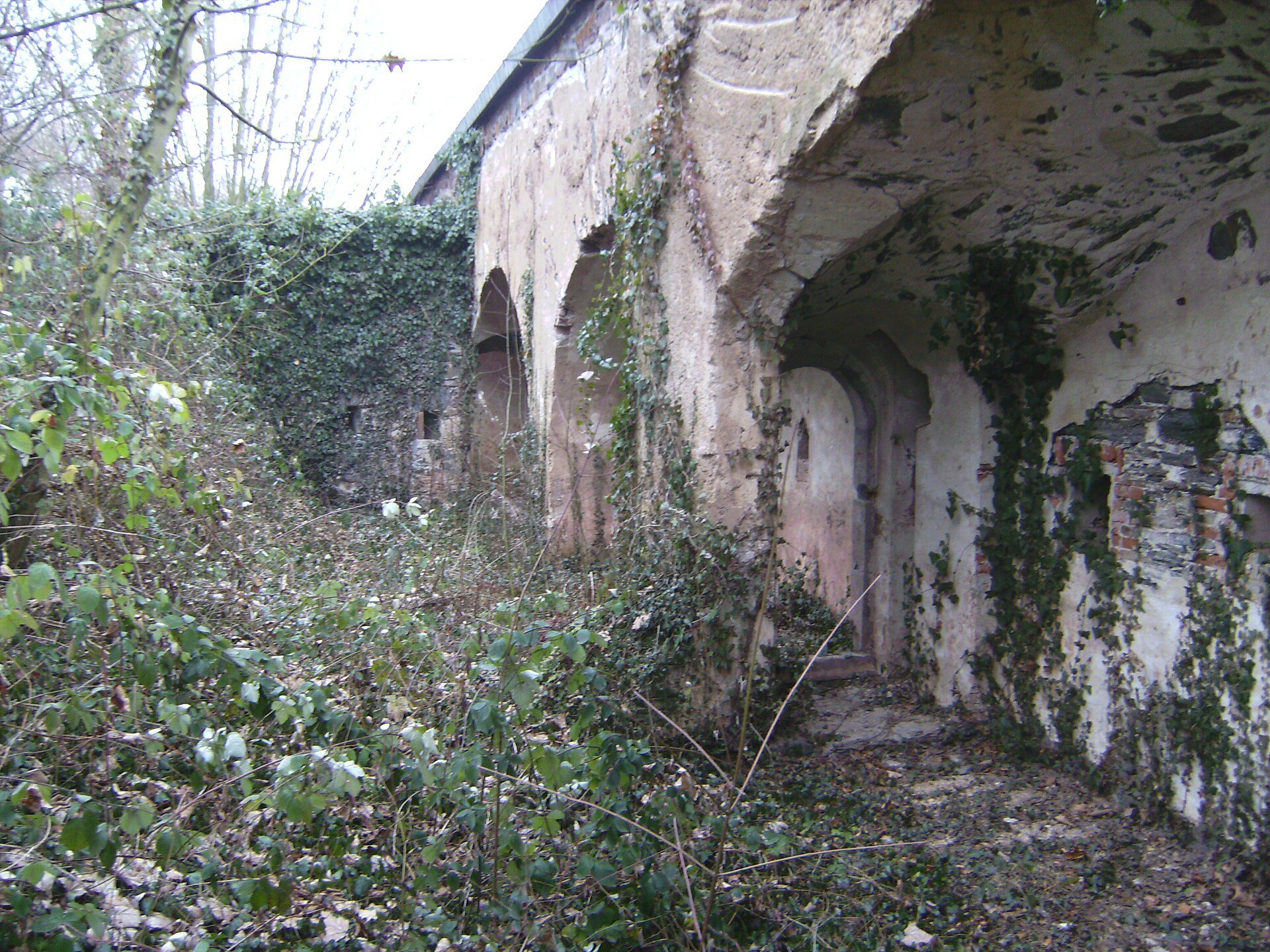
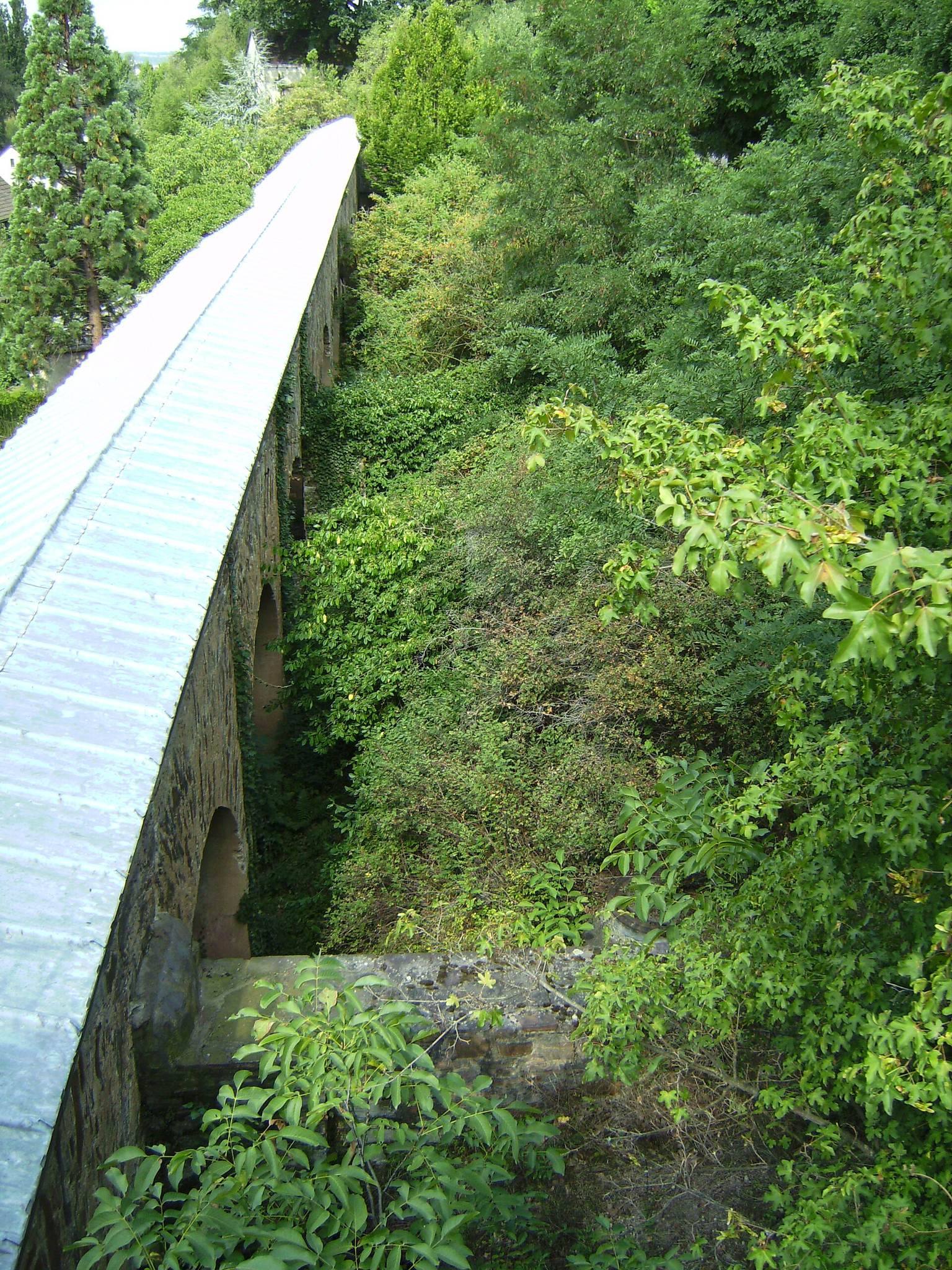
Parts of the southern face survive, including the scarp wall, the inner defended wall of the ditch, the patrol passage behind it, and the rear buttresses. These elements were restored in 1992. A zinc-sheet roof was added to protect the wall crest. Part of the former wall on the Moselle side required further repair between late 2014 and spring 2015 because of structural instability.
Covered passage
The former covered passage to Feste Kaiser Franz served as an air-raid shelter during the Second World War. Its remaining sections were removed during the lowering of Federal Road B 9 in the late 1960s, leaving the passage represented by the surviving portions of the former fortification complex.
Surviving site features
Visible remnants can be found near the primary school and kindergarten in Lützel and behind houses on Weinbergstraße. Other underground passages probably remain within the site, forming part of the surviving archaeological fabric of Moselflesche.