Balduinbrücke: A Medieval Bridge over the Moselle in Koblenz
Site at a Glance
- Popularity
- Medium
- Country
- Germany
- Primary era
- Medieval
- Eras represented
- Medieval, Modern
- Civilizations
- German, Holy Roman Empire
- Site type
- Infrastructure
- Remains
- Bridge
On this page8 sections
History
Balduinbrücke is a medieval stone bridge over the Moselle in Koblenz, Germany, connecting the Old Town with Lützel. Begun around 1342 or 1343 under Baldwin of Luxembourg, it is the oldest surviving bridge in Koblenz. A Roman river crossing had preceded it at this location.
Medieval construction and maintenance
Baldwin, the archbishop of Trier and a prince-elector of the Holy Roman Empire, is credited with planning the bridge. Prince-electors were rulers entitled to choose the emperor. A charter dated 1 May 1343 records the start of construction. Work continued for about 85 years, and the bridge was completed in 1429 with the construction of a gate tower. It was named for Baldwin.
In 1359, Archbishop Boemund II of Saarbrücken granted the right to collect a toll on the bridge. The costly work also received repeated papal indulgences, grants associated with remission of punishment for sin that could support religious works. These grants helped encourage contributions by linking the project to the needs of pilgrims. Donations went into a dedicated bridge fund, administered by a bridge master responsible for its upkeep. This arrangement continued until the Electorate of Trier, the ecclesiastical principality ruled by the archbishop, came to an end.
Refortification and changing defenses
Floods and ice repeatedly damaged the bridge. In the 17th century, it was modified as Koblenz strengthened its defenses during the Baroque period, an era of European art and architecture especially prominent in the 17th and 18th centuries. A gate structure at the Lützel end was removed in the 18th century, and the tower on the Koblenz side was taken down in 1775. In 1794, as French Revolutionary forces entered the city, the statue of Saint John of Nepomuk fell into the Moselle. The Bohemian priest and martyr was venerated as the patron saint of bridges.
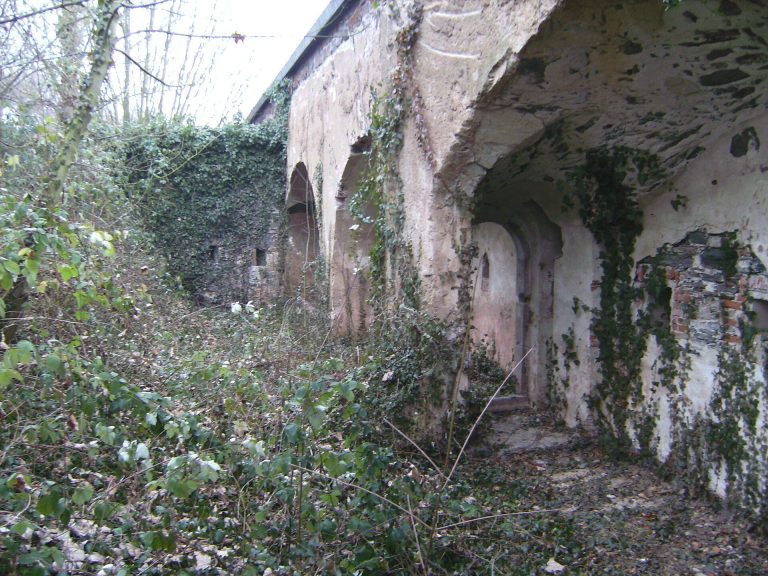
During the expansion of the Prussian Fortress of Koblenz, engineering officer Heinrich Adolph Buschbeck prepared plans to secure the bridge. The Moselle Gate Battery, a fortified artillery position on the city side, was built between 1821 and 1824 and plastered in 1834. It was demolished in 1897 after the city fortifications were abandoned. A defensive tower incorporating a protective barrier was built at the Lützel end in 1831–1832; it was removed in 1883 during bridge widening.
War damage and modern changes
On 7 March 1945, retreating German forces blew up the bridge along with Koblenz’s other bridges. Three arches on the Koblenz side collapsed into the river and were provisionally repaired. Reconstruction took place from 1946 to 1949, with its completion marked on 23 August 1949.
Changes to the Moselle for shipping in the 1960s led to further alterations and the removal of bridge sections. The bridge was altered and restored, with this work completed in 1975. Extensive repairs from February 2013 to October 2014 addressed damage caused by exposure and heavy traffic. The work covered the concrete sections, pedestrian underpass and spiral ramp on the Lützel side, as well as the historic stone arches; the roadway was renewed and the railings raised.
Balduinbrücke is listed as a protected cultural monument in Rhineland-Palatinate. Since 2002, it has also been part of the UNESCO World Heritage property of the Upper Middle Rhine Valley. It is marked as protected cultural property under the Hague Convention, an international agreement on safeguarding cultural property during armed conflict.
Remains
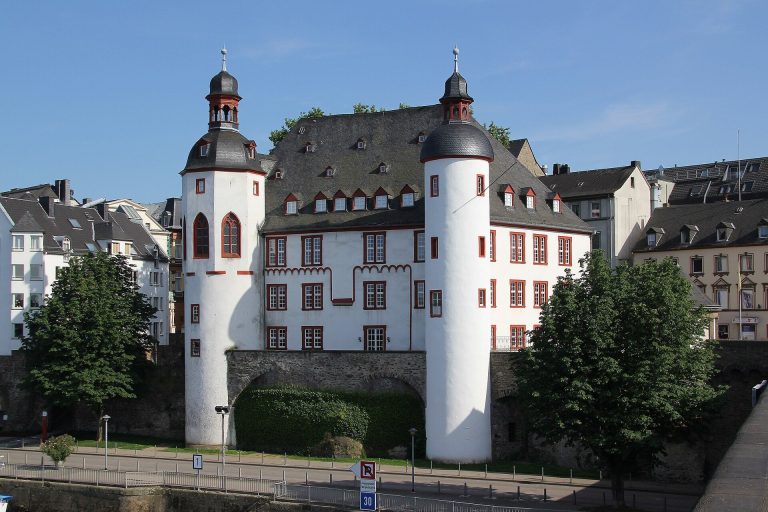
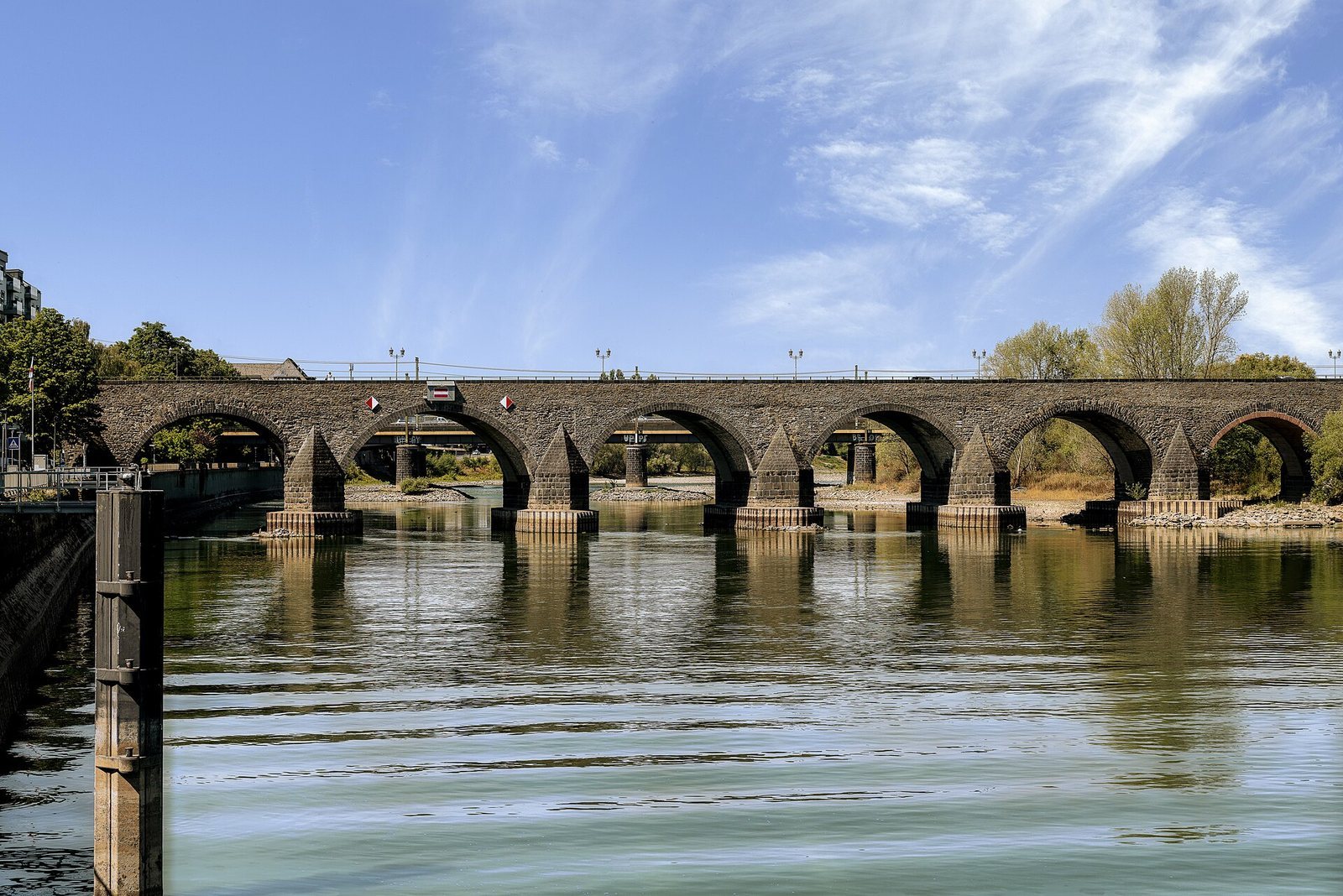
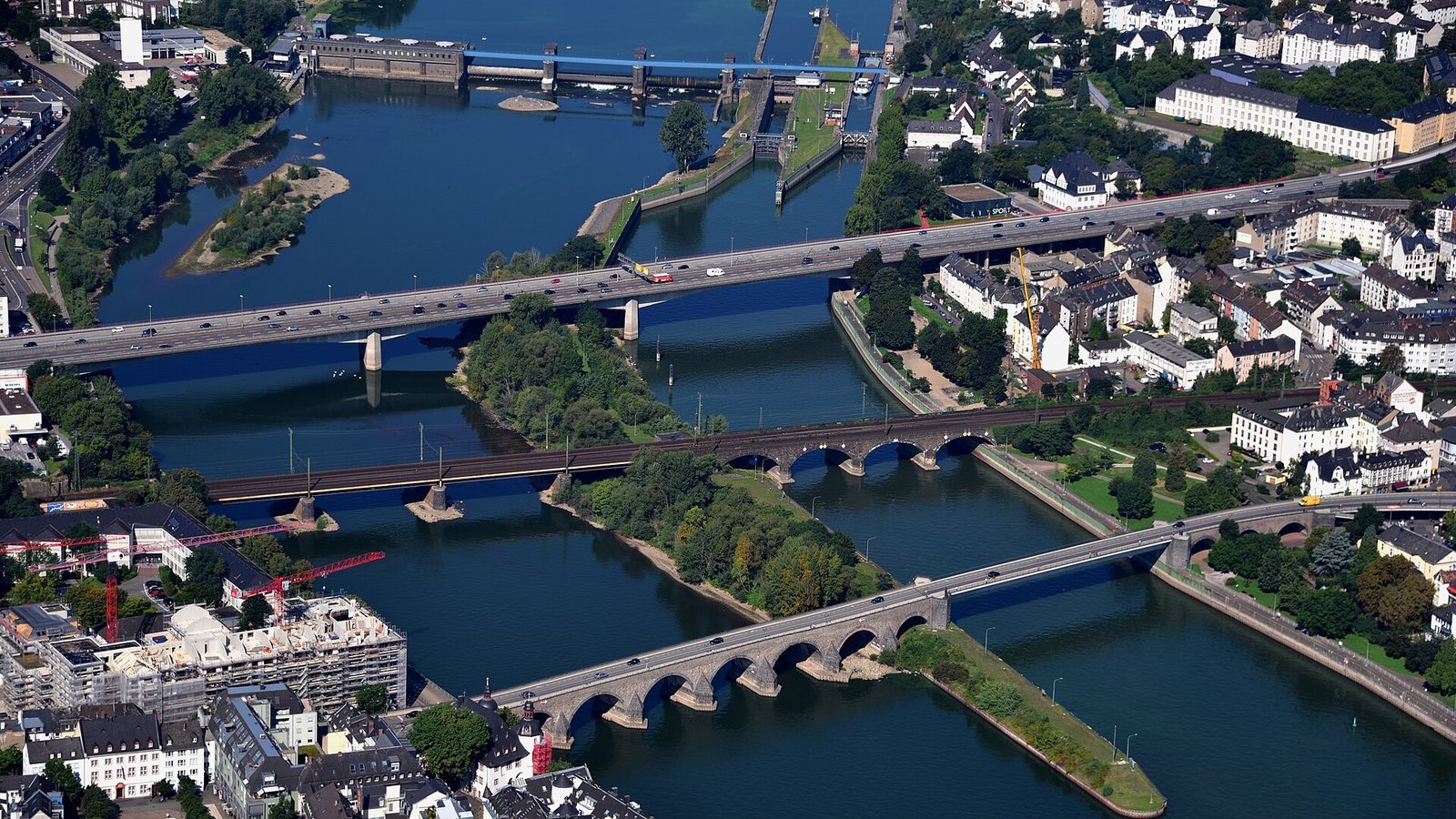
The present crossing combines historic stone arches with a concrete span over the shipping channel and approach structures on both sides. It runs beside the Old Castle and carries road traffic, a footway and a cycleway. At river kilometre 1.04, it is the last bridge on the Moselle before the river meets the Rhine at Deutsches Eck.
Stone arches and concrete span
The original stone bridge had 14 arches and 13 piers, spanning 325 metres between its end supports. Its stonework included Devonian greywacke, a type of sandstone, and volcanic rock such as basalt lava. The piers rest on linked-pile foundations that distribute structural loads. The present structure spans 246 metres between its abutments; including both approach bridges, it is 475 metres long and 12 metres wide. Three historic arches survive at the Lützel end, followed by a prestressed-concrete span over the shipping channel and seven historic arches on the Koblenz side. Three further large arches support the Koblenz-side approach ramp. Prestressed concrete uses tensioned steel reinforcement to help the material bear loads and span greater distances. Six arches on the Lützel side were removed to make space for shipping. The surviving arches were widened by about five metres upstream, roughly doubling the bridge’s medieval width. The 19th-century iron pedestrian walkways were removed, and the parapet walls were rebuilt in an earlier form.
Roman crossing
Between 1860 and 1867, remains of a Roman timber bridge supported by groups of piles joined into frames were found about 50 metres downstream. The crossing formed part of the Roman Rhine Valley road. Dredging for the shipping channel in 1944 and construction of the Koblenz weir between 1940 and 1951 removed numerous timber-bridge remains from the riverbed.
Figures, inscriptions and former dwellings
A stone figure of Baldwin of Luxembourg, made by Koblenz sculptor Rudi Scheuermann, stands on the bridge. In the archway on the Koblenz side, a relief cross depicting Christ the King was made by sculptor Siegfried Erdmann in the 1970s. An inscribed plaque from the 18th century in the same archway commemorates a repair and names a former bridge master; before the bridge was widened, the plaque was fixed to one of its piers. Small houses stood on the bridge or its piers at least temporarily, and Jewish residents lived in them.