Old Tulliallan Castle: A Ruined Douglas Tower House near Kincardine
Site at a Glance
- Rating
- 4.3
- Popularity
- Very Low
- Country
- United Kingdom
- Primary era
- Medieval
- External website
- Open
- Eras represented
- Medieval, Early Modern
- Civilizations
- English, Kingdom of Scotland
- Site type
- Military
- Remains
- Castle
On this page14 sections
History
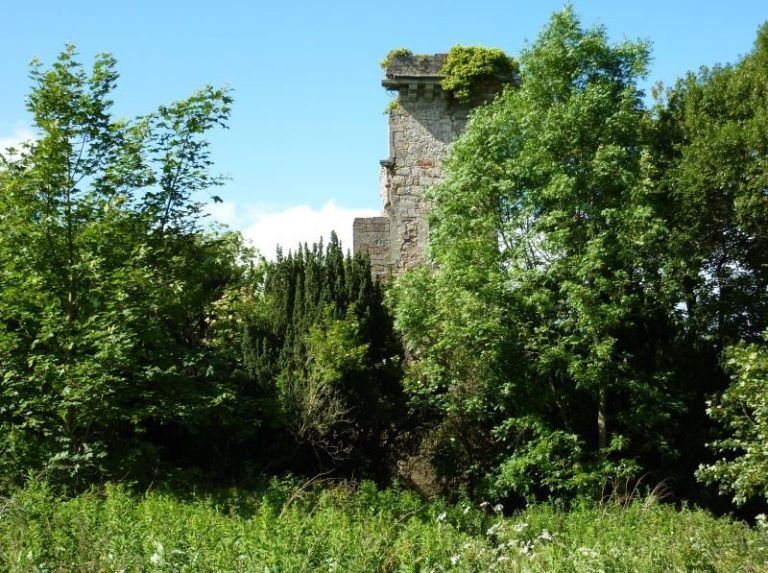
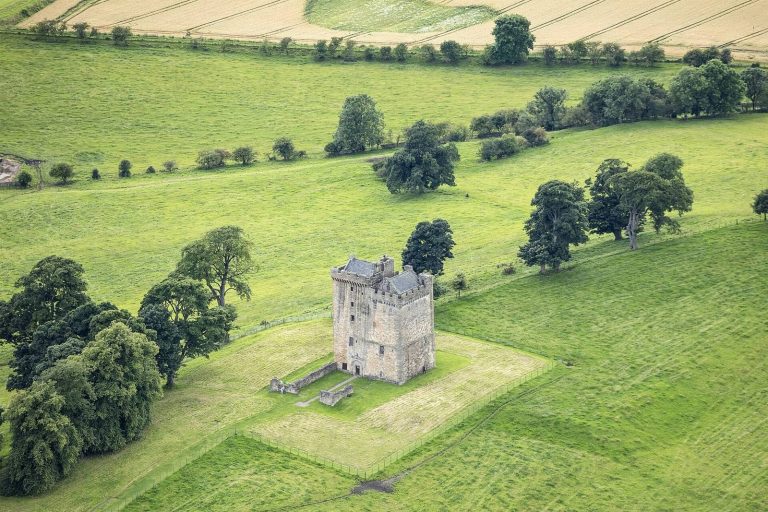
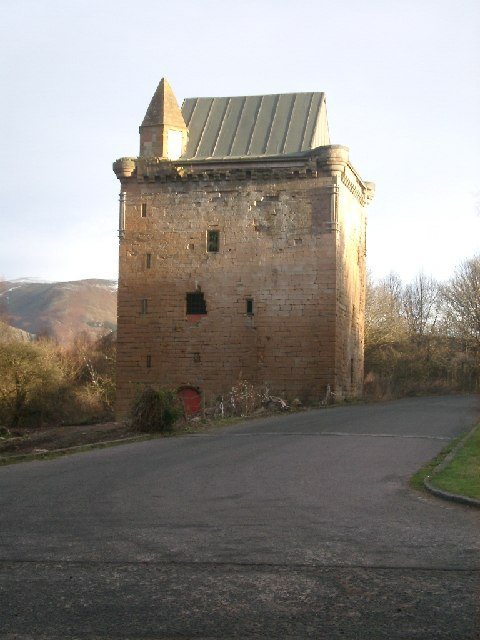
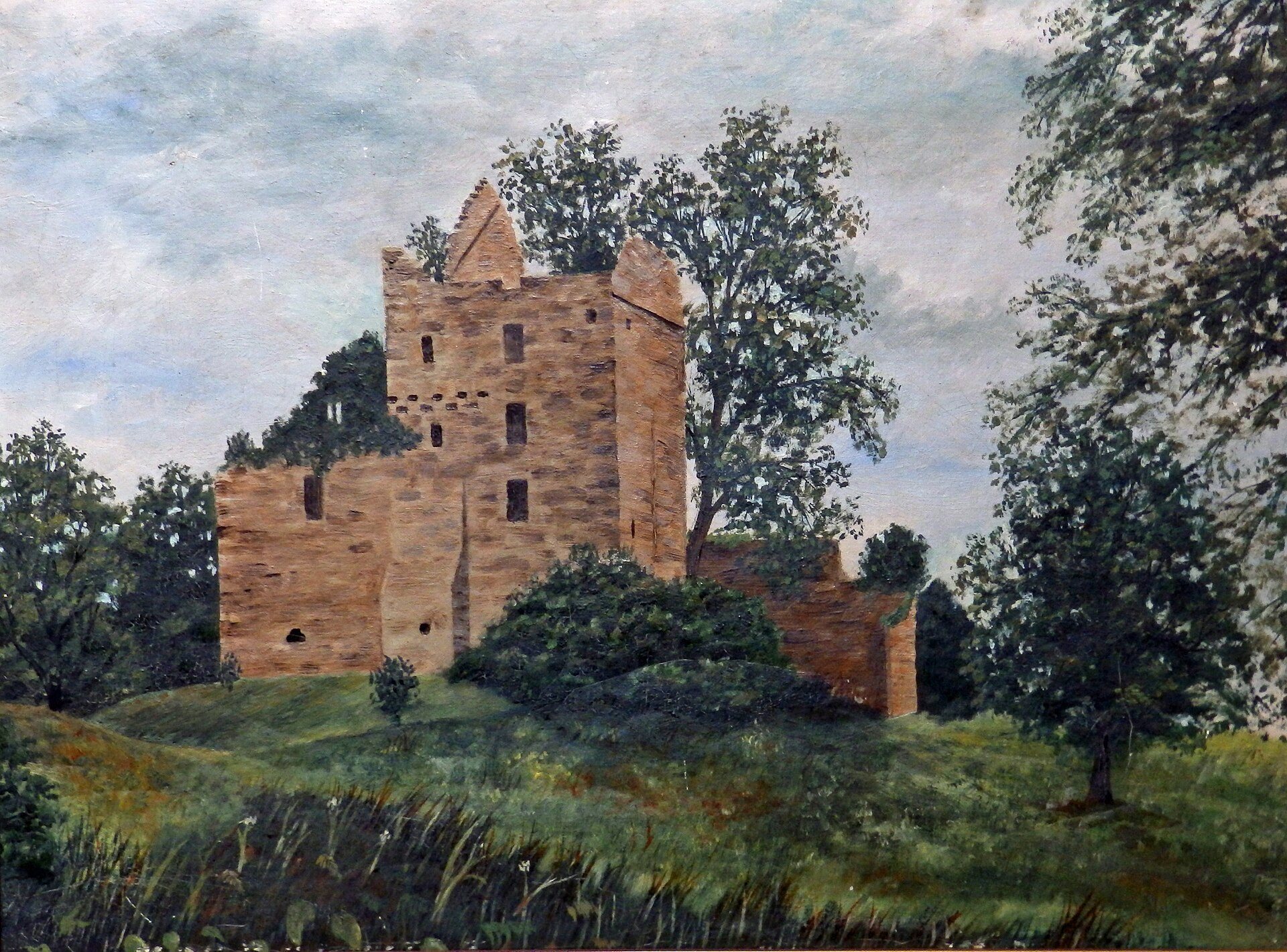
Old Tulliallan Castle is a ruined castle in Scotland, near Kincardine in Fife, a district that historically lay within Perthshire. Its first fortification existed before 1304, when Edward I of England, the king who intervened militarily in Scotland during the late thirteenth and early fourteenth centuries, ordered the walls of “Tolyalwyn” strengthened. The site occupied a strategic position beside the principal ferry route across the Forth, and its defenses faced marshland that was not drained until the eighteenth century.
Early Fortification and the Douglases
The strengthening ordered in 1304 probably included the D-shaped moat and outer rampart that protected the position from attacks across the surrounding wetlands. Buildings may already have stood within the enclosure, but the castle now called Old Tulliallan was probably constructed later by the Douglas family. The Douglases were a powerful Scottish noble family whose members held the earldom of Douglas and controlled extensive estates during the later medieval period.
Tulliallan passed to William Douglas, 1st Earl of Douglas, who lived from about 1327 to 1384. In 1402, Archibald Douglas, 4th Earl of Douglas, granted the Tulliallan estate to the Edmiston family. A royal charter confirmed the grant to Sir James Edmiston in 1456.
The Blackadder Lairds
Patrick Blackadder, a grandson of Cuthbert Blackadder of Blackadder Castle in Berwickshire, married Elizabeth Edmiston, Sir James Edmiston’s daughter. Tulliallan came to her as her dowry, and the Blackadder lairds subsequently held considerable power during the fifteenth and sixteenth centuries. A laird was a Scottish landholder, usually a member of the lesser nobility.
Robert Blackadder, Patrick’s brother, became Bishop of Aberdeen, Bishop of Glasgow in 1484, and the first Archbishop of Glasgow in 1492. He supported the rebel nobles who defeated and killed King James III of Scotland at the Battle of Sauchieburn in 1488. Robert died during a pilgrimage to the Holy Land in 1508.
Family disputes and political conflicts brought further violence. Sir John Blackadder, one of the lairds of Tulliallan, was beheaded in March 1531 for murdering James Inglis, Abbot of Culross, during a dispute over land. Sir John’s brother Patrick inherited the estate and renewed the Blackadder dispute with the Homes over family lands around Allanton in Berwickshire. Patrick was killed in an ambush near Edinburgh while attempting to settle the matter, after which the Blackadders made no further effort to recover their ancestral lands.
William Blackadder supported Mary, Queen of Scots, at the Battle of Carberry Hill on 15 June 1567. He was arrested soon afterward and hanged in June, while his brother was hanged in September.
Decline of the Estate
Sir John Blackadder, the last Blackadder owner of Tulliallan, was born in 1596. King Charles I of England created him a Baronet of Nova Scotia on 18 July 1626. A baronet held a hereditary British title below a baron but above most untitled gentry. Sir John’s estate included lime works, salt pans, and other enterprises, and produced an annual income of 36,000 merks. His debts eventually resulted in the seizure of his property.
Sir John fled to continental Europe, appears to have entered French service in 1642, and died in America in 1651. His wife, Elizabeth Graham, daughter of the Earl of Menteith, received an annuity of 360 merks and lived at Tulliallan until 1662. Their son Alexander could not clear the estate’s debts, and the Court of Session ordered its judicial sale. Colonel John Erskine, son of David Erskine, 4th Lord Cardross, purchased the estate in 1700.
The covenanting preacher John Blackadder, who lived from 1622 to 1685, was legally heir to the Blackadder baronetcy but did not claim the title. Colonel Erskine, known locally as the “Black Colonel,” became the last occupant of the old castle and died in the 1790s.
Abandonment and Protection
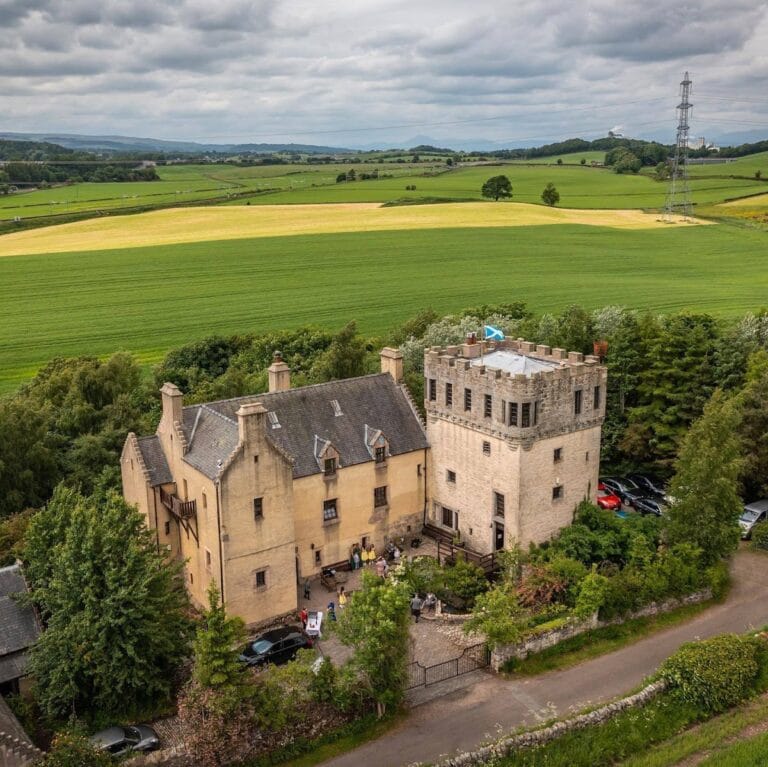
George Elphinstone, 1st Viscount Keith, bought the estate in 1799. A Scottish naval commander and peer, he built a new family residence about half a mile southeast of the old castle. The roof was removed from Old Tulliallan, and the abandoned building deteriorated into ruins. The associated modern Tulliallan Castle was built for Viscount Keith between 1818 and 1820. Old Tulliallan Castle is now protected as a Scheduled Monument, an archaeological or historic site safeguarded under Scottish law because of its national importance.
Remains
Moat and Enclosure
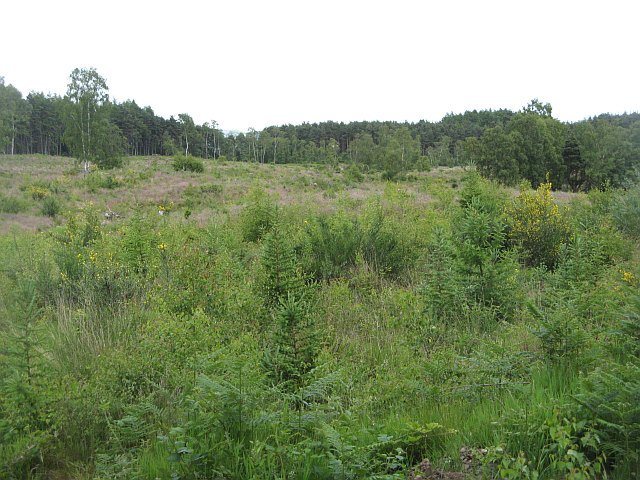
Old Tulliallan occupied low-lying, marshy ground beside the former main ferry route across the Forth. The castle enclosure was defended by a D-shaped moat and an outer rampart. The moat was formerly supplied with water from the Firth of Forth, whose waters reached farther inland in earlier periods. Together, these earthworks created a defended position within terrain that remained difficult to cross until the surrounding marshes were drained in the eighteenth century.
Douglas Tower House
Entrance Tower
The Douglas castle began as an L-shaped, two-storey tower house built of ashlar, carefully dressed stone laid in regular masonry. A tower at the southwest corner contained the principal entrance, which was approached by a drawbridge, a movable bridge spanning the moat. The arrangement combined a fortified residence with a controlled crossing into the enclosure.
Ground-Floor Rooms
Most ground-floor windows were small and square, while larger slit openings were placed above them. Important rooms were unusually located on the ground floor. Their ceilings contained ribbed vaults, vaulted ceilings supported by projecting stone ribs, which sprang from octagonal piers. The building was enlarged during the fifteenth century and probably underwent major reconstruction in the late sixteenth century.
South Front and Great Hall
South Posterns
A description from 1853 recorded two narrow posterns at the ends of the south front. A postern was a small secondary entrance in a fortified building or enclosure. These openings formed part of the surviving arrangement of the castle’s south side when the structure was already in decline.
Great Hall
The eastern postern opened into a room identified as the great hall. Its three compartments were formed by elegant groined arches, created where two vaulted surfaces intersected, resting on a central octagonal column. In 1853, these arches and their supporting column were described as being in remarkably good condition.
Later Ruins and the Bronze Kettle
Although already ruined, Old Tulliallan was still described in 1885 as an imposing-looking building. Its roof was later removed, leaving the structure exposed as it crumbled. An ancient bronze kettle was found among the ruins. It measured about 22 centimetres in diameter and 13 centimetres in height.
Local tradition held that the kettle had once hung from a roof boss and been filled with gold. According to the legend, the castle would stand and the Blackadders of Tulliallan would prosper for as long as the kettle remained suspended there.