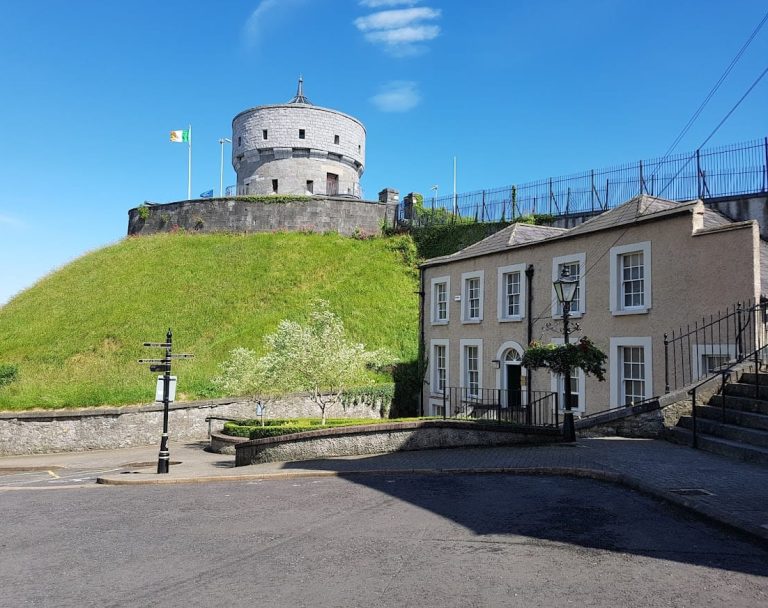
Greenmount Motte: A Norman Motte-and-Bailey Castle in Ireland


Site at a Glance
- Rating
- 3.8
- Popularity
- Very Low
- Country
- Ireland
- Primary era
- Medieval
- Eras represented
- Medieval
- Civilizations
- Norman
- Site type
- Military
- Remains
- Castle
On this page6 sections
History
Greenmount Motte is a Norman motte-and-bailey castle in County Louth, Ireland, built during the twelfth or thirteenth century after the Norman invasion of Ireland. This type of medieval fortification combined a raised earth mound, or motte, with an adjoining enclosed bailey, and was commonly constructed with timber and earth rather than stone. Greenmount is associated with the Cambro-Norman and Old English communities of Norman Ireland and is now a National Monument of Ireland.
Earlier Site and Norman Construction
The earthwork may have been raised over an earlier tumulus, or burial mound. A scabbard mount found at the site is considered long pre-Norman, supporting the possibility that the mound had an earlier use before the castle was built. Greenmount was formerly called Dromcath or Drumcath, a name derived from an Irish expression meaning “Battle Ridge.” Documents from 1310 and 1328 record a Nicholas of Drumcath, linking the earlier name with a medieval occupant or landholder.
Later Use and Investigation
During the Irish Rebellion of 1641, Greenmount served as a campground for Catholic Irish forces. The motte was excavated in 1830, when the work caused a cave-in, and it was investigated again in 1870. Reverend Joseph Dullaghan and John Henry Lefroy are associated with these excavations. The site is protected as a National Monument under the official name Greenmount motte, reference number 144.
Remains
Earthwork and Setting
Greenmount Motte is an earth-built motte-and-bailey earthwork situated 2.9 kilometres west of Annagassan, overlooking the Dee Valley. The site covers about 0.7 hectares. Its motte rises 12 metres above the surrounding ground, while the bailey forms the adjoining enclosed area of the castle earthwork. Visible foundations within the bailey belong to an elongated chamber measuring 1.5 by 1 metre. They lie 5.5 metres below the summit of the motte, giving an indication of the surviving archaeological depth within the site.
Excavated Finds
The excavations produced a scabbard mount, a fitting attached to a sword sheath, bearing an inscription in runic characters. The inscription reads “DOMNAL SELSHOFOTH A SOERTH THETA” and has been interpreted as “Domnal Seal’s-head owned this sword.” Its long pre-Norman date supports the interpretation of an earlier tumulus beneath the motte. Other finds included animal bones, charcoal, burnt earth, a bronze axe, and a bone harp peg marked by friction. Together, these objects provide evidence for activity at the mound before and during the medieval use of the earthwork.
Nearby sites