Burgruine Zangenstein: A Medieval Hill Castle in Germany


Site at a Glance
- Rating
- 3.5
- Popularity
- Very Low
- Country
- Germany
- Primary era
- Medieval
- Eras represented
- Medieval, Early Modern
- Civilizations
- Holy Roman Empire
- Site type
- Military
- Remains
- Castle
On this page7 sections
History
Burgruine Zangenstein is the ruin of a medieval hill castle in Germany, built in 1360 by Otto der Zenger von Schwarzeneck with permission from Count Palatine Ruprecht I. The castle stood above the Schwarzach on a granite rock beside the existing bridge over the Murach, occupying a strategically placed crossing within the Upper Palatinate.
Early occupation and medieval foundation
The rock and its surroundings were probably occupied as early as the Stone Age. A 2010 excavation near the castle rock uncovered a burial mound about 2,800 years old from the Celtic Hallstatt period, an Iron Age period associated with the early Celtic cultural sphere in central Europe. The recovered finds were evaluated by the State Office for Monument Protection in Regensburg and are displayed at the Nabburg Town Museum.
The charter issued for the 1360 foundation may point to an earlier fortification on the site. That predecessor was probably protected with wooden stakes rather than a stone outer defensive wall, since the document specifically refers to a fortification made of stone. The later castle became one of the possessions associated with the Zenger family, a noble family of the Upper Palatinate.
The Zenger family and later ownership
Between the fourteenth and sixteenth centuries, when the family was at the height of its power, the Zengers held Zangenstein, nearby Schwarzeneck Castle, and other castles in the Upper Palatinate. These included Thanstein, Fronhof, and Zangenfels, followed later by Forstenberg and Schwärzenberg. They may also have held Altenschneeberg Castle. Schwarzeneck itself is first recorded in 1211.
After the Zenger family died out in the sixteenth century, its last members ultimately tried to resist social decline through raids. Around the turn of the seventeenth century, Zangenstein passed to Dietrich von Winterfeld, district judge of Amberg and the governor representing the elector in Palatinate-Neuburg, and to his wife Ursula, née von Hatzfeld-Wildenburg. When Winterfeld left the Palatinate to become a cathedral provost of Schwerin and Lübeck, the castle changed owners several times.
Chapel care and protection
The castle declined during the nineteenth century and is now privately owned. From about 1873, the Catholic Church Foundation of Zangenstein cared for the castle chapel. A notarized deed and land-register entry from 1905 recorded its transfer by the then owners to the foundation. After the foundation remained without personnel for a long period and urgent repairs became necessary, the Schlosskapelle Zangenstein association, founded in 1988, maintained the chapel. A church foundation was re-established in 2012, and the association was then dissolved.
Burgruine Zangenstein is protected as an archaeological monument for the remains in the area of the medieval castle ruin and as an architectural monument of Zangenstein. These designations recognize both the surviving structure and the archaeological evidence connected with the site.
Remains
Castle rock and surviving structures
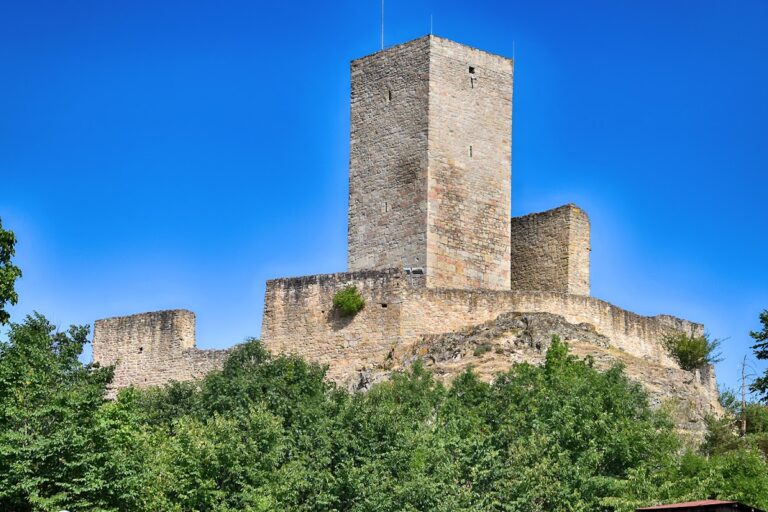
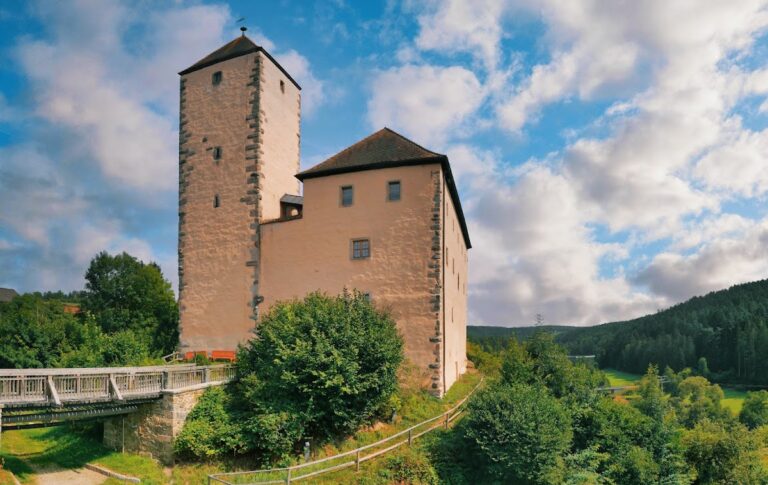
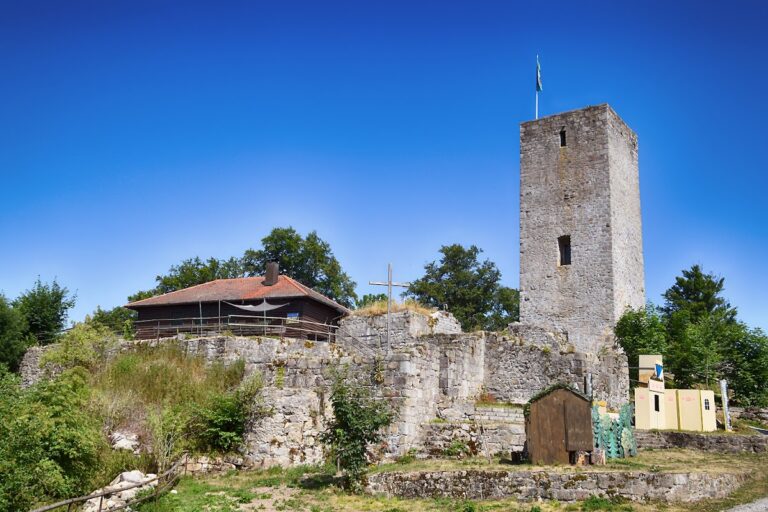
The ruin occupies a granite rock about 370 metres above sea level, above the Schwarzach and beside the bridge over the Murach. The rock is surrounded by the Schwarzach. Substantial sections remain of the curtain wall, the outer defensive wall enclosing the castle, together with the palas, the principal residential and representative building, the castle gate, and a shell tower. This type of tower had a curved outer wall and an interior open toward the castle enclosure. The castle had no keep.
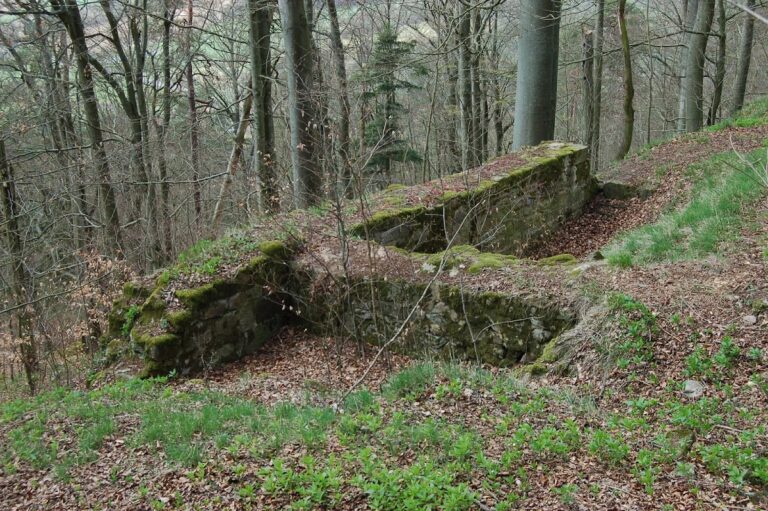
Within the enclosure are several heavily collapsed vaulted cellars. One cellar has a pointed-arched entrance beneath the palas. From the lowest cellar, an underground passage descends steeply to an agricultural building below the castle, preserving a physical connection between the hilltop complex and the structure beneath it.
Castle chapel
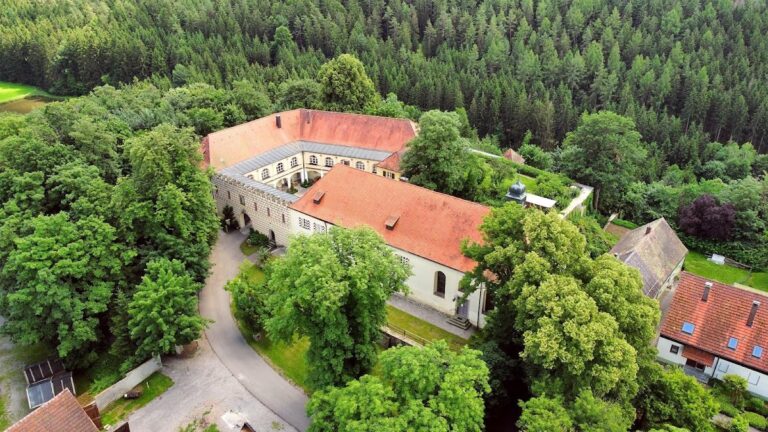
The castle chapel stands on the castle rock and is well preserved. Johann Friedrich von Aufsess converted it in the Baroque style in 1686. Its surviving form remains visible from a considerable distance, making the chapel a distinct part of the castle complex.
Nearby sites