Carrickkildavnet Castle: An O’Malley Stronghold in Ireland


Site at a Glance
- Rating
- 4.4
- Popularity
- Very Low
- Country
- Ireland
- Primary era
- Medieval
- Eras represented
- Medieval
- Civilizations
- Irish
- Site type
- Military
- Remains
- Castle
History
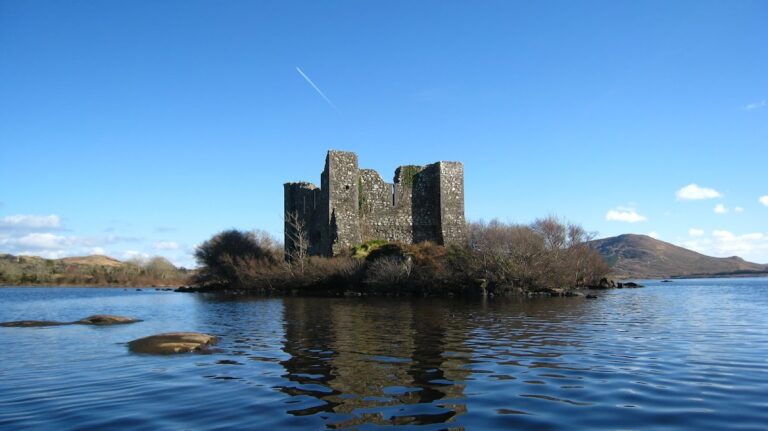
Carrickkildavnet Castle is a ruined tower house in Ireland, built around 1429 by the Ó Máille, or O’Malley, kings of Umaill. Umaill was a medieval lordship on Ireland’s western coast, ruled by the Ó Máille dynasty. The castle stood at the southeast corner of Achill Island, opposite the Corraun Peninsula, where it protected the mouth of Achill Sound and the passage between Clew Bay and Blacksod Bay.
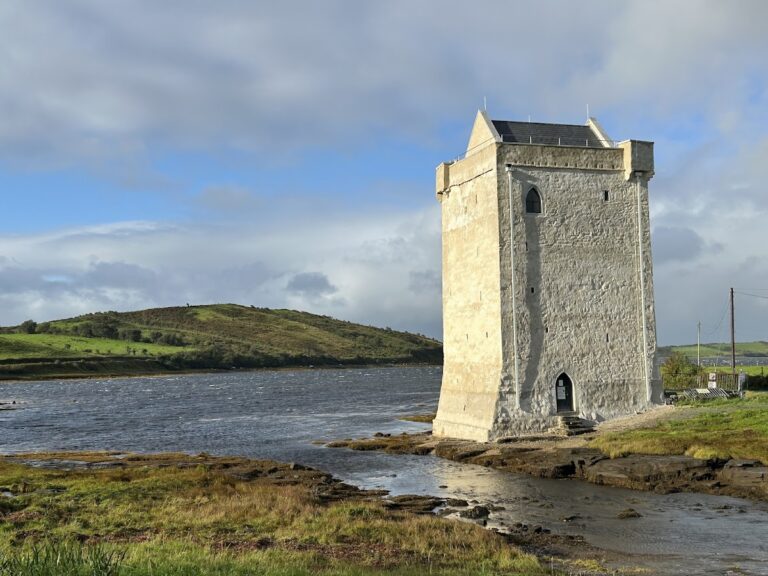
The stronghold later became associated with Gráinne Ní Mháille, widely known in English as Grace O’Malley. A sixteenth-century Gaelic leader linked with maritime power and resistance to English authority, she was also called the “pirate queen.” Her other strongholds included Rockfleet Castle in Clew Bay and a fortress on Clare Island.
Carrickkildavnet Castle is state-owned and recognized as a National Monument of Ireland under the official designation Carrickkildavnet Castle, reference number 458.
Remains
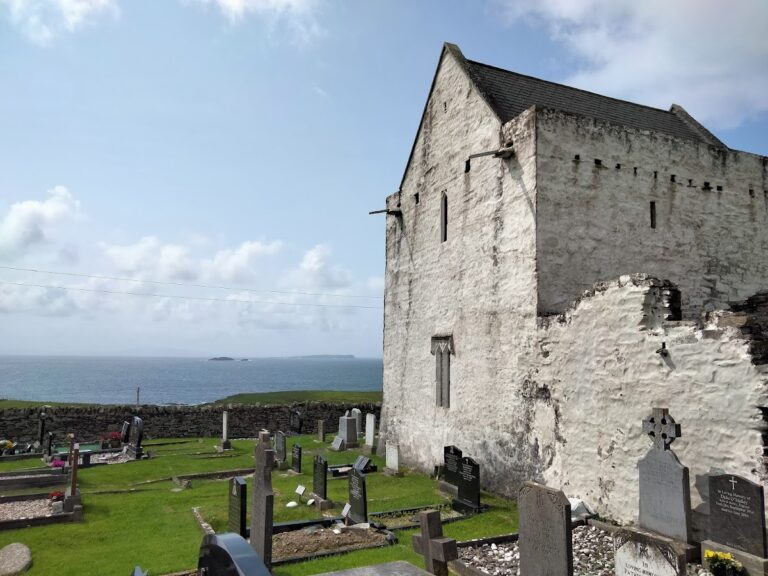
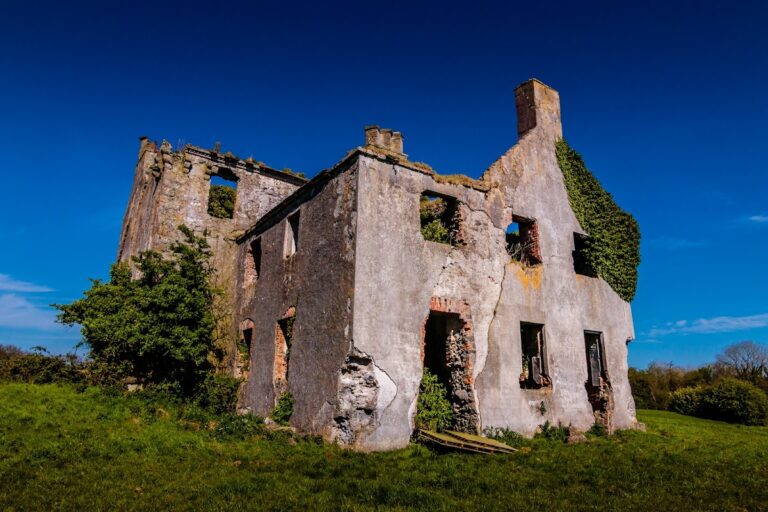
The surviving monument is a ruined four-storey tower house approximately 12 metres high. Tower houses were fortified residential towers commonly built by the Irish nobility during the late medieval and early modern periods. Carrickkildavnet’s ground floor has a vaulted ceiling, and a hole at the corner of the vault provided the only access to the upper levels. This unusual internal arrangement was probably intended to strengthen the building’s defence.
Defensive Features
The castle’s defensive fabric includes a mural chamber, a room or passage built within the thickness of the outer wall. Other surviving features include a machicolation, a projecting structure with openings through which defenders could attack people below, along with defensive loops and upper buttress fortifications. A bawn wall, the enclosing defensive wall around a castle or fortified residence, also survives in ruined form.
Nearby sites