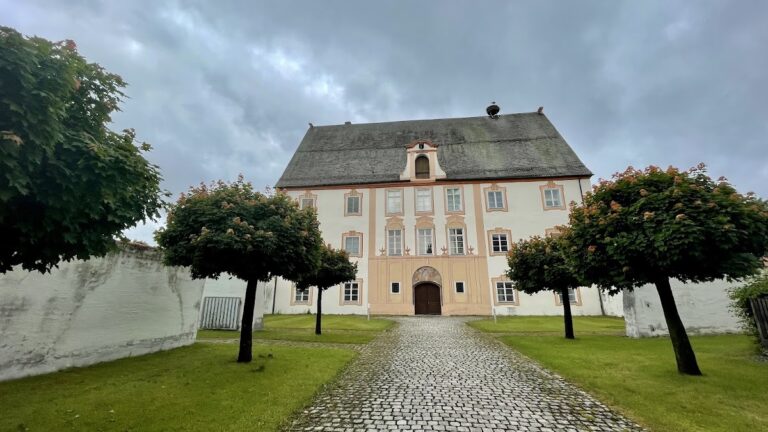
Schloss Illereichen: A Castle Remnant and Former Lordship Seat in Germany


Site at a Glance
- Rating
- 4.8
- Popularity
- Very Low
- Country
- Germany
- Primary era
- Medieval
- Eras represented
- Medieval, Early Modern
- Civilizations
- Holy Roman Empire
- Site type
- Military
- Remains
- Castle
On this page11 sections
History
Schloss Illereichen is a castle remnant in Germany, located in Altenstadt-Illereichen in the Neu-Ulm district of Bavarian Swabia. Its history reaches back to a fortified building associated with the Lords of Aichheim, while the surviving complex reflects later rebuilding and centuries of territorial rule.
Aichheim and Rechberg rule
A fortified building belonging to the Lords of Aichheim is recorded in 1330. In that year, the Lordship of Aichheim, also known as the Lordship of Illereichen, passed to Konrad von Rechberg through his marriage to Luitgard, the daughter of Berthold von Aichheim. The Rechberg family retained Altenstadt and Illereichen until 1677.
A new building was erected in 1420/60, and the gate tower was added during the sixteenth century. The castle therefore developed from an earlier fortified seat into an extensive complex with residential, service, and agricultural functions.
An imperial lordship and its later rulers
In 1626, the Lordship of Aichheim was elevated to a free imperial lordship. This status placed the territory directly under the Holy Roman Emperor rather than beneath an intermediate prince, while imperial and circle-estate status gave its ruler a recognized position in the Empire’s constitutional and administrative structure.
After 1677, the lordship passed to the Counts of Limburg-Styrum. Carl von Palm, an imperial count who later became a prince, acquired it in 1772 for 450,000 gulden. He sold it in 1788 to Prince Johann Nepomuk Josef von Schwarzenberg for 750,000 gulden, and the property passed to his son Josef in 1789.
Bavarian sovereignty and demolition
During Josef von Schwarzenberg’s rule, the Lordship of Illereichen came under Bavarian sovereignty in 1806. A Schwarzenberg princely manorial court, exercising local judicial authority for the territorial lord, operated there from 1814 to 1834. In 1833, shortly before his death, Josef von Schwarzenberg sold Illereichen to the Bavarian state minister Maximilian, Count von Montgelas. The following year, court jurisdiction and land revenues were transferred to the King of Bavaria.
In 1837/38, the castle, which incorporated the former extensive complex, was largely demolished. The remaining structures are protected as a historic monument under the Bavarian monument register, where the site is listed under file number D-7-75-111-40.
Remains
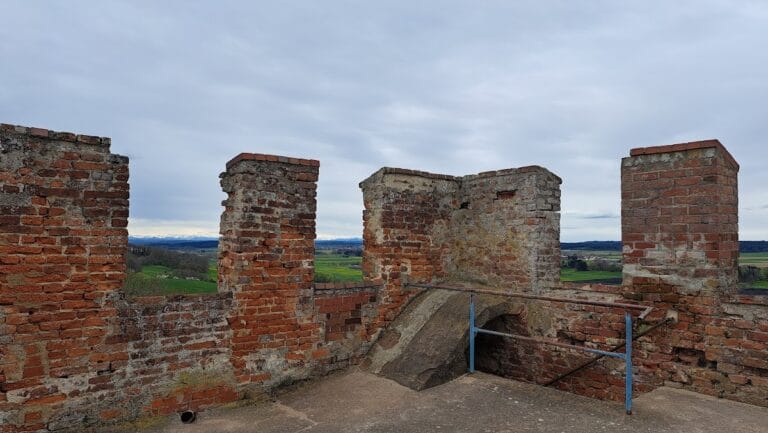
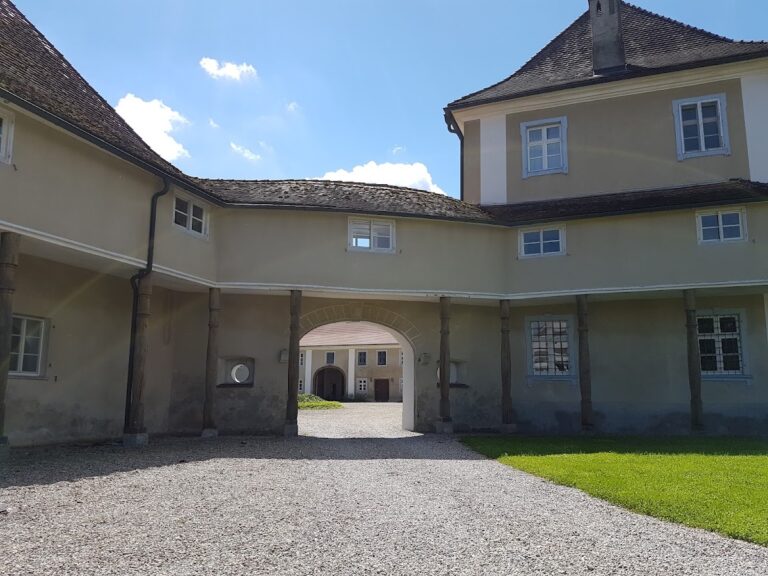
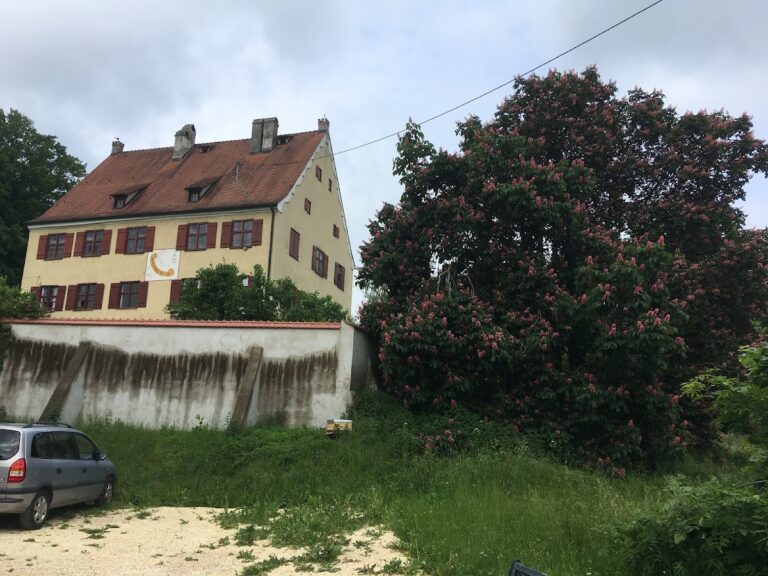
The surviving parts of Schloss Illereichen belong to an extensive castle complex organized around an outer bailey, the area outside the principal fortified enclosure that contained service, agricultural, residential, and administrative buildings. The preserved ensemble includes the outer-bailey building, gate tower, former agricultural and servants’ building, stable building, stone bridge, castle garden, retaining and fortification walls, and the former huntsman’s house.
Outer-bailey structures
Outer-bailey building and gate tower
The outer-bailey building and gate tower form central surviving elements of the former enclosure. The gate tower controlled passage into the fortified complex, while the outer-bailey building belonged to the service and administrative side of the castle. Together they preserve part of the arrangement that connected the castle’s entrance with its working buildings.
Agricultural and servants’ buildings
The former agricultural and servants’ building, the stable building, and a stone bridge remain part of the overall ensemble. These structures represent the practical facilities that supported the castle and its lordship, linking the residential and fortified functions with agricultural work and movement through the complex.
Garden and southern grounds
Former castle garden
South of the outer bailey lies the former castle garden. Retaining and fortification walls survive within this area, preserving the relationship between the cultivated grounds and the defensive structure of the castle complex.
Former huntsman’s house
The former huntsman’s house also stands south of the outer bailey. It belongs to the peripheral buildings associated with the castle grounds and remains within the physical ensemble of Schloss Illereichen.
Nearby sites