Tournon Castle: A Historic Fortress in France


Site at a Glance
- Rating
- 4.7
- Popularity
- Very Low
- Country
- France
- Primary era
- Medieval
- Eras represented
- Medieval, Early Modern
- Civilizations
- French
- Site type
- Military
- Remains
- Castle
On this page12 sections
History
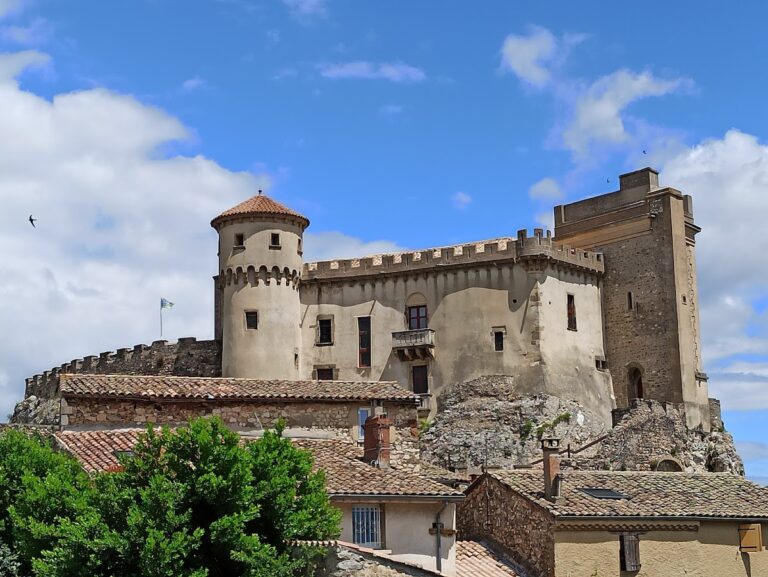
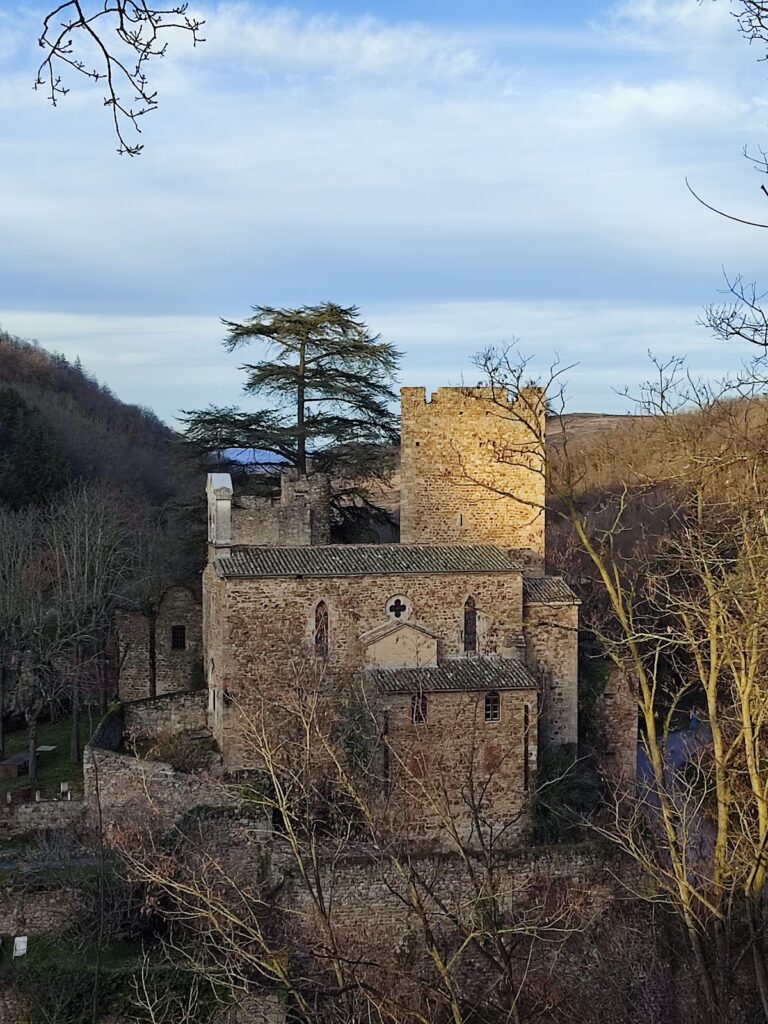
Tournon Castle is a historic fortress in Tournon-sur-Rhône, France, occupying the site of an ancient fortified settlement beside the Rhône. The site may have followed a Gallo-Roman watchtower, while traces of its first medieval castle date from the tenth century. Its surviving form was shaped mainly by rebuilding in the fourteenth and fifteenth centuries, followed by sixteenth-century construction that reflects the transition from medieval architecture to the Renaissance, the period that revived classical forms and developed new approaches to proportion, ornament, and residential design.
Medieval Origins and Lordly Residence
The castle stands on the location of an ancient castrum, a small fortified settlement or fort. The medieval town’s surrounding defensive wall was developed between the thirteenth and fifteenth centuries. During the fourteenth and fifteenth centuries, the castle’s residential buildings, chapel, and artillery towers were remodelled. The lords of Tournon continued to inhabit the complex until the seventeenth century.
A Royal Residence in the Sixteenth Century
French kings used Tournon Castle as an overnight residence during journeys. Louis IX, also known as Saint Louis and king of France from 1226 to 1270, stayed there while leaving for a crusade. François I and Henri II, successive sixteenth-century kings, also stopped at the castle while travelling toward the Italian Wars.
François de Tournon was born at the castle in 1489. He later became a cardinal, archbishop of Lyon, diplomat, and adviser to François I and Henri II. The castle was also the place where François de France, Dauphin of Viennois and Duke of Brittany, died on 10 August 1536. The Dauphin was the heir apparent to the French throne and the eldest son of François I. He fell ill after drinking water following a game of tennis in Lyon.
His secretary, Count Montecuccoli, was accused of poisoning him after several poisons were found in his quarters. Montecuccoli confessed under torture, but the poisoning theory remains disputed by modern scholarship.
Another tradition concerns Hélène de Tournon, who was said to have died from lovesickness. Pierre de Ronsard, a major sixteenth-century French poet who had been a twelve-year-old page at the castle, later wrote the Ode à Hélène.
Prison, Restoration, and Museum
Tournon Castle served as a prison until 1926 and was subsequently restored. It has housed a museum since 1928, identified as the Musée du Rhône and recognized as a Musée de France.
The castle became a French historic monument through several stages of protection. Its façades and roofs were designated in 1927, its interior apart from the guard’s lodging and tribunal areas in 1938, and its oak-studded postern door in 1960. The remaining unprotected parts were added to the register in 2023, except for the town hall, which was rebuilt after the Second World War.
Remains
Promontory and Medieval Defences
Tournon Castle occupies a rocky promontory beside the Rhône. The surviving complex combines medieval defensive work with later residential and religious buildings. On entering the present honour court, the wall on the right incorporates remains of the earlier keep known as Château Saint-Just. The medieval town enceinte, or surrounding defensive wall, developed from the thirteenth to the fifteenth century and forms part of the wider fortified setting.
Residential and Religious Buildings
Sixteenth-Century Residences
The castle’s principal appearance results from fourteenth- and fifteenth-century remodelling together with construction in the sixteenth century. New residential buildings were added during the sixteenth century, including a large Renaissance building that now houses the museum collections. These works transformed the earlier medieval complex into a residence incorporating newer forms of domestic architecture.
Beauregard Tower and Terraces
The Beauregard Tower and two terraces were built between 1560 and 1600. They belong to the later phase of construction that expanded and reshaped the castle’s residential and defensive spaces.
Chapel
The chapel was built between 1560 and 1600 and contains, among other works, a triptych by Jean Capassin. A triptych is an artwork made from three connected panels.
Hélène de Tournon’s Chamber
Inside the castle, a chamber associated with Hélène de Tournon has been reconstructed and presented as part of the surviving interior interpretation.
Objects and Museum Collections
A Roman milestone stands at the entrance to the honour court. It was moved there from Arras-sur-Rhône in 1939. Such milestones were roadside markers that recorded distances and supported the administration of Roman roads.
The museum’s collections include decorative arts and fine arts, with paintings, sculptures, and graphic works dating from the sixteenth to the twentieth century. They also cover local and technical heritage connected with the Rhône, including dams, bridges, boatmen, and modern navigation. Works by Raoul Dufy, Marcel Gimond, and André Lhote are among the collection’s holdings.