Fortezza dell’Annunziata: A Nineteenth-Century Defensive Fort in Ventimiglia


Site at a Glance
- Rating
- 4.6
- Popularity
- Low
- Country
- Italy
- Primary era
- Modern
- External website
- Open
- Eras represented
- Modern
- Civilizations
- Kingdom of Sardinia
- Site type
- Military
- Remains
- Fort
On this page8 sections
History
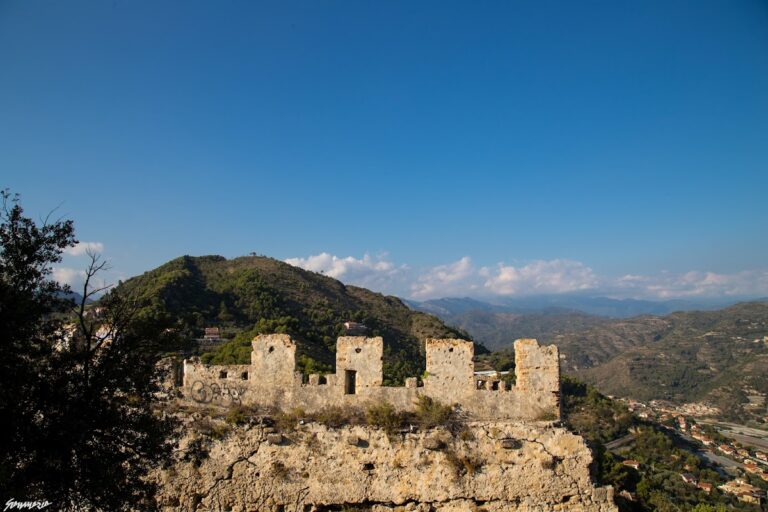
Fortezza dell’Annunziata is a nineteenth-century defensive fortification in Ventimiglia, Italy, built during the period of the Kingdom of Sardinia to protect the western Alpine borders and the coastal route toward northwestern Italy.
Genoese and Napoleonic Defenses
The fortress formed part of Ventimiglia’s historic defensive system, alongside Castel d’Appio and Fort San Paolo. These installations belonged to a landscape of military works established under the Republic of Genoa, a maritime republic whose territories included much of Liguria, and later developed during the Napoleonic period.
Construction After 1815
The redoubt was built during the first decades of the nineteenth century, after the Treaty of Paris of 1815. This settlement followed Napoleon Bonaparte’s defeat and reorganized European territories and military responsibilities after the Napoleonic Wars. Under its arrangements, the Austrian Empire required part of the indemnity imposed on France to be assigned to the Kingdom of Sardinia, the Savoy-ruled state that then included Piedmont and Liguria, for the fortification of the western Alpine borders.
The opening of the new coastal road to France, now known as Via Aurelia, added to the military importance of Ventimiglia. The town controlled a route toward northwestern Italy and the Po Valley, encouraging the construction of a fortified citadel in the area.
From Convent to Fortification
The site had originally been the Convent of the Annunziata, belonging to the Order of Friars Minor, commonly known as the Franciscans. In 1831, Colonel Malaussena and Lieutenant Colonel Podestà were assigned to plan its conversion into a casemated blocking fortification. A casemated fortification contains protected chambers intended for troops, storage, or artillery. The eighteen-year-old Camillo Benso, Count of Cavour, also took part in the studies. He later became a leading statesman and prime minister of the Kingdom of Sardinia and played a major role in Italian unification.
The new fortress was incorporated into a substantial defensive enceinte, or enclosing fortified wall, and connected by underground passages to Fort San Paolo, whose origins dated to the thirteenth century.
Disarmament and Later Use
A royal decree issued in July 1883 ordered the end of Ventimiglia’s status as a fortified place. In 1884, the Ridotta dell’Annunziata was disarmed and converted into an infantry barracks, later known as Caserma Umberto I. Fort San Paolo was completely dismantled at the same time.
After a period of abandonment, the military estate transferred the fortress to the Municipality of Ventimiglia after the Second World War. The municipality later transferred ownership to the Autonomous Board of Stays and Tourism. The property is now identified as belonging to the Region of Liguria, formerly the tourism board. Since 1990, the raised ground floor has housed the Girolamo Rossi Civic Archaeological Museum.
Remains
Fortress and Defensive Network
Fortezza dell’Annunziata survives as a fortress or redoubt adapted from the former convent into a casemated military work. Its protected internal chambers were designed as part of a blocking position, while the structure itself was integrated into a substantial curtain wall, the continuous fortified wall enclosing a defensive area.
Underground passages linked the fortress with Fort San Paolo, creating a connection between the nineteenth-century redoubt and the older defensive installation. This physical relationship reflects the incorporation of the new work into Ventimiglia’s wider defensive enceinte.
Civic Archaeological Museum
The raised ground floor now contains the Girolamo Rossi Civic Archaeological Museum, which has occupied the space since 1990. The museum’s presence represents the building’s later civic use after its military function and subsequent period of abandonment.