Enisala Fortress: A Medieval Stronghold in Romania


Site at a Glance
- Rating
- 4.5
- Popularity
- Medium
- Country
- Romania
- Primary era
- Medieval
- External website
- Open
- Eras represented
- Classical, Medieval
- Civilizations
- Byzantine, Genoese, Roman
- Site type
- Military
- Remains
- Fort
On this page7 sections
History
Enisala Fortress is a medieval ruin in Romania, whose first fortification was built by the Byzantines, the medieval rulers of the eastern Roman Empire, on a limestone escarpment near the Black Sea. The fortress developed through successive phases of Byzantine, Genoese, Wallachian, and Ottoman control.
Byzantine and Genoese foundations
The earliest fortification on the escarpment dates to the Middle Ages and was established by the Byzantines. In the thirteenth or fourteenth century, the Genoese, merchants and maritime colonists from the Italian city-state of Genoa, expanded the site into a stronger fortress. Their fortified trading presence around the Black Sea shaped the next major phase of Enisala’s development.
Wallachian and Ottoman control
During the reign of Mircea the Elder, a Wallachian ruler, Enisala came under the control of Wallachia, the medieval principality corresponding broadly to present-day southern Romania. Ottoman forces captured the fortress in 1416 or 1417, during the period when the expanding Ottoman Empire was taking control of Dobruja and the lower Danube region.
Loss of strategic importance
After the Ottoman frontier moved beyond the Danube Delta, silting separated the bay below the fortress from the Black Sea. The enclosed waters formed Lake Razim, changing the landscape around Enisala. As a result, the fortress lost its strategic importance and was abandoned.
Remains
Fortress structure
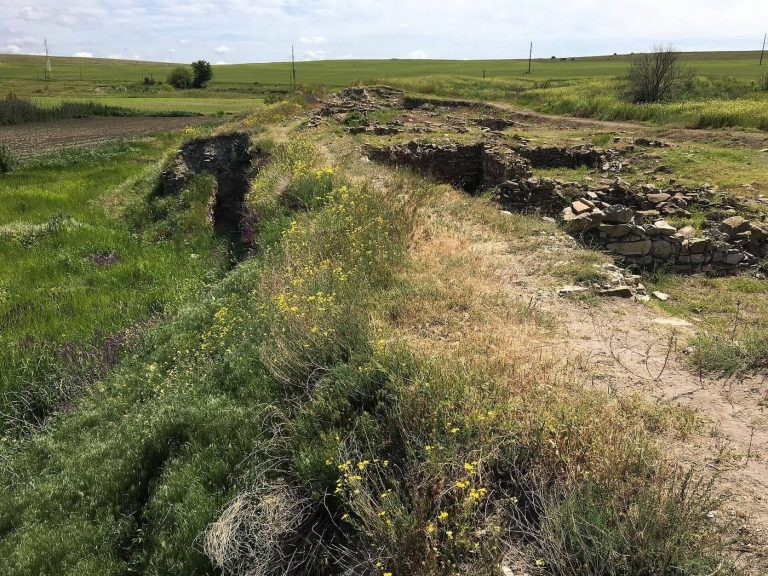
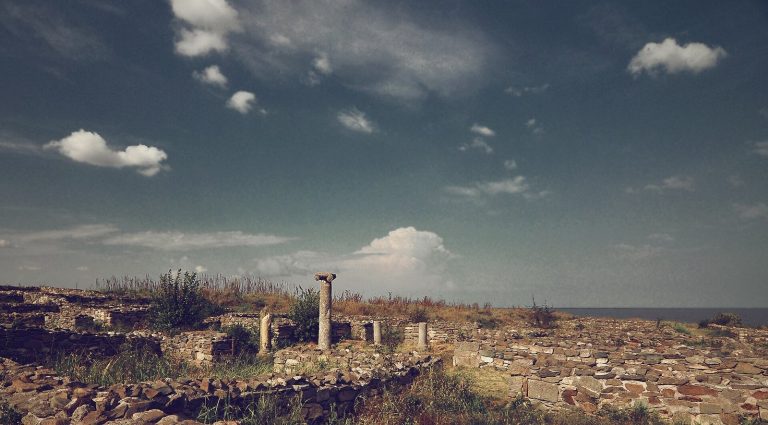
The ruin stands on a limestone escarpment above a bay, overlooking the largely flat coastal landscape. The Genoese fortress followed an irregular plan. Its walls were approximately 3 metres thick and 6 to 7 metres high, forming a substantial defensive enclosure on the elevated site.
Two rectangular towers occupied the northeastern side, while the western wall projected outward. These elements survive as part of the fortress ruin, which preserves the outline and defensive character of the medieval construction.
Archaeological remains at the hill
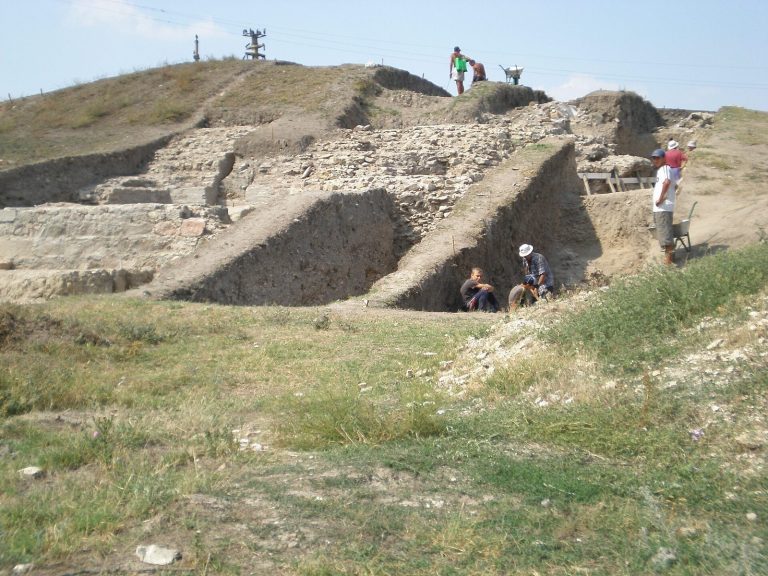
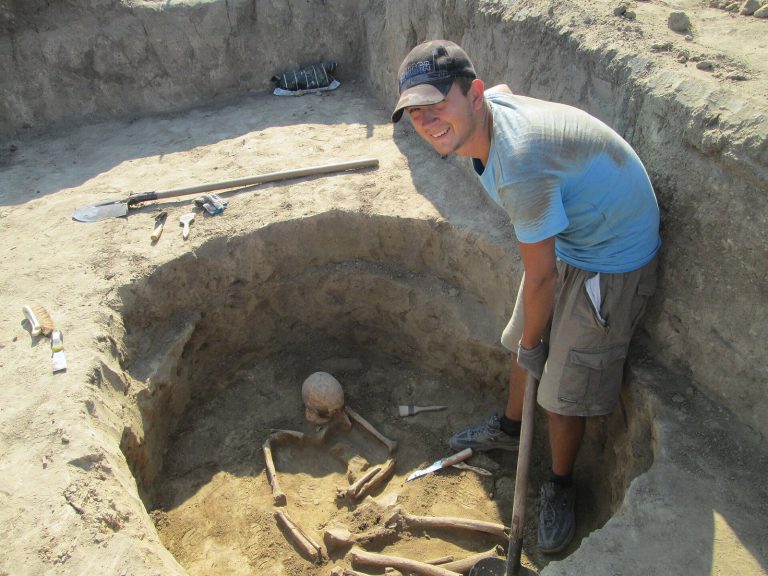
At the foot of the hill, archaeological remains include a Roman camp dating to the fourth century. A large necropolis, or cemetery containing multiple graves, from the fourth century BC was also discovered there, together with a large medieval necropolis dating to the fifteenth century. These remains place the fortress within a landscape used for settlement and burial across several historical periods.