Kozan Castle: A Medieval Armenian Fortress in Türkiye


Site at a Glance
- Rating
- 4.5
- Popularity
- Medium
- Country
- Turkey
- Primary era
- Medieval
- Eras represented
- Medieval
- Civilizations
- Byzantine, Kingdom of Cilicia, Mamluk
- Site type
- Military
- Remains
- Castle
On this page11 sections
History
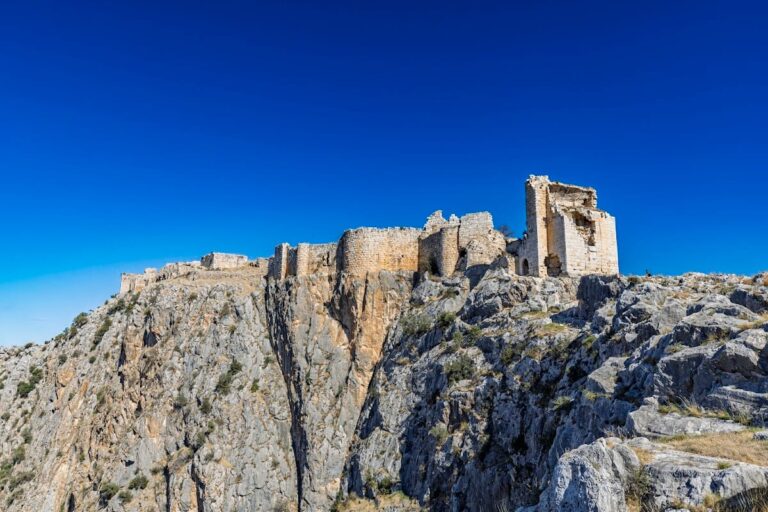
Kozan Castle is a medieval fortress in Türkiye, at Kozan, whose surviving fabric belongs chiefly to the period of the Armenian Kingdom of Cilicia. The site became the stronghold of Sis, the kingdom’s capital from the late twelfth century until the Mamluk conquest in 1375.
Byzantine and Abbasid Frontier
An Arab attack on Sis was repelled in 705. The Christian population later abandoned the settlement, after which Sis became a fortified frontier post of the Abbasid Caliphate, an Islamic empire that ruled much of the Middle East and maintained strongholds in Anatolia.
In 962, a Byzantine army led by the emperor and commander Nikephoros II Phokas recaptured Sis. The Byzantine Empire was the medieval eastern Roman state, and its forces controlled parts of Anatolia before the Armenian takeover. The site’s history then becomes unclear until Toros I, ruler of Cilician Armenia, captured Sis in 1113.
Capital of Cilician Armenia
After its incorporation into Cilician Armenia, a medieval Armenian kingdom in southeastern Anatolia and the northeastern Mediterranean, Sis grew into a royal center. The kingdom’s capital moved from Anavarza to Sis sometime between 1180 and 1190, and the castle became the principal fortified stronghold of the capital.
Nearly all of the castle’s surviving structure belongs to Armenian rule. A simpler gateway behind the Armenian main entrance may preserve the earlier Byzantine entrance, while the vaulted entrance corridor may have been added under Mamluk control.
Mamluk Conquest and Ottoman Use
The Mamluks, a military sultanate based in Egypt and Syria, besieged and captured Sis in 1375, ending the Armenian kingdom’s control of the capital. The royal palace below the castle was destroyed during the conquest. In the Ottoman period, Kozan Castle served as a military base. It now survives as a ruined historic fortress.
Remains
Fortifications and Interior
Outer Rampart
Kozan Castle occupies a hill approximately 400 metres high, immediately north of Kozan, which lies at about 130 metres above sea level. The fortress extends across two sections enclosed by a single outer rampart. This wall is about 400 metres long and includes 44 bastions, projecting defensive structures that allowed defenders to observe and fire along the walls.
The outer section contains a broad courtyard protected by walls and towers. The enclosing construction uses stone quarried from the surrounding mountains and a high-quality mortar intended to improve the durability of the structures.
Inner Castle
The inner castle occupies the southern section of the fortress. Its surviving spaces include vaulted utility rooms used for storage, together with wells, cisterns, dungeons, and kitchens. The entrance corridor has a vaulted form and carries an Arabic inscription. It may represent a Mamluk-period addition. Behind it, the simpler gateway at the rear of the Armenian main entrance may preserve the Byzantine approach to the castle.
Chapels and Royal Palace
Armenian Chapels
Two heavily ruined Armenian chapels probably date from the thirteenth century. One stands on the central spur of the castle. The other is set inside a semicircular tower in the eastern wall of the southeastern bailey, the fortified outer courtyard.
Royal Palace Towers
The royal palace was a separate fortified complex immediately below the castle. Its principal fortified tower, or donjon, was destroyed during the Mamluk capture of Sis, but two of its corner towers remain standing. Nearby Anavarza Castle and Yılankale are visible from Kozan Castle’s hill.