Ardgillan Castle: A Georgian and Gothic Revival Country House in Ireland


Site at a Glance
- Rating
- 4.7
- Popularity
- Medium
- Country
- Ireland
- Primary era
- Early Modern
- External website
- Open
- Eras represented
- Early Modern, Modern
- Civilizations
- British, Irish
- Site type
- Domestic
- Remains
- Castle
On this page7 sections
History
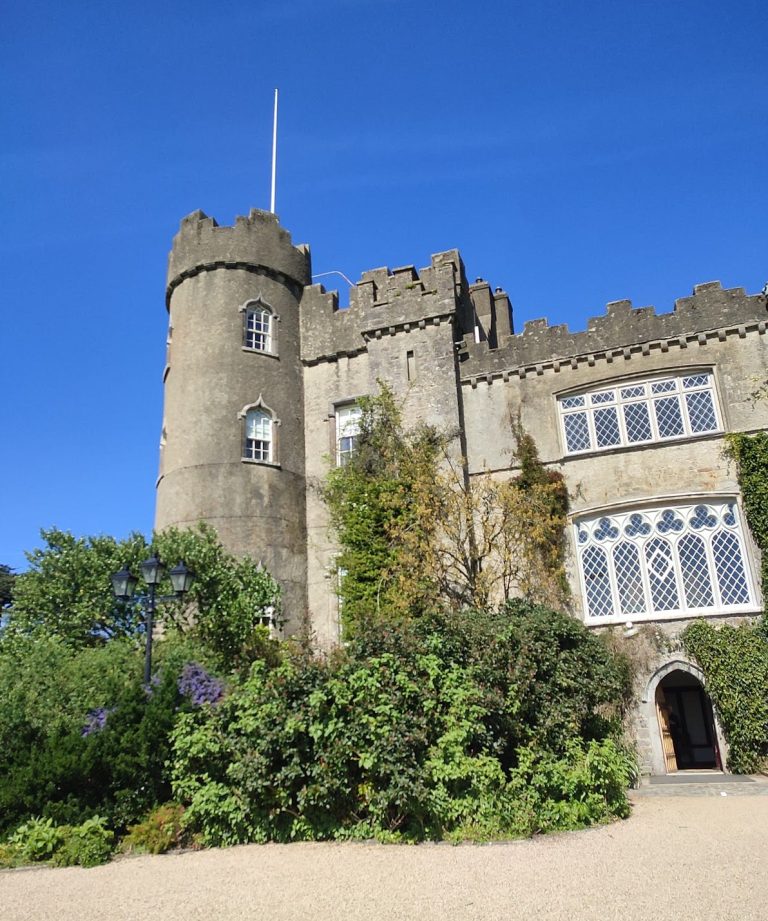
Ardgillan Castle is a country house near Balbriggan in County Dublin, Ireland, built in 1738 in the Georgian style and later given Gothic Revival and castellated embellishments. It stands within Ardgillan Demesne, an estate of about 200 acres, or approximately 81 hectares, whose woodland, gardens, and working grounds formed the setting for the house.
Origins and Taylor ownership
The land had previously belonged to Robert Usher, a wine merchant from Tallaght. When the Reverend Robert Taylor acquired it, the area was heavily wooded. Taylor employed former soldiers from Bangor in County Down to clear the grounds, paying each man one penny and supplying a meal, a bed, and a daily tot of Irish whiskey from Bushmills. He built the house in 1738. Taylor was the son of Sir Thomas Taylor, 1st Baronet.
During the nineteenth century, the property passed to Thomas Edward Taylor, the son of Reverend Edward Taylor and grandson of Thomas Taylour, 1st Earl of Bective. The Taylor family continued to hold the estate until 1962, when it was sold to Henrich Potts of Westphalia.
Nineteenth-century alterations
Renovations during the 1850s included work on the farm offices. George Papworth undertook part of this work, while Frederick Darley was involved in the design of new stable blocks. These changes expanded the estate’s working buildings alongside the country house.
Public ownership and restoration
Fingal County Council acquired the estate in 1982 and renovated the house with assistance from FÁS, Ireland’s national training and employment authority at that time. President Mary Robinson officially opened the restored property to the public in 1992. The house now operates as a public historic property, with its former first-floor bedrooms used for classes and exhibitions. A permanent exhibition presents colour maps and explanatory text from the Down Survey, the seventeenth-century survey created after the Cromwellian conquest to record landownership and territorial boundaries in Ireland.
The Dublin–Belfast railway line passes through the demesne. In 2005, a truck damaged the Lady’s Stairs bridge, which links the demesne with the coast across the R127 road. The bridge was renovated and reopened in 2007. Local stories connect it with the ghost of a woman whose husband drowned while swimming. A more widely accepted version names the ghost as Lady Langford, who was reportedly drowned while swimming in November as her husband, Lord Langford of Summerhill House in County Meath, was hunting in Scotland. Lord Langford died shortly afterward. These accounts remain folklore rather than documented history.
Remains
House and estate grounds
Ardgillan Castle is a surviving country house, 30 metres high, overlooking Barnageera Beach, the Irish Sea, and Balbriggan. Its Georgian design was later altered with Gothic Revival features and castellated embellishments, decorative details intended to evoke a fortified castle. The building has two storeys above a basement, which extends beneath the lawns on the south side.
The former internal arrangement reflected the household’s domestic and estate functions. The ground and first floors contained the living accommodation, while the west and east wings held servants’ quarters and estate offices. The basement contained the kitchen and stores. On the first floor, the former bedrooms now serve as exhibition and teaching rooms, including space for the permanent Down Survey display.
The demesne combines woodland and broad grass-covered areas with a walled herb garden, a rose garden, a Victorian glasshouse, tea rooms, and an ice house. The former gardener’s cottage housed the Paws at Ardgillan café from 2016 until its closure in 2019.
Lady’s Stairs bridge
The Lady’s Stairs is a bridge over the Dublin–Belfast railway line near the Irish Sea. Concrete stairs lead to the bridge, whose sides have high metal fencing with small openings. The railway line can also be viewed from the hilltop near the playground. After the bridge was damaged by a truck in 2005, renovation restored it for continued use in 2007.
Nearby sites