Jagdschloss Kranichstein: A Renaissance Hunting Lodge and Baroque Court Residence in Germany


Site at a Glance
- Rating
- 4.3
- Popularity
- Low
- Country
- Germany
- Primary era
- Early Modern
- External website
- Open
- Eras represented
- Early Modern
- Civilizations
- Holy Roman Empire
- Site type
- Domestic
- Remains
- Palace
On this page16 sections
History
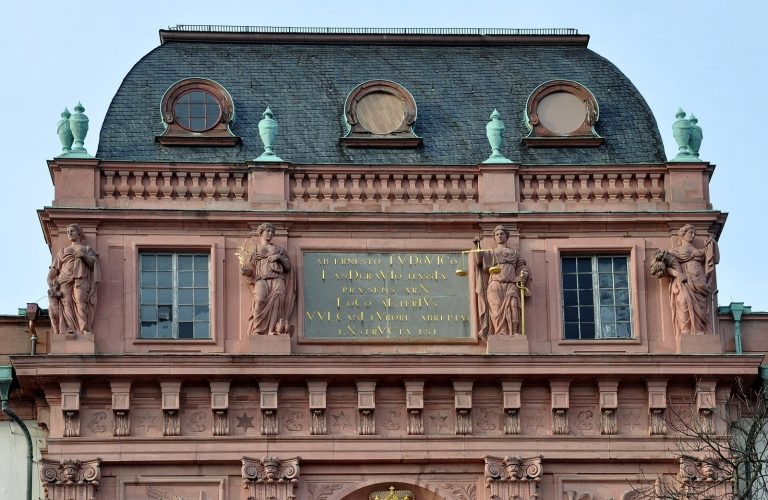
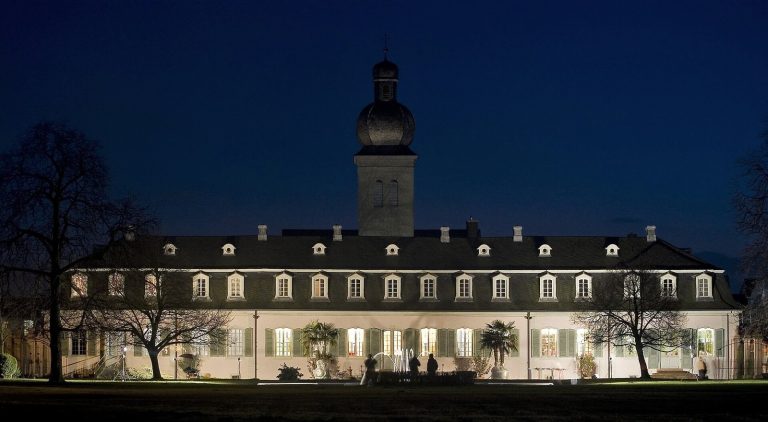
Jagdschloss Kranichstein is a former hunting lodge and summer residence in Darmstadt, Germany, built for the Landgraves of Hesse-Darmstadt between 1578 and 1580 in the Renaissance period. George I commissioned the conversion of an agricultural estate into a courtly hunting palace, with construction directed by the court master builder Jakob Kesselhuth. The complex later served the grand ducal family of Hesse and became a center for hunting, seasonal residence, and courtly display.
Landgravial hunting estate
For approximately 350 years, the landgraves and grand dukes used Kranichstein for hunting and as a summer residence. During the reigns of Ernest Louis and Louis VIII, the estate hosted hunting festivals that included parforce hunts, in which mounted participants pursued game over an extended chase with hounds following its scent, as well as organized hunting in prepared settings. These activities led to changes that gave the Renaissance complex the representative character of a Baroque hunting residence, reflecting contemporary ideals of elegance and luxury.
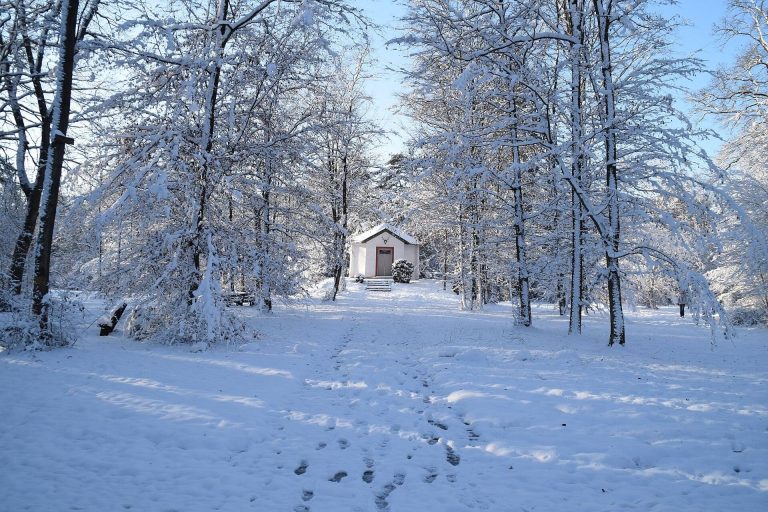
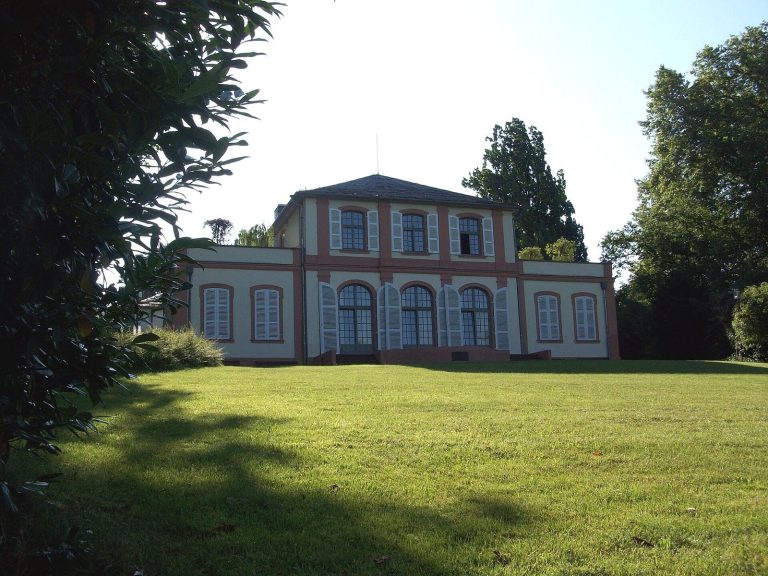
The surrounding forest was reshaped by clearings cut in a star-shaped pattern. In 1765, Louis VIII expanded the wider hunting estate by commissioning Dianaburg, a smaller Baroque hunting lodge about 2.5 kilometers north of Kranichstein. Hunting clearings extended north and east toward Dianaburg and Alexanderburg, linking the associated hunting grounds to the principal palace.
Residence and courtly use
From June 1863, the future Grand Duke Louis IV of Hesse and by Rhine and his wife Alice lived at Kranichstein while the New Palace was being completed. After 1866, they continued to use the complex as a summer residence until Alice’s death in 1878. Alice was a British princess and a daughter of Queen Victoria, who visited Kranichstein several times as a summer guest.
Museum and restoration
In 1917, Grand Duke Ernest Louis brought hunting weapons and related equipment from his palaces and hunting lodges to Kranichstein. Court Marshal Kuno Count von Hardenberg arranged the resulting hunting museum. From 1946, the estate was the first venue for the Darmstadt Summer Courses for Contemporary Music. The Stiftung Hessischer Jägerhof acquired the complex in 1952 and reopened the museum with a focus on the Baroque period.
Extensive renovation carried out from 1988 to 1996 by the State of Hesse, the City of Darmstadt, and the Stiftung Hessischer Jägerhof restored the lower floor to its original Renaissance appearance. Since the late twentieth century, the complex has also served as a hotel, restaurant, event venue, and wedding venue. In 2008, the associated hunting arsenal became home to bioversum, a natural-history and environmental-education museum concerned with biodiversity and invasive species. Jagdschloss Kranichstein is regarded as one of the few surviving Baroque hunting lodges in Germany. The wider estate, including the Kavaliersbau, hunting arsenal, hunting-equipment master’s house, Forsthaus Kranichstein, former estate farm, hunting screens, Dianaburg, and Alexanderburg, is identified as a group of Hessian cultural monuments.
Remains
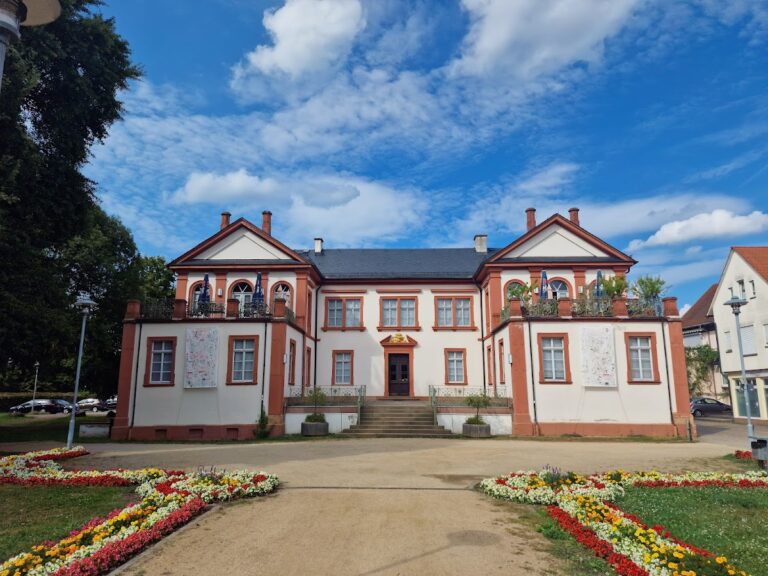
Jagdschloss Kranichstein survives as a three-winged Renaissance complex whose later alterations shaped its Baroque appearance. The palace stands within a larger estate of associated buildings, water features, forest clearings, and hunting structures. Together, these elements preserve the arrangement of a courtly hunting residence and its working surroundings.
Palace buildings and interiors
Eastern-wing Marstall
The Marstall occupies the ground floor of the eastern wing. Later installations were removed during the most recent renovation, and the space now functions as a hall for concerts and other events.
Palace chapel
The palace chapel was established under George I. Its interior includes a decorative stucco ceiling and two wooden galleries decorated with paintings.
Hunting museum
The lower floor of the hunting museum presents hunting from its beginnings through the Baroque period, with particular attention to courtly representation and eighteenth-century methods. Its weapons collection includes firearms, air guns, crossbows, stag-hunting knives, and boar spears. The displayed guns were made by the court gunsmiths Albrecht and Boßler.
The upper floor contains courtly reception rooms presented in Baroque form. Hunting trophies line the corridors, especially deer antlers mounted on wooden deer heads. Hunting paintings, tapestries, and hunting accessories accompany the displays. One wing of the palace contains Hotel Jagdschloss Kranichstein.
Associated estate buildings
Kavaliersbau
The Kavaliersbau stands directly beside the palace and contains a restaurant with a garden terrace.
Hunting arsenal and master’s house
South of the palace are the hunting arsenal and the associated hunting-equipment master’s house. The hunting arsenal is approximately 112 meters long and houses bioversum, whose exhibitions address natural history, biodiversity, and invasive species.
Former estate farm
West of the palace, the former estate farm now functions as an equestrian facility and a Hessian performance center.
Water features and hunting landscape
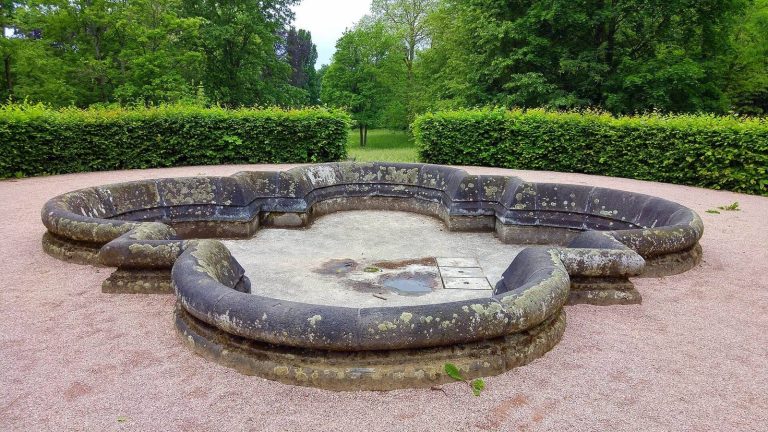
Backhausteich and waterways
The Backhausteich lies east of the former palace park along Zeughausallee. The Ruthsenbach connected the hunting estate with the Fasanerie and the Steinbrücker Teich.
Dianaburg and Alexanderburg
North and east of the palace, radial clearings and hunting screens shaped routes through the Oberwald toward the associated hunting buildings. Alexanderburg is identified as a former hunting house. Dianaburg, built in 1765, is the smaller Baroque hunting lodge situated approximately 2.5 kilometers north of the main palace.