Wolfsberg Castle Ruins: A Medieval Hill Castle in Germany



Site at a Glance
- Rating
- 4.6
- Popularity
- Low
- Country
- Germany
- Primary era
- Medieval
- External website
- Open
- Eras represented
- Medieval
- Civilizations
- Holy Roman Empire
- Site type
- Military
- Remains
- Castle
On this page9 sections
History
Wolfsberg Castle Ruins in Germany are the restored remains of a high-medieval aristocratic hill castle probably built around 1150 by the free nobles of Wolfsberg. The earliest recorded member of the family, Gozpold de Wolfesperch, appears in documents from 1169, and the line is thought to have descended from the free-noble family of Schönfeld-Gößweinstein.
From the Wolfsberg Lords to Bamberg Rule
When the lords of Wolfsberg died out around 1204, the castle passed to the lords of Stein, medieval service nobles who held administrative, military, or court positions for powerful rulers. They served the Bishops of Bamberg, and from 1244 they used the castle’s name. Around 1333, the stronghold was sold to the lords of Egloffstein. Siboto von Egloffstein is recorded as its owner in 1358.
From 1383, Wolfsberg formed part of the Bishopric of Bamberg, the ecclesiastical principality ruled by the Bishops of Bamberg, who also exercised territorial authority. The castle became the seat of an episcopal administrative office and was repeatedly pledged between the fifteenth and seventeenth centuries.
Destruction and Rebuilding
The South German War of the Cities, a late-medieval conflict in southern Germany, brought the first major destruction in 1388. Wolfsberg was rebuilt in 1408 under Albrecht von Egloffstein, an episcopal official. The Peasants’ War, a large-scale uprising in the German lands in 1525, caused another destruction. Reconstruction began again in 1547 under Philipp von Egloffstein.
Wilhelm von Wiesenthau became the castle’s last pledge-holder in 1568. During his tenure the buildings were seriously neglected. When Wolfsberg returned to the Bishopric of Bamberg in 1609, it was uninhabited and dilapidated. The Thirty Years’ War, the European conflict of 1618 to 1648, caused further damage. Swedish forces destroyed parts of the castle in 1631 and 1632, while Tilly’s cavalry and Electoral Bavarian troops caused additional destruction in 1633.
Demolition and the Present Ruin
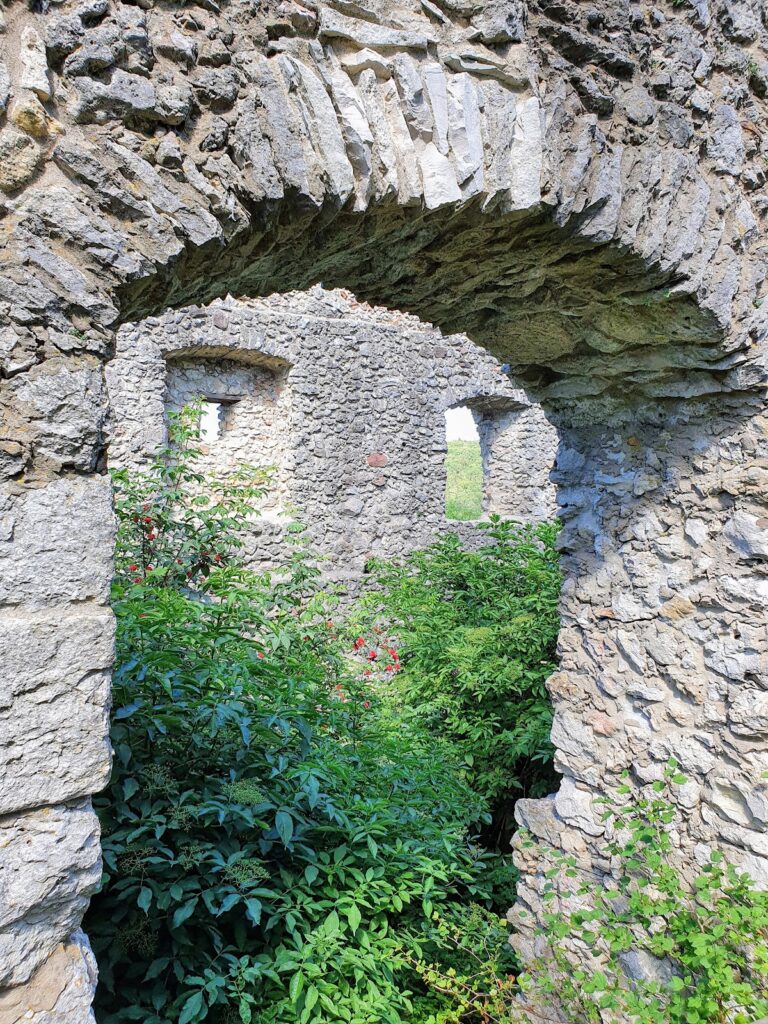
The Bavarian state took possession of the castle in 1803 and left it empty. In 1823, the property was sold for 50 guilders to the stonemason Müller of Brunn. Müller later transferred it to his son-in-law, who demolished the castle and sold its building materials piece by piece. The surviving remains now form a restored ruin, preserving the outline and physical setting of the former stronghold.
Remains
Hill-Spur Setting and Construction
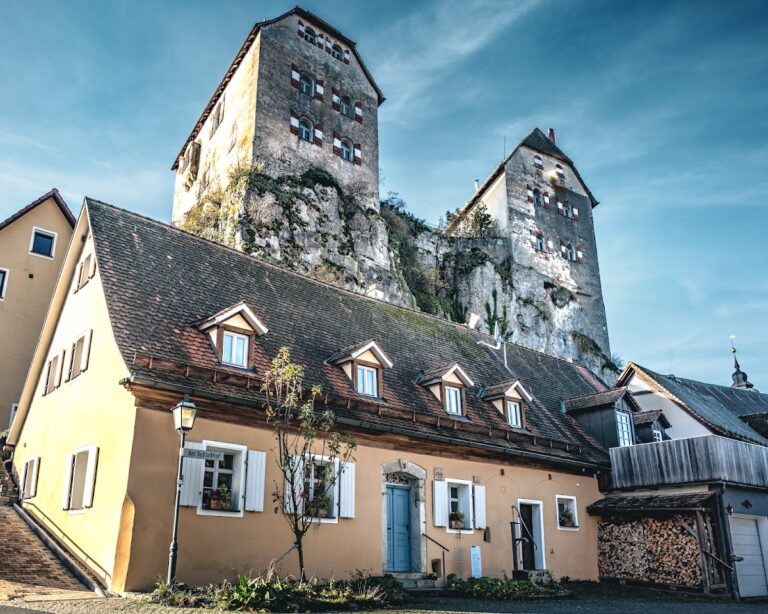
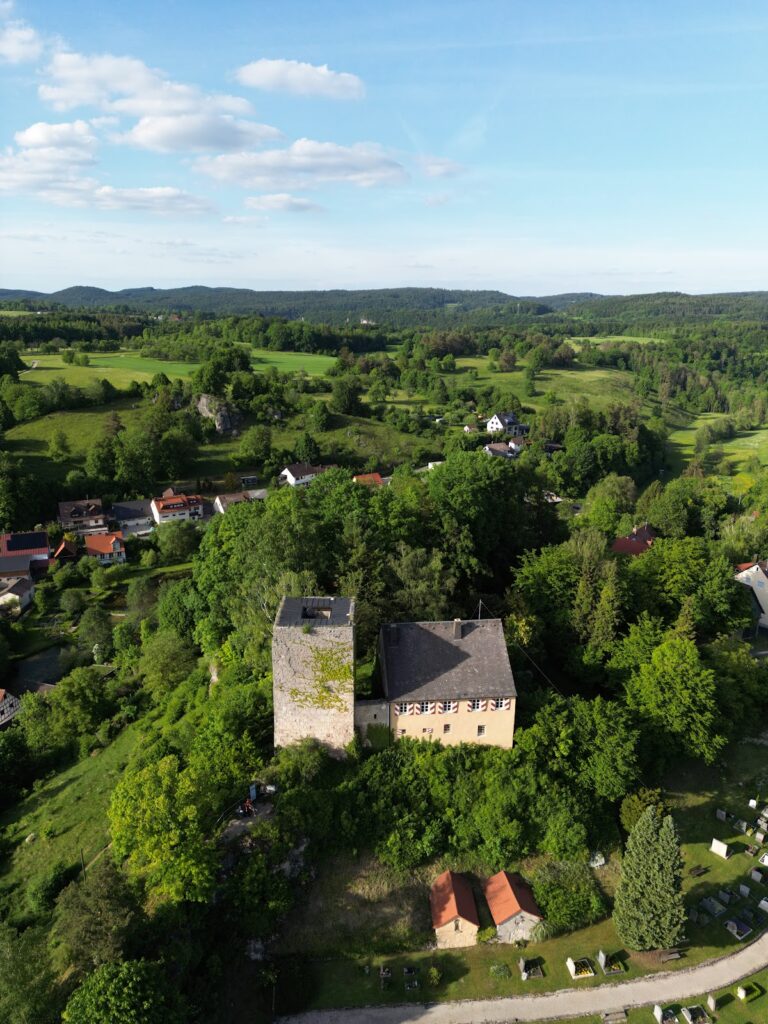
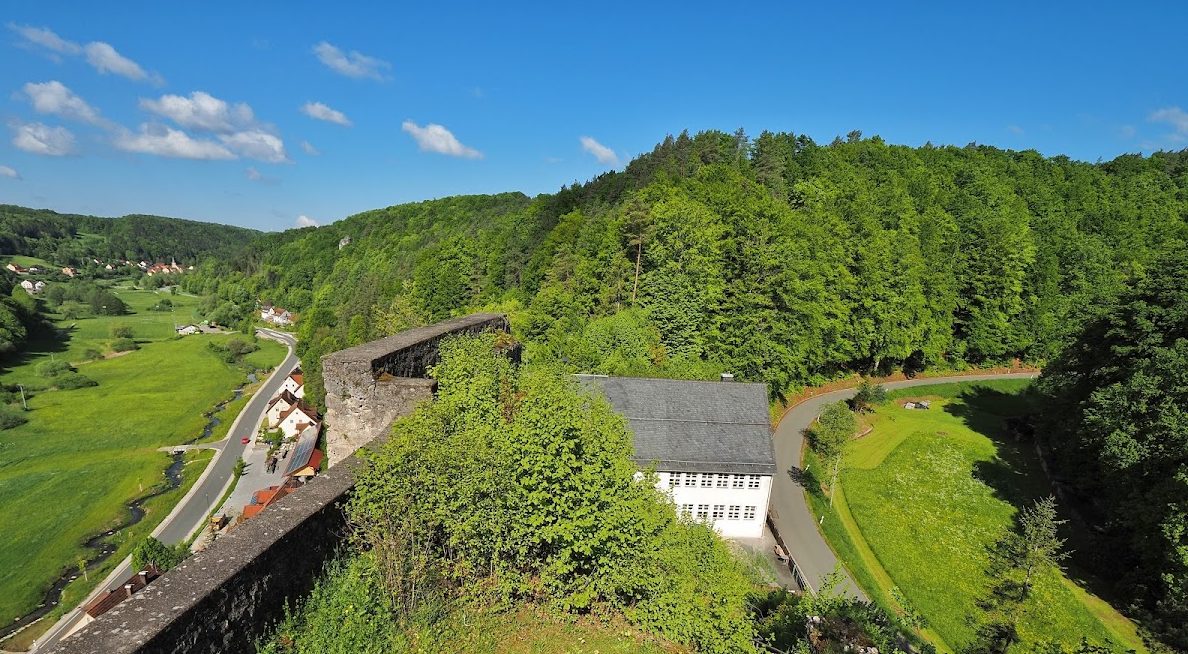
The castle stands at about 436 metres above sea level on an eastward-projecting spur above the Trubach valley and the village of Wolfsberg. A natural saddle separates the spur from the western plateau. The Trubach valley borders it to the south, while a dry valley follows the northern side of the spur before opening into the Trubach valley. The castle was constructed with rubble-stone masonry and occupied the elevated spur as a compact fortified complex.
Surviving Castle Areas
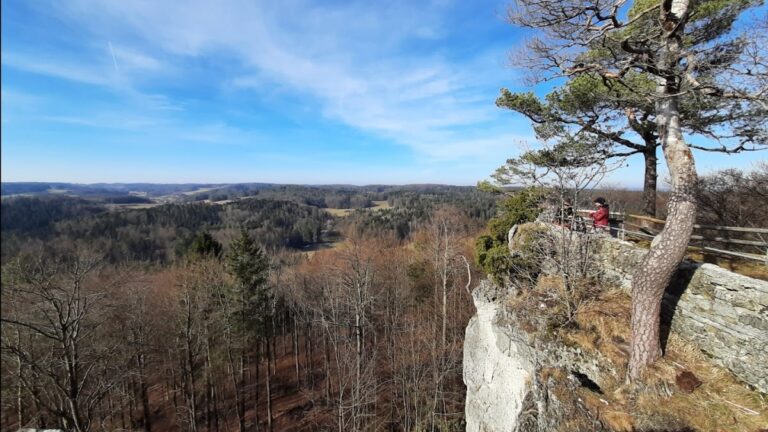
Upper Bailey
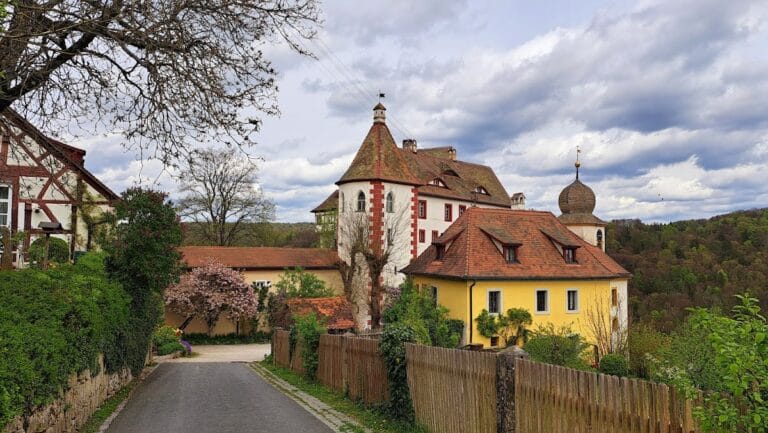
The surviving complex includes an upper bailey, or upper fortified courtyard, which is freely accessible and serves as a viewing point. From the ruins, Egloffstein Castle can be seen downstream in the Trubach valley. In the opposite direction lie a castle site at Obertrubach and the ruins of Bärnfels and Leienfels castles, while Hiltpoltstein Castle is situated to the south.
Lower Bailey
The lower bailey forms the second principal part of the surviving complex. It is partly privately owned and inaccessible, while remaining within the castle’s historic arrangement on the hill spur. Wolfsberg Castle is also situated within the Franconian Switzerland–Veldenstein Forest Nature Park.
Nearby sites