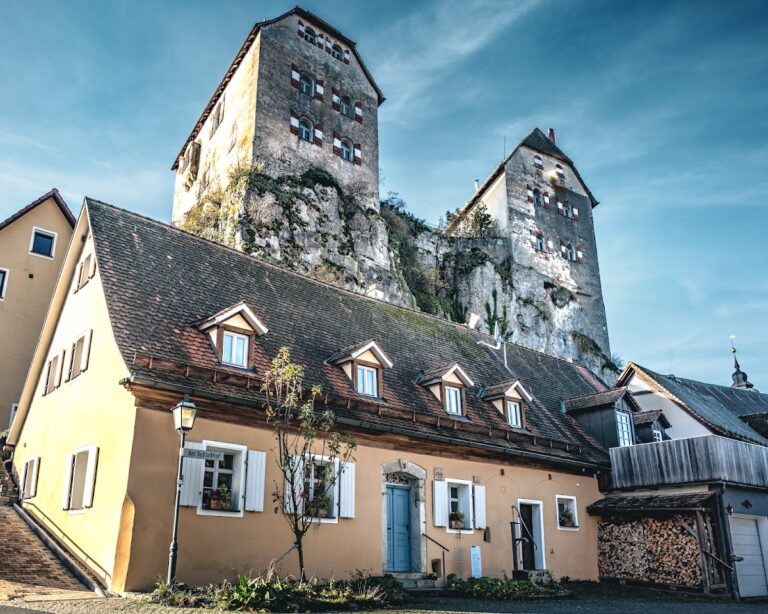
Leienfels Castle Ruins: A Late-Medieval Hill Castle in Germany


Site at a Glance
- Rating
- 4.6
- Popularity
- Low
- Country
- Germany
- Primary era
- Medieval
- External website
- Open
- Eras represented
- Medieval
- Civilizations
- Holy Roman Empire
- Site type
- Military
- Remains
- Castle
On this page9 sections
History
Leienfels Castle Ruins are the remains of a late-medieval aristocratic hill castle in Leienfels, Germany, probably built around 1300 or in the early fourteenth century. The castle occupied a spur of the Leienfelser Schlossberg and was constructed for the Egloffstein family. Its name probably derives from Löwenfels, meaning “Lion Rock.”
Foundation and Egloffstein ownership
Construction is attributed to Seibot I of Egloffstein, who is known from records dating between 1285 and 1332. The castle’s occupants belonged to the ministeriales, medieval service nobles who held office and status through service to a higher lord rather than through membership in the fully free high nobility.
Leienfels was first mentioned in 1372. Following a feud, Götz of Egloffstein placed his share of the castle, which had probably previously been held as private property, under the authority of the Bishop of Bamberg. The bishop was an ecclesiastical prince who governed the Prince-Bishopric of Bamberg, a major territorial power in the medieval and early-modern Holy Roman Empire.
Capture and destruction in the fourteenth century
In 1380, forces belonging to the Bishop of Bamberg and Burgrave Frederick V of Nuremberg captured Leienfels. A burgrave was a medieval territorial and military official. Götz of Egloffstein was taken prisoner and confined in Nuremberg, while his successors continued to become involved in feuds.
Wenceslaus, King of Bohemia and the elected King of the Romans, ordered the castle’s destruction in 1397. The surviving complex therefore reflects later rebuilding as well as its original fourteenth-century construction.
Episcopal administration and wartime damage
Jobst I of Egloffstein sold Leienfels to the Bishop of Bamberg in 1502. The castle then became the seat of a small episcopal administrative office. In 1525, during the Peasants’ War, a widespread revolt that affected much of the German-speaking lands, the castle suffered severe damage. Its garrison, commanded by Otto of Mengersdorf, prevented the rebels from capturing it, and the complex was restored immediately afterward.
Leienfels was seriously damaged again in 1553 during the Second Margrave War, a conflict in the Holy Roman Empire fought from 1552 to 1554. Reconstruction proceeded more slowly than after the destruction of 1525. In 1594, Leienfels was incorporated into the episcopal administrative office of Pottenstein. An episcopal administrative office was a territorial district governed on behalf of the prince-bishop.
Abandonment and later protection
By 1610, the castle complex was considered uninhabitable. During the Thirty Years’ War, the major European conflict of 1618 to 1648, repairs were judged no longer worthwhile in 1643. Bricks were removed from the surviving buildings in 1646, after which the complex was left to decay.
Today the Bavarian State Office for Monument Protection lists Leienfels as both an architectural monument and an archaeological ground monument. These designations cover the former castle complex, its surviving walls and buildings, and archaeological evidence from the medieval and early-modern periods.
Remains
Layout and construction
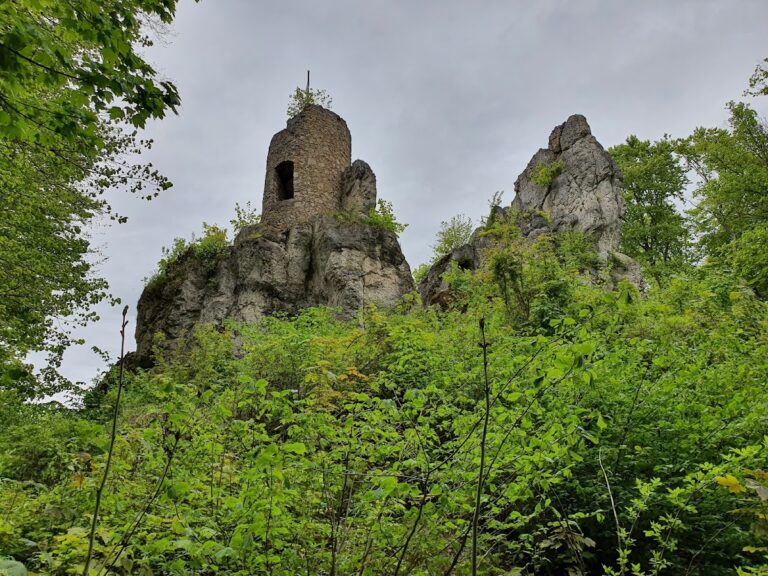
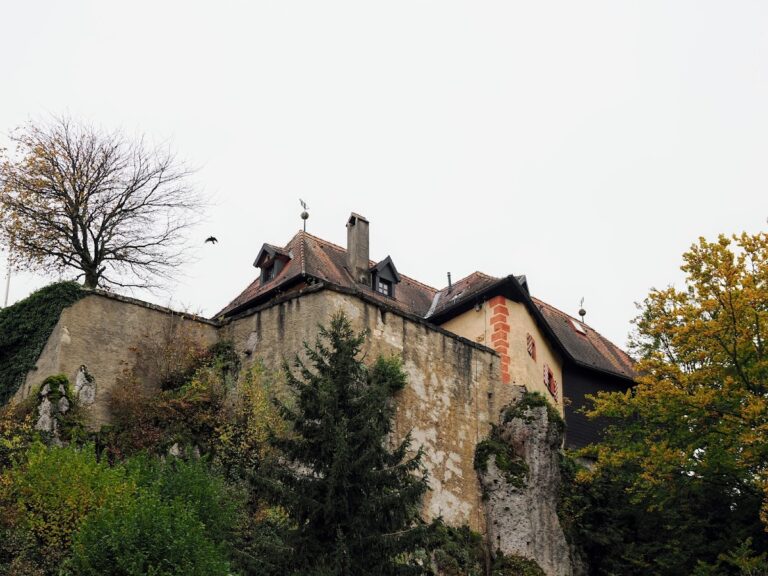
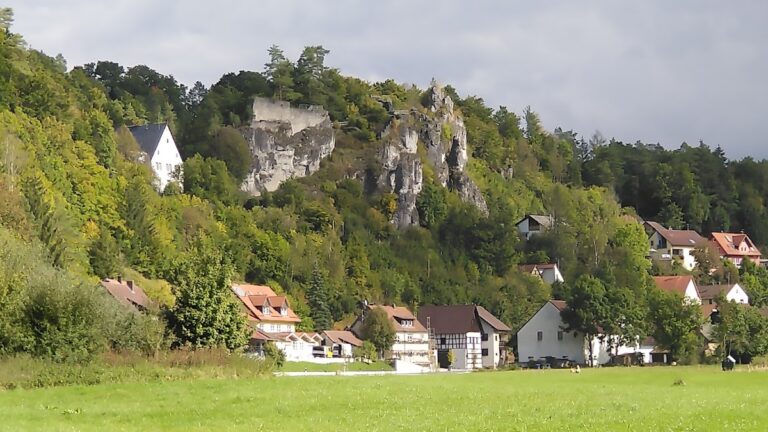
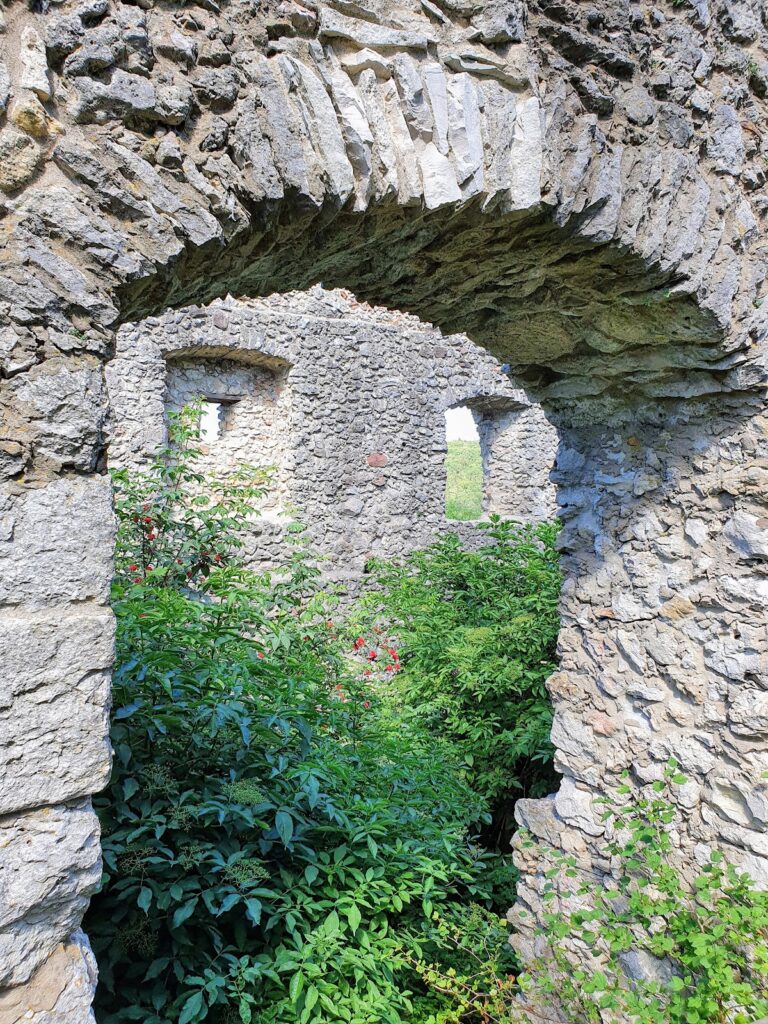
The ruins stand on the 590-metre-high Leienfelser Schlossberg immediately northwest of the village of Leienfels, within the Franconian Switzerland–Veldenstein Forest Nature Park. The castle occupied a spur and had an almost triangular plan. Its structures were built from rubble stone, and the surviving complex is presented as a restored ruin.
Inner bailey and enclosing walls
The inner bailey retains an entranceway flanked by a round tower. Parts of the enclosing wall also survive, together with the remains of the main building and its corner tower. The core of these structures dates from the fourteenth century, preserving the principal defensive and residential elements of the castle.
Outer bailey and surrounding castle landscape
A wall from the former outer bailey also survives and dates to the fourteenth century. Leienfels stands about 4.6 kilometres northwest of the church at Betzenstein. Other castle ruins or archaeological castle sites are associated with the surrounding landscape: Bärnfels lies to the west, Leuenstein was located to the north on the Bleistein near Graisch, Leupoldstein lies to the southeast, and further former castles occupied the Trubach valley to the southwest.
Nearby sites