Petrovaradin Castle: A Baroque Bastion Fortress in Serbia
Site at a Glance
- Rating
- 4.8
- Popularity
- High
- Country
- Serbia
- Primary era
- Early Modern
- Eras represented
- Stone Age, Bronze Age, Medieval, Early Modern
- Civilizations
- Habsburg, Hungarian
- Site type
- Military
- Remains
- Fort
On this page13 sections
History
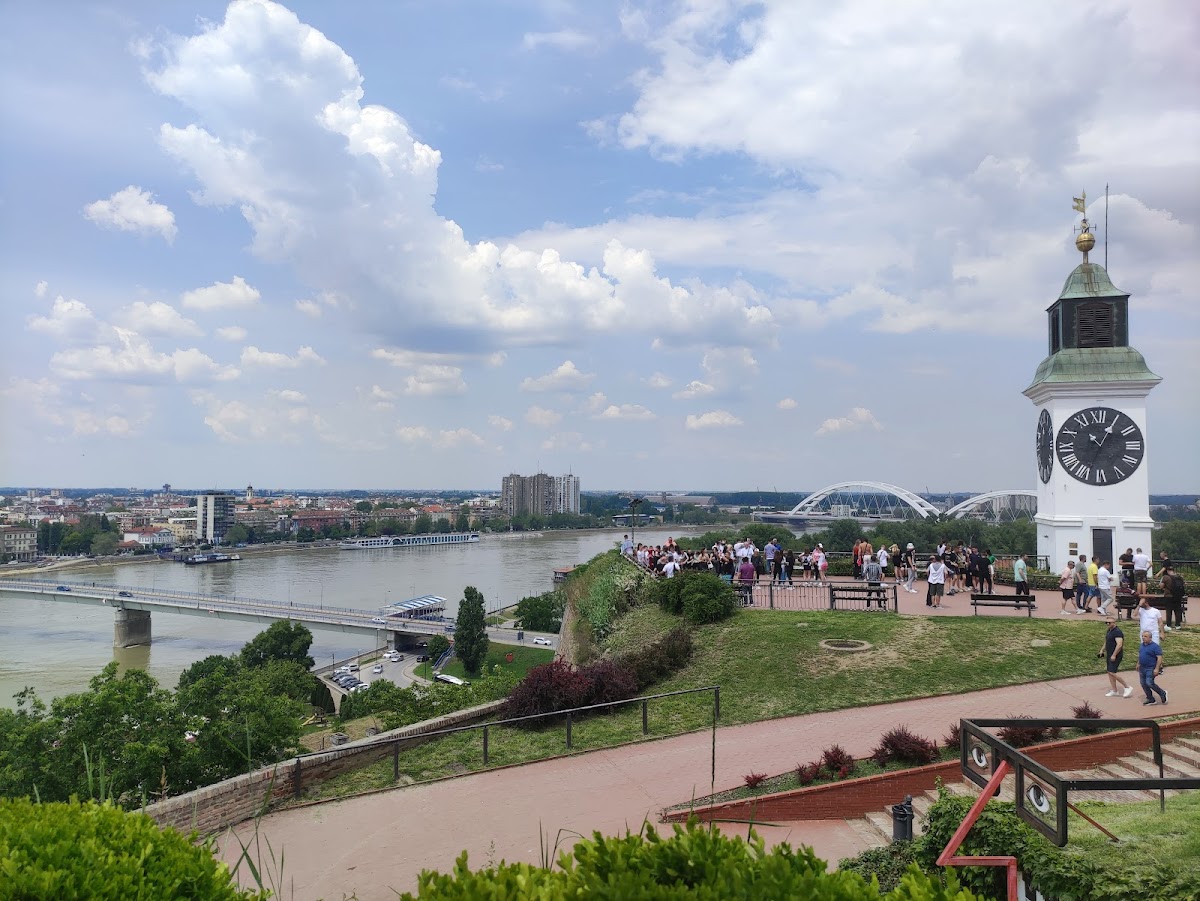
Petrovaradin Castle is a Baroque bastion fortress in Serbia, built and expanded by successive Roman, medieval, Ottoman, and Austrian powers on the right bank of the Danube overlooking Novi Sad. Human settlement at the site extends from the Paleolithic period to the present, while the present fortress emerged from Austrian construction begun in 1692 and was recorded as completed in 1780.
Prehistoric and Roman foundations
Archaeological evidence places human activity at Petrovaradin in the Paleolithic period. A settlement in the upper fortress dates to approximately 19,000–15,000 BC. Excavations in 2005 also revealed Early Bronze Age remains from around 3000 BC, including ramparts that belonged to a fortified settlement.
The first major fortifications were built by the Romans during the 1st century BC. Their fortress, known as Cusum, formed part of the fortified Danube frontier, or limes, a zone of roads, forts, walls, and military installations defending the boundaries of the Roman Empire.
Medieval and Ottoman phases
In 1235, King Béla IV of Hungary brought French Cistercian monks to Petrovaradin. The Cistercians were a Catholic monastic order rooted in the Benedictine tradition and known for a disciplined, comparatively austere form of monastic life. They established the Bélakút monastery over the remains of Cusum. Its walls, built between 1247 and 1252, formed the site’s medieval defenses.
The medieval fortress was later strengthened as Ottoman pressure increased. After a two-week siege, it fell in 1526 and remained under Ottoman control for approximately 150 years. The Austrian army captured Petrovaradin in 1687 during the Great Turkish War, ending that period of Ottoman rule. The older fortress was then demolished, and the Austrians began constructing a new defensive complex according to contemporary military standards.
Austrian reconstruction and major battles
In 1692, the Austrian War Council sent engineers to survey Petrovaradin for a new fortress. Count Mathias Keyserfeld prepared the initial plans, with financial and personnel support provided to Count Keysersfeld. Count Luigi Ferdinando Marsigli later revised the plans, while Colonel Michael Wamberg directed the fieldwork until his death in 1703. Charles Eugène de Croÿ, a European military commander and prince, laid the cornerstone of the present southern section on 18 October 1692.
The new fortress was tested soon afterward. Ottoman forces led by Grand Vizier Sürmeli Ali Pasha besieged it for 23 days from 9 September 1694. They withdrew toward Belgrade in October because of poor weather. The Austrian victory under Prince Eugene of Savoy at Senta on 11 September 1697 helped create the conditions for the Peace of Karlowitz in 1699. Prince Eugene, an Austrian imperial commander, later commanded the Austrian army at Petrovaradin during the decisive battle of 1716.
The Battle of Petrovaradin took place on 5 August 1716 during a renewed war between Austria and the Ottoman Empire. Prince Eugene commanded approximately 76,000 Austrian troops against an Ottoman army of about 150,000 led by Grand Vizier Silahdar Damat Ali Pasha. The Austrian victory ended the Ottoman threat to Central Europe.
Further fortification plans were prepared in 1751, and major construction continued from 1753 to 1776. The fortress is recorded as completed in 1780. A four-level countermine system, consisting of underground passages intended to detect, obstruct, or destroy enemy mines beneath the defenses, was also completed in 1776 after a proposal by Major Albrecht Heinrich Schroeder. The Austrian High Military Council approved his plan in March 1764, and construction began several years later.
Revolution, military decline, and preservation
Petrovaradin performed its final major military role during the Hungarian Revolution of 1848–49, an uprising against Austrian rule. Austrian troops attempted to force the fortress to surrender through a blockade. On 12 June, the fortress shelled Novi Sad, destroying two-thirds of the city.
After the revolution, Petrovaradin served as military barracks and a storage facility. Following the First World War, it became part of the Kingdom of Serbs, Croats and Slovenes, later known as Yugoslavia. Several other 17th-century fortresses in the region were demolished after losing their military purpose, but Colonel Dragos Djelosevic spared Petrovaradin because he considered it exceptionally beautiful.
Petrovaradin Fortress was designated an immovable cultural heritage site of great importance in 1948. In 1991, it was added to Serbia’s register of spatial cultural-historical units of great importance.
Remains
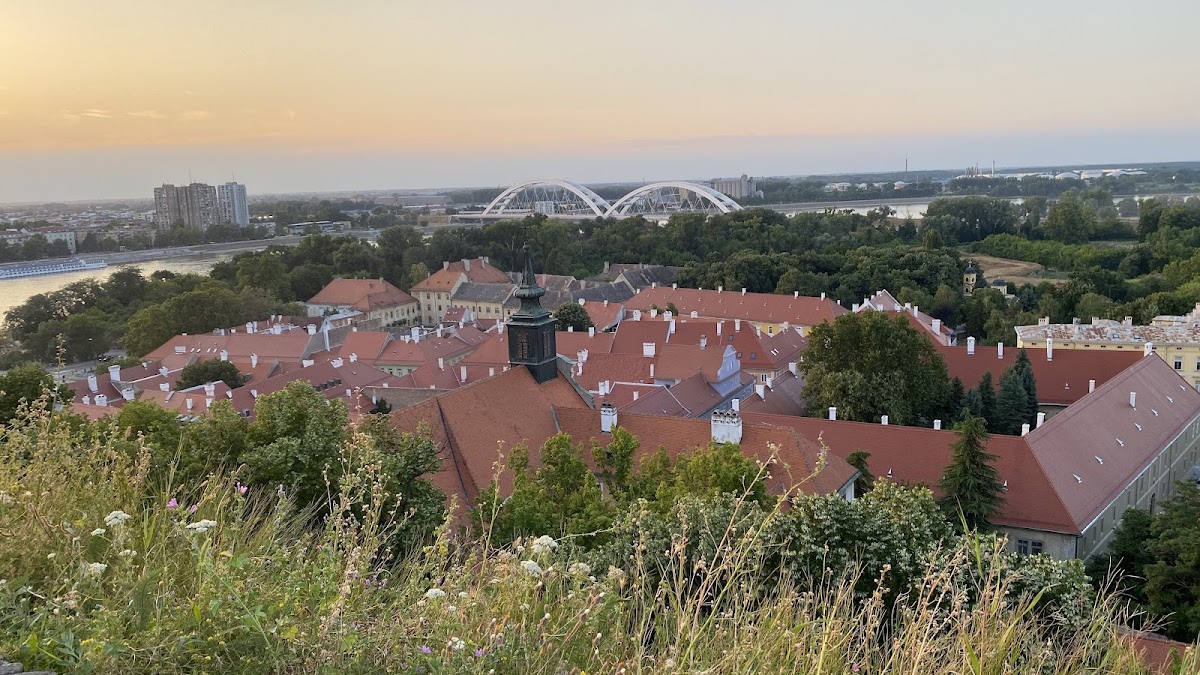
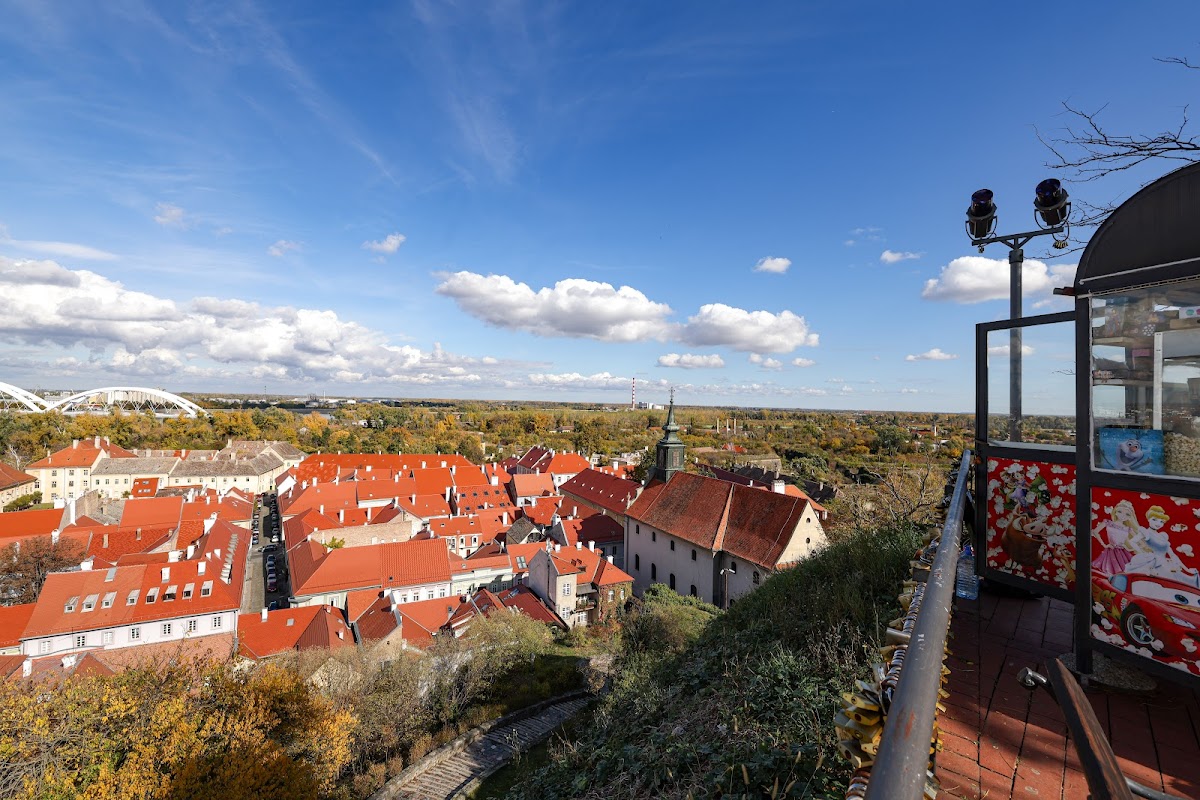
Petrovaradin Castle survives as an extensive Baroque bastion fortress, a fortified complex whose projecting angular defenses allowed defenders to cover walls and approaches with interlocking fire. The protected complex comprises the Upper and Lower Petrovaradin Fortress with Podgrad. Its visible defenses and deep underground works reflect the successive transformation of the site from Roman and medieval stronghold into an Austrian military installation.
Fortifications and underground works
Bastion fortress
The present fortress occupies the site previously held by the Roman fortress of Cusum and the medieval Bélakút monastery. The monastery walls, constructed between 1247 and 1252, formed the visible medieval defenses before the Austrian army replaced the older fortress after capturing Petrovaradin in 1687. The Austrian complex was planned from 1692 and expanded through major works carried out between 1753 and 1776.
Countermine system
More than 16 kilometres of underground corridors survive beneath the fortress. The passages form a four-level countermine system, designed as a subterranean defense against enemy mining operations. Major construction followed Major Albrecht Heinrich Schroeder’s proposal of 1764, and the system was completed in 1776.
Monastery church and clock tower
Former Franciscan monastery church
The church of the former Franciscan monastery contains the grave of Colonel Michael Wamberg, who directed the fieldwork on the Austrian fortress until his death in 1703. The monastery church now forms part of the present military hospital.
Fortress clock tower
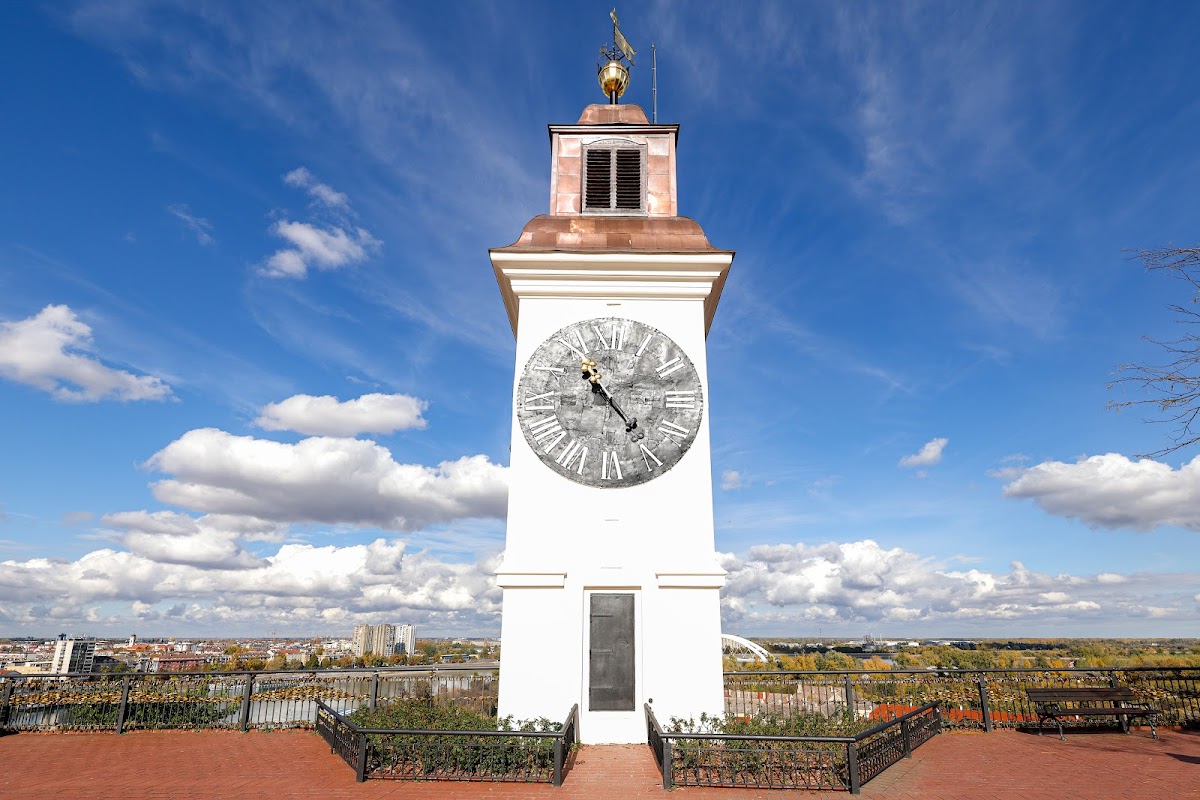
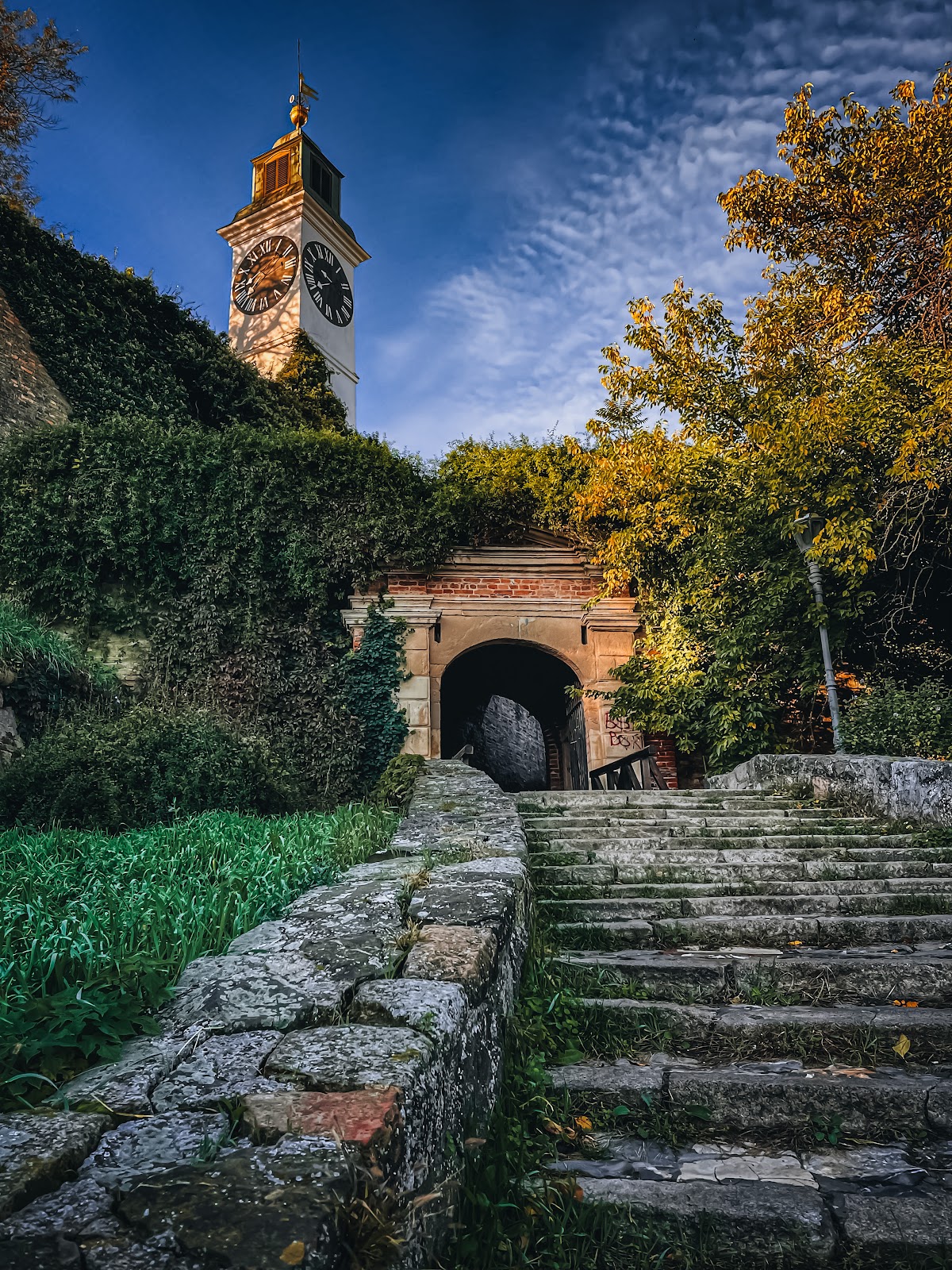
The fortress clock tower has an unusual arrangement in which the small hand indicates the minutes and the large hand indicates the hours. The design was intended to let fishermen on the Danube read the time from a distance. The clock remains a landmark of the fortress.
Archaeological remains
The upper fortress contains the remains of a Paleolithic settlement dating to approximately 19,000–15,000 BC. The wider Petrovaradin site also preserves Early Bronze Age ramparts from around 3000 BC, revealing that the location was fortified long before the Roman, medieval, and Austrian defenses were built.