‘s Gravenkasteel: A Moated Castle in Grimbergen, Belgium
Site at a Glance
- Rating
- 4.2
- Popularity
- Very Low
- Country
- Belgium
- Primary era
- Early Modern
- External website
- Open
- Eras represented
- Medieval, Early Modern, Modern
- Civilizations
- Belgian, Spanish
- Site type
- Domestic
- Remains
- Castle
On this page6 sections
History
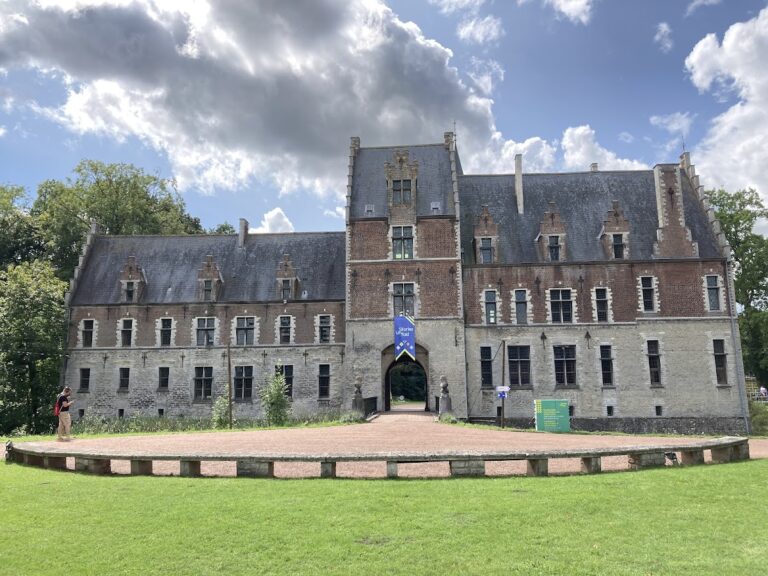
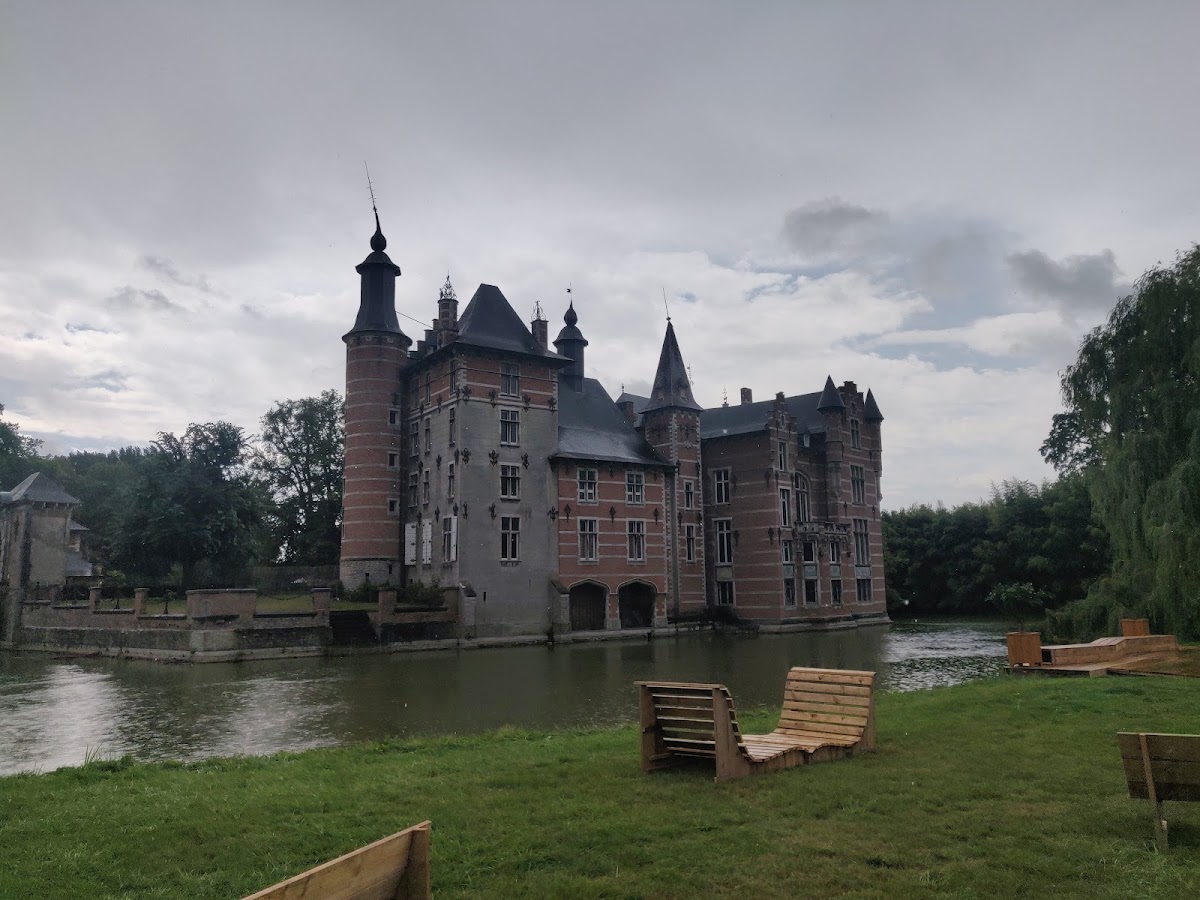
‘s Gravenkasteel is a moated castle in Humbeek, Belgium, whose origins are placed in the fourteenth century and whose oldest surviving sections date from the fifteenth and sixteenth centuries. The castle stands north of the village center beside ‘s Gravenbos and is also known as Humbeek Castle or Lunden Castle, the latter name recalling a former owning family.
Medieval origins and later rebuilding
The castle suffered severe damage during warfare at the end of the sixteenth century. Repairs followed in the seventeenth century, preserving and renewing the estate after the period of conflict. Around 1700, the castle lord Jacques Le Cocq became a count in Castile, after which Humbeek became a county.
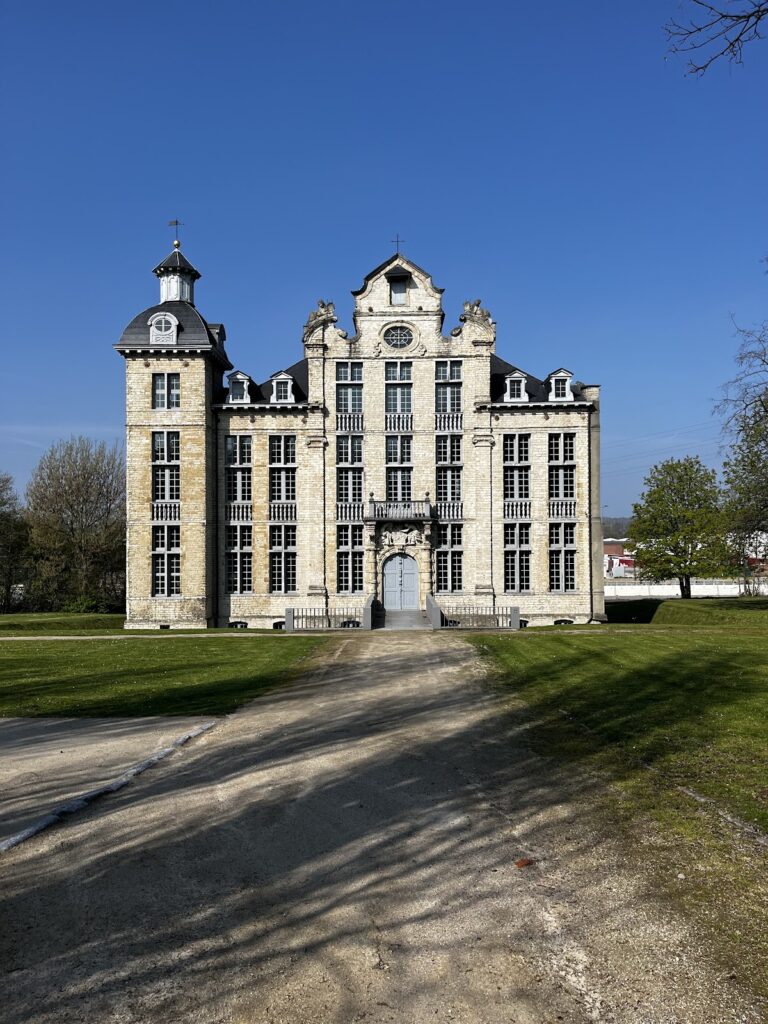
In the nineteenth century, the castle was restored and enlarged in a neo-traditional style, an architectural approach that revived or recombined forms associated with earlier regional building traditions. The work gave the complex much of its later character while incorporating its older fabric.
Ownership and the Lunden estate
The castle and estate passed to the Le Candele family in 1804. In 1880, they were inherited by the Lunden family, who originated in Antwerp. Baron Théophile Lunden served as castle lord from 1880 to 1908. He was a general in the Chasseurs à Cheval, mounted light cavalry troops, and Master of the Horse, a senior court official responsible for royal stables and equestrian arrangements.
The Lunden family maintained a thoroughbred stud farm at Humbeek for a long period. Théophile Lunden was followed by his son Léopold until 1921, his grandson René until 1942, and René’s brother Guy thereafter. In 1995, the castle was inherited by the Brussels-based t’Serstevens family, specifically Jonkheer Bernard t’Serstevens and Myriam, Baroness Lunden, Guy Lunden’s daughter. The current castle lord is Jonkheer Didier t’Serstevens. In 2010, the monumental Lebanon cedar and Atlas cedar on the estate received protection as monuments.
Remains
Castle architecture and interiors
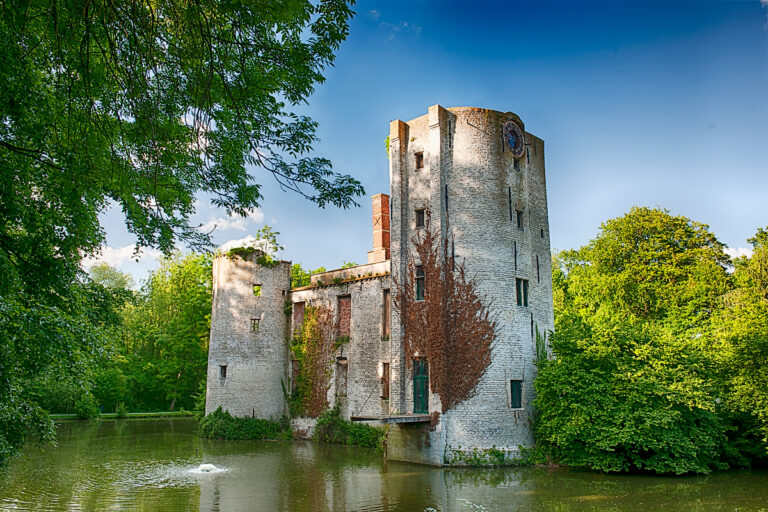
‘s Gravenkasteel is built of brick and sandstone and forms part of a moated estate, meaning that it is surrounded wholly or partly by a water-filled ditch. Its nineteenth-century restoration enlarged the complex and gave it a neo-traditional appearance. The interiors preserve a sandstone mantelpiece decorated with caryatids, sculpted female figures serving as architectural supports, together with a salon lined with Córdoba leather, decorative leather traditionally used for wall coverings and furnishings. Fine seventeenth-century woodwork and ironwork also survive inside the castle.
Park and woodland estate
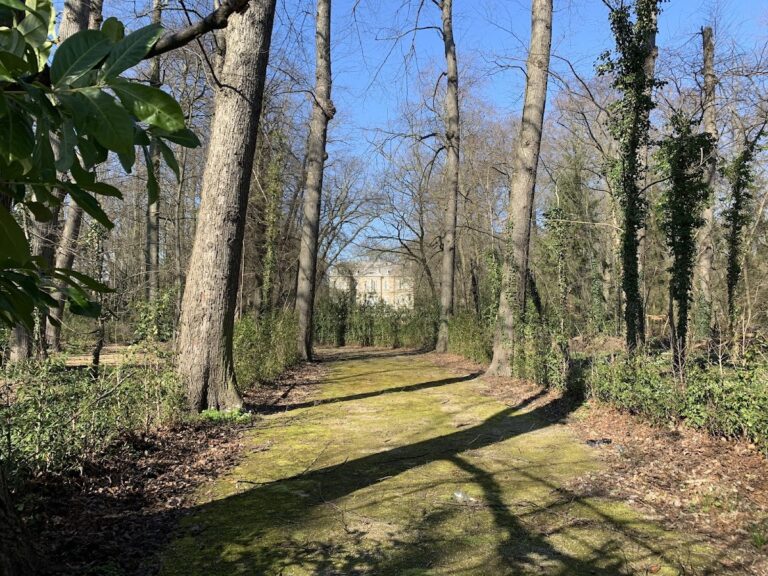
The park contains two monumental cedar trees. The Lebanon cedar is considered the older and is dated to planting in the 1860s, while the Atlas cedar was apparently planted after 1880. The estate also includes the surrounding ‘s Gravenbos and covers approximately 100 hectares.