Cousland Castle: A Ruined Scottish Tower House
Site at a Glance
- Rating
- 4.5
- Popularity
- Very Low
- Country
- United Kingdom
- Primary era
- Medieval
- Eras represented
- Medieval, Early Modern
- Civilizations
- Kingdom of Scotland
- Site type
- Military
- Remains
- Castle
On this page8 sections
History
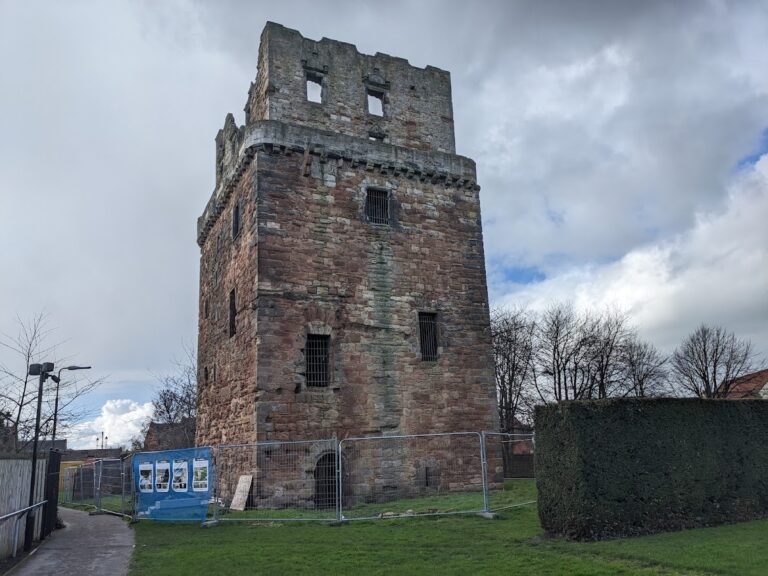
Cousland Castle is a ruined fifteenth-century tower house near Cousland in Scotland, United Kingdom. It began as a fortified residence associated with the St Clair of Roslin family and was later enlarged during the sixteenth century. Its history connects the site with Scottish aristocratic families, royal favour, military conflict, and the uncertain tradition that Mary, Queen of Scots, surrendered there in 1567.
St Clairs, Ruthvens, and royal favour
Cousland was originally a hunting lodge of the St Clair family of Roslin. In 1493, Henry Sinclair, Lord Sinclair, sold the property to William Ruthven, Lord Ruthven. The castle was also associated with Robert or Thomas Cochrane, a courtier and favourite of James III, the fifteenth-century king of Scotland. Cochrane was said to have been a stonemason who rose to prominence at court before being assassinated at Lauder Bridge in 1482. Thomas Cochrane held some of the lands at Cousland as a royal gift.
Conflict and damage
In 1529, Patrick Charteris burned the castle during a feud with William Ruthven, 2nd Lord Ruthven. After the Battle of Pinkie in 1547, Edward Seymour, Duke of Somerset, slighted the castle. To slight a castle was to deliberately damage or partly demolish its fortifications so that it could not readily function as a stronghold. William Patten’s maps of the 1548 battle depict the place under the name “Cowsland.”
Tradition holds that Mary, Queen of Scots, formally surrendered to the Confederate Lords at Cousland Castle in 1567 after the conflict at Carberry Hill. Mary was the Scottish monarch forced to surrender after that confrontation. David Calderwood instead placed the Lords on the “north side of Cowsland,” rather than specifically at the castle, so the precise location of the surrender remains uncertain.
Later ownership and demolition
Cousland was forfeited by John Ruthven, 3rd Earl of Gowrie, and his mother, Dorothea Stewart. The Earl of Gowrie was a Scottish noble title associated with the Ruthven family. The property was subsequently granted to Hugh Herries, a physician to James VI and I, who had helped rescue the king from the Ruthvens at Gowrie House in Perth in August 1605. James VI and I ruled Scotland as James VI and England and Ireland as James I.
The property later passed from the Herries family to the Hays of Kinnoull and then to the Makgill family during the seventeenth century. In the late seventeenth century, it was owned by John Dalrymple, 1st Earl of Stair. The house was demolished after 1760. The surviving site has been protected as a scheduled monument under designation SM1187 since 1953. A scheduled monument is a legally protected archaeological or historic site considered nationally important for preservation.
Remains
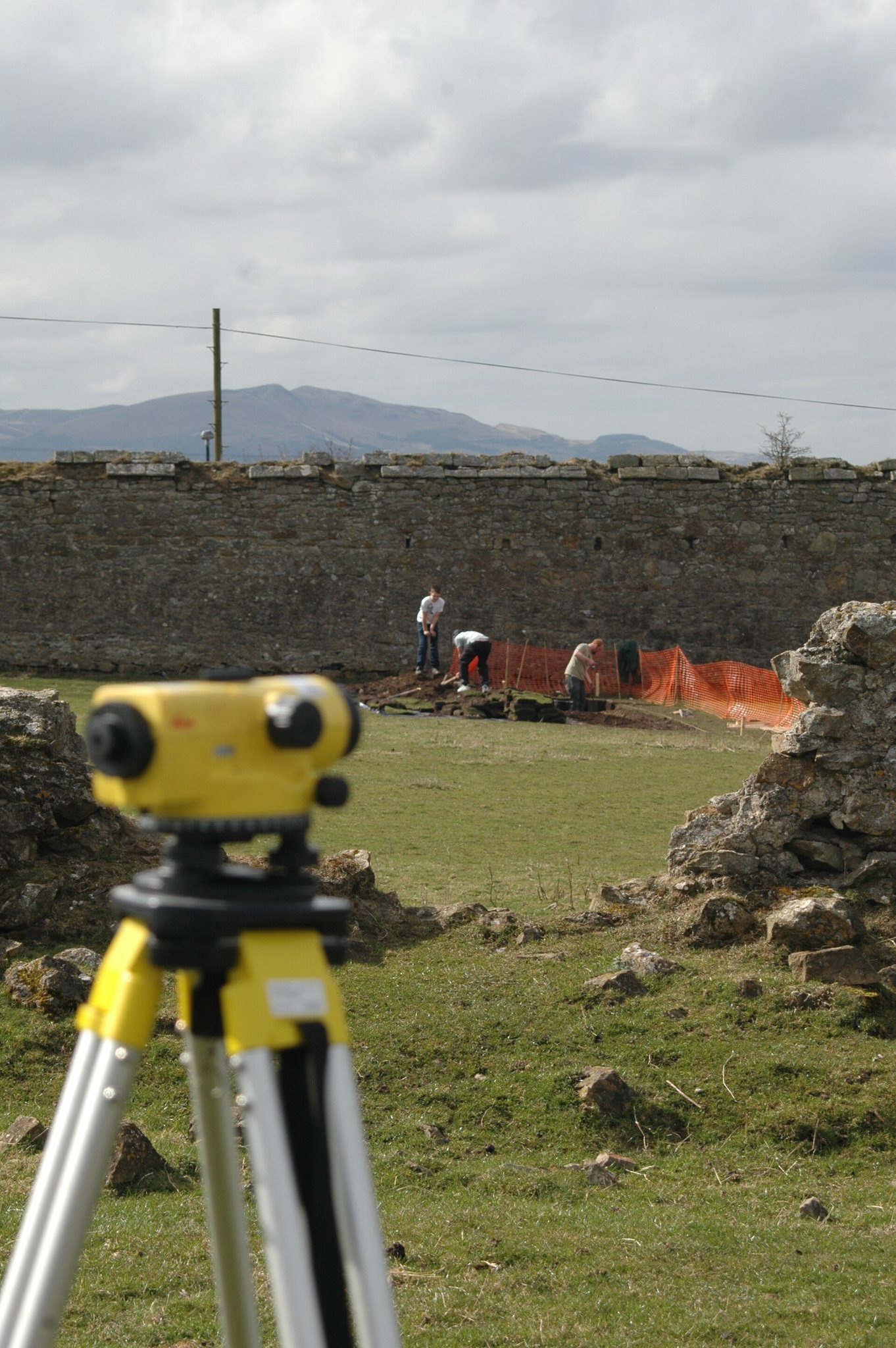
The principal remains consist of a tower house and enclosure walls arranged around a square walled garden area measuring 68 metres (223 feet). The tower occupies the north-east corner of the enclosure, while the surviving walls define the former residence’s wider compound.
Residential and enclosing structures
Tower house
The original tower house dates from the fifteenth century and was extended during the sixteenth century to form a larger residence. A tower house was a fortified home centred on a tall masonry tower that combined domestic accommodation with defensive features. The surviving tower includes a vaulted basement and forms the principal built remnant of the former castle.
Enclosure walls
The enclosure walls are 85 centimetres (33 inches) thick and were probably built after 1690. They survive intact along the northern sides of the square enclosure. Together with the tower house, these walls preserve the main elements of the former residence’s layout.