Castle of Floripes: A Submerged Medieval Fortress in Spain

Site at a Glance
- Rating
- 4.5
- Popularity
- Very Low
- Country
- Spain
- Primary era
- Unclassified
- Eras represented
- Unclassified
- Civilizations
- Unclassified
- Site type
- Military
- Remains
- Castle
On this page7 sections
History
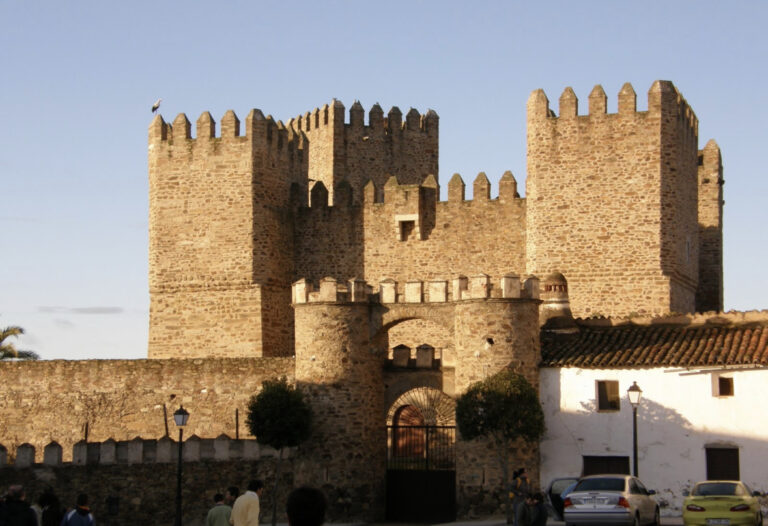
Castle of Floripes is a medieval fortress in Spain, located at Garrovillas de Alconétar, with Arab origins. Also known as Rocafrida, Alconétar, and the Fortress of Alconétar, it occupied a position that later became associated with legends, traditional ballads, and references in Miguel de Cervantes’ Don Quixote.
Christian conquest and military orders
Fernando II, the twelfth-century king of León, conquered the fortress in 1166 and granted it to the Knights Templar, a medieval religious-military order that held fortified sites in the Iberian Peninsula. In 1203, his successor Alfonso IX recovered most of the fortresses in the region and transferred them to the Order of Alcántara, a separate Iberian religious-military order. Alconétar was an exception and remained under Templar control until that order was dissolved in 1312.
Names, legends, and protection
The name Rocafrida appears in a document associated with Juan II, the fifteenth-century king of Castile and León. The castle also entered traditional ballads and became part of the literary landscape indirectly referenced by Cervantes, the Spanish author of Don Quixote, first published in the early seventeenth century.
Castle of Floripes is protected by the general heritage declaration established by the decree of 22 April 1949 and by Spain’s Historical Heritage Law 16/1985. It is classified as an Asset of Cultural Interest and has appeared on the Red List of Endangered Heritage since 2014.
Remains
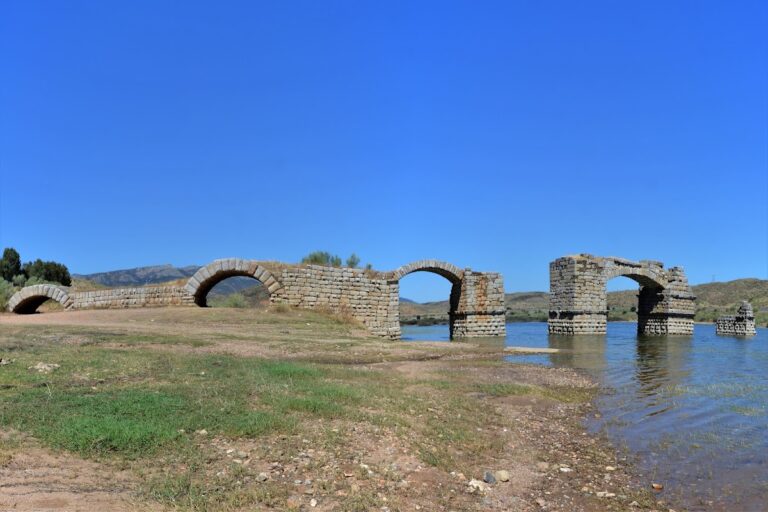
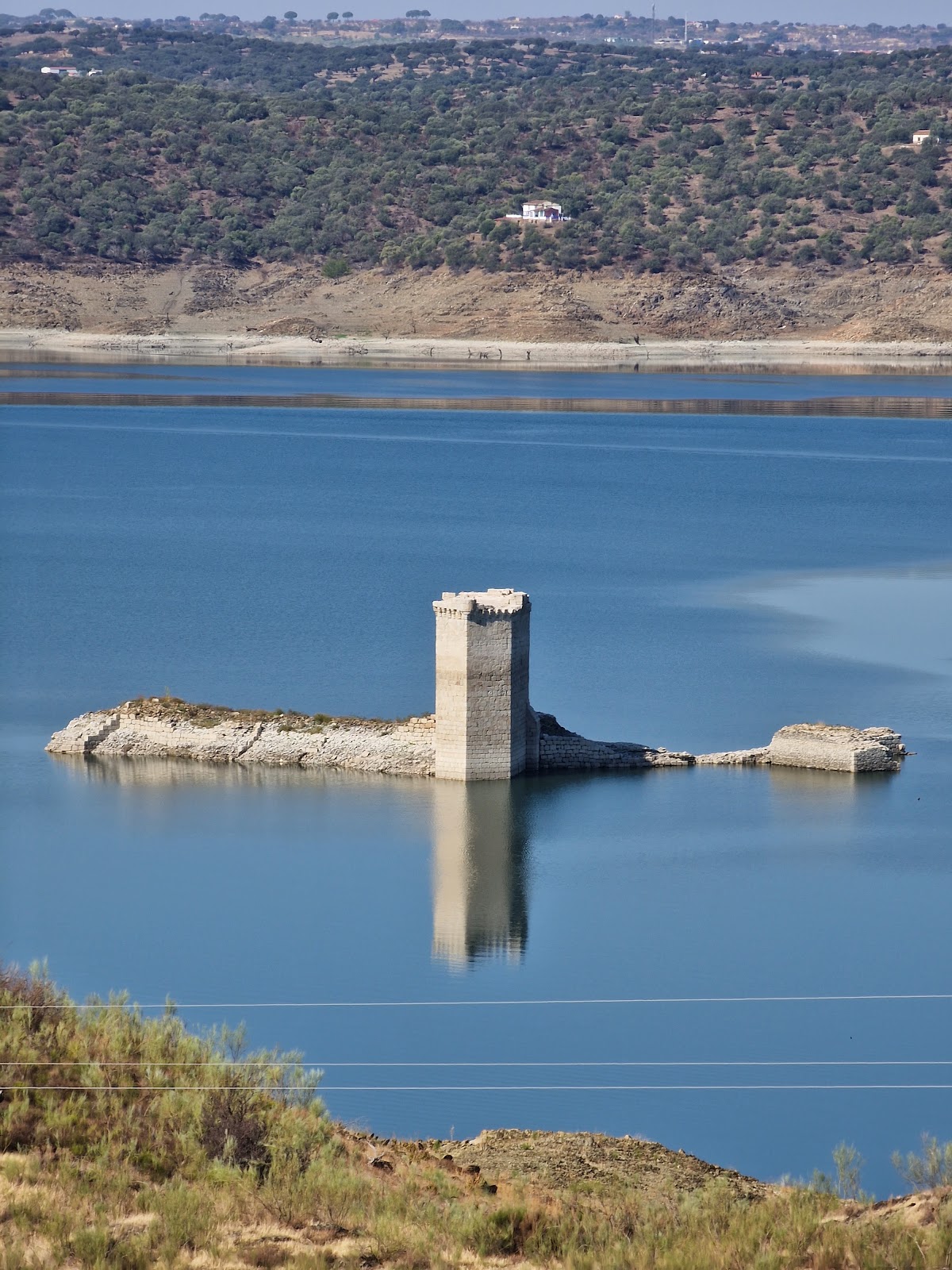
The surviving fortress stands within the José María de Oriol–Alcántara II Reservoir, also known as the Alcántara Reservoir, at Garrovillas de Alconétar in Cáceres Province, Extremadura. Water covers the castle for most of the time, leaving its remains visible only when the reservoir level falls. The structure is undergoing progressive ruin.
Submerged fortress
Keep
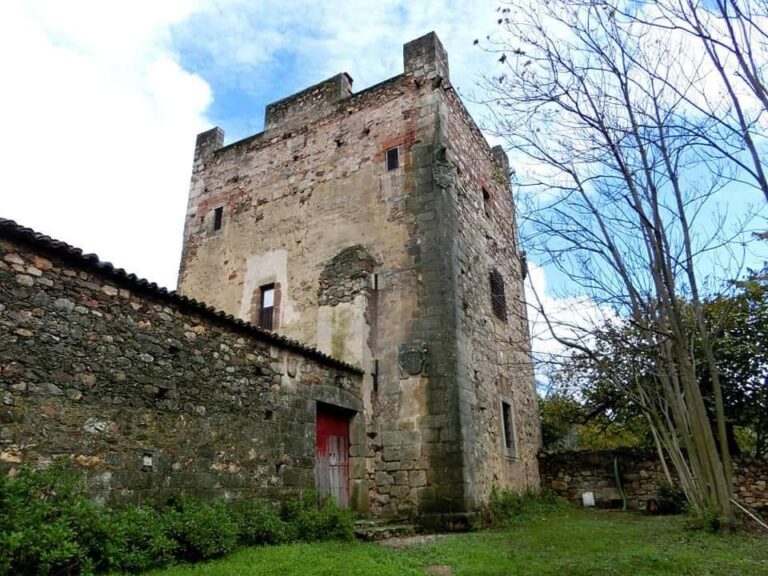
When the water level drops, the keep is normally the only part of the fortress visible above the reservoir. Its survival provides the principal visible indication of the submerged castle.
Crenellated enclosure
During exceptionally dry years, the crenellated enclosure also emerges from the water. This enclosure forms the wider surviving defensive structure around the keep and remains in a progressively ruined condition.