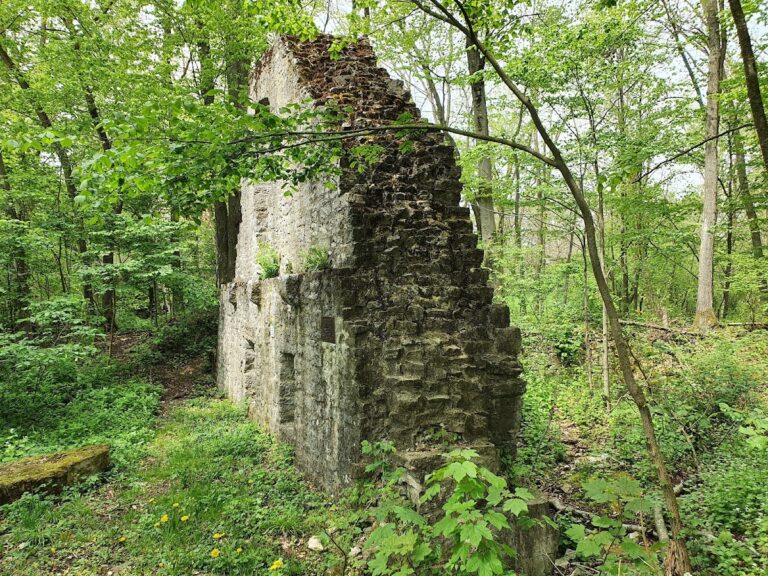
Burg Brauneck: A High-Medieval Castle Ruin in Germany


Site at a Glance
- Rating
- 4.1
- Popularity
- Very Low
- Country
- Germany
- Primary era
- Medieval
- Eras represented
- Medieval, Early Modern
- Civilizations
- Holy Roman Empire
- Site type
- Military
- Remains
- Castle
On this page11 sections
History
Burg Brauneck is the ruin of a high-medieval spur castle near Creglingen in Germany, built around 1230 under Konrad von Hohenlohe in the Romanesque style, a medieval tradition known for heavy masonry and rounded arches. It became one of the ancestral seats of the Hohenlohe-Brauneck branch and formed the administrative centre of a lordship that included many surrounding villages.
The Hohenlohe-Brauneck lordship
Konrad von Hohenlohe established the Hohenlohe-Brauneck line when the castle was built and first documented around 1230. Brauneck stood alongside Burg Hohlach and Schloss Weikersheim among the family’s ancestral seats. For its period, it was considered a relatively extensive castle complex. The Hohenlohe family’s ministerials, dependent service nobles who handled military, administrative, or estate duties, were the Lords of Enheim.
The Hohenlohe-Brauneck line ended around 1390. Several members had entered high-ranking ecclesiastical offices, contributing to the family’s extinction. Brauneck then stopped serving as a residence and became an administrative seat, initially managed by officials representing the heirs. Unlike the Hohenlohe castles at Weikersheim, Neuenstein, and Langenburg, it was not developed into a residential complex after this change.
Margravial control and noble fiefs
In 1448, Count Michael von Hardeck, described as Konrad’s last descendant, sold the castle and lordship to Margrave Albrecht of Brandenburg-Ansbach. A margrave was a noble ruler, while a margraviate was the territory under his authority. The lordship included Creglingen and the “six Main villages” around Marktsteft and Obernbreit.
The Brandenburg margraves granted Brauneck as a knightly fief, meaning land or rights held by a lower noble in return for service, until 1690. The Lords of Ehenheim were its most important holders between 1460 and 1615. They did not reside at the castle, but appointed a Vogt, or castle administrator, to manage the estate.
Destruction and later agricultural use
During the German Peasants’ War, a series of popular uprisings in the German-speaking lands during 1524 and 1525, the castle was taken by surprise, plundered, and burned. The damage was valued at 768 guilders, a historical currency used in German-speaking lands. Parts of the complex were later rebuilt, but Brauneck no longer retained its character as a fortress.
In 1615, the complex passed to the Lords of Gundelsheim. Creglingen church registers indicate that they lived there until about 1680. After a short period under the Lords of Danngrieß between 1683 and 1690, the estate returned to the margraviate and was sold to farmers. The Ströbel family has owned it since 1699. Following its destruction and partial rebuilding, Burg Brauneck continued as an agricultural operation. It is recognized as a cultural heritage monument in Baden-Württemberg.
Remains
Burg Brauneck occupies a 330.4-metre-high plateau spur near the present Bavarian border, above the steep valley drop of the Steinach, a right-bank tributary of the Tauber. The castle follows an approximately regular rectangular plan. Its surviving fabric includes major defensive and religious structures, with older remains also incorporated into newer sections. The complex is preserved as a ruin.
Fortifications and entrance
Shield wall
A substantial shield wall remains visible within the castle complex. This particularly strong defensive wall protected the side most vulnerable to attack, while the projecting spur and steep slopes contributed to the site’s natural defence.
Keep
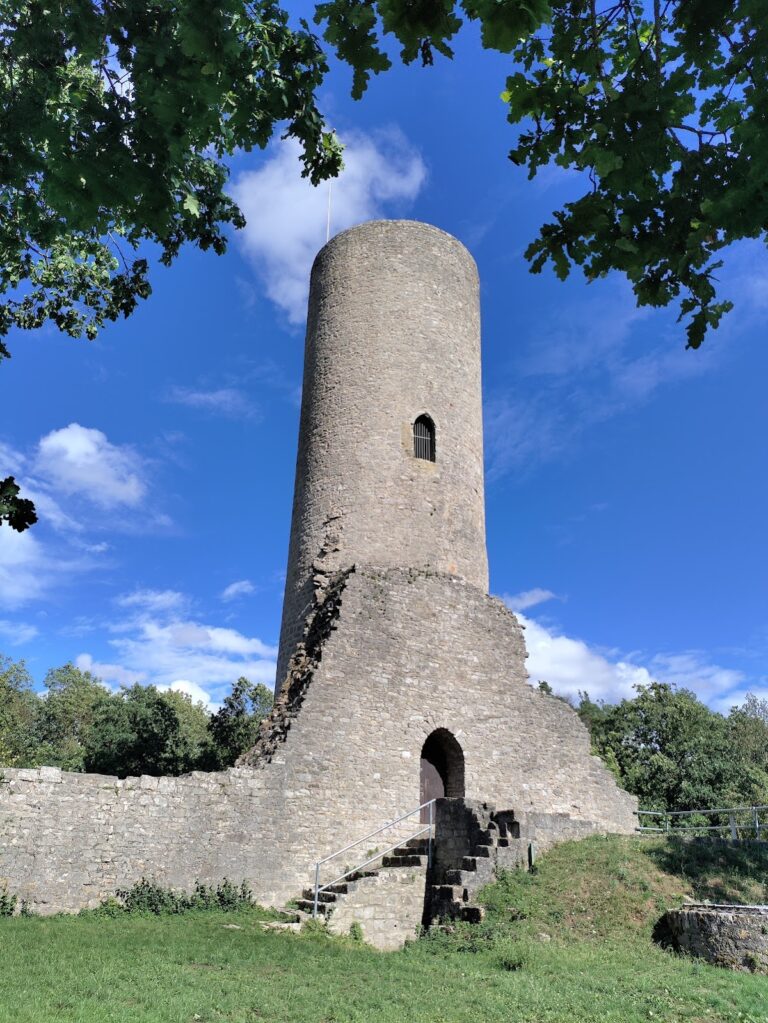
The square keep is well preserved. It has a square ground plan and is built of bossed ashlar, carefully cut stone blocks whose central faces project outward. The masonry provides a clear surviving example of the castle’s substantial medieval construction.
Castle gate
The Romanesque castle gate remains identifiable. Its survival helps define the entrance arrangements of the high-medieval complex and connects the gateway with the heavy, rounded-arch architectural tradition represented elsewhere in the castle.
Romanesque chapel
Chapel remains
The remains of a Romanesque chapel survive within Burg Brauneck. The chapel was formerly two storeys high, and its Romanesque portal is still preserved. Together with the gate, keep, and shield wall, it contributes to the castle’s importance as an example of architecture from around 1200, a type of surviving complex that is relatively uncommon in Franconia.