Haus Dürffenthal: A Medieval Water Castle in Germany
Site at a Glance
- Rating
- 4.8
- Popularity
- Very Low
- Country
- Germany
- Primary era
- Medieval
- External website
- Open
- Eras represented
- Medieval, Early Modern, Modern
- Civilizations
- German, Holy Roman Empire
- Site type
- Military
- Remains
- Castle
On this page8 sections
History
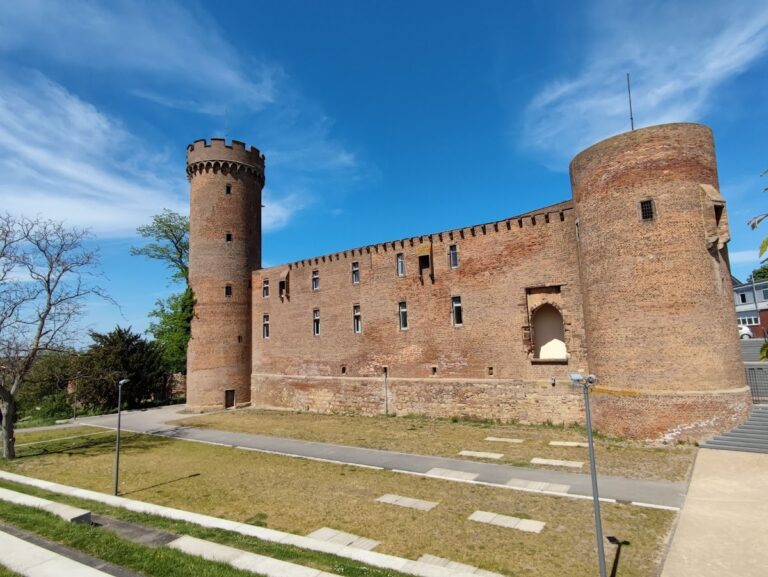
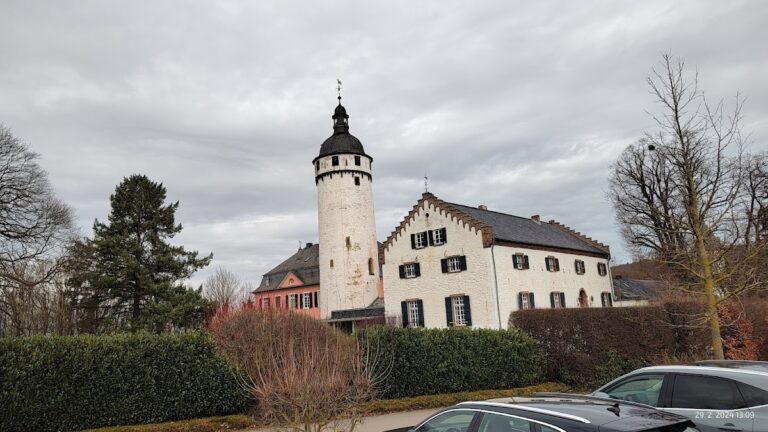
Haus Dürffenthal is a medieval lowland castle in Germany, west of Ülpenich in the city of Zülpich. It originated in the thirteenth century as a fortified residence on level, marshy ground and later developed into a water castle. The site became associated with the aristocratic Dürffenthal family and subsequently with the Berg family, while its preserved buildings reflect several centuries of alteration and continued occupation.
The Dürffenthal Family and the Counts of Jülich
The knightly family of Dürffenthal is first documented in 1307. Its ancestors had previously endowed St. Martin’s Abbey in Cologne, a monastery governed by an abbot, with a tithe right, an entitlement to receive a portion of agricultural produce or income. During the fourteenth century, the family held Haus Dürffenthal as a fief, meaning property granted in return for obligations to a superior lord, from the Counts of Jülich. A chapel was first mentioned during this period. The Dürffenthal family later died out.
The Lords of Berg
At the beginning of the fifteenth century, Daniel von und zu Berg was lord of Dürffenthal. The family also held Blens Castle, Hausen Castle, and Irnich Castle. In the mid-sixteenth century, the Berg zu Blens line died out, and Dürffenthal became the principal base of the Berg family. The manor house was enlarged during the fifteenth century into substantially the form that survives today, preserving the central medieval phase of the complex.
Ownership and Heritage Protection
Haus Dürffenthal was sold to Aegidius Thoelen in 1809. In 1818, Thoelen transferred the property for 16,000 Reichstaler to Andreas Heuser, who had previously lived at Zievel Castle. In 1834, the castle was entered in the register of Jülich knightly seats eligible for representation in the provincial diet. The property remained privately owned in 2012 and was used partly as a residence with an attached horse-boarding facility. It entered the monument list of the City of Zülpich as number 15 on 24 September 1981 and is protected as an architectural heritage monument in North Rhine-Westphalia.
Remains
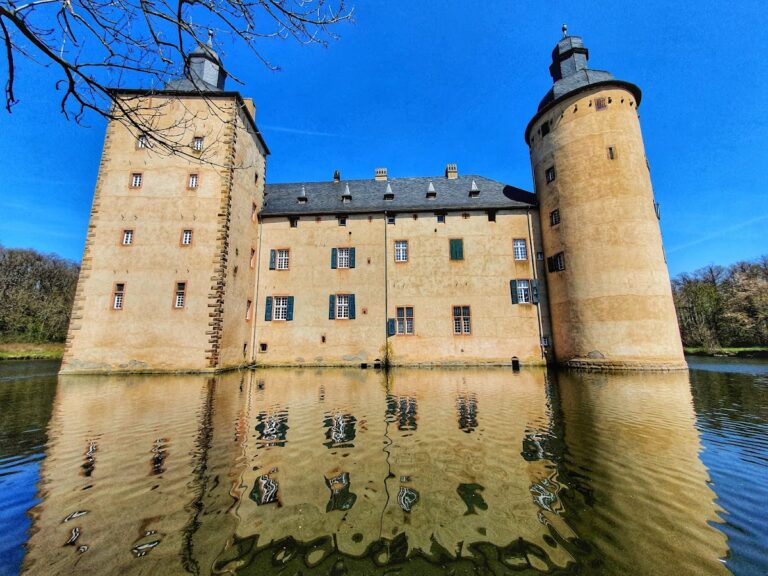
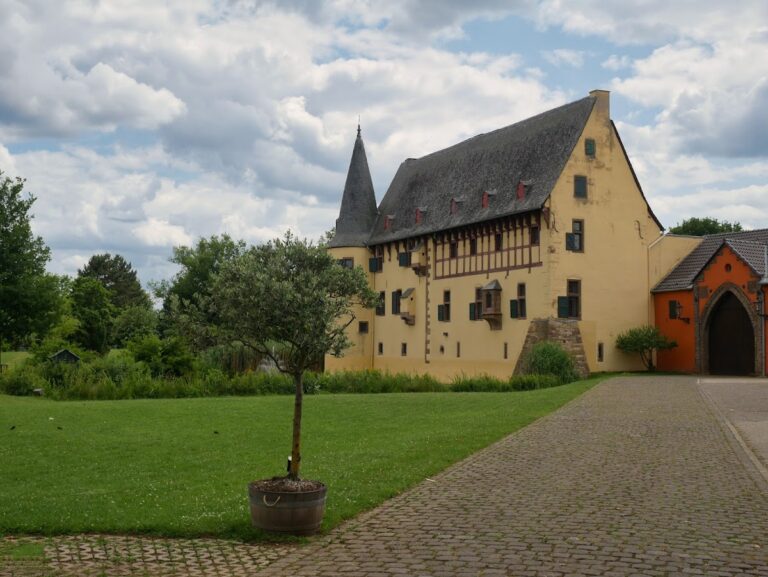
Haus Dürffenthal is a completely preserved, late-medieval, three-storey complex built largely of rubble stone. It consists of a manor house on its own island, an outer bailey, a garden complex, a chapel, and an extensive system of ditches fed by the Rotbach. The site lies north of the present B56 beside the stream, in a formerly marshy floodplain. Its water-filled defenses remain physically important because the ditches must stay filled to protect the pile foundations beneath the manor house.
The Outer Bailey
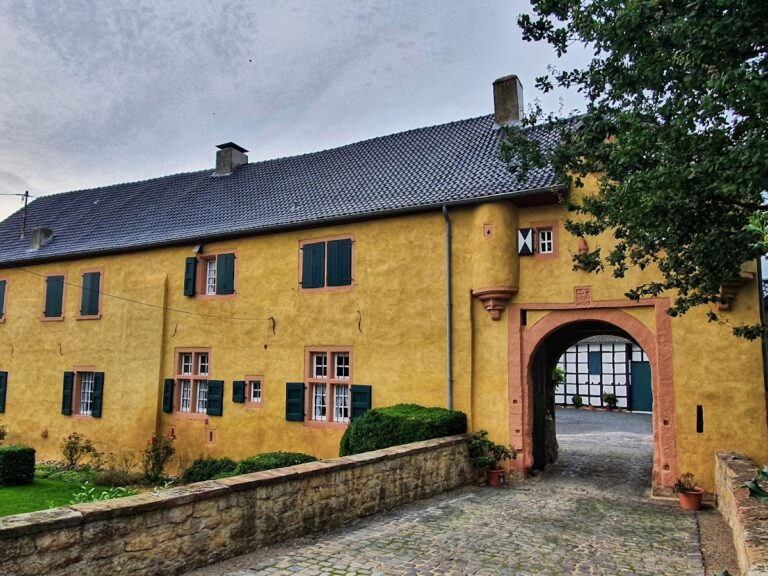
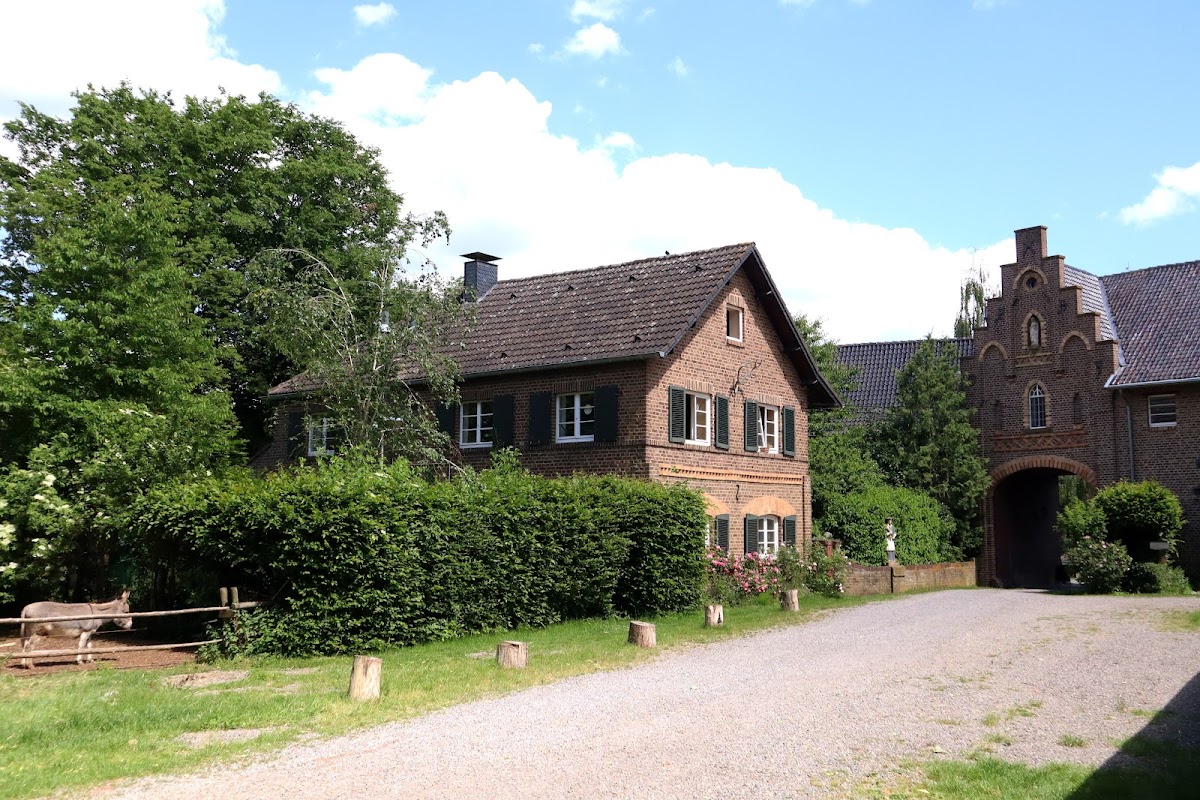
The outer bailey contains mainly half-timbered buildings dating from the eighteenth and nineteenth centuries. Among them is a very large cowshed built of solid materials. The entrance is marked by a Gothic Revival gatehouse from 1879. Earlier buildings at the site are shown in a drawing made in 1723 in the Codex Welser, an illustrated historical record of places and buildings. Together, these structures show how the medieval castle complex continued to be adapted for later residential and agricultural use.
The Manor House
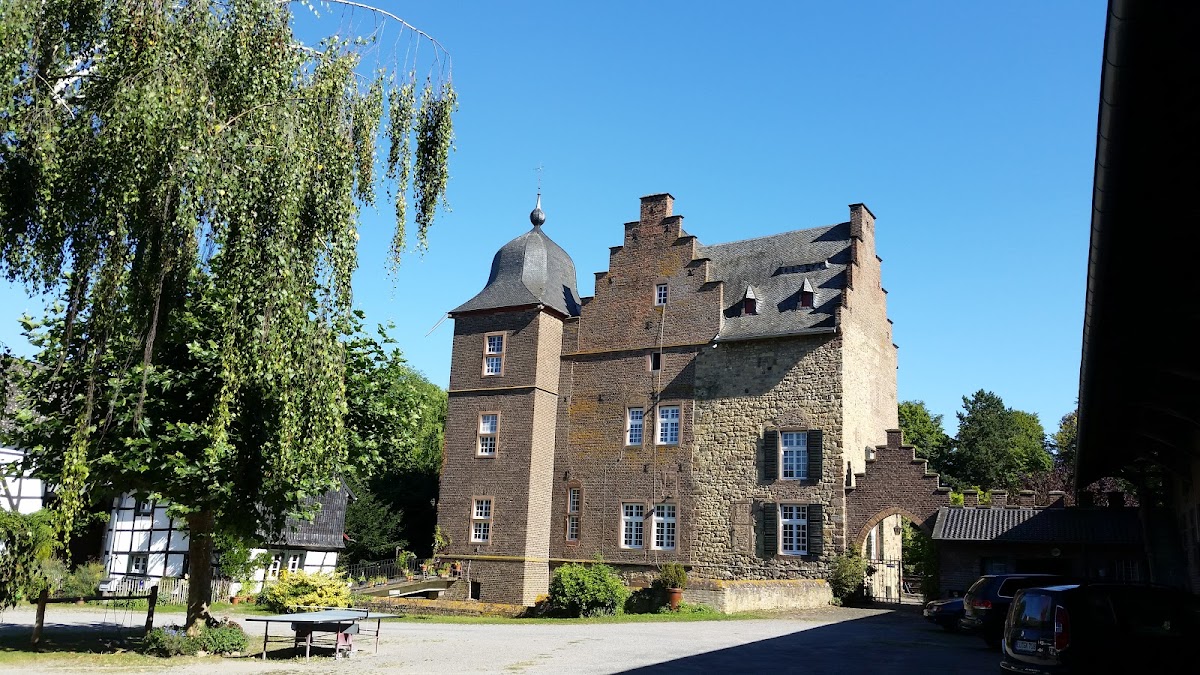
The manor house occupies a separate island within the surrounding ditches and has an angular plan. Its two-storey east wing includes a corner tower, while the shorter west wing rises to three storeys. Most of the west wing dates from the thirteenth century. Enlargement in the fifteenth century gave the building substantially the arrangement that remains today, combining the oldest surviving part with later medieval work.
Chapel and Roman Archaeology
A chapel was built on the south side of the ditch enclosure in 1905 in the Gothic Revival style. The site also produced evidence of an earlier Roman presence. In 1904, a Roman grave discovered at Haus Dürffenthal contained an enamel-painted glass bottle from the second half of the third century AD. Its decoration shows a chariot race, and its inscription reads “PROVINCIA BELGIC(A),” referring to Belgica, a northern province of the Roman Empire.