Pöppendorfer Ringwall: A Slavic Fortified Enclosure in Germany
Site at a Glance
- Rating
- 4
- Popularity
- Very Low
- Country
- Germany
- Primary era
- Medieval
- Eras represented
- Medieval
- Civilizations
- Unclassified
- Site type
- Military
- Remains
- Wall
On this page6 sections
History
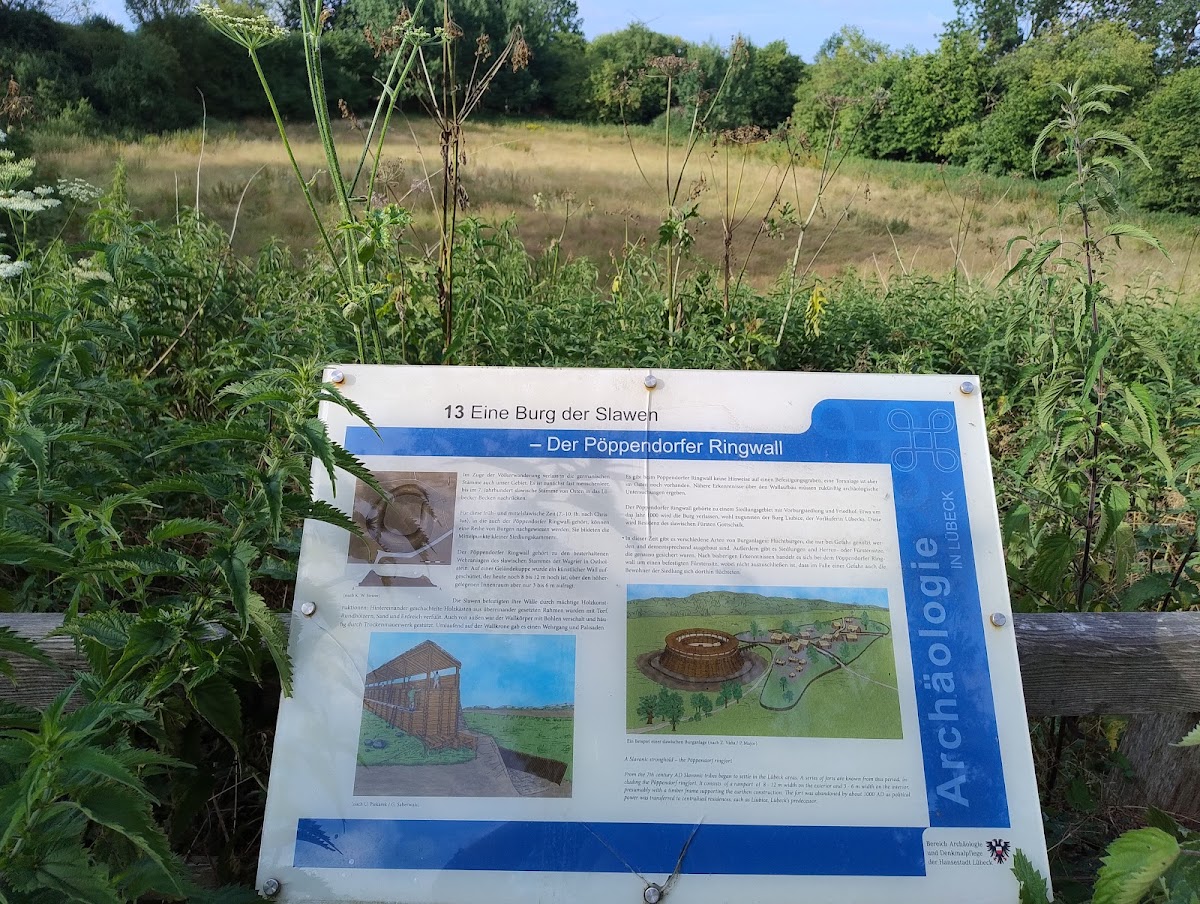
Pöppendorfer Ringwall is an eighth-century Slavic fortified enclosure in Germany, located in Pöppendorf within Lübeck’s Kücknitz district. It was built by the Wagrians, a medieval West Slavic population of northern Germany, and was abandoned around AD 1000. The enclosure belonged to a wider settlement area, with an associated settlement to the southwest and Slavic burial mounds on the Pöppendorfer Hals.
Wagrian enclosure and abandonment
Ceramics collected from the interior and the western rampart belong to the Middle Slavic period, a phase identified through the characteristic material culture of Slavic communities. These finds place the main use of the enclosure within the medieval Slavic period. The site is thought to have fallen out of use by the time of Alt Lübeck, an early medieval settlement that became an important predecessor in Lübeck’s history, and in any case by the beginning of written chronicling in the eleventh and twelfth centuries.
Earlier monument and modern protection
Some pottery fragments from the enclosure carry deep impressions dating to the Neolithic period. Together with large glacial erratic boulders, stones deposited by former ice sheets, found during test probing in the first half of the nineteenth century, these discoveries support the interpretation that a megalithic structure lies beneath the interior of the rampart. A megalithic structure is a monument built from large stones.
The rampart is protected as a monument. Along with the nearby Pöppendorfer Großsteingrab, it forms a notable feature of the Archaeological and Natural History Trail in the Waldhusen Forest.
Remains
Enclosure and rampart
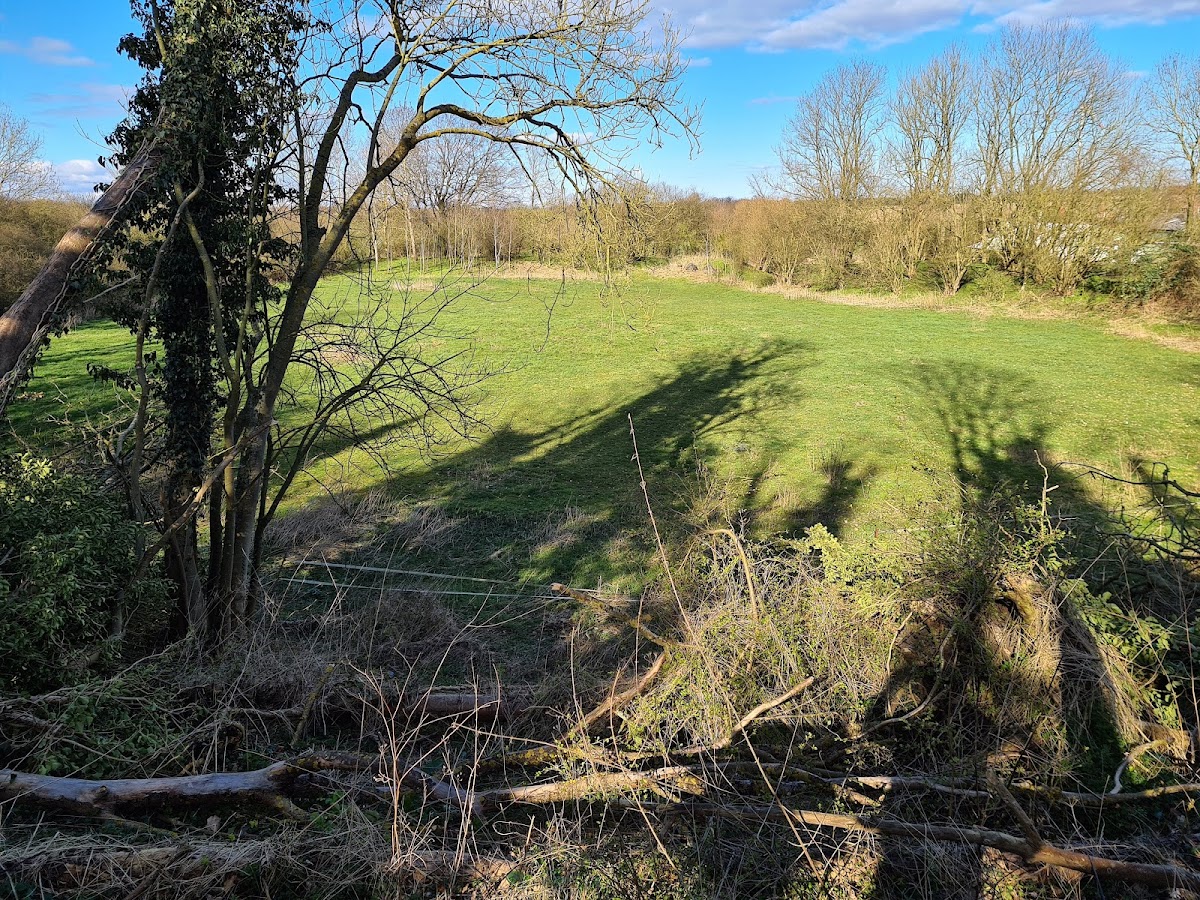
The enclosure occupies a small elevation beside wet lowland to the northeast and measures approximately 100 metres across. Its earthwork rises about 8 to 12 metres above the surrounding ground and about 3 to 6 metres above the interior. The northeast side, facing the wet lowland, is lower than the southwest side, and the entrance is oriented toward the northeast.
The surviving earthworks give the Pöppendorfer Ringwall the character of a substantial defensive enclosure. The rampart is regarded as one of the best-preserved and most visually impressive examples in eastern Holstein, as well as a textbook example of a Slavic fortified enclosure, or burgwall, an earthen defensive settlement or refuge enclosed by a rampart.
Archaeological evidence
Middle Slavic ceramic sherds came from both the interior and the western rampart, linking the surviving earthwork with its medieval Slavic use. Neolithic sherds decorated with deep impressions and large glacial erratic boulders found beneath or within the rampart support the interpretation of an earlier megalithic monument concealed by the enclosure’s construction.
Nearby sites