Castillo de Ubierna: A Medieval Fortification in Burgos


Site at a Glance
- Rating
- 4.5
- Popularity
- Very Low
- Country
- Spain
- Primary era
- Medieval
- External website
- Open
- Eras represented
- Medieval
- Civilizations
- Crown of Castile
- Site type
- Military
- Remains
- Castle
On this page5 sections
History
Castilian and Navarrese Rivalry
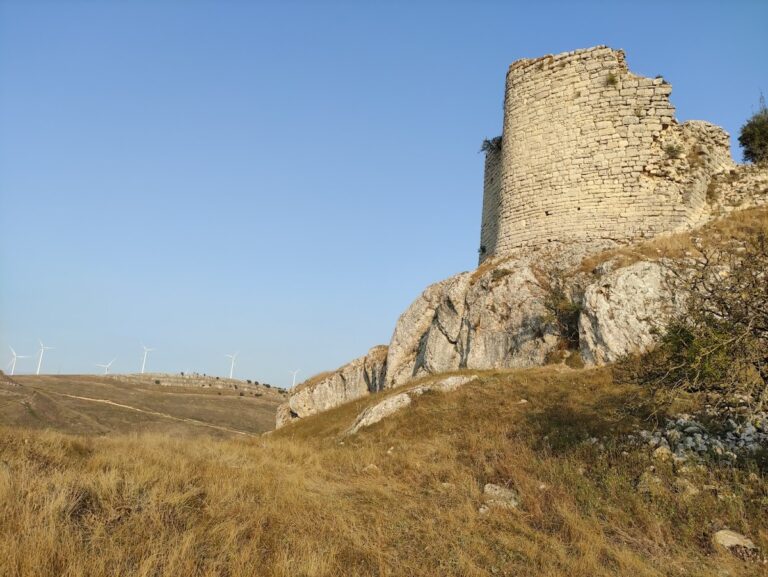
Castillo de Ubierna is a ruined medieval fortification in Spain, in the settlement of Ubierna, Burgos. The castle was owned by the counts of Castile and stood within a region shaped by conflict between neighboring medieval kingdoms.
In 1054, Fernando I of León and Castile fought his brother García Sánchez III, king of Pamplona, at the Battle of Atapuerca. After the battle, Diego Flaínez seized the strongholds of Ubierna, Urbel, and La Piedra from the Navarrese. Along with Vivar, these places were later reintegrated into the Kingdom of Castile. The episode appears in the Historia Roderici, a medieval Latin biography of Rodrigo Díaz de Vivar, better known as El Cid.
The Flaínez and Díaz de Vivar Connection
The occupation of Ubierna may have brought the surrounding merindad, a medieval territorial district administered by a royal official, under the same control as the castle. The fortress had been the residence of the king of Pamplona’s lieutenant, an official who held and administered territory or a stronghold for a ruler. After Diego Flaínez died, his son Rodrigo Díaz de Vivar succeeded him in Ubierna, Urbel, and La Piedra.
Modern Heritage Protection
Castillo de Ubierna received general legal protection with Spain’s other castles under a decree dated 22 April 1949. Signed by Francisco Franco and José Ibáñez Martín and published on 5 May that year, the decree placed the castle under the status of an Asset of Cultural Interest through this broad protection.
Remains
Castillo de Ubierna survives as a ruined fortification within the settlement of Ubierna, in the municipality of Merindad de Río Ubierna, Province of Burgos, in Castile and León. The remaining site is identified by its defensive character and its connection with the castle that controlled the surrounding medieval district.