Schloss Greifenstein: A Historic Castle in Bavaria


Site at a Glance
- Rating
- 4.6
- Popularity
- Very Low
- Country
- Germany
- Primary era
- Early Modern
- External website
- Open
- Eras represented
- Early Modern
- Civilizations
- Holy Roman Empire
- Site type
- Domestic
- Remains
- Castle
On this page8 sections
History
Schloss Greifenstein is a historic castle in Germany, probably built from 1558 onward as a sixteenth-century aristocratic residence by Philipp III von Thüngen. A date of 1565 on a gable keystone supports this construction period. The castle later became associated with the Gleichen-Russwurm family and with the descendants of Friedrich Schiller, the influential German poet, dramatist, historian, and philosopher.
Construction and Transformation
Philipp III von Thüngen, a member of a Franconian noble family, probably initiated the castle’s construction. Renovation work in the late 1970s found no evidence of an earlier building. In 1657, Major General Hans-Georg von Rußwurm acquired the castle. It was remodelled into its present form in 1726.
After the von Russwurm family line ended in 1732, the von Gleichen family assumed the castle as the imperial barons of Gleichen-Russwurm. An imperial baron belonged to the lower-ranking imperial nobility of the former Holy Roman Empire, rather than ruling an independent state. From 1756, Wilhelm Friedrich Freiherr von Gleichen, known as von Rußwurm, lived at Greifenstein with his family. He was an officer of the Bayreuth margrave and a naturalist.
Schiller Family Association
Friedrich Schiller and his wife, Charlotte, visited Greifenstein in 1793 while travelling from Weimar to Stuttgart. In 1828, Schiller’s youngest daughter, Emilie, married Heinrich Adalbert von Gleichen-Russwurm. She lived at Greifenstein until her death in 1872.
Emilie’s son Heinrich Ludwig was a German Impressionist and a professor at the Grand Ducal Art School in Weimar, an art academy connected with the grand duchy of Saxe-Weimar-Eisenach. He lived and painted in Bonnland. In 1895, Schiller’s great-grandson Alexander von Gleichen-Rußwurm, a former officer and cultural-historical writer, lived and worked at Greifenstein, where he established the Schiller Archive, a collection devoted to Friedrich Schiller’s life and work.
Military Area and Later Preservation
Greifenstein was renovated in 1936. The Schiller Archive was later transferred to Marbach am Neckar, where it is held by the German Literature Archive. In 1938, Bonnland and the castle were resettled and incorporated into the Hammelburg military training area, established in 1893. After the Second World War, displaced persons were housed in Greifenstein.
The castle underwent another renovation in 1982 and is protected in Bavaria as an architectural heritage monument, meaning that heritage-conservation law safeguards the site because of its historical or architectural value. The Hammelburg military training area remains in use, and Schloss Greifenstein is a restricted area for troops conducting exercises.
Remains
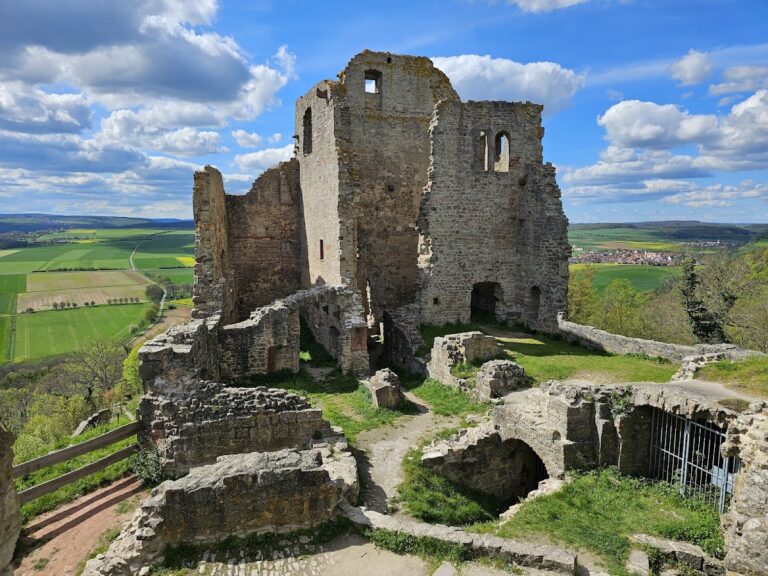
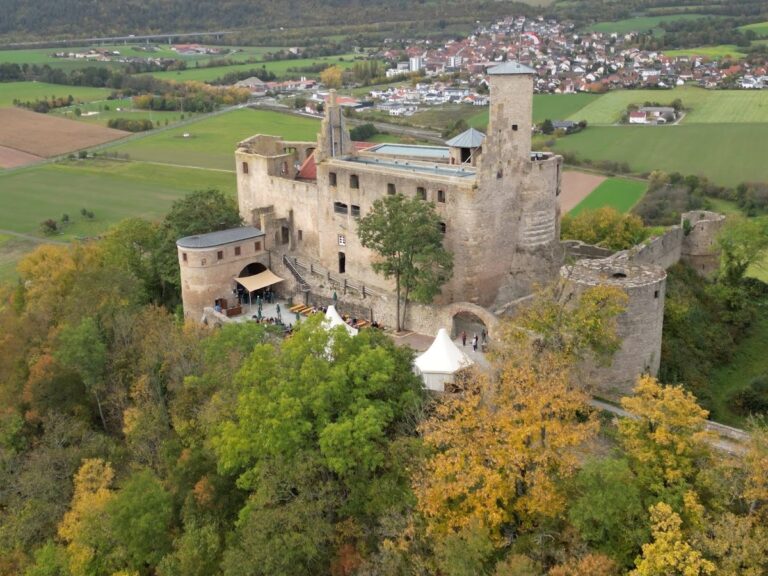
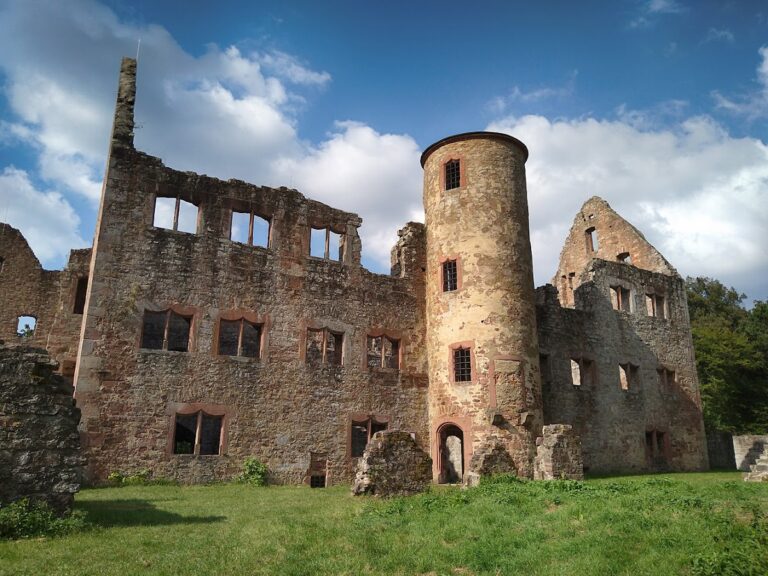
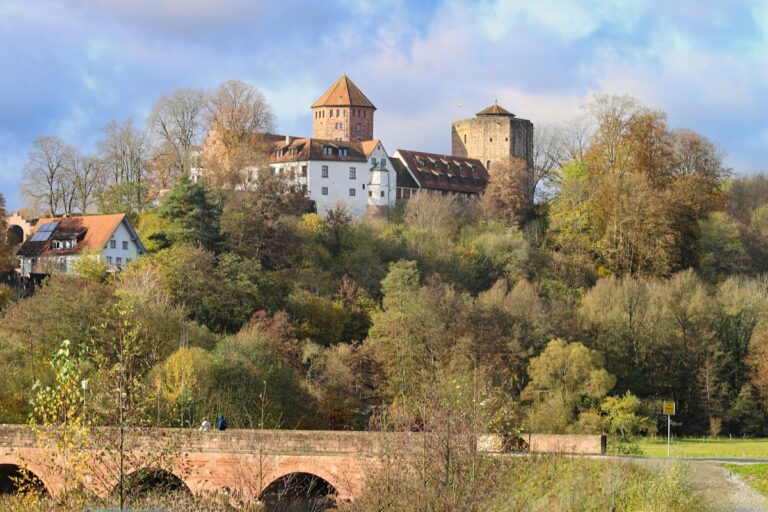
Schloss Greifenstein stands immediately above the former village of Bonnland in the Bad Kissingen district of Bavaria, within the Hammelburg military training area. The surviving complex includes the castle, its associated estate buildings, and a manor-house garden. The 1565 date carved on a gable keystone provides a physical indication of the castle’s original construction period.
Associated Grounds
Estate Buildings
The estate buildings form part of the castle complex. These service and agricultural structures were associated with the administration of a landed residence and supported the functioning of Greifenstein as an aristocratic estate.
Manor-House Garden
A manor-house garden is also included within the site. It belongs to the grounds of the residence and forms part of the surviving physical complex above the former village of Bonnland.
Nearby sites