Komberk: A Medieval Castle in Czechia


Site at a Glance
- Rating
- 4.3
- Popularity
- Very Low
- Country
- Czechia
- Primary era
- Medieval
- Eras represented
- Medieval
- Civilizations
- Holy Roman Empire, Kingdom of Bohemia
- Site type
- Military
- Remains
- Castle
On this page10 sections
History
Komberk is a medieval castle in Czechia, constructed before 1313 on a promontory above the Čeminský stream. The site had earlier Eneolithic, or Copper Age, settlements, including settlements associated with the Cham culture, a prehistoric culture of Central Europe.
Early Lords and Monastic Ownership
The first known holder of Komberk was Ojíř of Komberk, a member of the Švihovský family of Rýzmberk. Around 1340, he sold the castle and other property to Teplá Monastery, a medieval religious community in Bohemia. His widow, Žofie, challenged the transaction, and the contract was annulled in 1350.
Ctibor of Švamberk later acquired Komberk. In 1368, he exchanged it with Kladruby Monastery for other property. The Benedové and the lords of Gutštejn subsequently became associated with the castle. In 1420, a Hussite army captured Komberk during the Hussite Wars, a Bohemian religious and military conflict linked to the reform movement founded by Jan Hus.
The Gutštejn Period and Abandonment
After the capture, Kladruby Monastery used the castle estate to settle debts owed to Vilém of Nečtiny and Žlutice. They sold it before 1447 to Burian I of Gutštejn. The lords of Gutštejn generally lived elsewhere, but maintained Komberk and kept a military garrison there.
Komberk was probably captured in 1478 by forces led by Jan Planknar of Kynšperk. The castle’s later history is disputed. Tomáš Durdík regarded it as abandoned after the capture, while Miloslav Bělohlávek stated that Jan of Gutštejn still lived there and sold it to Albrecht of Kolowrat in 1509 or shortly beforehand.
Albrecht of Kolowrat’s property passed to the brothers Jan and Bernart of Valdštejn. They sold Komberk and Dolní Bělá to Václav of Roupov. Komberk probably then fell into deterioration, and in 1558 it was recorded as deserted. The castle grounds are protected as a cultural monument of the Czech Republic.
Remains
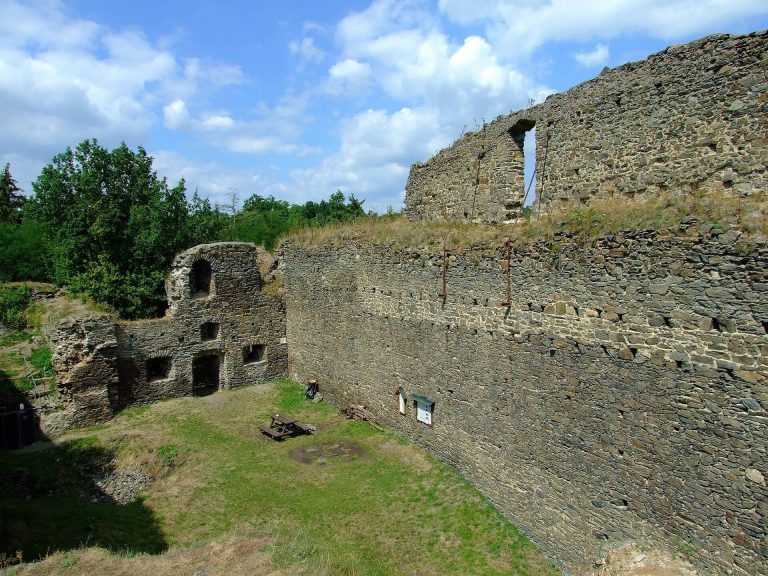
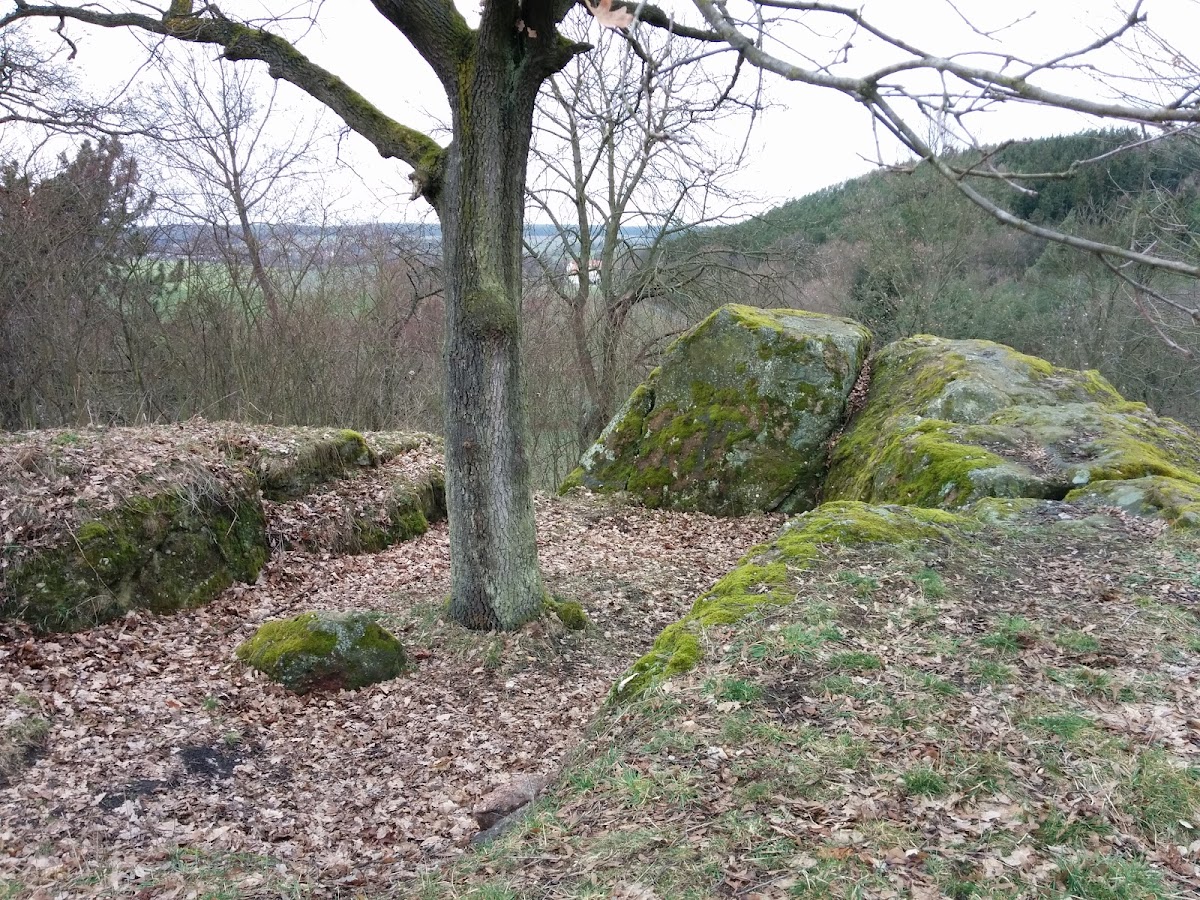
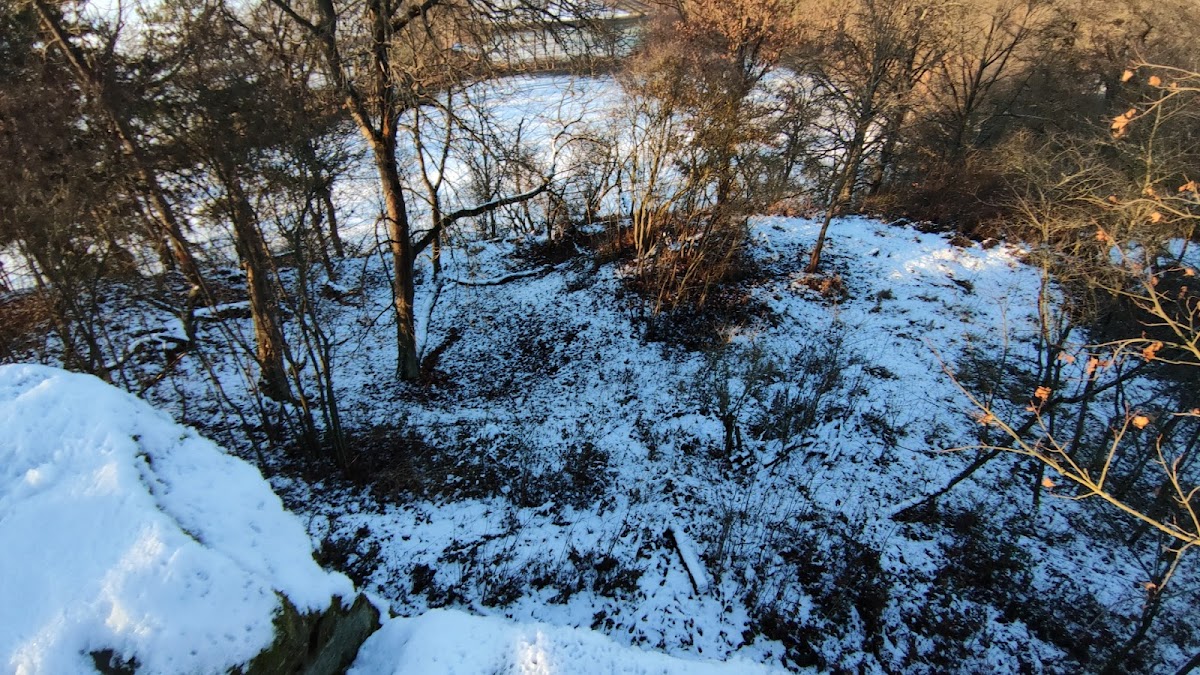
Komberk survives mainly as earthworks and terrain traces marking buildings and fortifications on a promontory about 350 metres above sea level. The castle core had an approximately oval plan. Defensive works extended around the core, while a much larger outer bailey occupied the eastern side of the site.
Castle Core
Northern Building
A building stood in the northern part of the oval core. Its ground floor was partly cut into the bedrock, linking the structure directly to the rocky terrain of the promontory.
Sunken-Floor Dwelling
On the opposite side of the core, a circular depression marks a sunken-floor dwelling. This type of structure was partly excavated into the ground, leaving its floor below the surrounding terrain.
Outer Fortifications
Southern Enclosures
The core was defended by a palisade, a barrier formed from closely set stakes or posts. On the southern side, a semicircular outer enclosure strengthened the defences. A second outer enclosure lay lower down the slope, creating another defensive line outside the castle core.
Eastern Outer Bailey
A much larger outer bailey adjoined the core on the eastern side. Its defences included a ditch and rampart, both partly surviving. A change in level between the bailey and the core may represent a filled-in ditch, preserving evidence of an earlier division between these parts of the castle.