Château de Médan: Historic Writers’ Residence in France


Site at a Glance
- Rating
- 4.7
- Popularity
- Very Low
- Country
- France
- Primary era
- Early Modern
- External website
- Open
- Eras represented
- Medieval, Early Modern, Modern
- Civilizations
- French
- Site type
- Domestic
- Remains
- Castle
On this page9 sections
History
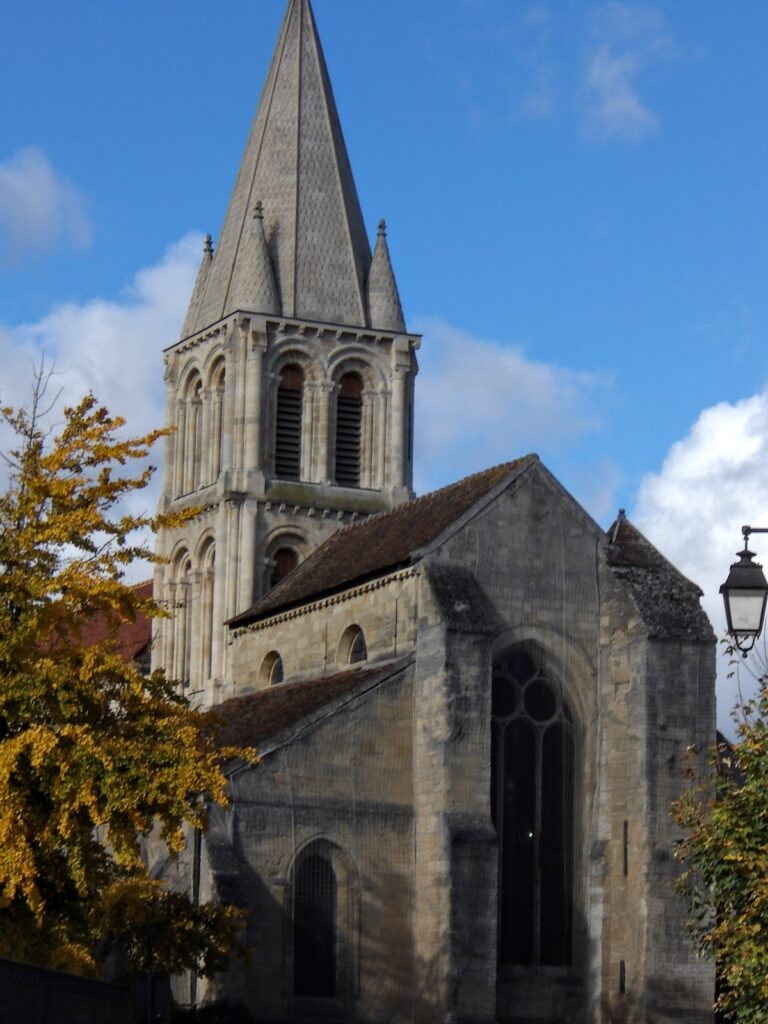
Château de Médan is a historic château in Médan, France, whose origins reach back to the ninth century. Its early structure later provided the basis for a hunting pavilion built at the end of the fifteenth century, which was transformed into a château during the sixteenth century.
From Hunting Pavilion to Literary Residence
The sixteenth-century château belonged to the Perdriel family. Through Pernette Perdriel’s marriage to Jean I Brinon, it passed to the Brinon family and became the residence of Jean II Brinon, patron of Pierre de Ronsard. Members of the Pléiade, a sixteenth-century French literary group that renewed poetry through classical forms and the French language, regularly came to Médan to hunt and write. Among them were Ronsard, Joachim du Bellay, and Jean-Antoine de Baïf.
Henri IV also hunted and stayed at the château. Around 1635, his chamberlain Jean Bourdin, a senior official responsible for service within the ruler’s household, added the farm estate. The château itself was enlarged during the eighteenth century, extending the complex beyond its earlier form.
Revolutionary and Modern History
The last seigneur, or landholding lord in the feudal and early modern social order, was guillotined on 15 November 1793 during the French Revolution. His lands and the château were then sold.
In the twentieth century, the château became associated with Maurice Maeterlinck, winner of the 1911 Nobel Prize in Literature, an internationally recognized award for major achievement in literature. He lived at Médan from 1924, where he wrote The Life of Termites and The Glass Spider. His play The Blue Bird was also performed there.
Maeterlinck’s wife abandoned the château in 1949. A fire damaged it in 1956, after which the property stood derelict. The newspaper Combat occupied the building from 1962 until its bankruptcy in 1974. It was sold at auction in 1977 and later restored by its current private owners, who live there. The château became a listed French historic monument in 1979 and also received the Maisons des Illustres designation, a heritage status for residences associated with notable historical or cultural figures. It is linked with the historical route of writers’ houses and remains privately owned.
Remains
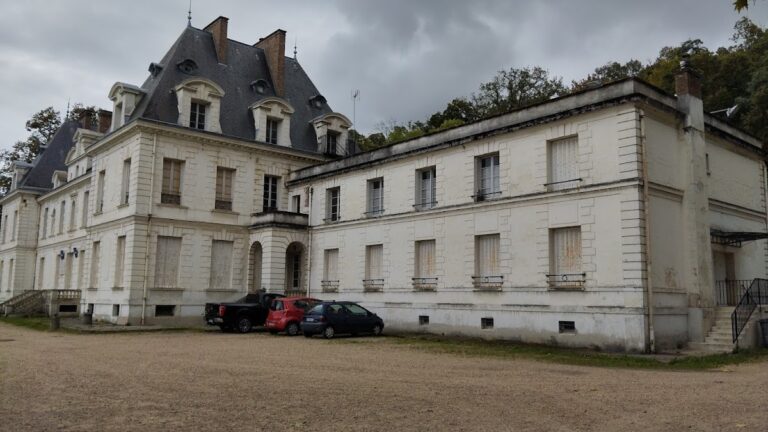
The surviving complex brings together the château, the farm estate added in the seventeenth century, and a long wing overlooking the valley. Its present form reflects successive enlargement, rebuilding, fire damage, abandonment, and restoration by the current owners.
Château and Estate Buildings
Main Château
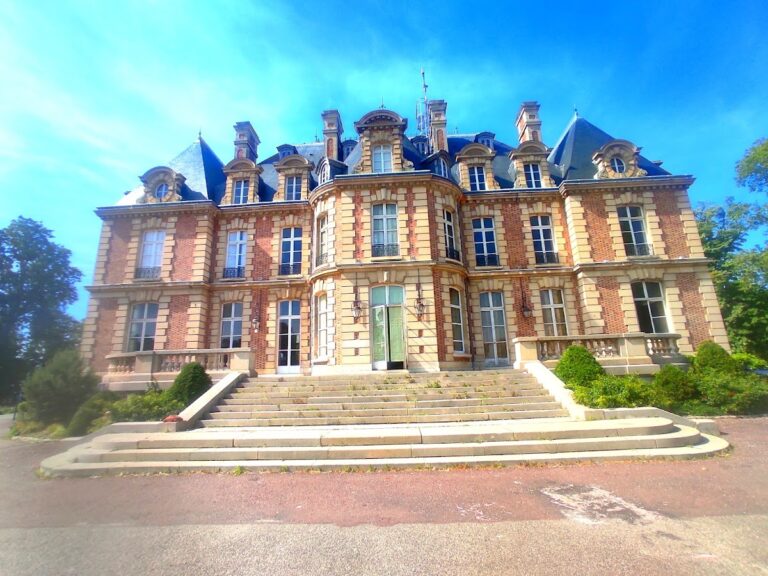
The main château developed from the ninth-century structure and the late-fifteenth-century hunting pavilion. The pavilion was converted into a residence for the Perdriel family during the sixteenth century, and the building was enlarged again in the eighteenth century. Fire damage in 1956 was followed by a period of dereliction before the château was restored.
Farm Estate
The farm estate was added around 1635 by Jean Bourdin, Henri IV’s chamberlain. It forms part of the historic group of buildings associated with the château’s expansion beyond its earlier residential core.
Valley Wing
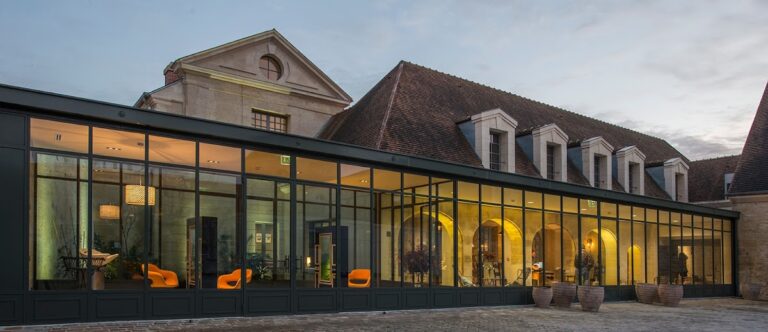
The Gilbert de Voisins family added a long wing overlooking the valley between 1750 and 1777. Baron de Dalmas rebuilt this wing in 1873, giving the surviving complex another distinct phase of architectural development.
Cézanne’s Médan
Château de Médan and its surroundings also survive through Paul Cézanne’s artistic record. He painted three works depicting the château, another painting of the Médan countryside, and numerous drawings connected with the area. One painting of the château is held by the Burrell Collection in Glasgow.
Nearby sites