Castle of Suvero: A Medieval Defensive and Residential Castle in Italy


Site at a Glance
- Rating
- 4.4
- Popularity
- Very Low
- Country
- Italy
- Primary era
- Early Modern
- Eras represented
- Medieval, Early Modern
- Civilizations
- Holy Roman Empire
- Site type
- Domestic
- Remains
- Castle
On this page9 sections
History
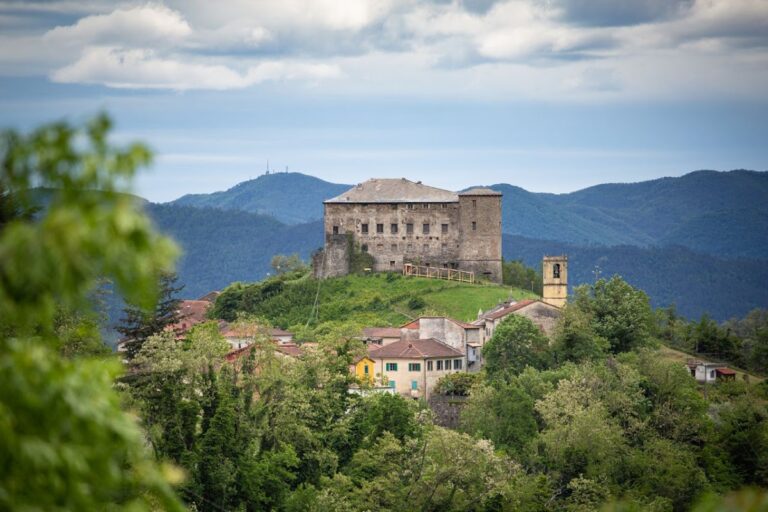
Castle of Suvero is a medieval defensive and residential building in Suvero, Italy, along the route toward Casoni Pass. It protected the settlement and later became the residence of the Malaspina feudal lords, while retaining facilities for a small garrison.
Medieval origins and Malaspina rebuilding
A castle already stood on the site by 1549, when it was described as approximately four centuries old. That year, Marquis Rinaldo Malaspina, a sixteenth-century lord of the Malaspina noble family, received investiture as lord of the fief of Suvero. A fief was a territory held by a lord within a hierarchical system of political authority and associated rights. After receiving the fief, Malaspina ordered the earlier castle to be enlarged and renovated.
From stronghold to aristocratic residence
During the Renaissance, the period that began in Italy in the fourteenth century and continued into the sixteenth, the castle’s role changed. It was no longer used exclusively for military purposes and became a fortified residence for the Malaspina lords. The building still retained arrangements for housing a small garrison and remained the family’s residence for more than two centuries.
Wartime events caused some damage, but the harm was limited and repaired promptly. The castle therefore remained largely intact until a later period of decline. In 1797, the end of Malaspina rule under the new Napoleonic French administration also ended the feudal jurisdiction of the nobles of Lunigiana. The owners then abandoned the castle.
Decline, restoration, and present use
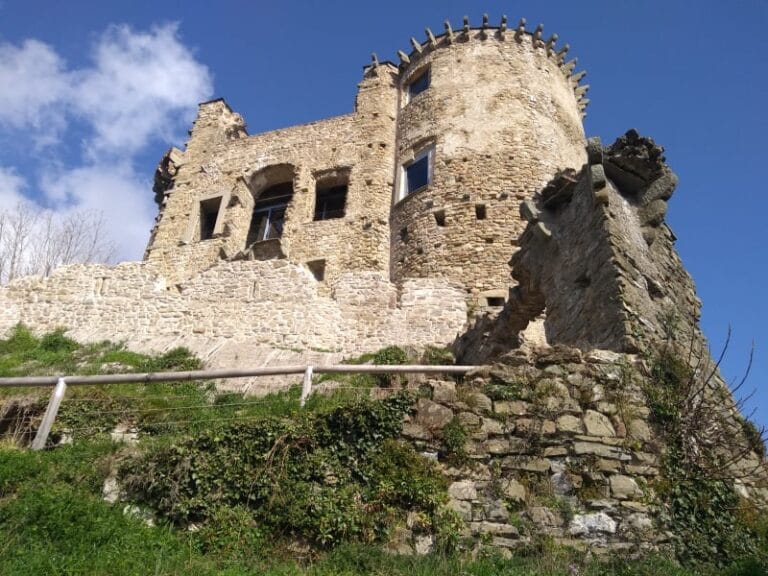
Neglect during the nineteenth century weakened the building, and the severe earthquake of 1920 led to further collapses, including two of its three corner towers. In recent years, the Castle of Suvero underwent a complete restoration described as the third major restoration in its history. It is now privately owned and used as a residence. The castle has been recognized as Italian national heritage since 1937.
Remains
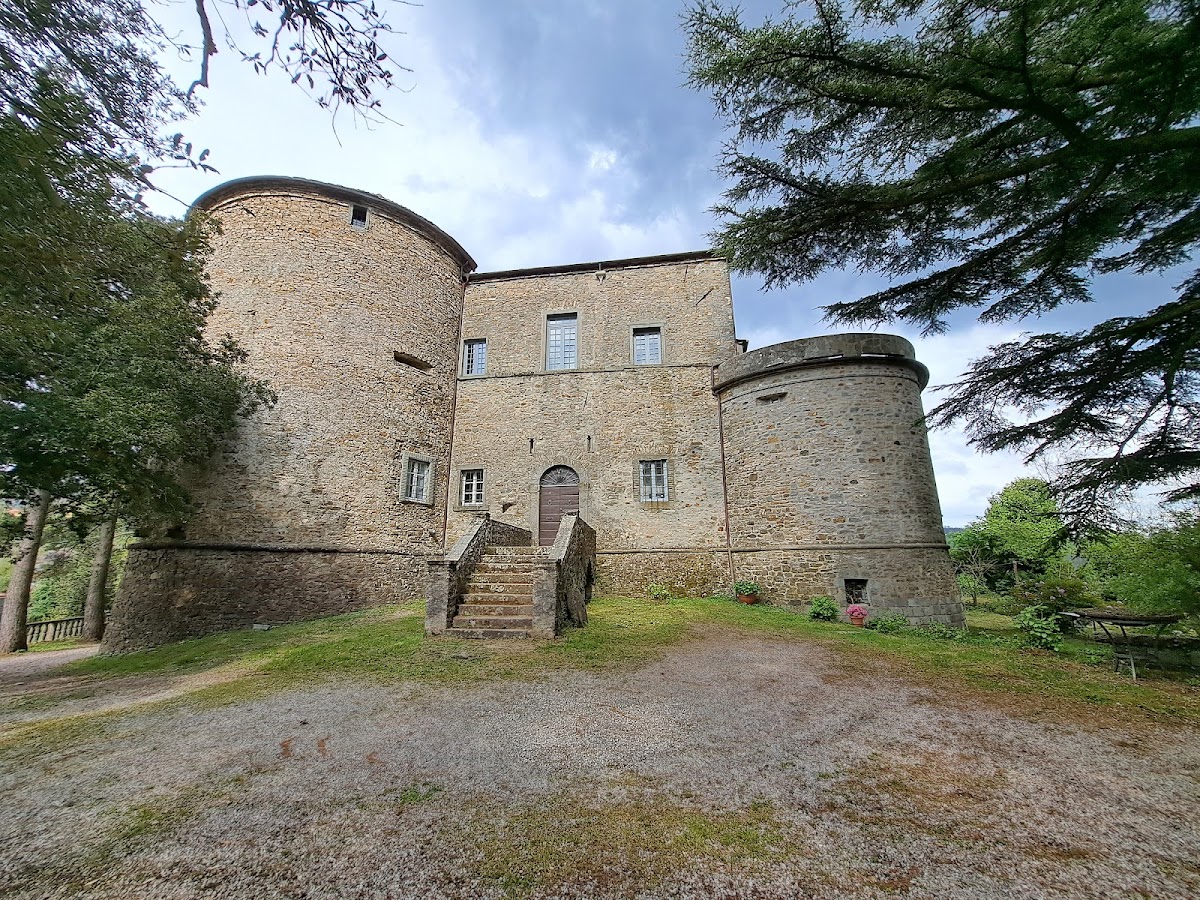
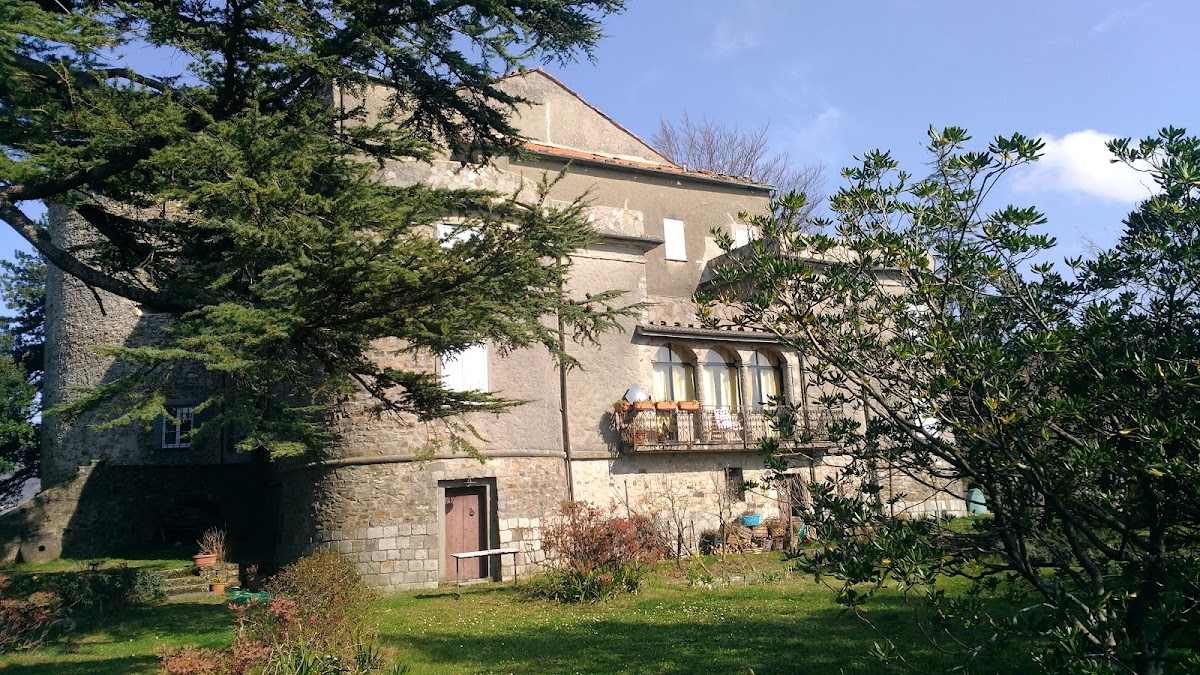
The castle occupies a commanding position over Suvero at Piazza Fontana Benedetto Mergoni, beside the route toward Casoni Pass. Its plan is trapezoidal, with imposing towers reinforcing three of its four corners. The restored building now has two floors, while surviving traces indicate that it originally rose to a third floor.
Surviving towers and upper-level features
Corner tower
Only one of the three corner towers survives. It rises 18 metres and forms the principal surviving element of the castle’s former defensive arrangement. The other two towers collapsed after the castle was abandoned, during the prolonged neglect that followed, and in the 1920 earthquake.
Windmill and millstone
A windmill once stood on the former third floor. Its millstone has been preserved inside the castle, linking the surviving interior to the building’s earlier upper-level use.
Residential and defensive fabric
Although the castle was converted into a residence, it retained infrastructure intended to accommodate a small garrison. The complete restoration has left the building in good condition, and the surviving structure now functions as a private dwelling.