Baile Hill: The Motte of York’s Old Baile Castle
Site at a Glance
- Rating
- 4.6
- Popularity
- Low
- Country
- United Kingdom
- Primary era
- Medieval
- External website
- Open
- Eras represented
- Medieval
- Civilizations
- English, Norman
- Site type
- Military
- Remains
- Castle
On this page8 sections
History
Baile Hill is the surviving remnant of Old Baile, a Norman motte-and-bailey castle in York, United Kingdom, whose origins date to 1068. A motte-and-bailey castle combined a raised earth mound carrying a fortified structure with an enclosed courtyard. William the Conqueror, the duke of Normandy who became king of England after the Norman Conquest of 1066, ordered a castle on the south side of York near the River Ouse after taking the city.
Norman foundations and rebuilding
A second castle was built on the opposite side of the river after a rebellion the following year. The sequence is uncertain, although the castle on the east side, at the site of the future York Castle, is generally considered to have come first, followed by Old Baile on the west side. Danes destroyed both castles in 1069, and William ordered their reconstruction almost immediately.
Old Baile apparently did not serve as a regular long-term residence or stronghold. By the thirteenth century, the Archbishop of York held it. In 1322, Archbishop William Melton agreed to defend the castle during wartime.
Integration into York’s defenses
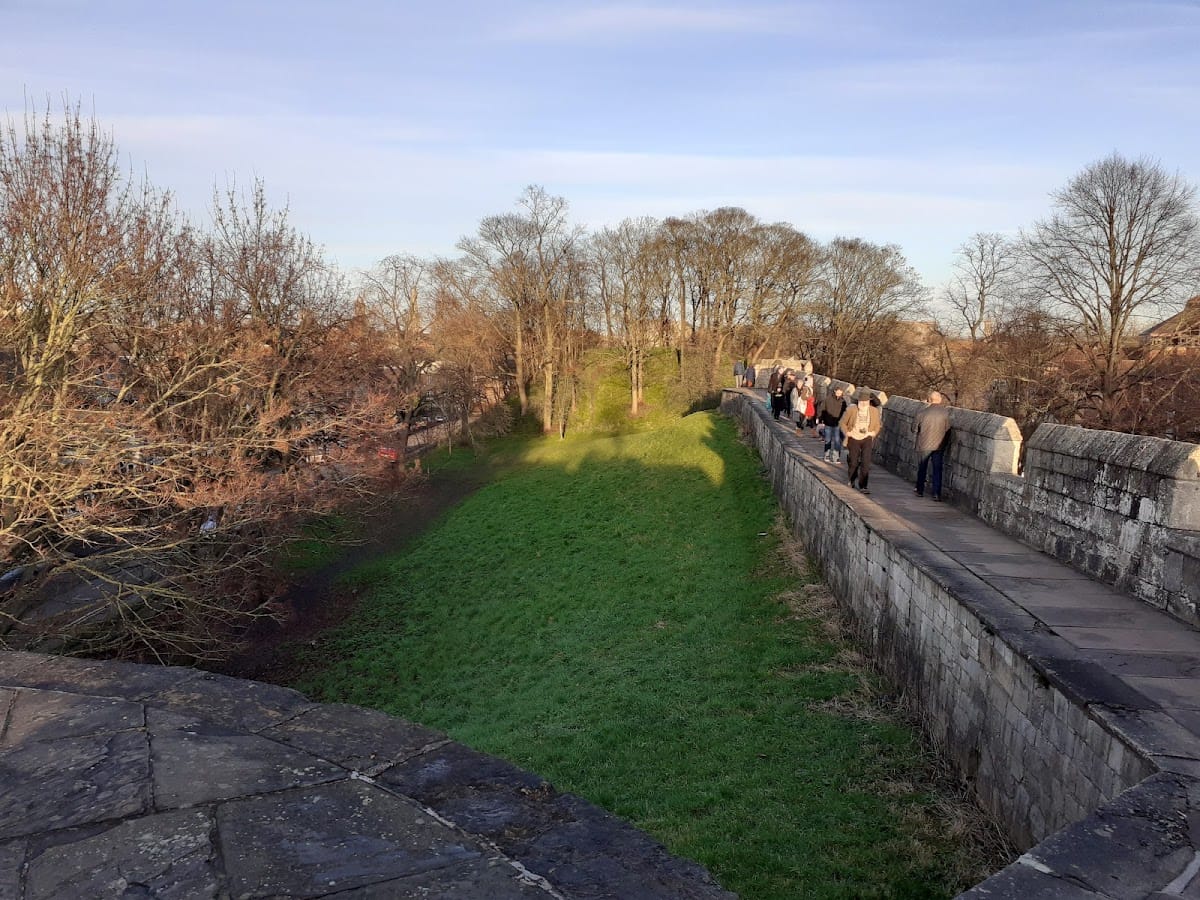
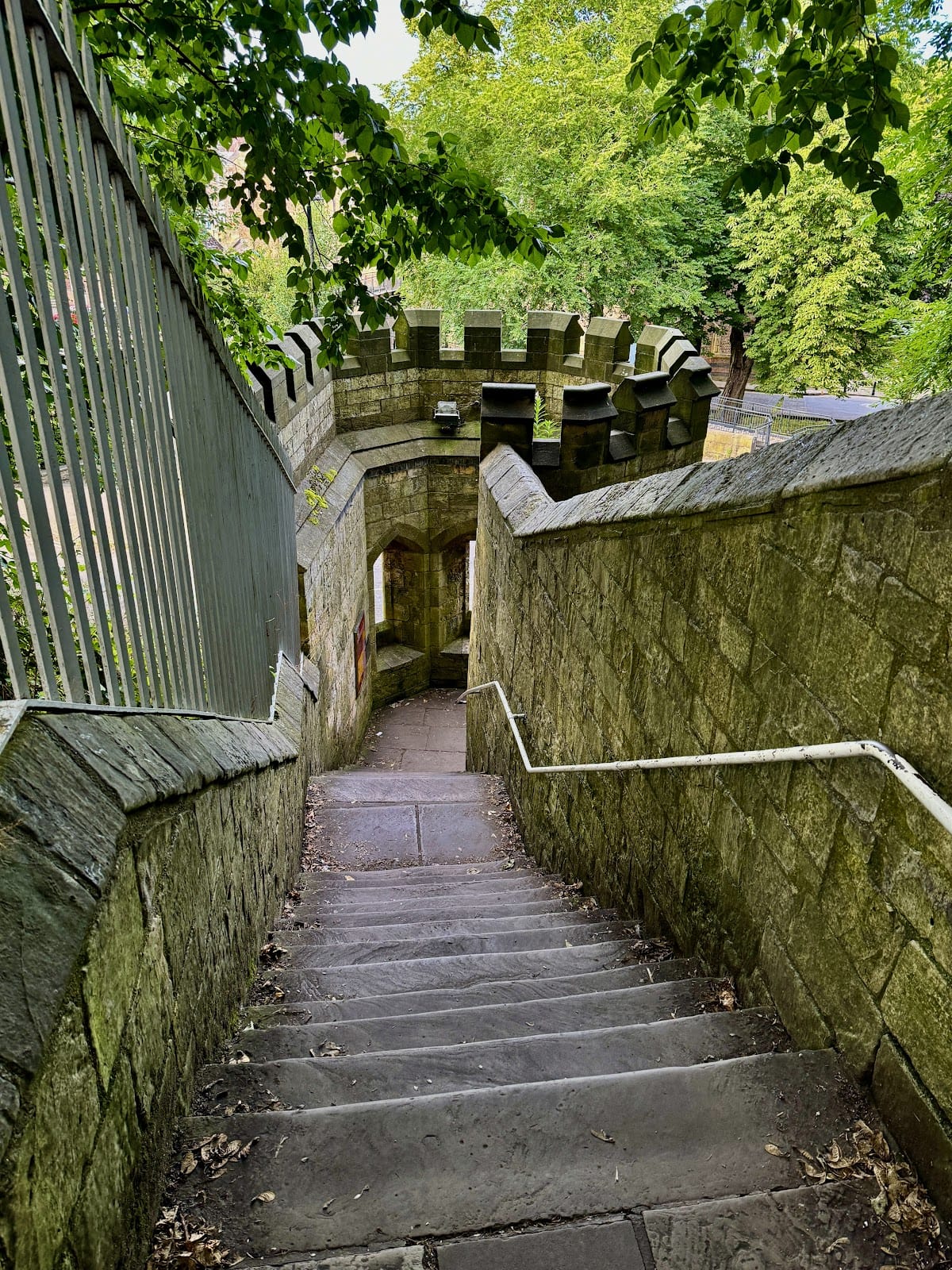
Around 1340, York’s city walls were extended along the southeast and southwest sides of Old Baile. The new defenses incorporated the castle’s existing earthworks and ditch, although they were rarely used. Old Baile later served mainly for grazing and recreation, including medieval archery.
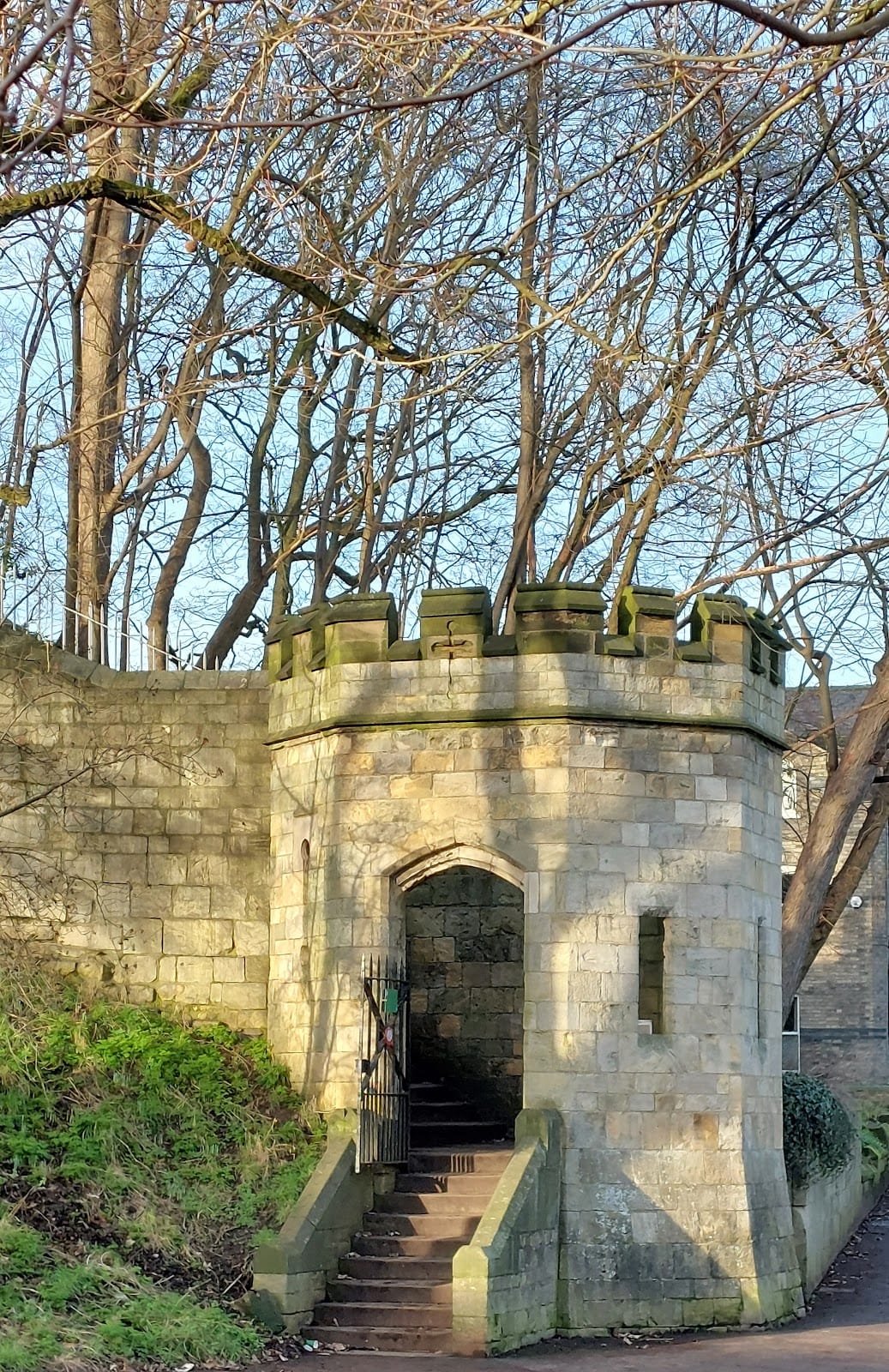
During the Siege of York in 1644, part of the English Civil War, Baile Hill became a Royalist firing position. The conflict was fought between supporters of Parliament and the monarchy, while Royalists supported King Charles I. The mound now forms part of York’s historic defensive complex, which includes the city walls, gates, posterns, moats, other mounds, St Leonard’s Hospital, and Merchant Taylor’s Hall. The listed complex excludes the section from Bootham Bar to Monk Bar north of York Minster.
Remains
Baile Hill stands in York’s Bishophill area at an elevation of about 15 metres above sea level, at the junction of Baile Hill Terrace and Cromwell Road. It is a human-made mound, the surviving motte of Old Baile, and its position can be understood alongside the former castle courtyard to the northwest and the later city defenses.
Castle earthworks
The motte
The motte was approximately 12 metres high and 66 metres in diameter. A large ditch surrounded it, while a staircase led up to a wooden structure at the summit. A wooden fence enclosed this upper structure. The surviving mound preserves the principal earthwork of Old Baile.
The bailey and ditch
The rectangular bailey lay northwest of the motte. An earth rampart and an outer ditch enclosed this courtyard. Two slight depressions in York’s city ramparts mark parts of the former castle ditch, with one beside Baile Hill and another near Victoria Bar.
Later surroundings
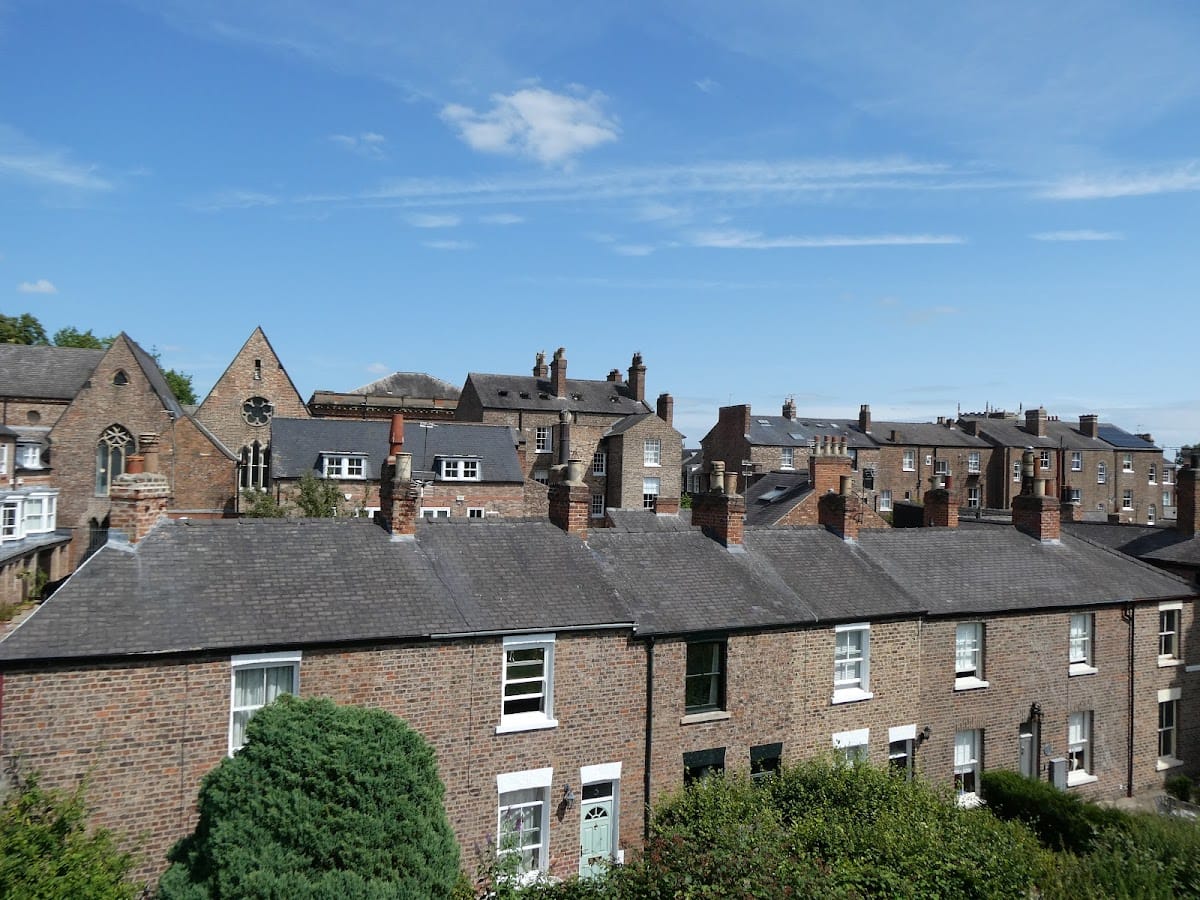
Houses built during the 1880s cover the remainder of the Old Baile site. The mound therefore survives within a later urban setting, while the earthworks incorporated into York’s walls preserve additional traces of the castle’s defensive boundary.