Château de Cérons: A Historic Bordeaux Chartreuse and Wine Estate


Site at a Glance
- Rating
- 4.7
- Popularity
- Low
- Country
- France
- Primary era
- Early Modern
- External website
- Open
- Eras represented
- Early Modern
- Civilizations
- French
- Site type
- Domestic
- Remains
- Elite Residence
On this page7 sections
History
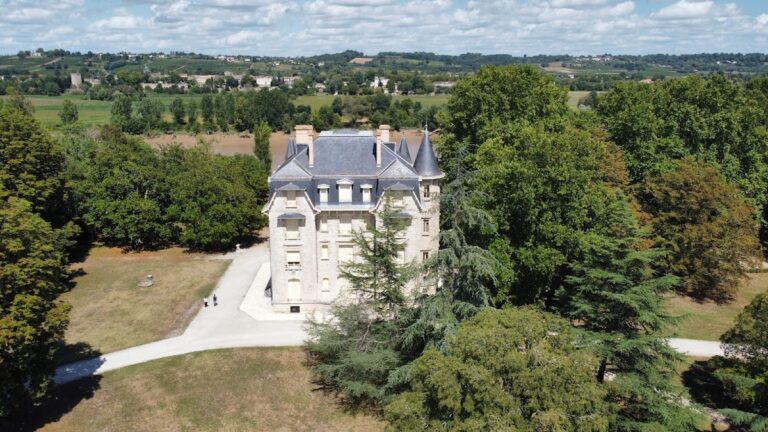
Château de Cérons is a historic chartreuse and wine estate in Cérons, France, built by the Denys family between the late seventeenth and early eighteenth centuries. One of the earliest chartreuses in Bordeaux, it follows a classical design incorporating Louis XIV-style elements and occupies the site of the former village beside the Garonne.
Construction and Ownership
The Denys family, whose members were Bordeaux parlementarians, established the château during the transition from the seventeenth to the eighteenth century. Its position near the Garonne mattered to the movement of Bordeaux wine, which was exported by river. The building faces a twelfth-century church in the commune of Cérons, about 35 kilometres south of Bordeaux.
The Calvimont family owned the château during the eighteenth and nineteenth centuries. The French Revolution altered the interior and forced the Calvimonts into exile. Afterward, the property was sold at auction several times and passed through numerous owners before it came to the Vaché family.
Twentieth-Century Uses and Preservation
Roger Expert, a prominent architect of the first half of the twentieth century, spent the later part of his life at Château de Cérons and restored its central hall. During the First World War, the northern part of the building served as a military hospital, mainly treating victims of gas attacks on the front. In 1940 and during the Algerian War, the château also housed refugees.
The Perromat family acquired the estate in 1958, and Caroline and Xavier Perromat have owned it since 2012. The château was listed as a French historic monument by decree on 19 August 2008. This protection concerns its interior decoration, including sculptures, woodwork, and stucco ornament.
Wine Production
Château de Cérons remains a wine-producing estate. It makes sweet wine under the Cérons appellation, a legally defined Bordeaux wine area, and dry red and white wines under the Graves appellation. The estate is described as one of the few Bordeaux properties producing all three wine colours.
Its cultivation follows a reasoned approach, with herbicide-free soil management, hedges that support biodiversity, a reduced carbon impact, and short supply chains. These practices form part of the estate’s continuing agricultural use.
Remains
Château de Cérons is a classical chartreuse, a French country residence generally arranged around a long principal building with projecting or separate pavilions. Its main composition includes two pavilions and a pronounced acroterion, an architectural ornament placed along the upper edge of a building. The château’s protected interiors retain sculptures, woodwork, and stucco ornament, while the central hall bears the mark of Roger Expert’s restoration.
Building and Interior
The architectural character combines the orderly composition of a classical chartreuse with Louis XIV-style details. The two pavilions form part of the principal arrangement, and the acroterion emphasizes the upper edge of the building. Inside, sculpted elements, woodwork, and stucco decoration constitute the features covered by the historic-monument protection.
Vineyards and Setting
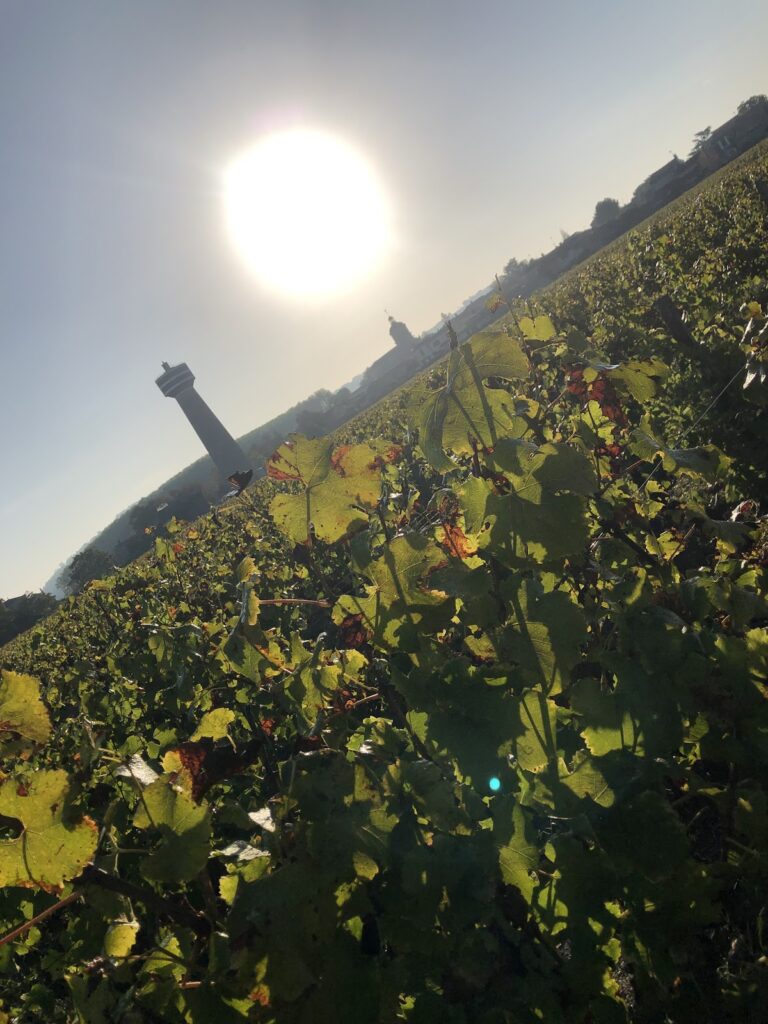
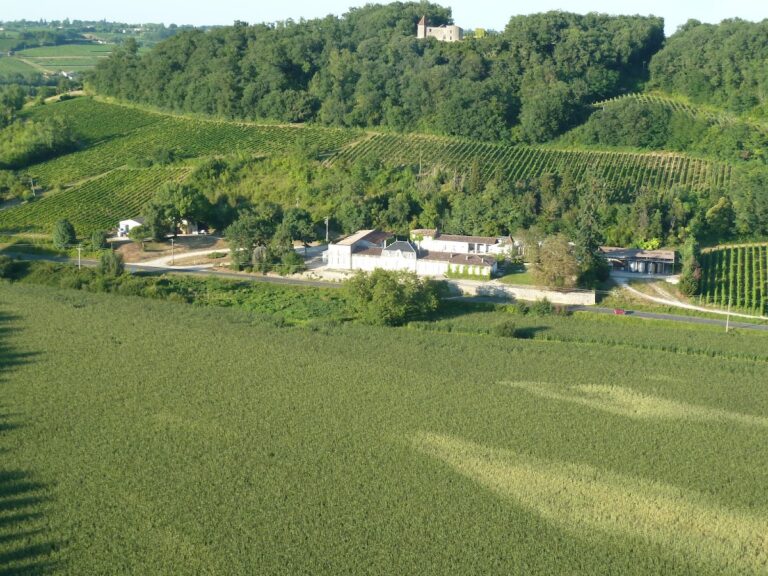
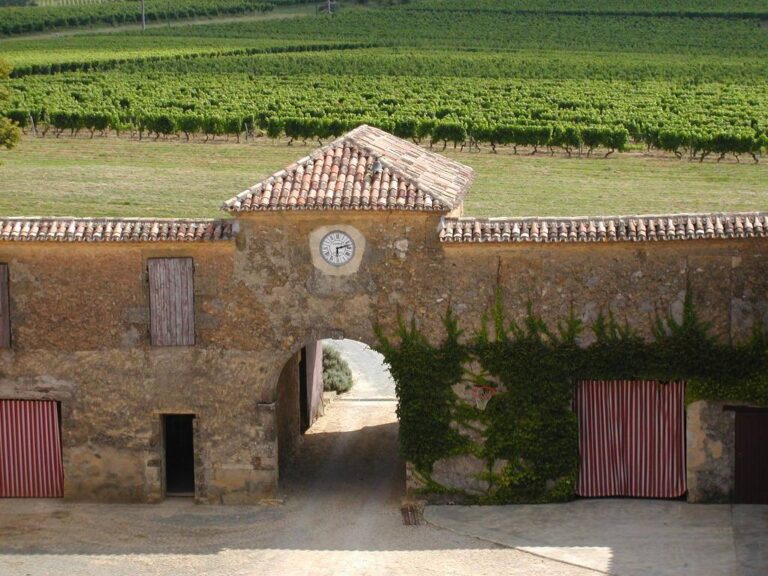
The estate’s vineyards cover 30 hectares, including three hectares around the château. All the parcels lie within the Cérons appellation and are located mainly on the Cérons plateau. The vines grow in gravelly soil over limestone, a combination that defines the physical setting of the wine-producing estate.
The nearby Ciron influences the development of Botrytis cinerea, a fungus whose controlled growth, often called noble rot, concentrates grapes for sweet wine production. This influence is weaker than in Sauternes and Barsac. The white wines use Sauvignon, Sémillon, and Muscadelle, while the red wines are made from Merlot and Cabernet Sauvignon.
Nearby sites