Castello di San Nicola de Thoro-Plano: Medieval Fortress of Maiori


Site at a Glance
- Rating
- 4.6
- Popularity
- Low
- Country
- Italy
- Primary era
- Medieval
- External website
- Open
- Eras represented
- Medieval
- Civilizations
- Kingdom of Naples
- Site type
- Military
- Remains
- Castle
On this page7 sections
History
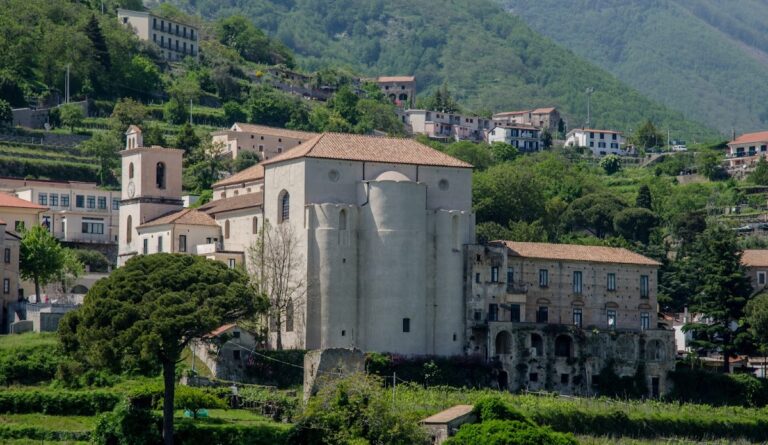
Castello di San Nicola de Thoro-Plano is a medieval defensive structure in Italy, overlooking Maiori from the Lattari Mountains. Its settlement grew around an older church dedicated to Saint Nicholas, whose name became part of the castle’s identity.
Early defensive role
The first recorded information about the settlement dates to around the middle of the ninth century, after the assassination of Sicard of Benevento, a Lombard prince whose death was followed by political fragmentation and warfare in southern Italy. The stronghold formed part of the Duchy of Amalfi, the medieval political power centred on Amalfi and its surrounding territory. It helped relay information between military units and provided shelter for the population during frequent raids, including attacks by Saracen marauders, a medieval European term for Muslim peoples that included raiders active in the Mediterranean. The site functioned as a fortress and refuge rather than as a residential manor.
Fifteenth-century enlargement
Major completion of the castle took place around 1465. After the Piccolomini family acquired the fief, a territory held by a vassal in return for service or allegiance, the fortress was substantially enlarged between 1465 and 1468. The Piccolomini were influential Italian nobles and vassals of King Ferrante of Naples, also known as Ferdinand I. The work strengthened the walls and added multiple towers, and the enlargement cost the town of Maiori 6,000 ducats.
Religious incorporation and later use
In 1593, the Collegiate Church of San Nicola was suppressed, and its religious complex was incorporated into the castle. A collegiate church was served by a college of clergy rather than by a monastic community. The complex continued in use at least until the beginning of the nineteenth century, first for military purposes and later for storing agricultural produce by local inhabitants. The castle then declined and was adapted as a museum during the nineteenth century. It now also houses a small museum of local manufactures, many of them recovered in the castle area. Castello di San Nicola de Thoro-Plano is recognized as Italian national heritage.
Remains
The fortress stands on Thoro-Plano hill in the Lattari mountain chain, overlooking the districts of Arcola and Carpineto. The name Thoro-Plano refers to the flat part of Mount Thoro. The castle preserves the form established in 1465, with a polygonal perimeter extending for approximately 550 metres. Its continuous curtain walls, the fortified walls linking towers, contain loopholes, narrow openings used for observation or the discharge of weapons, and buttresses.
Walls and towers
Nine towers interrupt the curtain walls, forming the principal defensive framework of the surviving fortress. The enlarged complex also contained barracks, storehouses, and a drinking-water well with a reservoir. Across the landscape, the settlement faced a separate signal fortress on the hill of Torina, also called Thoro Clivus. That fortification was dedicated to Saint Michael the Archangel, and its surviving tower is known as Il Campanile in the Tuoro area.
Museum collections
The structure contains a small museum preserving ancient local manufactures. Most of these objects were recovered in the area of the castle and form part of the material evidence associated with its later history.