Castle of Les Torrocelles: A Medieval Fortress and Hermitage in Spain



Site at a Glance
- Rating
- 4.5
- Popularity
- Low
- Country
- Spain
- Primary era
- Medieval
- Eras represented
- Medieval
- Civilizations
- Crown of Aragon
- Site type
- Military
- Remains
- Castle
On this page8 sections
History
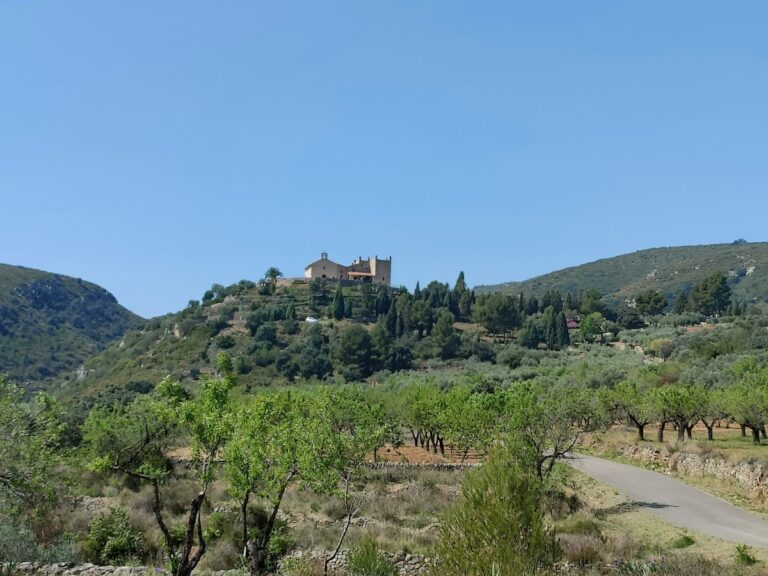
Castle of Les Torrocelles is a castle-and-hermitage complex in Spain, in the municipality of Lucena del Cid near Atzeneta. Its origins extend at least to the Muslim period, while its surviving basic form reflects medieval Christian military and religious construction. Successive expansions and alterations created the varied appearance of the complex.
Muslim-period origins
Les Torrocelles stands at the end of a narrow valley crossed by the route between Lucena and Atzeneta. The castle of Atzeneta is about 2 kilometres away at the opposite end of the valley. Together, the two fortifications marked and defended the boundaries of the powerful castles and districts of Alcalatén and Culla.
Alcalatén and Culla were already established during the Muslim period. For this reason, Les Torrocelles and the neighboring castle of Atzeneta are considered possible advanced fortified positions belonging to those Islamic districts. The site’s early role therefore appears to have been connected with the control and defense of an important valley passage.
Christian medieval development
The castle’s simple medieval structure appears to belong to the early Christian Reconquest, the long expansion of Christian-ruled territories in the Iberian Peninsula at the expense of Muslim states. The complex combined military and religious purposes, with the castle and the hermitage developing in different periods. Later enlargements and remodelings produced the heterogeneous form that survives today.
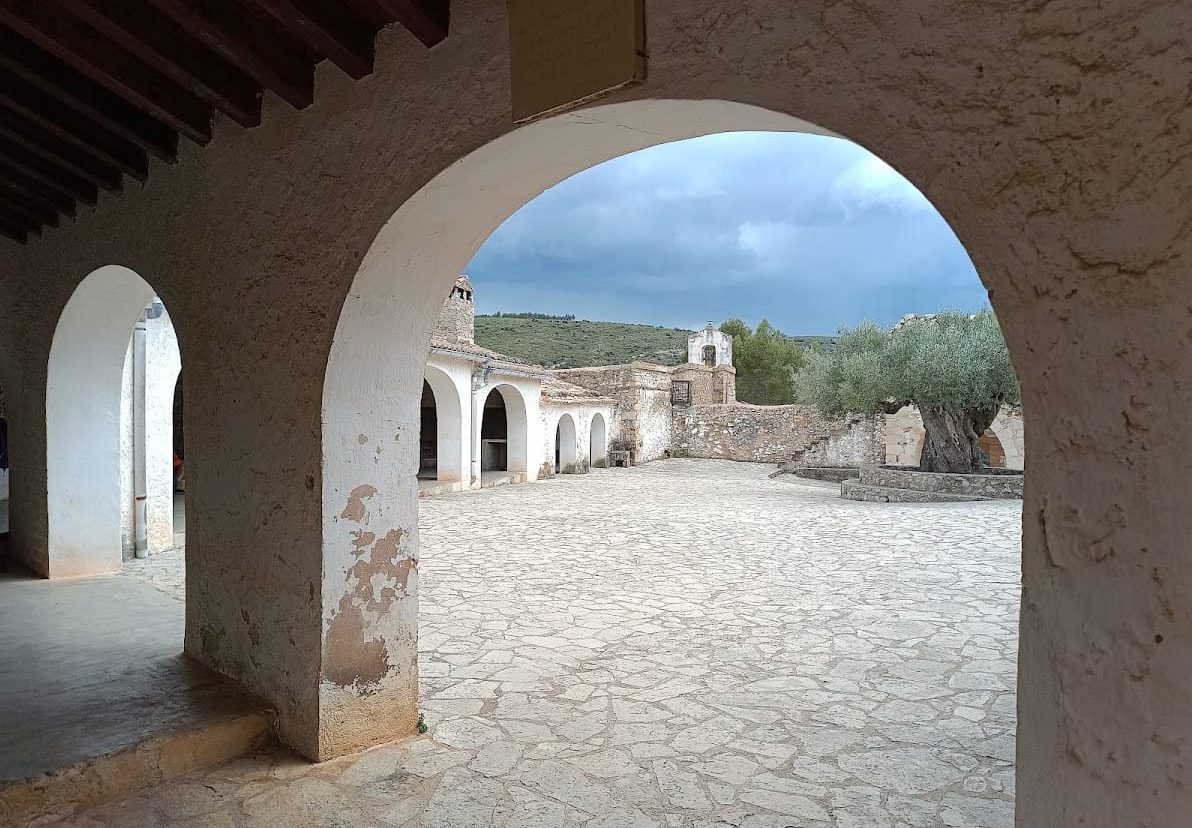
The hermitage remains a station used by the Pilgrims of Les Useres, participants in a traditional Valencian pilgrimage. The complex has been listed in the Valencian heritage register since 2023. The castle itself is in ruins, while the surviving structures preserve evidence of the site’s changing defensive and religious functions.
Remains
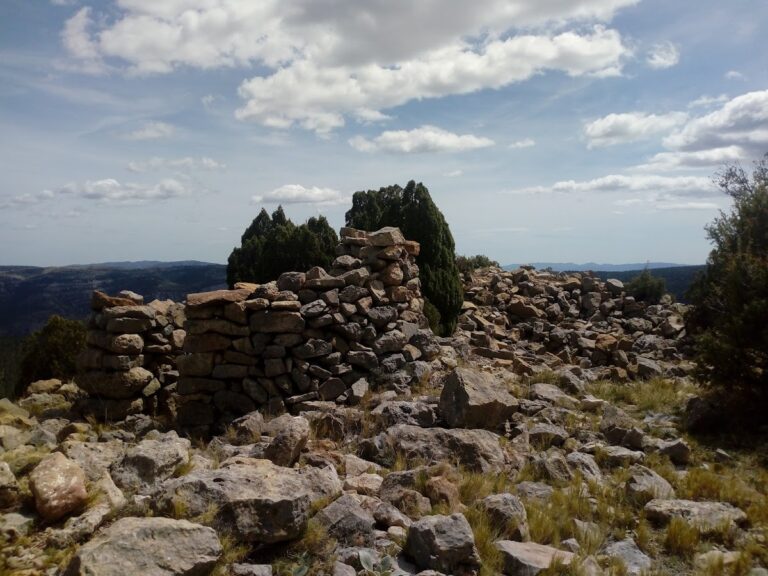
The castle is a mountain fortress arranged on a single level within an irregular right-trapezoidal plan. It covers approximately 500 square metres and is enclosed by four curtain walls, meaning sections of fortification linking strengthened points. The walls are made from unworked local limestone set in alternating diagonal rows, a herringbone pattern, and bonded with mortar. The southern wall forms the longer side of the enclosure and contains the principal surviving tower.
Fortress enclosure
Enclosing walls
The four walls define the castle’s irregular enclosure and its compact internal area. Their local limestone construction, rough surface, diagonal arrangement, and mortar bonding give the fortification a simple medieval character. A rough staircase fixed to the inner face of the wall rises toward the tower and connects the enclosure with its upper defensive structure.
Southern entrance tower
At the center of the southern wall stands a solid, almost square tower built of regularly cut stone blocks, or ashlar masonry. It has two levels and contains the former sole entrance to the complex. The gateway passes through two arches. The outer arch, which connects the approach with the tower, is a regular semicircular opening formed from large wedge-shaped stones called voussoirs. The inner arch, leading from the tower into the castle courtyard, is considerably larger and has a Gothic form with a divided central locking stone, or keystone.
The upper level contains narrow loopholes, openings used for observation and ranged weapons, facing both outward and toward the interior of the enclosure. The tower is covered by a double-pitched roof of Moorish tiles. Its original top was probably finished with battlements, although the present structure is recorded as being in ruins.
Hermitage
The complex also contains a hermitage, a small chapel or shrine, associated with the Pilgrims of Les Useres. It belongs to a different period from the castle and continues the site’s religious use alongside the remains of the mountain fortress.