Donadea Castle: A Medieval and Aylmer Estate Stronghold in Ireland



Site at a Glance
- Rating
- 4.7
- Popularity
- Low
- Country
- Ireland
- Primary era
- Early Modern
- Eras represented
- Early Modern
- Civilizations
- Irish
- Site type
- Military
- Remains
- Castle
On this page11 sections
History
Early religious and medieval origins
Donadea Castle is a ruined historic site in Ireland, in Donadea Demesne, County Kildare. Its history is associated with a religious settlement traditionally linked to Saint Patrick, the missionary saint connected with the Christianization of Ireland. The Book of Armagh, a medieval manuscript containing material about Patrick and early Irish Christianity, records that he visited the place in 455, when it was called Dunmurraghill, and marked out the foundations of a religious settlement. St Peter’s was laid out at the same time.
An Iron Age defensive structure probably preceded the settlement. The Irish element dun, meaning fortress, survives in the site’s earlier name. Dunmurraghill was destroyed by the Danes in 832, after which the church was rebuilt. From the twelfth century, Anglo-Norman feudal lords established a manor at Donadea. A manor house was built on or near the site of the present castle, beginning a succession of fortified structures there during the Middle Ages.
The Aylmer fortified estate
The Aylmer family acquired the manor and estate from the Earls of Ormond during the sixteenth century. Gerald Aylmer began constructing a new tower in 1581, and the work was completed in 1624. In 1626, the Aylmers repaired or rebuilt the medieval church. Gerald Aylmer was subsequently created the first Baronet of Donadea, a hereditary British and Irish title ranking below a baron and above most knighthoods.
The estate remained connected with the Aylmer family until Caroline Aylmer, its last member, died in 1935. She left the property to the Church of Ireland, an Anglican church within Ireland’s ecclesiastical tradition. The church later sold the estate to the state.
From private estate to public forest park
Donadea Forest Park opened in 1981 on part of the former Aylmer estate. It is managed by Coillte, Ireland’s state-owned forestry company, and covers approximately 2.43 square kilometres. The park is designated a Natural Heritage Area, an Irish status recognizing a site for its natural-heritage value. The name Donadea is also recorded in the Irish form Domhnach Dheá.
Remains
Historic buildings and estate features
Donadea Castle
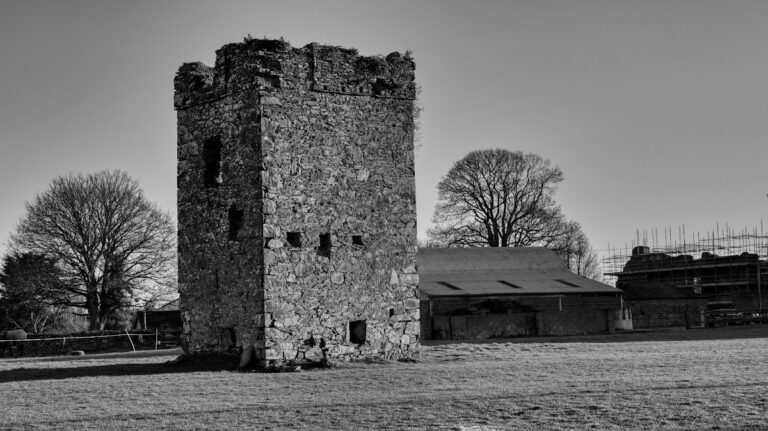
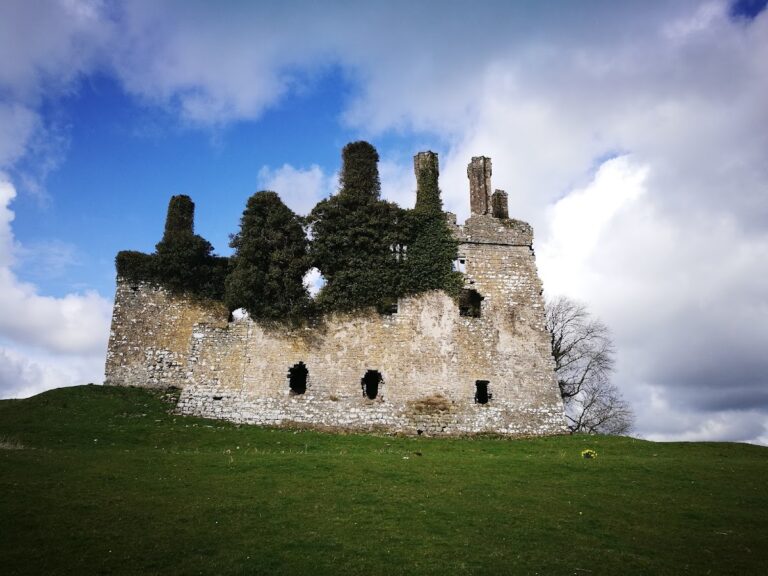
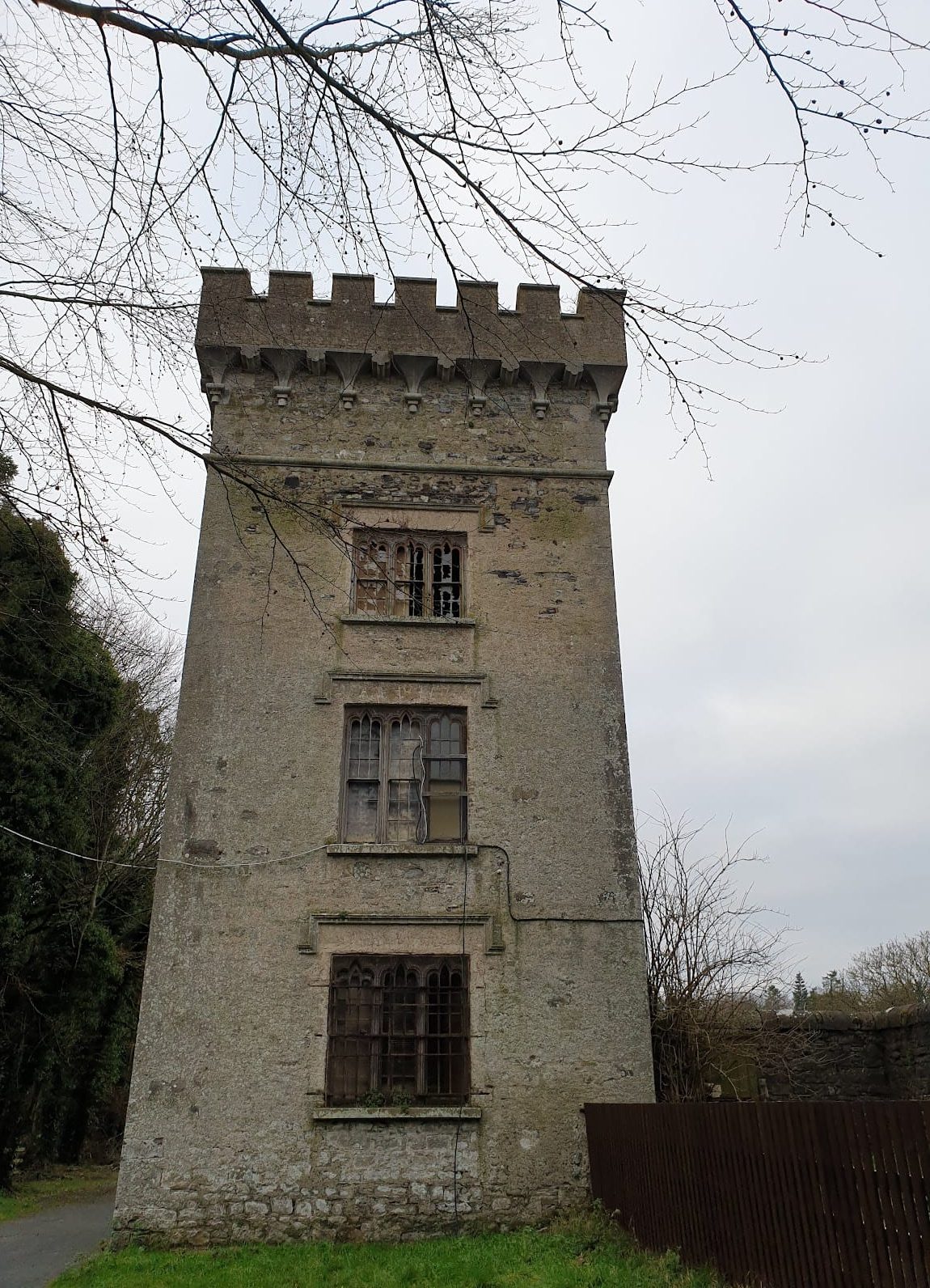
The oldest surviving part of Donadea Castle is the tower begun by Gerald Aylmer in 1581 and finished in 1624. It represents one phase in the series of fortified structures built on or near the site from the medieval period onward. The castle survives as a ruin within the demesne, alongside the remains of a tower, walled gardens, an ice house, a boathouse, and Lime Tree Avenue.
St Peter’s Church
St Peter’s Church is a small seventeenth-century Church of Ireland building within Donadea Demesne. The site’s earlier churches were wooden, while the medieval church was rebuilt by the Normans and later repaired or rebuilt by the Aylmers in 1626. The surviving church forms part of the historic building group associated with the castle and estate.
Woodland and water landscape
Lake and drainage streams
The forest park includes a lake of approximately 2.3 hectares. Walled streams form part of the park’s drainage system, linking the managed water features with the wider estate landscape.
Mixed woodland
Mixed woodland covers approximately 600 acres of the park. Together with the former demesne buildings, gardens, avenues, and water features, it preserves elements of the landscape that developed around the Aylmer estate.