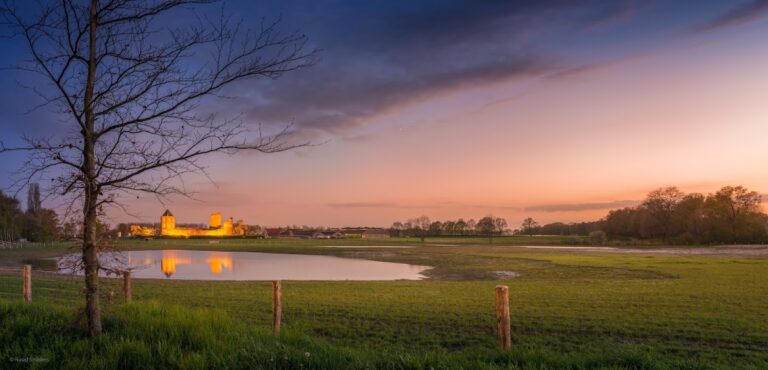
Burg Heinsberg: A Motte Castle and Bastioned Fortress in Germany
Site at a Glance
- Rating
- 4.3
- Popularity
- Low
- Country
- Germany
- Primary era
- Medieval
- Eras represented
- Medieval, Early Modern
- Civilizations
- Holy Roman Empire
- Site type
- Military
- Remains
- Castle
On this page11 sections
History
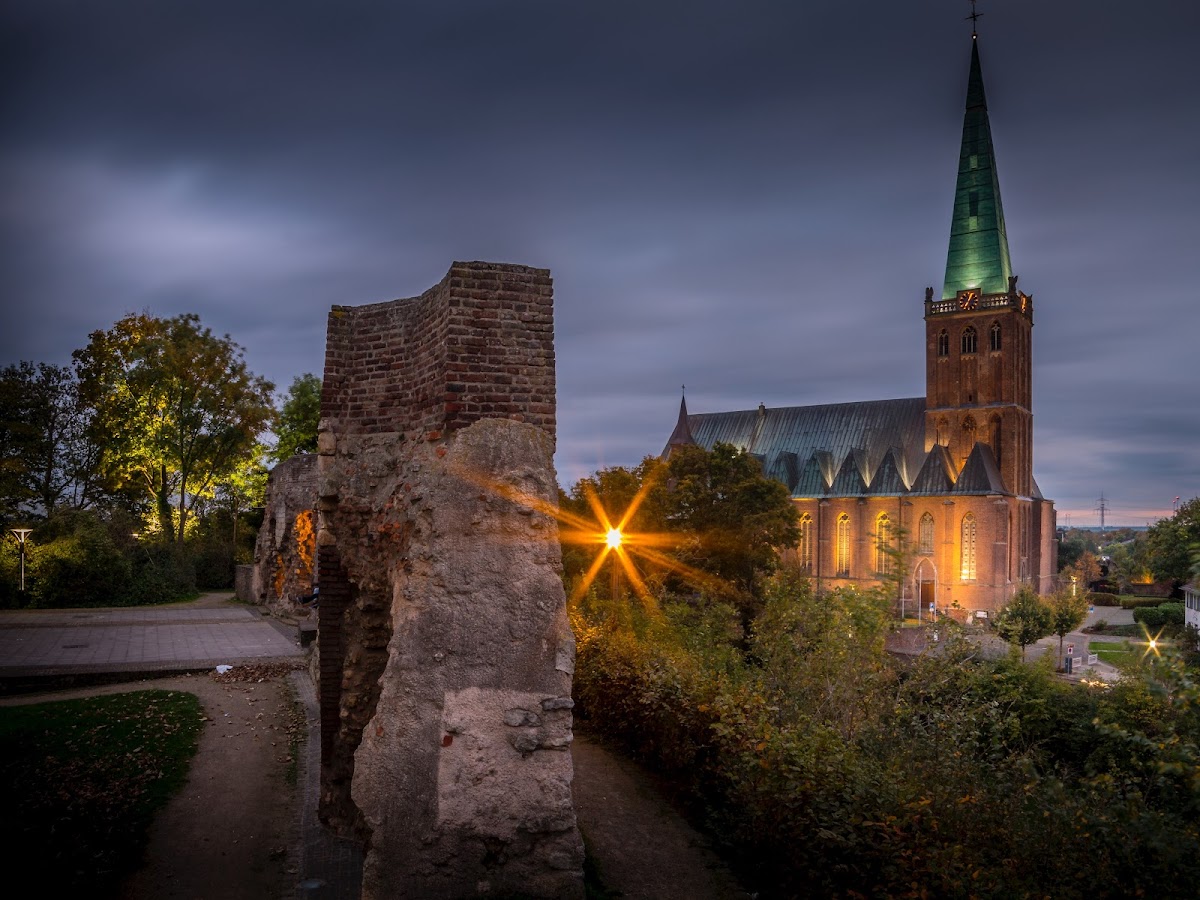
Burg Heinsberg is the ruin of a medieval motte castle and later bastioned fortress in Heinsberg, Germany. Probably founded in the eleventh century, it became the seat of the Lords of Heinsberg before developing into a stone-built castle and, in the sixteenth century, a modern fortress. The associated Burgberg–Kirchberg area is one of the largest surviving motte complexes in the Rhineland.
Origins and Medieval Development
The castle’s exact construction history remains uncertain. At an unclear date, probably during the eleventh century, it became the residence of the Lords of Heinsberg, the noble family that ruled the Lordship of Heinsberg. The first fortification was probably a relatively modest timber-and-earth structure.
In 1144, Heinrich of Limburg destroyed the castle and its settlement on behalf of Conrad III, the King of the Romans, a title used by the elected German king before or apart from imperial coronation. During the twelfth century, the site was expanded into a stone Randhausburg, a castle whose buildings were arranged around the edge of its fortified core. Limestone, tuff, marl, and sandstone were used in this medieval construction, some of them brought from outside the local area.
Jülich Rule and Sixteenth-Century Fortification
After the Lordship of Heinsberg passed to the Duchy of Jülich through marriage and inheritance, Burg Heinsberg became the seat of a Jülich Amtmann from 1484. An Amtmann was an administrative official who governed a territorial office on behalf of a prince. The Duchy of Jülich was a major state of the Holy Roman Empire in the lower Rhine region.
In 1538, Wilhelm V of Jülich, Cleves, and Berg was elected Duke of Guelders by the estates of Guelders, while Emperor Charles V also claimed the duchy. This dispute over control of Guelders created a strategic danger for Heinsberg, which stood near the Spanish Netherlands, the Habsburg-controlled Netherlands. That same year, the town and castle began to be reshaped as a bastioned fortress.
Bertram von Zündorf planned the fortress works and also served the ducal house at Düsseldorf Palace. The southern side of Heinsberg was redesigned according to the bastioned system, which used projecting angular defenses to provide overlapping fire and protect vulnerable stretches of wall. The works extended across the area between the present Protestant church, the Klevchen ridge, and the monastery courtyard, where the terrain offered a favorable position for an attack.
War, Destruction, and Preservation
The extent to which other parts of the town were refortified is uncertain. Imperial troops captured Heinsberg in 1543 during the Third War of the Guelders Succession, a sixteenth-century conflict over control of the Duchy of Guelders, and partly destroyed the town.
French troops may have destroyed the castle during the wars of Louis XIV in the late seventeenth century, but this remains unconfirmed. The former complex is now a legally protected archaeological monument, or Bodendenkmal, consisting primarily of buried or ground-level remains. Its surviving masonry, town-wall fragments, and fortress elements preserve the successive development of the site from medieval lordly residence to early modern defensive stronghold. Burg Heinsberg can be compared with the more extensive Randhausburg ruin at Kessel on the Maas in the present-day Netherlands, which also served as the seat of a territorial dynast within the Holy Roman Empire.
Remains
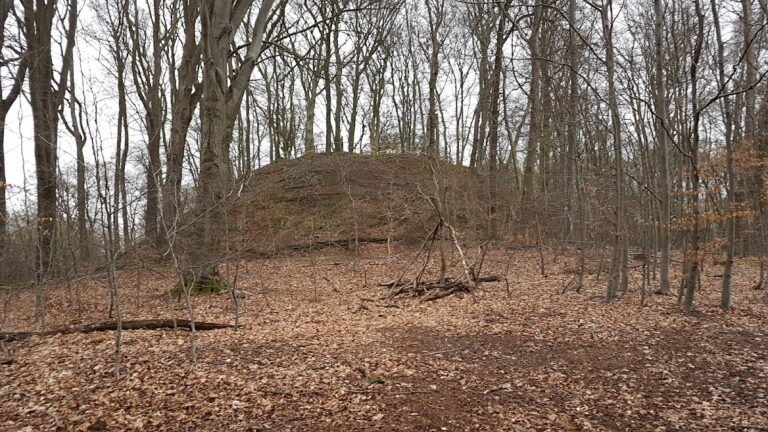
The site occupies the end of a natural spur projecting toward the lowlands at the edge of the Rur valley. Two excavated cuts divided the spur into the Burgberg and Kirchberg. The Burgberg was raised into a principal mound about 10 metres high, while the present Kirchberg served as the outer bailey. The surviving physical remains combine the elevated medieval castle core with fragments of the town defenses and later fortress works.
Medieval Castle Core
Burgberg
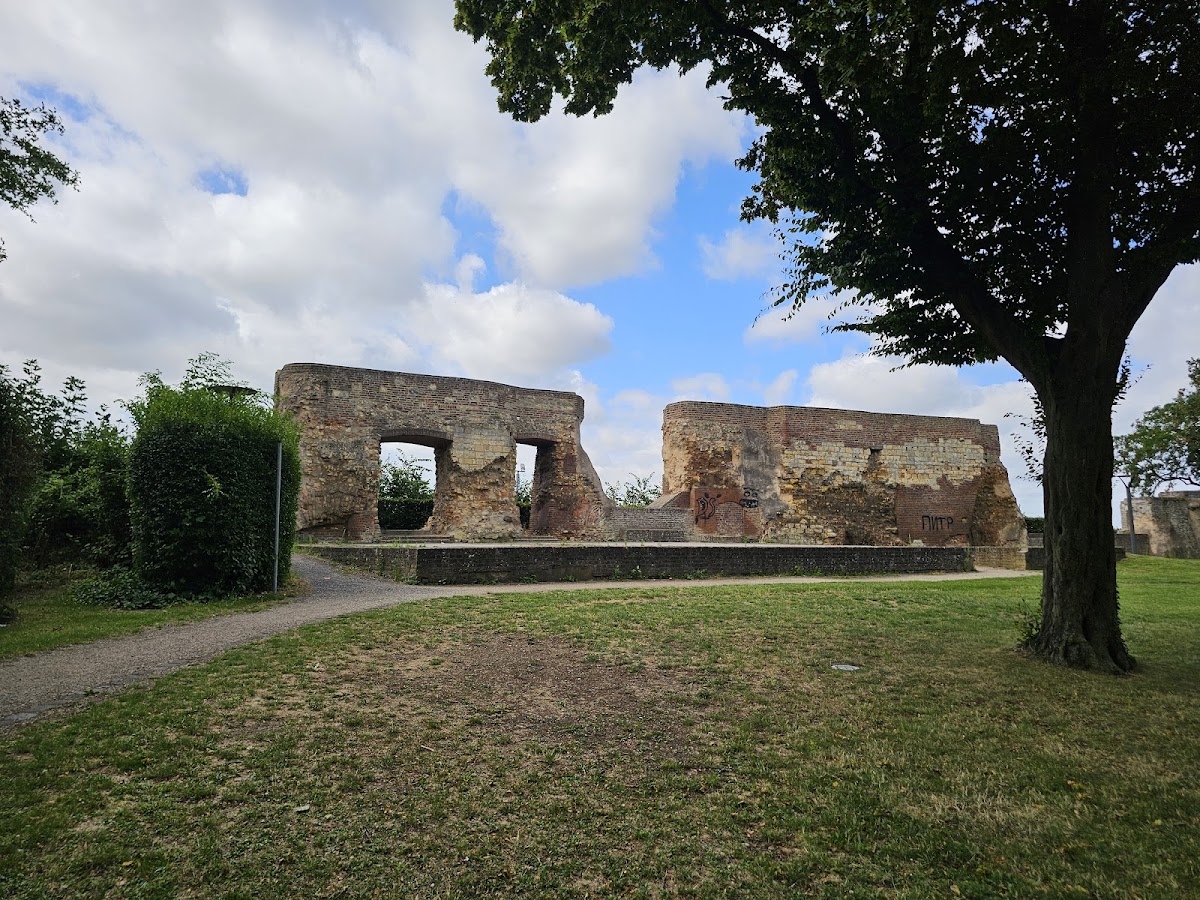
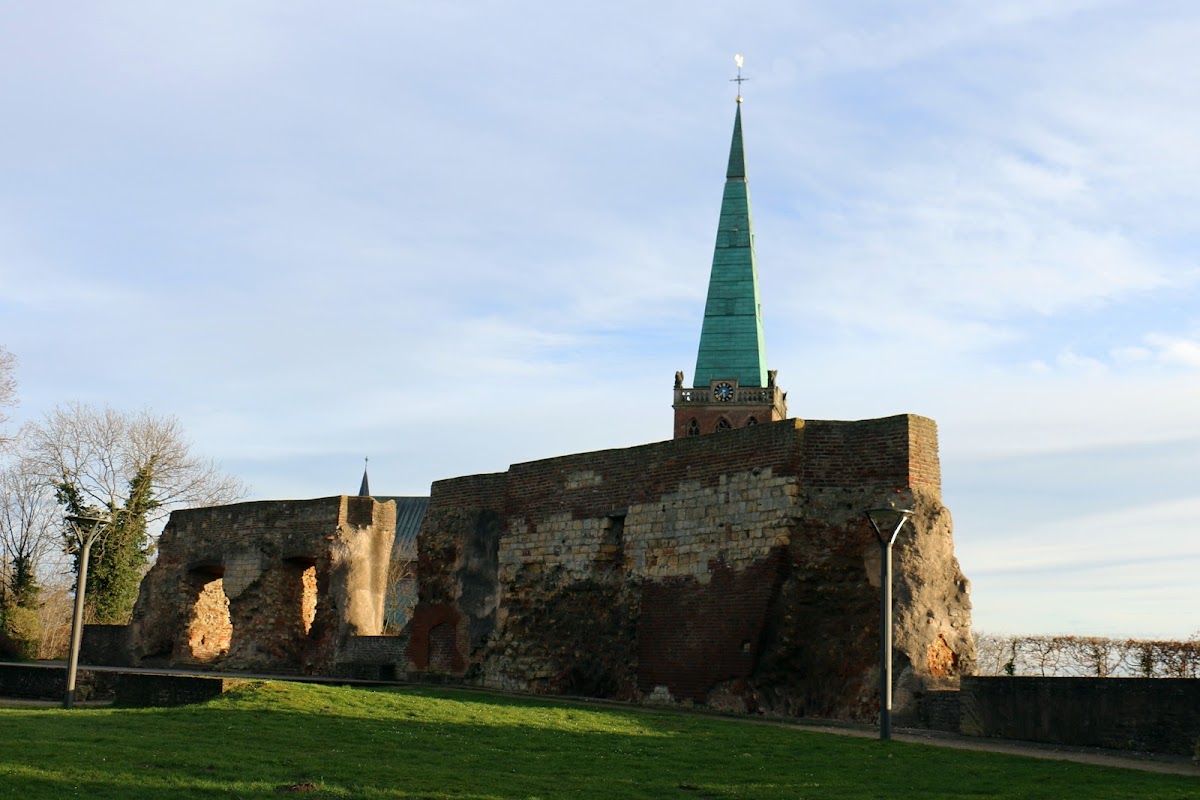
The Burgberg is the principal motte, an artificial or modified earthen mound carrying a fortified residence or tower. Its elevated core supported the motte-based Randhausburg, whose buildings were arranged around the perimeter. The earlier timber-and-earth fortification was later replaced or enlarged in stone using limestone, tuff, marl, and sandstone. Only clearly visible but relatively minor masonry survives in relation to the original scale of the castle.
Kirchberg and St Gangolf
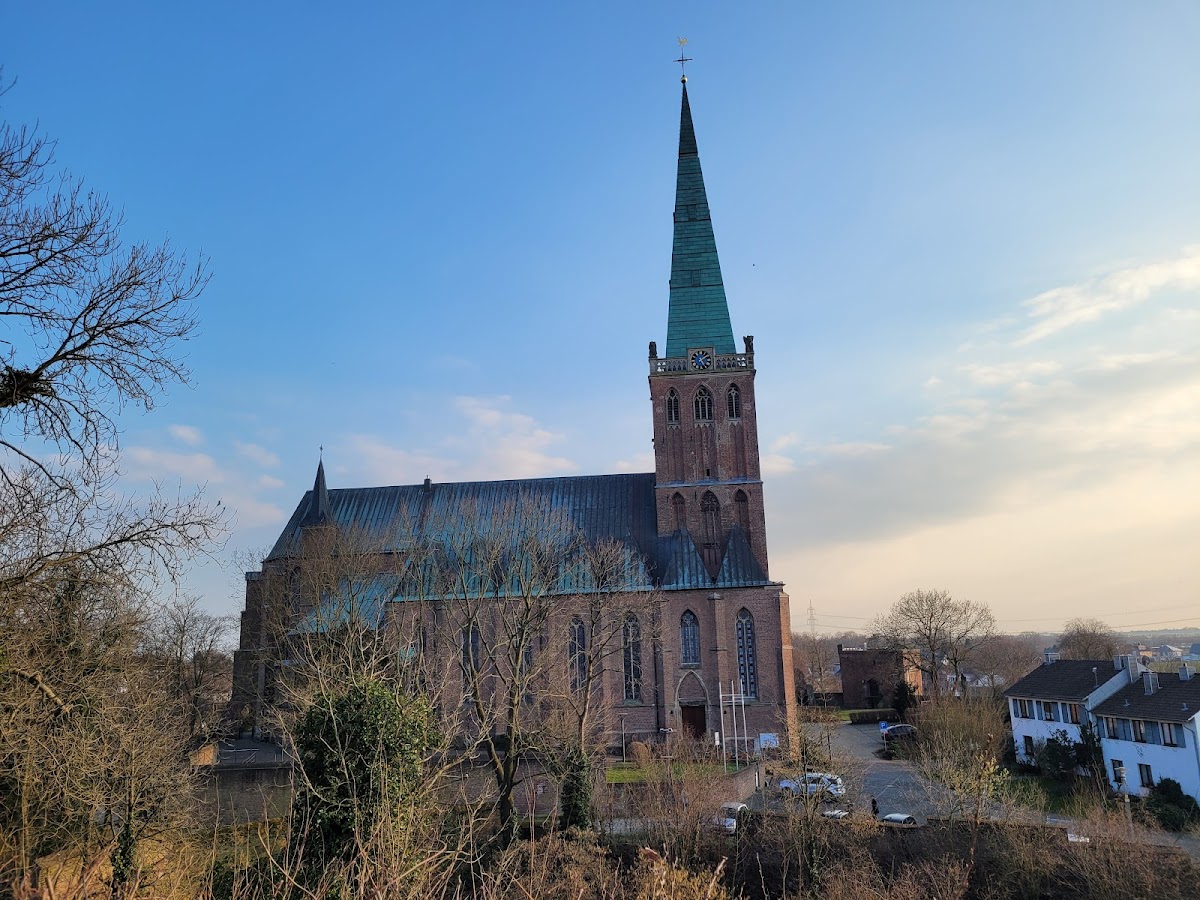
The Kirchberg functioned as the castle’s outer bailey after earlier buildings had occupied the area. During the fifteenth century, the Gothic collegiate church of St Gangolf was built there. A collegiate church is served by a college of secular clergy rather than a monastic community. The church therefore forms part of the later history of the castle area, whose two elevated sections remain defined by the excavated cuts in the natural spur.
Town Defenses and Fortress Works
Bastioned Southern Defenses
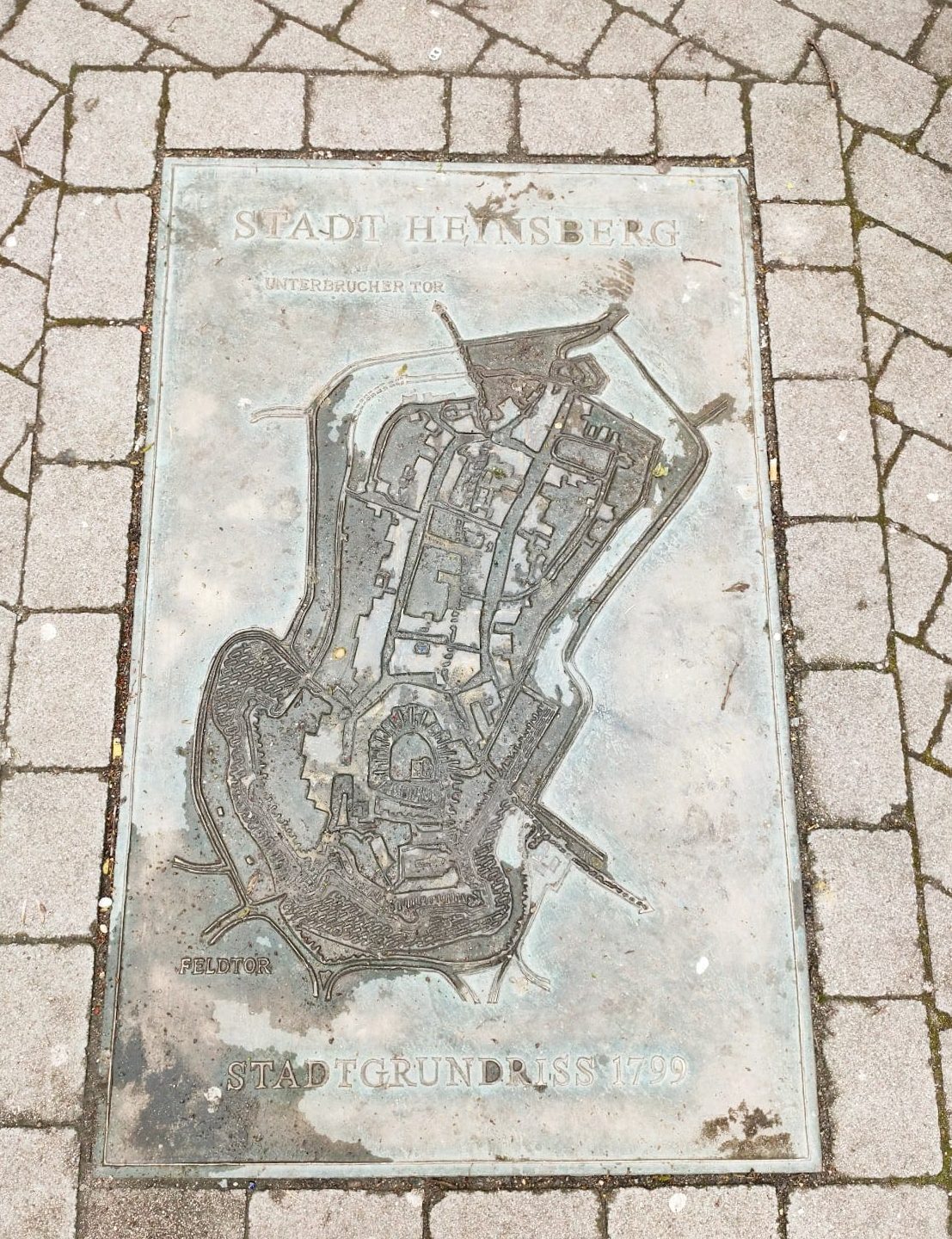
Later defensive works occupied the southern side of Heinsberg, including the area between the present Protestant church, the Klevchen ridge, and the monastery courtyard. The remains include elements of the sixteenth-century bastioned fortress, together with parts of the town wall. The fortress arrangement followed the principle of projecting defenses that allowed overlapping fire along the protected lines.
Gates and Water Defenses
The sixteenth-century Field Gate stood near the area of the former district court and earlier Prussian district administration before being removed in 1854. The Unterbruch Gate, located in the north of the town, was demolished in 1894. Both gates had curved, shot-resistant posterns, small protected gateways through the fortifications. Extensive ponds probably supplemented the defenses on the eastern and western sides of town where bastions did not provide protection. Their former presence survives in street names such as Haagweiher and Riedweiher.