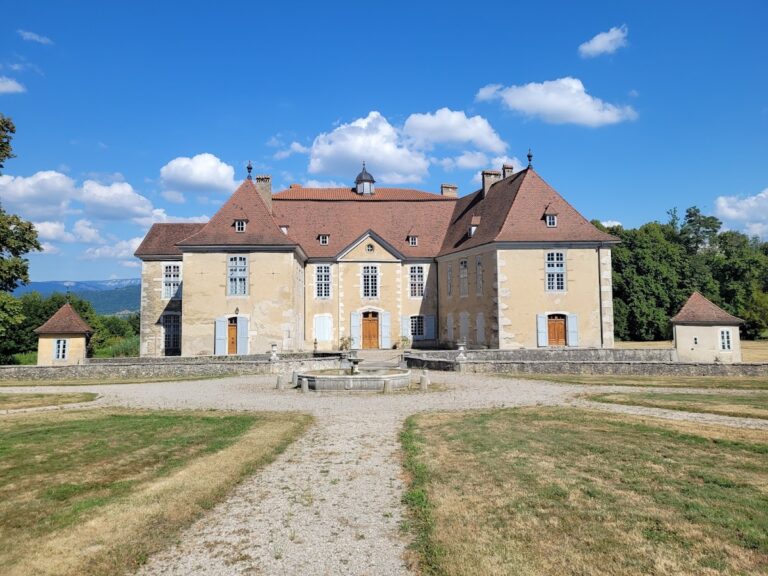
Château de Faverges-de-la-Tour: A Historic Leisure Residence


Site at a Glance
- Rating
- 4.8
- Popularity
- Low
- Country
- France
- Primary era
- Early Modern
- External website
- Open
- Eras represented
- Medieval, Early Modern, Modern
- Civilizations
- French
- Site type
- Domestic
- Remains
- Castle
On this page10 sections
History
Château de Faverges-de-la-Tour is a château de plaisance, a residence designed mainly for leisure and status, in France. Construction began in the fifteenth century and continued through alterations into the nineteenth century. The château is documented from the fourteenth century, although its origins may be earlier. Its strategic position and long association with the prominent Virieu family helped shape its historical importance.
Medieval origins and routes
The Virieu family owned the château from 1230. Its position controlled the ancient Compendium of Augustum, a route associated with the passage from Vienne toward Aoste and Chambéry. It also commanded the medieval road between Morestel and Evrieu, known in medieval records as the via Favergeysia.
The surrounding parish was originally called Saint-Barthélemy. When the community was divided at the end of the thirteenth century, it adopted the name of the château. This change connected the settlement’s identity more closely with the local residence and its estate.
Later alterations and modern use
The château was repeatedly altered from the fifteenth through the nineteenth centuries. Between 1850 and 1885, an architect named Bresson restored it in a pseudo-Italian style and added a ring of machicolations to its tower. Machicolations are projecting defensive structures with openings through which objects could be dropped or thrown onto attackers below.
The present road through La Bâtie-Montgascon dates from the reign of Louis-Philippe, who was King of the French from 1830 to 1848. An earlier route, heavily used by travellers, was called the “Nurses’ Road.” Women from Savoy used it when travelling to Lyon to collect children placed with them for nursing. Until 2004, the château belonged to the Relais & Châteaux hotel network. Since 2005, it has hosted corporate seminars.
Remains
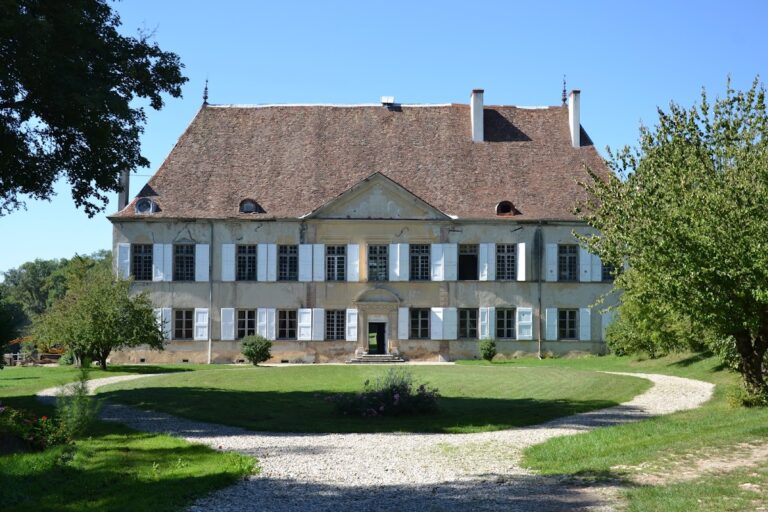
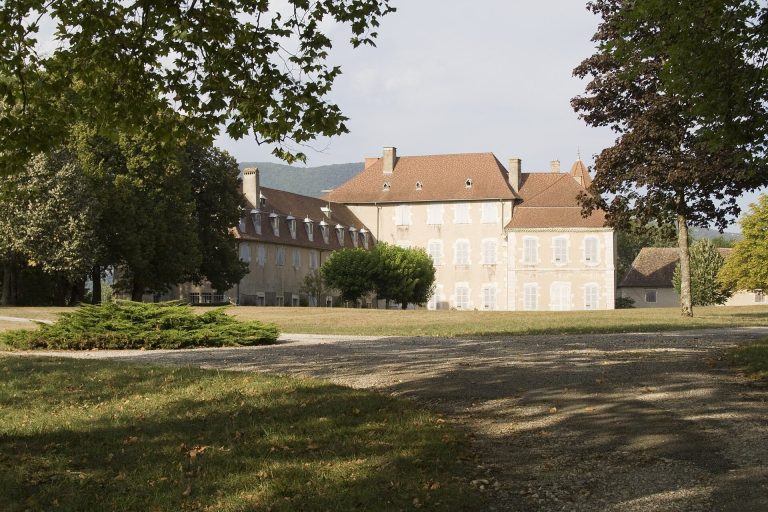
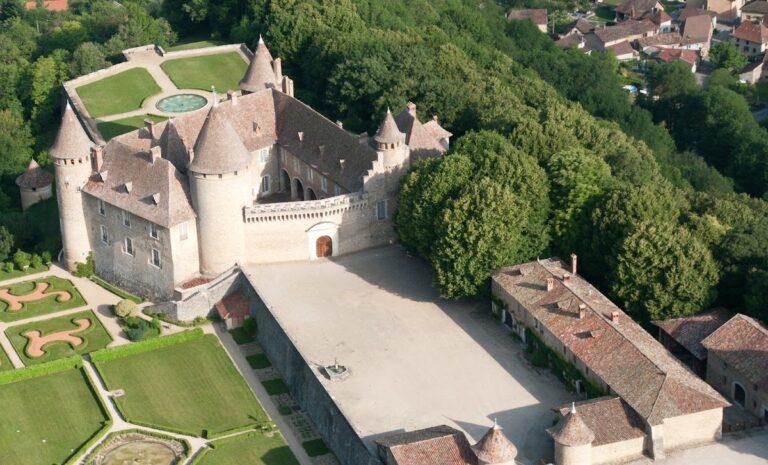
The château stands about one kilometre west of the village of Faverges-de-la-Tour, on the western side of the present National Route 75. Its surviving fabric combines a fortified enclosure, a terrace supported by vaulting, a watchtower, stables, and the main residence. The buildings preserve remains from the fifteenth, seventeenth, and eighteenth centuries, together with later nineteenth-century additions.
Enclosure and defensive features
Terrace and enclosing wall
On the steep side of the site, a long terrace supports the fortified enclosure. The terrace is built over vaulting and protected by a wall, creating a raised structural platform for the château and its surrounding buildings.
Southeastern watchtower
The tower at the southeastern corner served as a watchtower. During the French Revolution, the period of political upheaval that began in 1789 and transformed France’s political and social order, it was lowered to the level of the roofs. This change followed the republican principle of equality associated with the period. The tower later received a ring of machicolations during the nineteenth-century restoration.
Stables and nineteenth-century additions
Vaulted stables
The outbuildings include vaulted stables constructed in the eighteenth century. One window bears the date 1732, providing a precise marker within the surviving estate buildings.
Turrets and surviving fabric
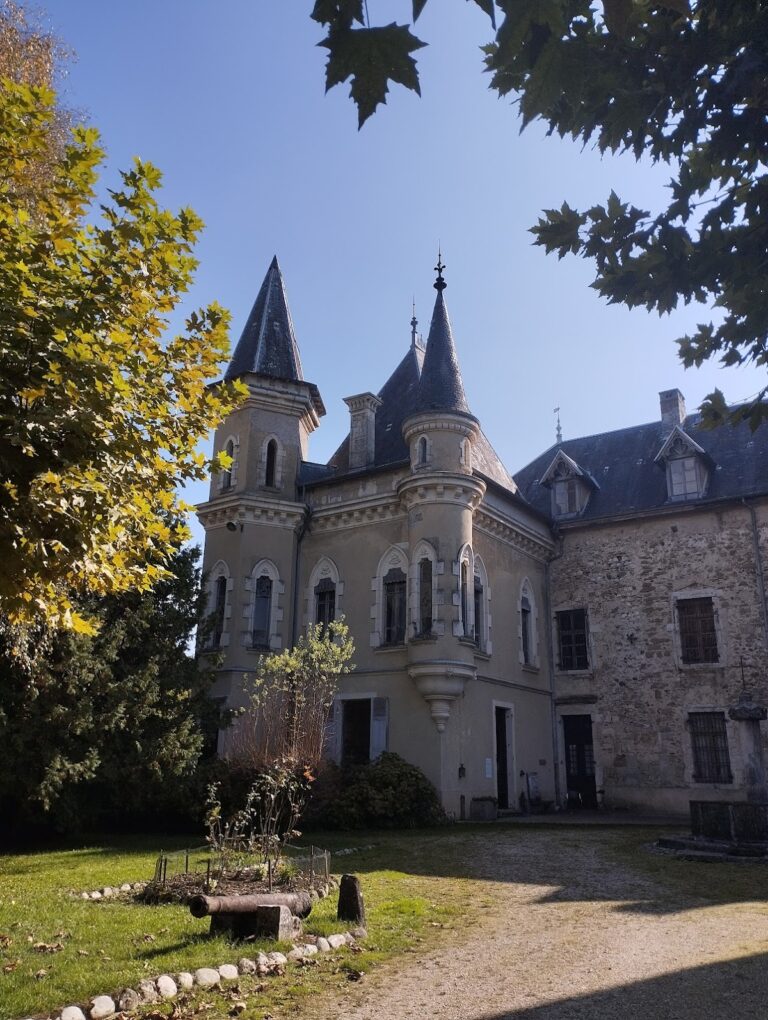
In the nineteenth century, the owner attempted to add turrets to the château. One collapsed immediately after it was erected, while the other remains standing. Together with the older masonry and the later restoration work, these elements reflect the building’s successive modifications rather than a single period of construction.