Burg Dhronecken: A Former Administrative Castle in Germany


Site at a Glance
- Rating
- 4.6
- Popularity
- Low
- Country
- Germany
- Primary era
- Modern
- Eras represented
- Medieval, Modern
- Civilizations
- Holy Roman Empire
- Site type
- Civic
- Remains
- Palace
On this page10 sections
History
Burg Dhronecken is a former castle and present-day palace in Germany, in the village of Dhronecken. It served as the administrative seat of the Amt Dhronecken, a territorial district also known as Mark Thalfang, and remained an important residence for local rulers and officials.
Origins and Wildgrave residence
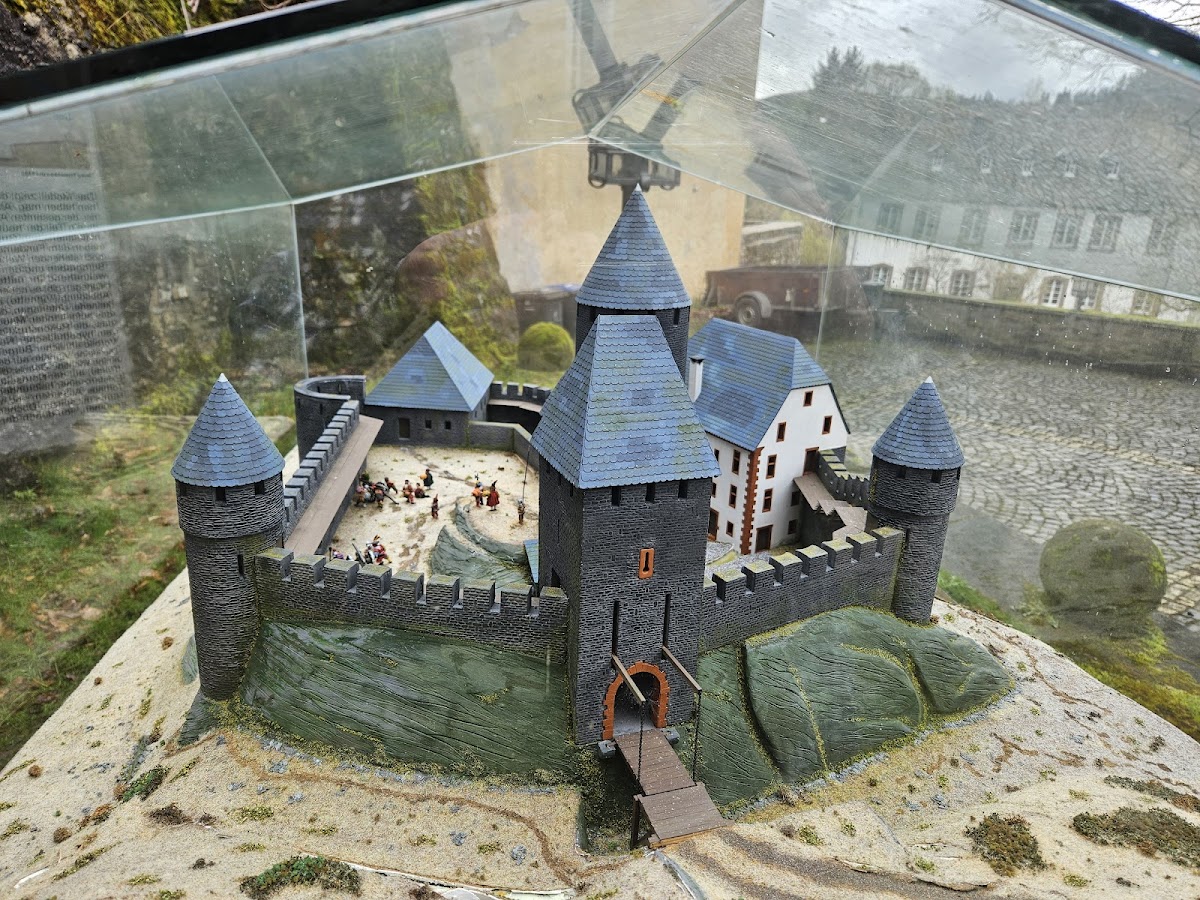
A knight named Conrad von Tronecken appears in the historical record around 1300. The Feste Troneck, or fortress of Troneck, is mentioned somewhat later and was probably considerably older. The castle is sometimes identified by tradition as the ancestral seat of Hagen von Tronje, a hero of the medieval German epic Nibelungenlied. This association is a tradition rather than an established historical fact.
From 1309, the castle served as the retirement residence of Friedrich Wildgraf von Kyrburg. He is described as the last Templar provincial master, or grand prior, for Upper Germany. The Knights Templar were a medieval military-religious order, and a provincial master was a senior official responsible for a major regional branch. The castle thereafter remained connected with the Wildgraves, a noble dynasty associated with territorial rule in the Rhineland and surrounding regions.
Conflict, administration, and destruction
In 1403, the Wildgraves’ castle was unsuccessfully besieged by the Elector of Trier, the archbishop-elector who was entitled to participate in choosing the Holy Roman Emperor. The castle continued as the residence of the Wildgrave’s Amtmann until 1798. An Amtmann was the official who governed an Amt, or territorial administrative district.
Cologne, imperial, and French troops destroyed the castle on several occasions. It was finally destroyed by an earthquake, leaving surviving remnants rather than the complete medieval complex. After the period of French rule, the site gained a new official role in 1817, when it became the residence of a Prussian chief forester.
Later use
In the modern period, ancillary buildings were erected on the foundations of the old castle. The larger building known as the Schloss now houses the Hochwald Forestry Office, part of Landesforsten Rheinland-Pfalz, the state forestry administration of Rhineland-Palatinate. The castle is designated a cultural monument.
Remains
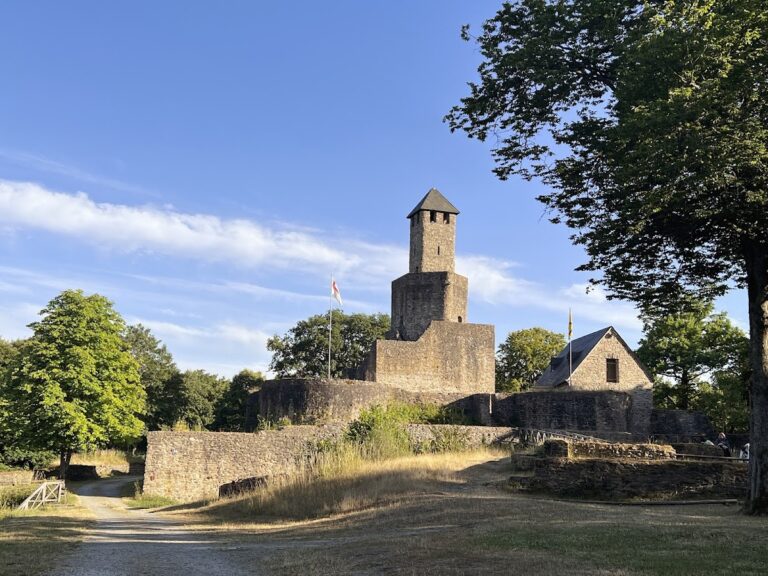
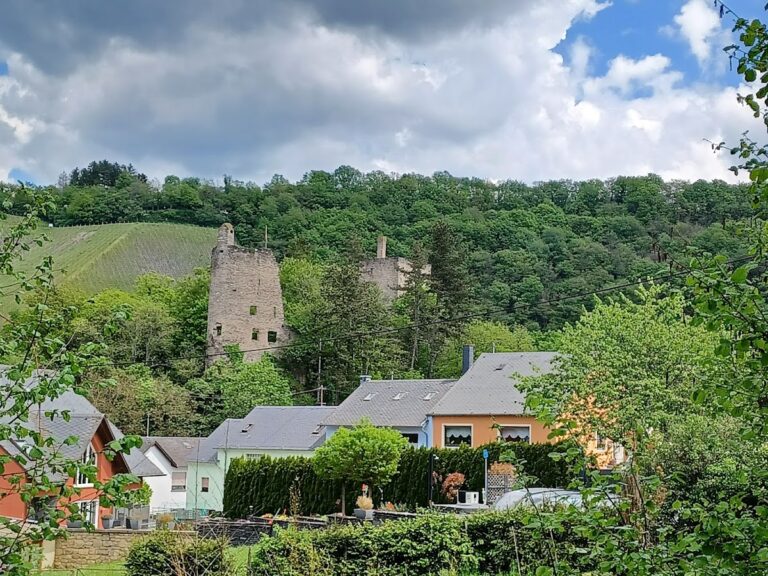
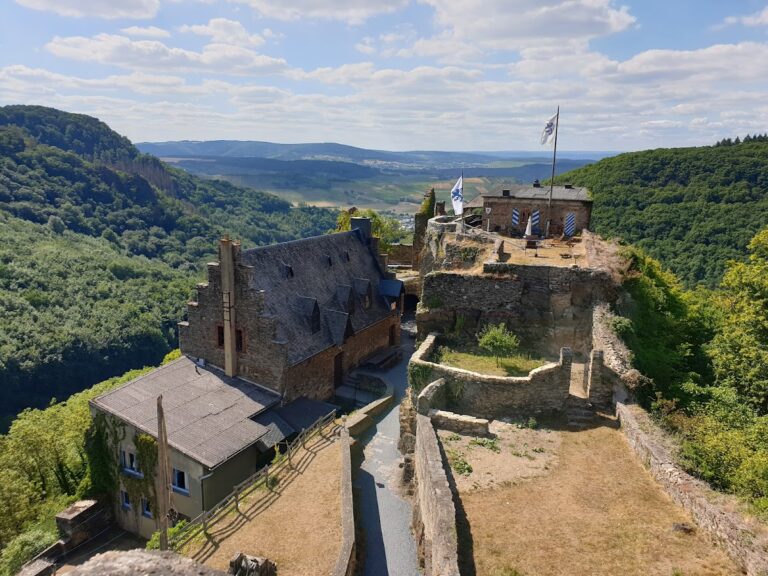
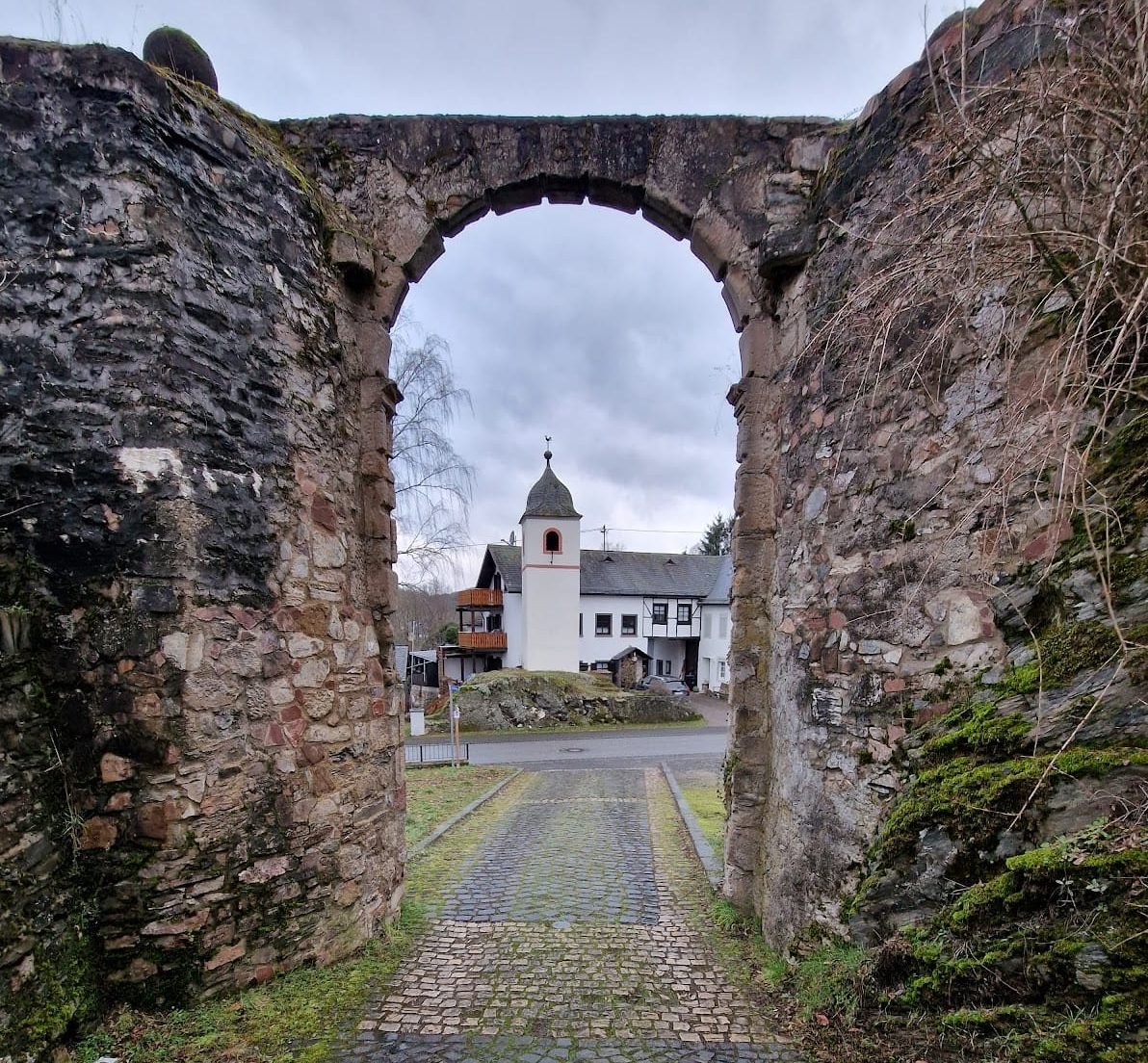
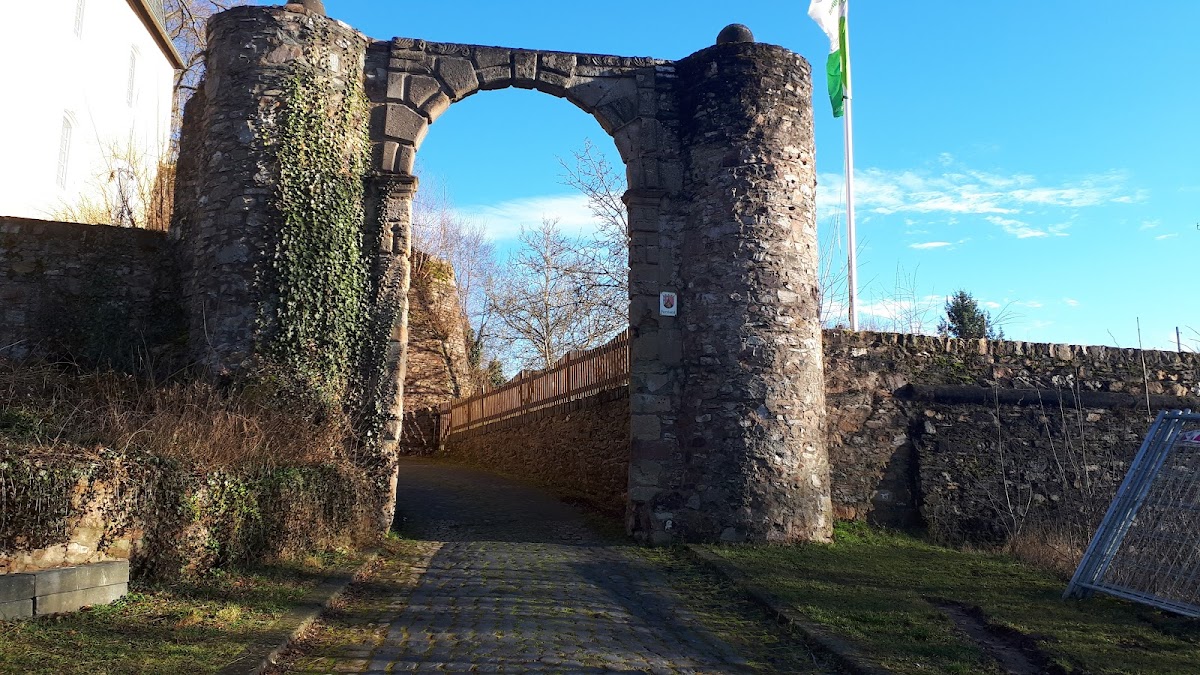
The surviving site combines remnants of the former castle with modern buildings constructed on its foundations. A remaining corner tower, the tall palace, and a timber-framed barn form the principal built features, while maintained gardens and a nature playground occupy parts of the surrounding grounds.
Castle foundations and buildings
The modern ancillary buildings follow the footprint of the former castle by standing on its old foundations. Their position preserves part of the relationship between the historic fortress site and the later palace complex.
Corner tower
One corner tower survives from the former castle and remains accessible for climbing. It is a physical remnant of the earlier defensive complex and contrasts with the later buildings erected around the old foundations.
Palace
The building known as the Schloss is relatively large and tall. It was erected in the modern period on the foundations of the old castle and now accommodates the Hochwald Forestry Office.
Timber-framed barn
A barn beside the palace has a visible timber framework. The building serves as the civic center of the municipality of Dhronecken, giving the former castle site a continuing public function.
Gardens and lower grounds
The palace gardens have been planted and maintained continuously since 1985. Below the castle, a nature playground extends on both sides of the Thalfanger Bach, adding a modern landscaped and recreational element to the surviving site.