Roccolo Castle: A Neo-Gothic Residence and Park in Italy


Site at a Glance
- Rating
- 4.4
- Popularity
- Low
- Country
- Italy
- Primary era
- Modern
- External website
- Open
- Eras represented
- Modern
- Civilizations
- Kingdom of Sardinia
- Site type
- Domestic
- Remains
- Castle
On this page7 sections
History
Roccolo Castle is a nineteenth-century neo-Gothic residence in Italy, built from 1831 in the hills behind Busca at the request of Marquis Roberto Tapparelli d’Azeglio and his wife, Costanza Alfieri di Sostegno. It represents the nineteenth-century neo-medieval revival, an approach that reinterpreted medieval forms rather than reproducing them exactly, within the former Marquisate of Saluzzo.
Foundation and aristocratic residence
Roberto d’Azeglio, the brother of the writer, painter, and statesman Massimo d’Azeglio, and Costanza used Roccolo Castle as a summer and autumn residence from 1831 to 1862. Its design reflected both the Savoy court, the royal court of the House of Savoy, and the English cultural influences associated with the marquises.
The residence attracted members of Savoy nobility as well as prominent Italian and British figures. Visitors included Silvio Pellico, an Italian writer and political figure; Camillo Benso, Count of Cavour, a leading statesman in the creation of modern Italy; King Umberto I and Queen Margherita; and the British prime ministers Lord Palmerston and Lord Gladstone.
Name and preservation
The name Roccolo comes from a bird-catching device made with nets. The castle and its park have since been restored, and the complex is recognized as Italian national heritage.
Remains
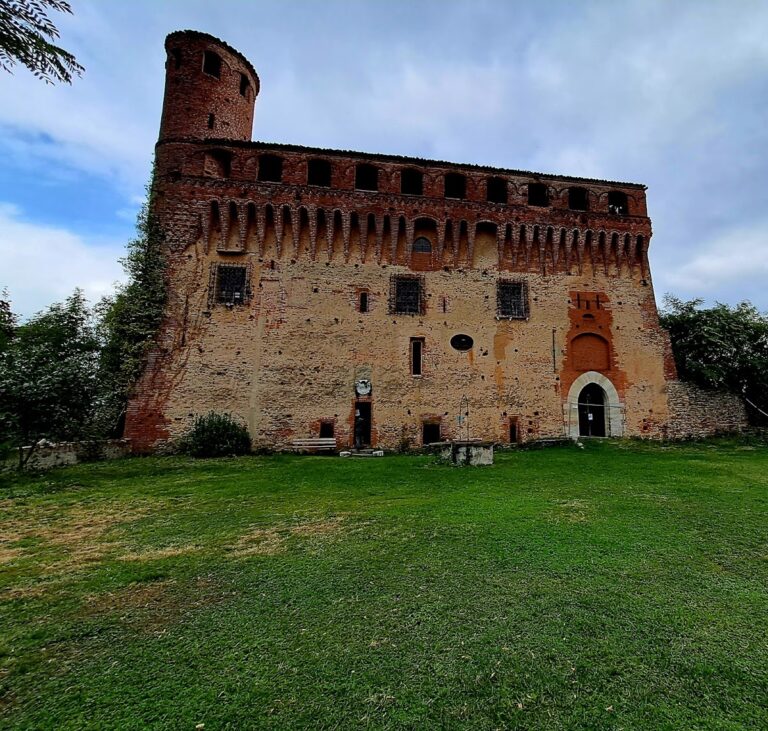
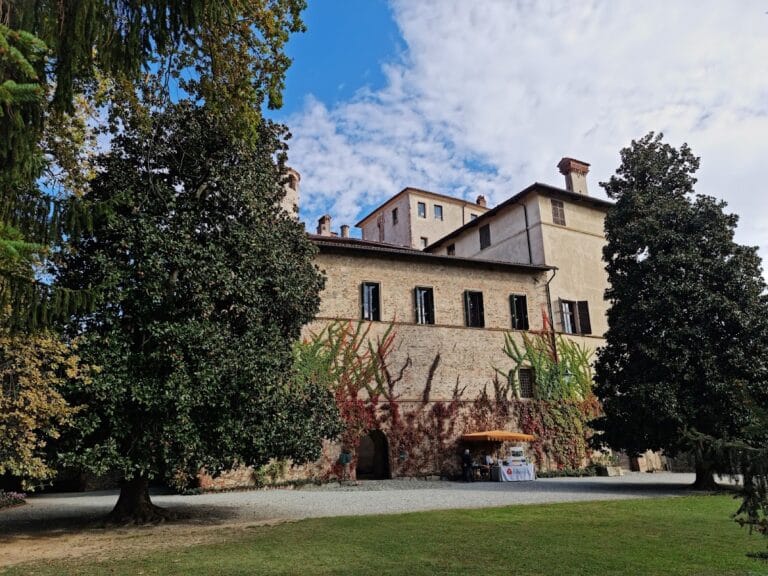
Roccolo Castle stands within its namesake park on the hills behind Busca. The neo-Gothic building has a main facade enclosed between two circular towers, giving it the character of an English neo-Gothic residence. Among the trees, a further tower rises with Ghibelline merlons, the swallow-tailed battlements associated with the Ghibelline political tradition in medieval Italy. The inner court is decorated with terracotta elements of Moorish character.
Castle interiors
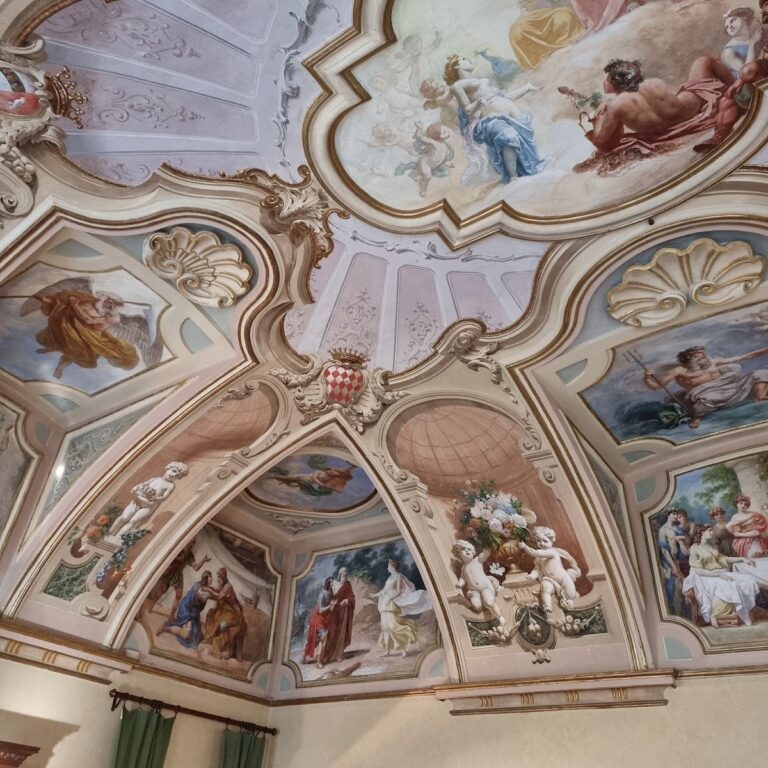
A forked staircase leads into the residence. Inside, trompe-l’oeil, an artistic technique using perspective and shading to create three-dimensional illusions, appears alongside stucco decoration, landscape views, and colored glass set in lead. Most of the furnishings came from the workshop of cabinetmaker Gabriele Capello.
Chapel and historic furnishings
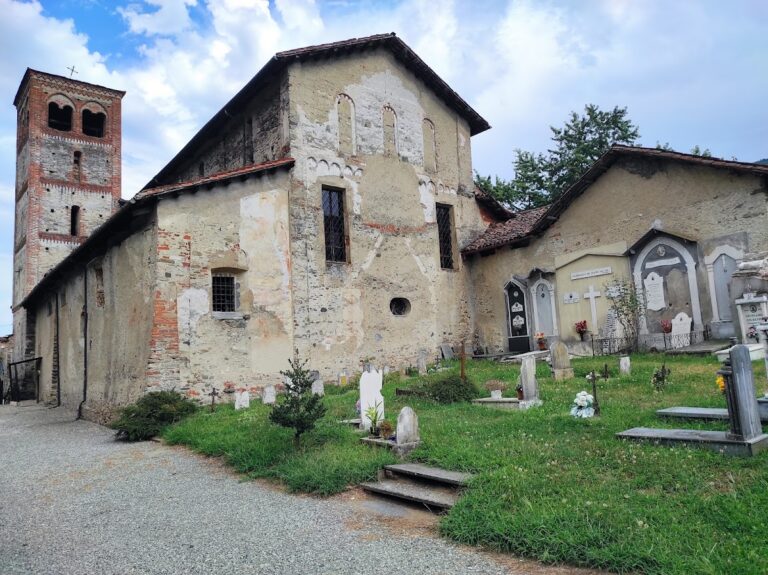
A chapel stands a short distance from the castle. It contains several sixteenth-century choir stalls acquired by the marchioness from the marquisal chapel at Revello, associated with Margherita of Foix-Candale.
Roccolo Park
Roccolo Park covers 50 hectares and contains plantings of holm oak, liriodendron, red beech, osmanthus, cherry laurel, and varieties of maple, lime, horse chestnut, and yew. Behind the castle is a Romanesque garden, while a series of terraces in front forms a garden with a classical profile.
The park also includes a lake and a glazed greenhouse built between 1846 and 1850. Grottoes, waterfalls, bridges, fountains, balustrades, and niches extend the designed landscape around the residence.