Eremo di Belmonte: A Former Carthusian Monastery in Italy


Site at a Glance
- Rating
- 4.7
- Popularity
- Very Low
- Country
- Italy
- Primary era
- Medieval
- Eras represented
- Medieval, Early Modern, Modern
- Civilizations
- Duchy of Savoy, Kingdom of Sardinia
- Site type
- Domestic
- Remains
- Elite Residence
On this page10 sections
History
The Eremo di Belmonte, also called the Eremo di Busca, is a former Catholic monastery in Busca, Italy, with origins in a thirteenth-century community of Carthusian nuns. The Carthusians combined communal worship with a strongly solitary form of monastic life. The complex later became a Camaldolese devotional centre, a noble residence, and a parish property, preserving evidence of several distinct religious and secular phases.
Carthusian beginnings
A chapel linked to a women’s monastery stood on the hill during the thirteenth century. The community belonged to the Carthusian order and originated from the Charterhouse of Buonluogo. Buonluogo received land at Bricherasio in 1237 and an estate at Belmonte di Busca around 1274 to 1277. These grants led to dependent communities at Belmonte and Bricherasio.
An act of 1277 names a community at Belmontet. Buonluogo remained the principal house, while Belmonte and Molare di Bricherasio functioned as dependent houses, or correries, serving a charterhouse rather than operating as autonomous monasteries. The dependent establishments may not have received formal recognition from the Carthusian order. Bricherasio appears to have been founded from Belmonte in 1277 or 1278 under the name Charterhouse of Molare di Bricherasio.
The Carthusian nuns abandoned Belmonte around the 1280s. A former prioress is recorded in 1293, and in 1298 the community comprised a prioress and five nuns. Before the middle of the fifteenth century, Belmonte was incorporated into the Dominican nuns’ Abbey of Santa Maria delle Grazie near Castino. The Dominican order was a Catholic religious order associated with preaching and religious study.
Camaldolese renewal
In the seventeenth century, the hermitage passed to the Camaldolese of San Romualdo. The Camaldolese are a reform branch of the Benedictine tradition that combines monastic life with an eremitical ideal. Under their ownership, Belmonte became a centre of devotion and pilgrimage. They renewed the existing complex and constructed a Baroque church beside the medieval church.
Secular ownership and parish use
After the suppression of the monastic orders and the Napoleonic period, the property passed to local nobles and later to the Grimaldi family. The principal building was converted into a noble residence. During the early nineteenth century, the hill was used for geodetic measurements by Baron de Zach, an astronomer and geodesist whose work included scientific surveying.
The complex was eventually transferred to an intermediary, who donated it to the parish of Carmagnola around 1950. In the postwar period it was acquired by the parish of Saints Peter and Paul in Carmagnola, which continues to use it for parish activities. Bombing during the Second World War severely damaged the complex, particularly the Baroque church. Several restoration campaigns have taken place since the 2000s, including work on the interiors. The Eremo di Belmonte is protected as cultural property in Italy.
Remains
The hermitage stands at approximately 836 metres above sea level on a hill at the foothills of Monte Pagliano. Its surviving buildings bring together a horseshoe-shaped residential complex, a garden, and two churches built in different periods. The older church survives in a heavily transformed form, while the later Baroque church remains partly ruined after wartime damage.
Residential complex
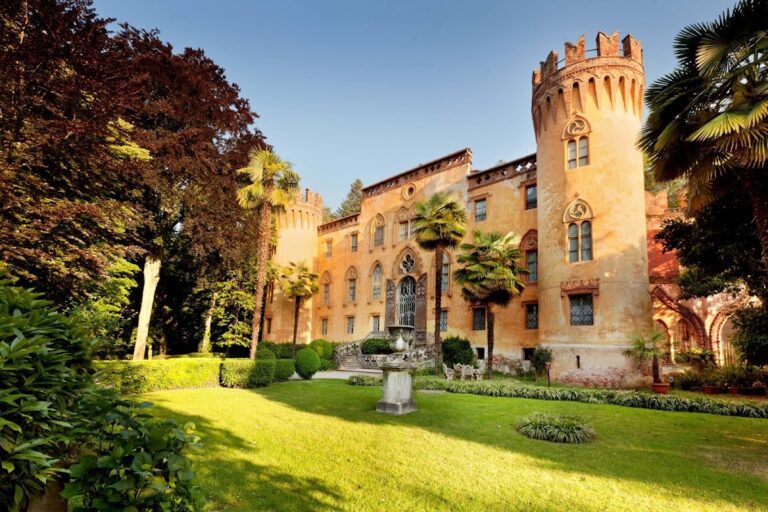
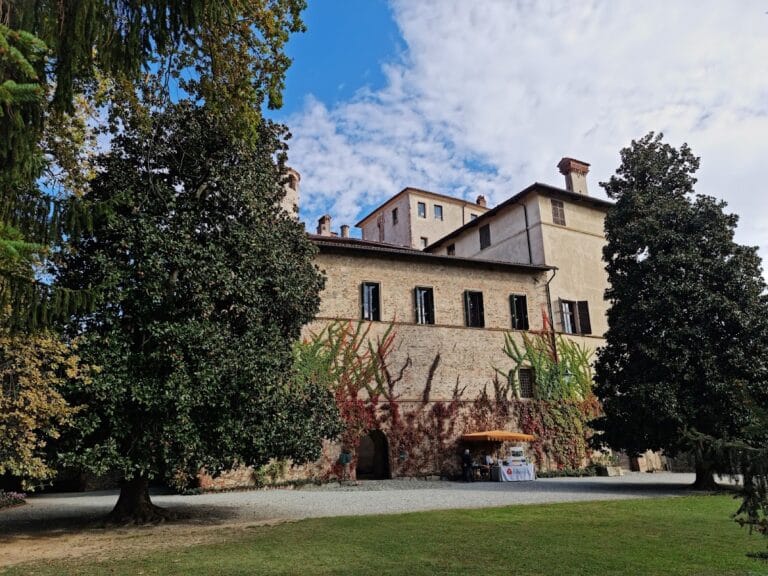
The main residential building has a horseshoe-shaped plan and encloses a garden on its southwest side. A monumental Atlas cedar grows within the garden. On the northeast façade, the principal entrance is reached by a grand staircase sheltered by a three-bay portico. The building’s later role as a noble residence is also reflected in its interior decoration, which includes numerous paintings by different artists.
Decorated interiors
Several vaults were decorated by Francesco Gonin, an Italian painter known for nineteenth-century decorative work. Their allegorical subjects relate to the Italian Wars of Independence. Stanislao Grimaldi del Poggetto, a member of the Grimaldi noble family and a patron associated with the residence’s decoration, commissioned these paintings from Gonin.
Churches
Medieval church
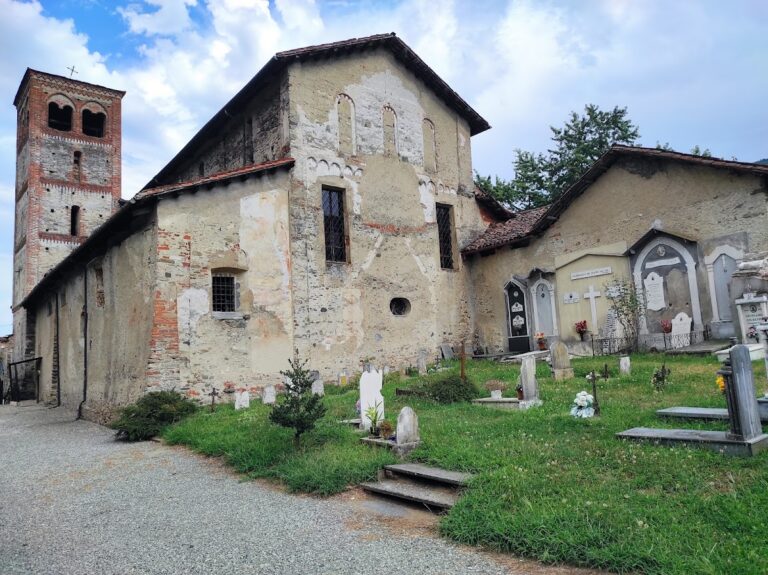
The old church dates from the thirteenth-century phase of the site and stands beside the residential area. It survives in a heavily transformed form, retaining a physical connection with the earlier religious establishment while reflecting later changes to the complex.
Baroque church
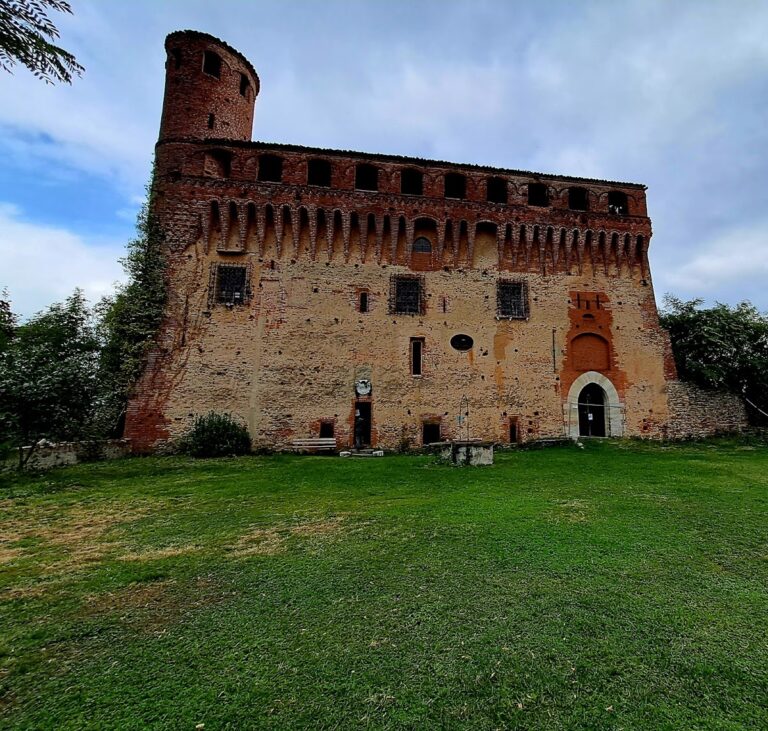
The Camaldolese built the Baroque church beside the older church when they renewed the hermitage in the seventeenth century. Its decoration included stuccoes by Domenico Beltramelli and paintings by Dallamano. Bombing during the Second World War caused major damage, and only parts of the church now survive in ruins.