Castle Pienzenau: A Castle-Like Residence and Estate in Merano, Italy
Site at a Glance
- Rating
- 4.6
- Popularity
- Low
- Country
- Italy
- Primary era
- Medieval
- External website
- Open
- Eras represented
- Medieval, Modern
- Civilizations
- Habsburg, Holy Roman Empire
- Site type
- Domestic
- Remains
- Castle
On this page8 sections
History
From farming estate to ecclesiastical property
Castle Pienzenau is a historic estate in Italy, located in Obermais, a district of Merano in South Tyrol. Its earliest documented form was a farming estate, while its later buildings took on the appearance of a medieval castle or castle-like residence. Around 1394, the property was associated with Klara and Ulrich von Pienzenau, although the record identifies an estate rather than an explicitly named castle.
During the sixteenth century, Pienzenau belonged to Georg Büchler von Weidenegg. By 1779, it was owned by the Benedictine monks of Ettal Abbey in Bavaria. Benedictines follow the Order of Saint Benedict, a monastic tradition that often combined religious life with agricultural management. Pienzenau had by then become a prelate’s estate, meaning property connected with the support or administration of a senior church official or ecclesiastical institution.
The estate’s vineyards supplied much of the red wine needed by the monasteries, including wine for sacramental use. The monks also used Pienzenau as a retreat and recreational residence. A wayside chapel at the western wall remains an enclave belonging to Ettal Abbey.
Nineteenth-century transformation
In the mid-nineteenth century, Emperor Franz Joseph’s government took ecclesiastical properties into state possession. Franz Joseph was the long-reigning Habsburg ruler of the Austrian Empire and, from 1867, of the Austro-Hungarian Empire. Pienzenau was placed on the market during the resulting changes in ownership.
The local innkeeper and freedom fighter Johann Prunner of Schenna was associated with the estate during this period. Josef von Trauttmannsdorff-Weinsberg acquired Pienzenau in 1849. After his death in 1869, the Imperial Knight Moritz von Leon inherited it together with Trauttmansdorff Castle.
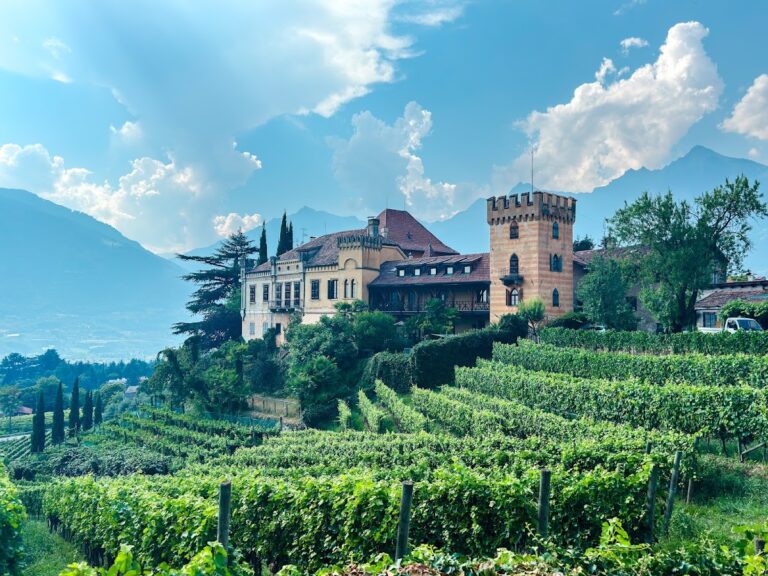
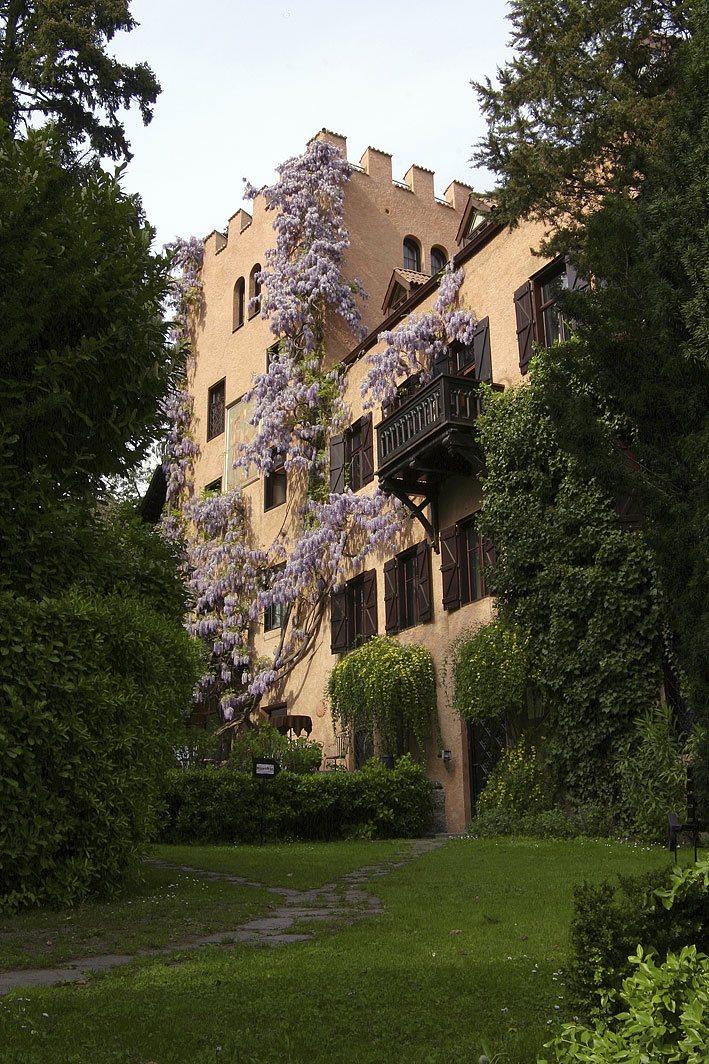
Moritz von Leon began converting the former farm estate into a castle-like residence. The buildings received battlements, and their interiors were renewed. Eugen von Popoff bought Pienzenau in 1884. He was recognized as a pioneer of fruit cultivation, linking the estate’s later history with the agricultural development of the surrounding property.
Aristocratic and cultural associations
From about 1870 to 1900, Pienzenau received aristocratic visitors. This period included the years associated with Empress Elisabeth, widely known as Sisi. During her four stays at nearby Trauttmansdorff Castle, Pienzenau, together with Rametz and Rubein castles, accommodated members of her court, horses, and carriages.
At the end of the nineteenth century, the local press used several descriptions for the property, including former farm, villa, residence, castle, and fortress. From 1889, the designation “castle” became established. Later owner Paul Kuh-Chrobak hosted artists at Pienzenau, among them Richard Strauss, the major German composer and conductor of the late nineteenth and early twentieth centuries.
The Schölzhorn family acquired the estate in 1969 and completely renovated it. Pienzenau now operates as a castle lodging establishment and hotel with the public Bistro Pienzenau. Its rooms and park areas are used for the restaurant, weddings, celebrations, and other events.
Remains
The estate and castle-like buildings
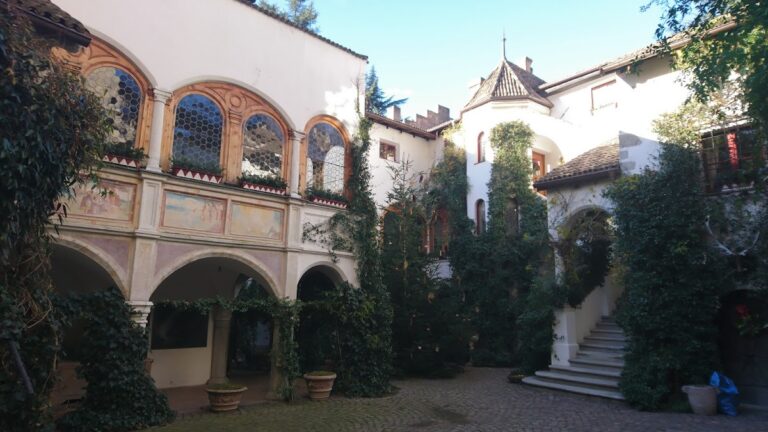
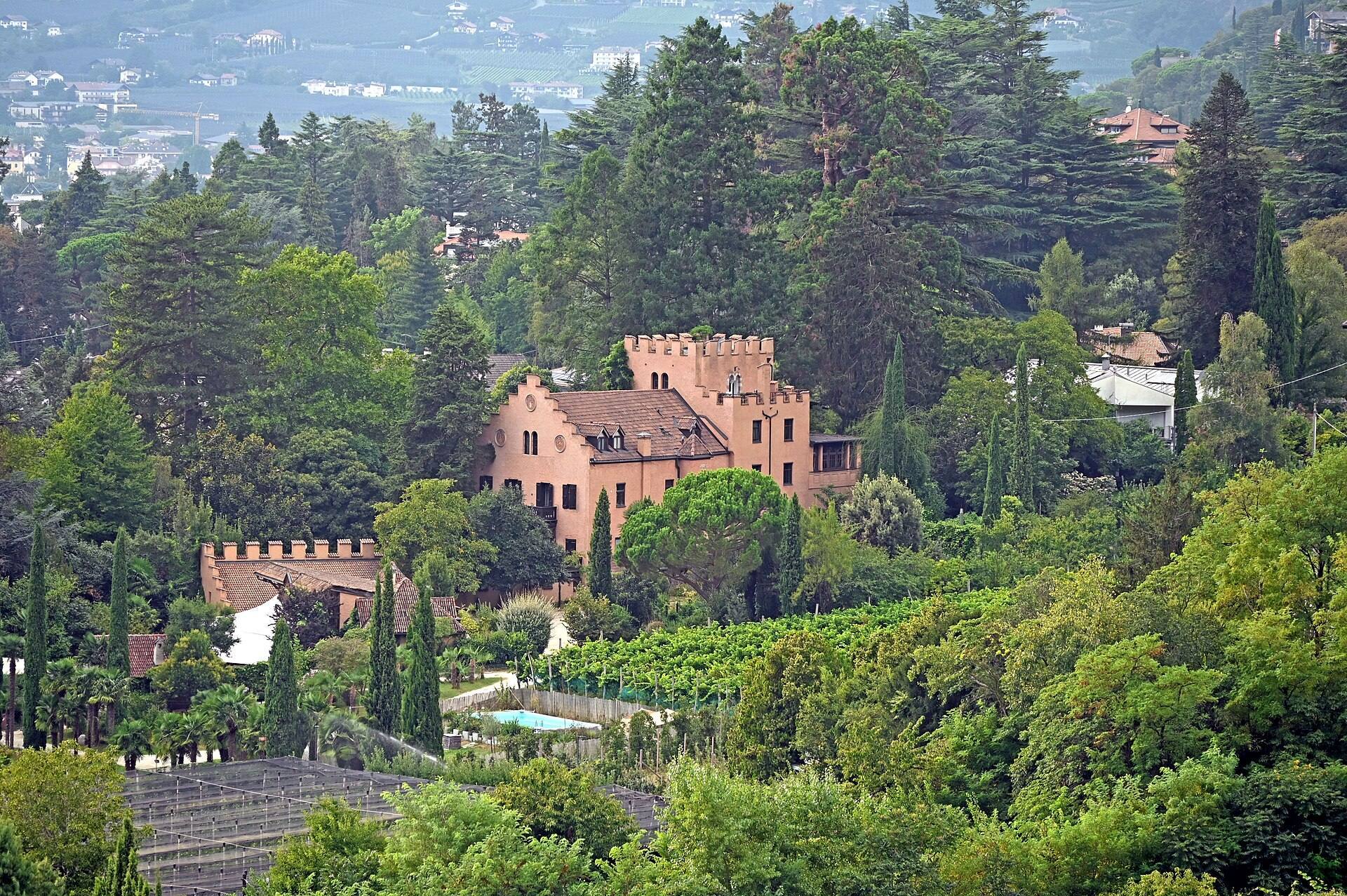
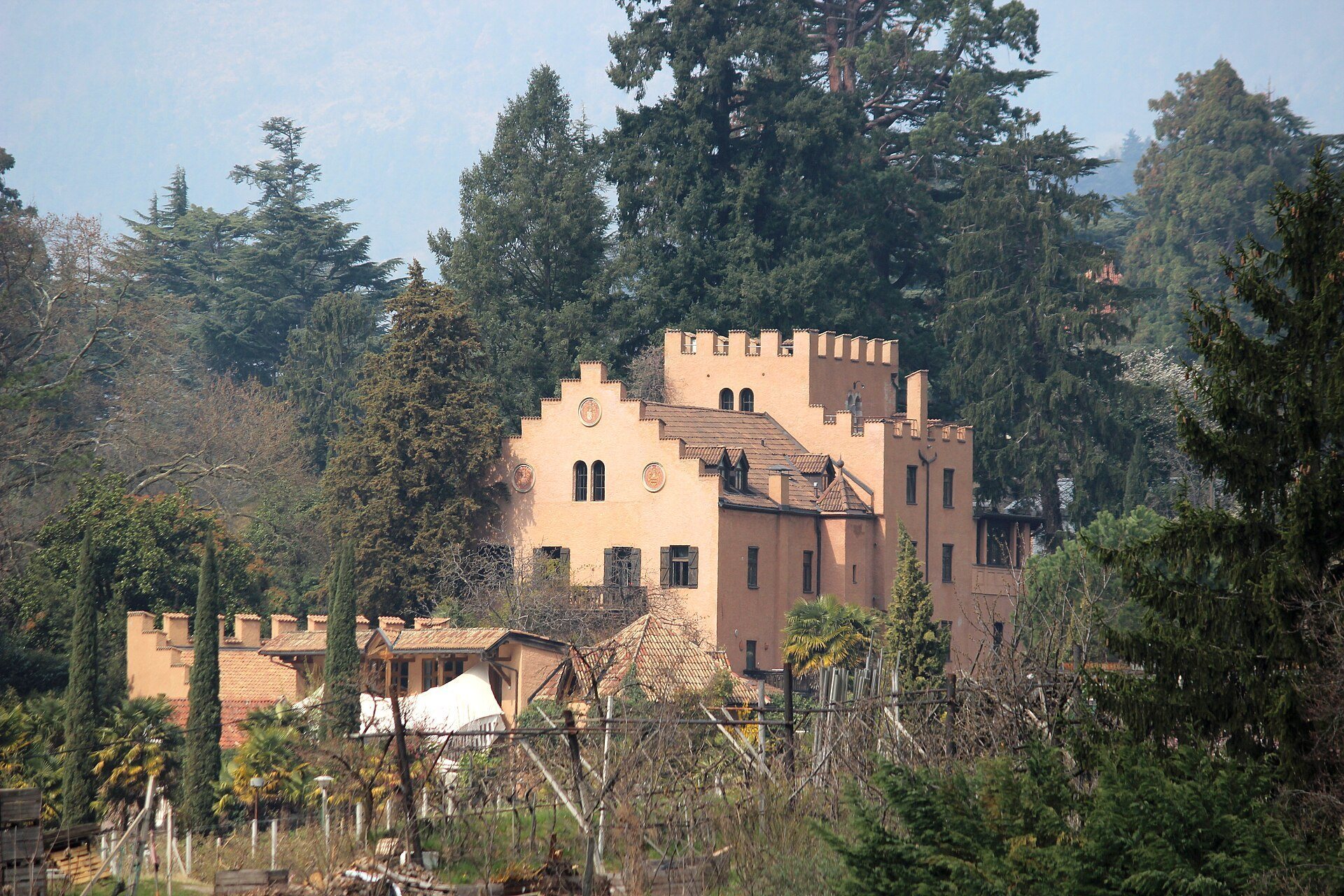
Castle Pienzenau occupies several hectares in Obermais. The surviving property combines the fabric of a former agricultural estate with the nineteenth-century alterations that gave its buildings a castle-like character. Battlements were added during Moritz von Leon’s transformation, and the interiors were renewed during the same phase. The estate’s present use as lodging, a restaurant, and an event venue continues the occupation of the buildings and open areas.
The park
At the commission of the Benedictine monks, a Spanish botanist and garden designer laid out an extensive park on the estate. Its planting includes Mediterranean shrubs and a range of tree species, among them hemp palms, monkey-puzzle trees, cypresses, cedars, and bamboo. The park forms a substantial landscaped component of Pienzenau alongside the residential and hospitality buildings.
Wayside chapel
A wayside chapel stands at the west wall of the estate. It contains a devotional niche and remains an enclave belonging to Ettal Abbey, preserving a direct physical connection with the period when the property was owned by the Benedictine community.