Dunraven Castle: A Castellated Hunting Lodge on the South Wales Coast

Site at a Glance
- Rating
- 4.6
- Popularity
- Low
- Country
- United Kingdom
- Primary era
- Modern
- Eras represented
- Modern
- Civilizations
- British
- Site type
- Domestic
- Remains
- Castle
On this page9 sections
History
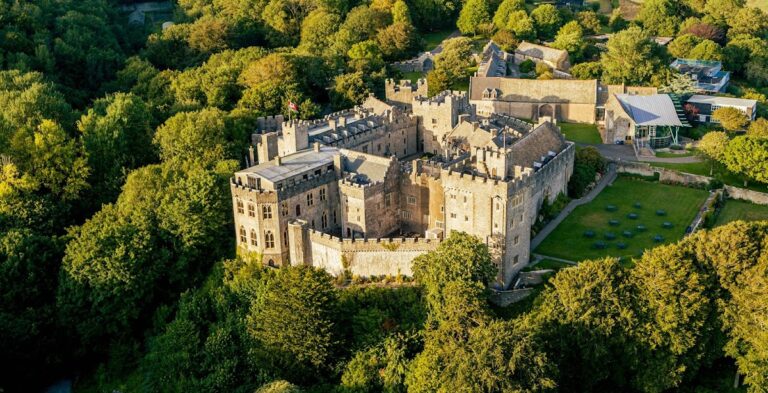
Dunraven Castle was a mansion on the South Wales coast near Southerndown in the United Kingdom, rebuilt as a castellated hunting lodge between 1802 and 1806. Its development followed earlier fortifications and a manor house on the Dunraven Estate, while later remodelling shaped the building that remained inhabited into the period after the Second World War.
Earlier Fortifications and the Manor House
The site had several earlier defensive structures. Tradition attributed the first fortification to Arnold le Boteler, a medieval landholder, in the mid-12th century. By the 16th century, the Vaughan family owned a manor house there, whose existence was noted by John Leland, an English antiquary and topographer of that period.
The manor was sold to the Wyndham family in 1642. Thomas Wyndham of Dunraven, who served as a Member of Parliament for Glamorgan from 1789 until his death in 1814, later replaced it with a castellated hunting lodge. This type of residence was designed for country living and hunting but used castle-like features, including towers and battlement-like elevations. Thomas Wyndham’s wife designed the lodge, probably taking Clearwell Castle in Gloucestershire as her model.
The Wyndham-Quin Estate
The estate passed to the Wyndhams’ daughter, Caroline. In 1810 she married Windham Henry Quin, an Irishman who later became the 2nd Earl of Dunraven, a hereditary British peerage title. Through the marriage, he adopted the additional name Wyndham in 1815 and became Windham Wyndham-Quin.
Caroline began a major remodelling of the building in 1858. The estate later passed to Edwin Wyndham-Quin, 3rd Earl of Dunraven and Mount-Earl, who had represented Glamorganshire in Parliament from 1837 to 1851, and then continued through his descendants.
Demolition and Heritage Status
The house remained inhabited until after the Second World War and was also used as a military hospital. It was demolished in 1963. The surviving parts of the house are a Grade II listed building, while the gardens and park are Grade II on the Cadw and ICOMOS Register of Parks and Gardens of Special Historic Interest in Wales. Cadw is the Welsh Government’s historic-environment service, and ICOMOS is an international organisation concerned with cultural-heritage conservation.
Remains
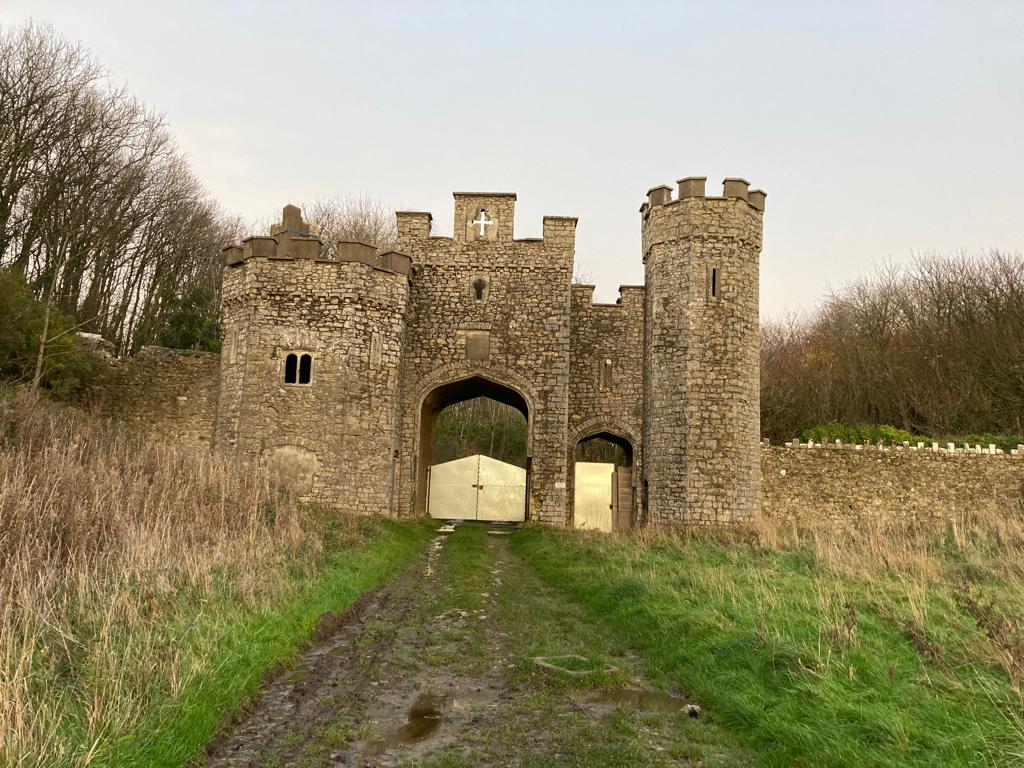
The surviving remains combine parts of the former house with its associated estate landscape. The castle’s walled garden, gatehouse, and other structures remain, while the gardens and park preserve the wider setting connected with Dunraven Castle.
Garden and Estate Structures
Walled Garden
The walled garden survives as one of the principal physical remains of the Dunraven estate. Its enclosing walls preserve part of the landscape associated with the castle and form part of the surviving heritage landscape of the Glamorgan Heritage Coast.
Gatehouse and Associated Buildings
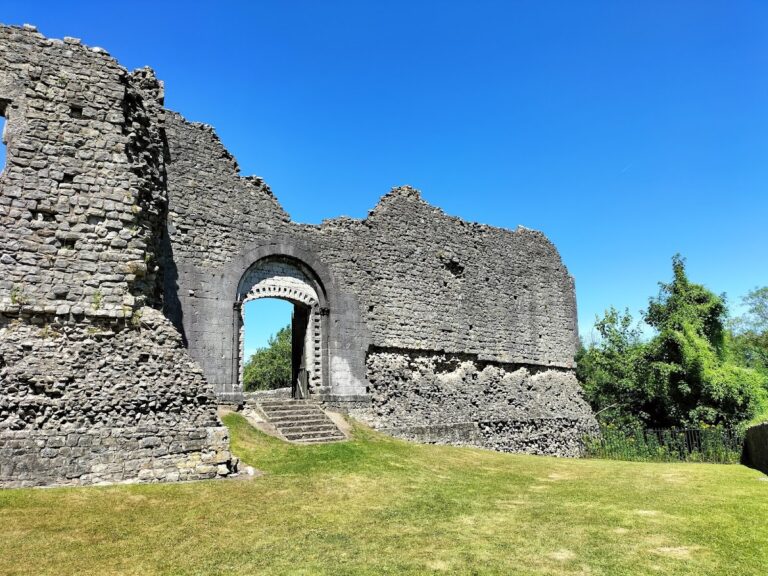
The gatehouse and several other structures connected with the castle also survive. Together with the walled garden, they represent elements of the estate that remained after the main house was demolished.
Gardens and Park
The gardens and park survive as a connected landscape associated with Dunraven Castle. Their designation on the Welsh register reflects the historic interest of the estate grounds as part of the castle’s surviving setting.