Castle of Peñarroya: A Medieval Fortress and Hermitage in Spain

Site at a Glance
- Rating
- 4.4
- Popularity
- Medium
- Country
- Spain
- Primary era
- Medieval
- External website
- Open
- Eras represented
- Medieval, Early Modern
- Civilizations
- Crown of Castile, Spanish
- Site type
- Military
- Remains
- Castle
On this page11 sections
History
Castle of Peñarroya is a medieval fortress and later Christian sanctuary in Argamasilla de Alba, Spain, associated first with Muslim rule and then with the Christian reconquest of the Iberian Peninsula. A chronicle by Ramón Antequera Bellón states that Captain Alonso Pérez de Sanabria captured it from Muslim forces on 8 September 1198. The same account connects the capture with the discovery of the image of Our Lady of Peñarroya, who became patroness of Argamasilla de Alba and La Solana.
From conquest to commandery
After the Christian reconquest, the long medieval expansion of Christian kingdoms into Muslim-ruled parts of Iberia, the fortress entered the territories of the Order of Saint John in 1215. This military religious order administered fortified districts, collected revenues, protected settlements, and supported Christian rule. At Peñarroya, its authority developed around the local landscape and its resources.
During the fourteenth century, Peñarroya was the order’s most economically important commandery. A commandery was an administrative and economic district governed by a military religious order. The fortress served to administer pastures and taxes, protect the inhabitants of the territory, and store the order’s goods. Its importance therefore extended beyond military defense to the management of land, revenue, and supplies.
Sanctuary and modern stewardship
The religious association attributed to the image of Our Lady of Peñarroya continued after the medieval military phase. The inhabitants of Argamasilla de Alba venerate her as their patroness, while she also serves as patroness of La Solana. Pilgrimages connected with the two communities take place in April and September respectively, and Christian worship remains part of the fortress’s use.
The Municipality of Argamasilla de Alba now owns the castle. Restoration work has left its buildings in an acceptable state of conservation. The site has held designation as an Asset of Cultural Interest since 1990, a legal heritage status recognizing its importance within Spain’s protected cultural inheritance.
Remains
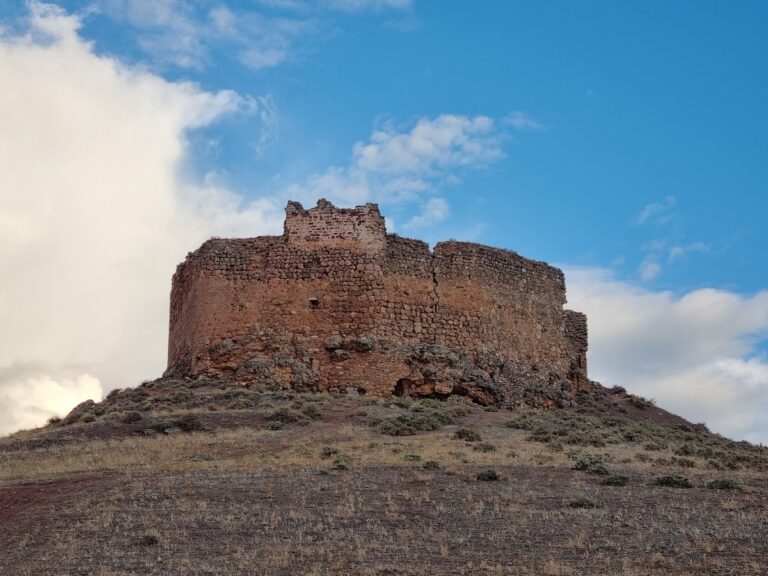
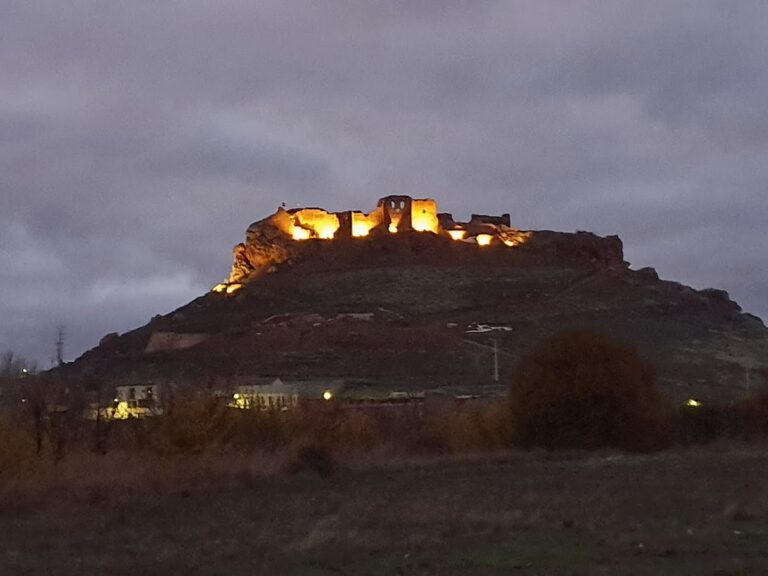
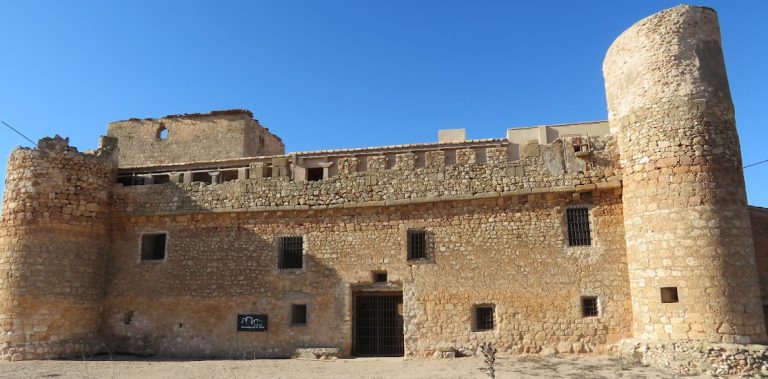
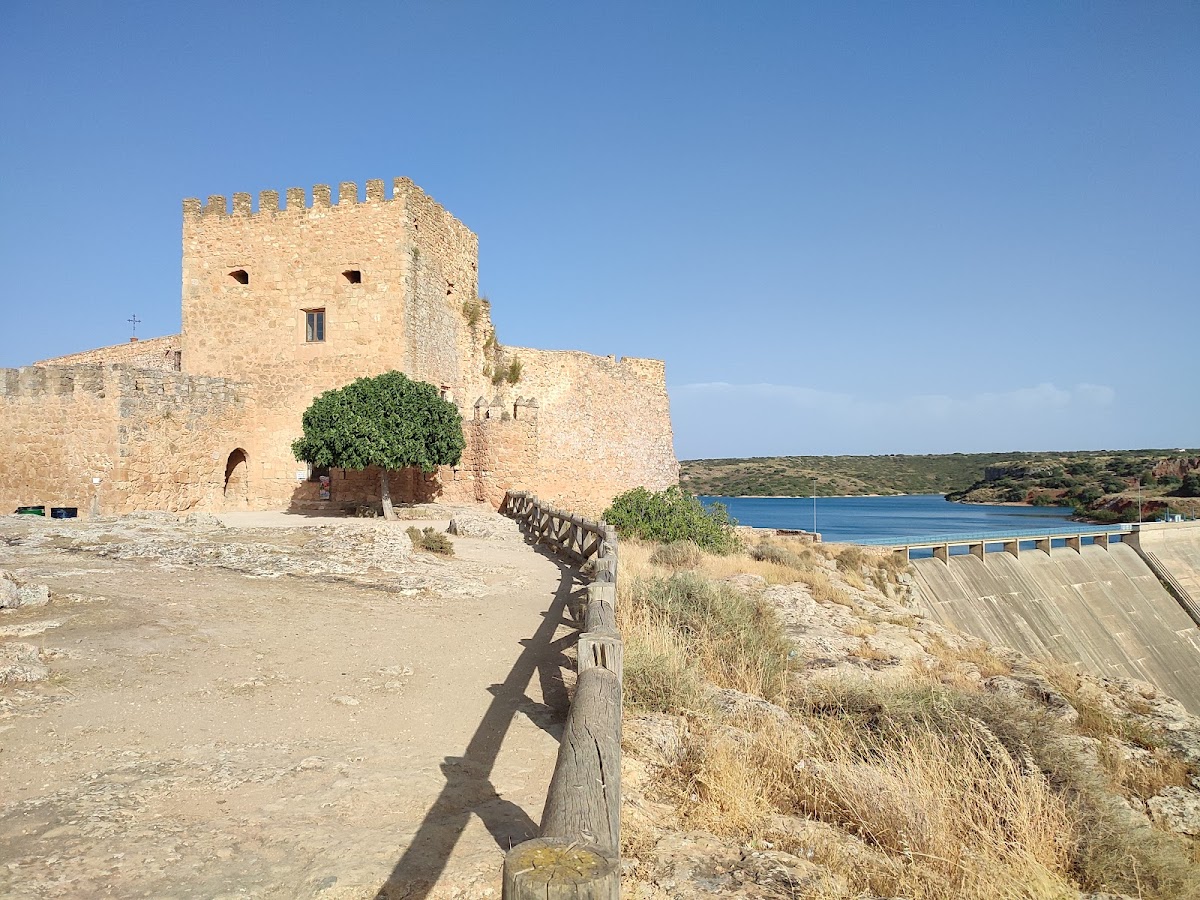
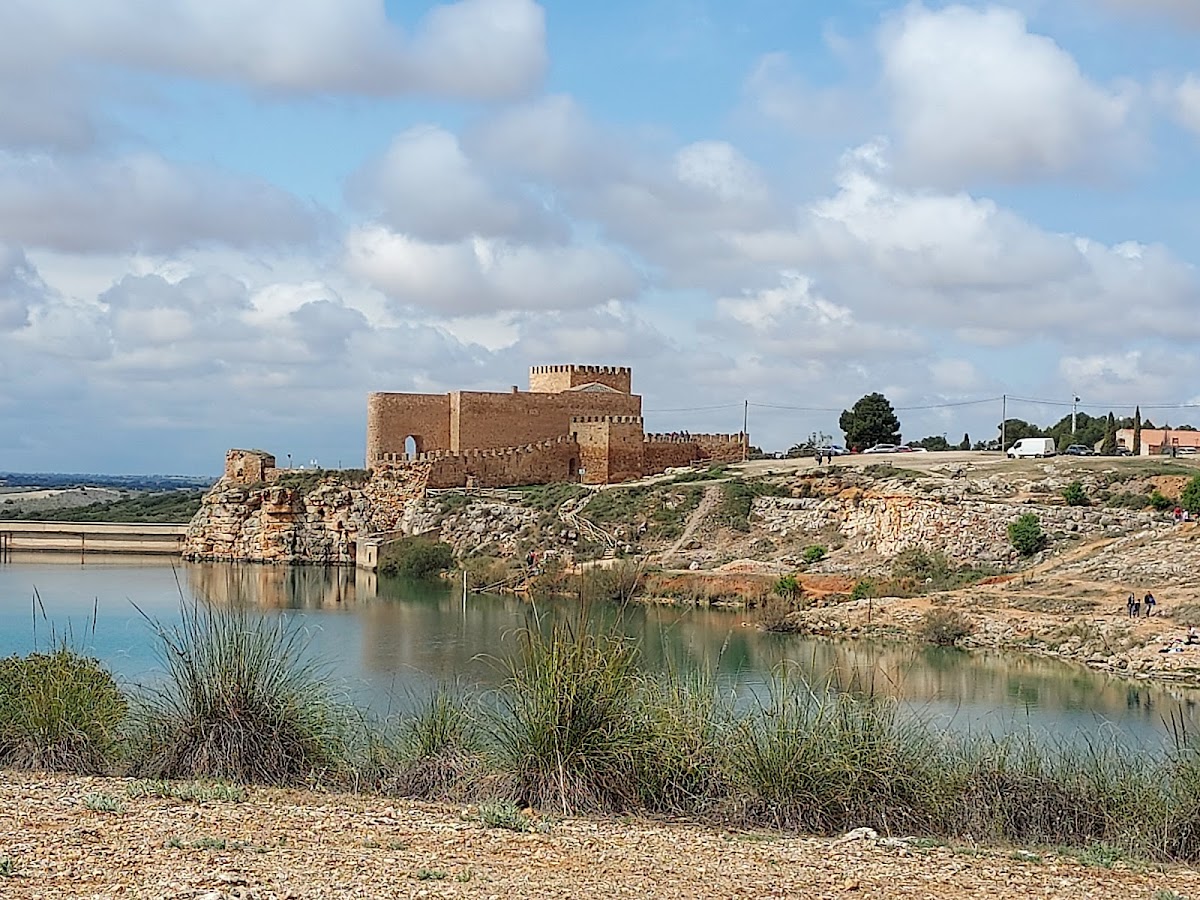
The castle occupies a reddish or blondish rocky outcrop above a cliff beside a stretch of the Guadiana River leading toward the Peñarroya Reservoir. Built with rubble masonry and ashlar, it combines defensive walls, towers, a military courtyard, water infrastructure, and later religious buildings. On the side facing the reservoir, an entrance leads into the present hermitage.
Fortifications and military buildings
Walls, moat, and courtyard
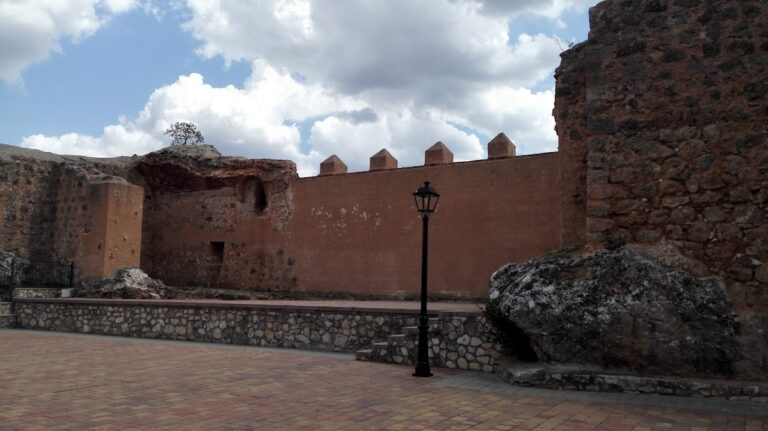
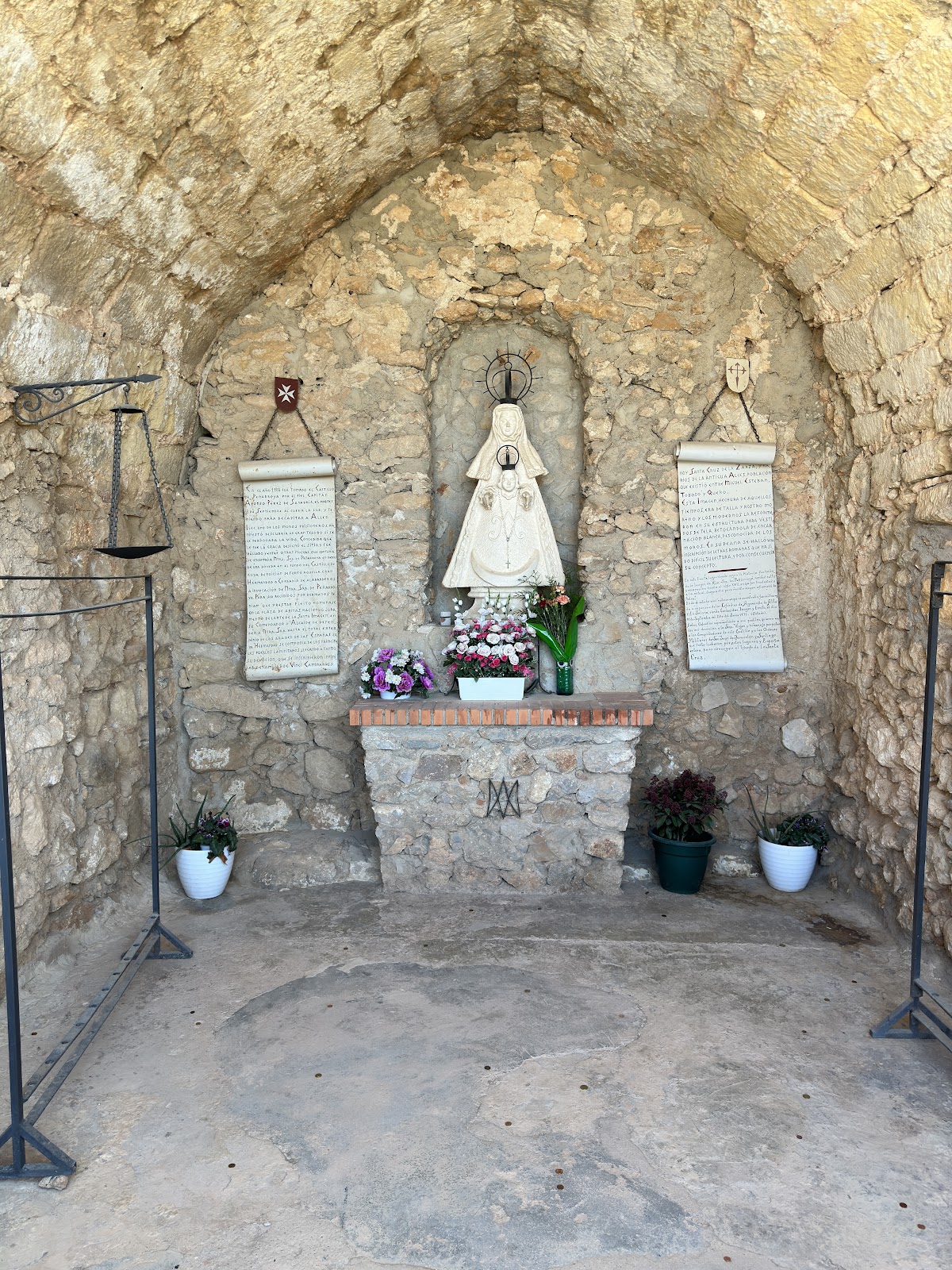
An exterior approach includes a medieval access path, a devotional wayside shrine, and a moat. A portico opens into the military courtyard, which measures approximately 67 by 43 metres. Buildings are attached to the surrounding walls, including a former church dating from the twelfth century and a cistern, a structure used to collect and store water.
An internal passage called a liza, meaning the space between defensive walls, separates the higher main wall from the outer defensive wall. The outer wall extends for 70 metres and contains three towers positioned between its wall sections. An albarrana tower, a projecting defensive tower set apart from the main wall but connected to it, has a rectangular plan with a rounded front end.
Keep
The square keep covers 113 square metres and rises through three storeys. It probably once housed the lord of the castle or its castellan, the official responsible for the fortress. The building now contains the premises of the Brotherhood of Our Lady of Peñarroya of Argamasilla de Alba. A doorway from the wall walk, the passage along the top of a defensive wall, formerly provided access to its terrace.
Religious buildings
Hermitage
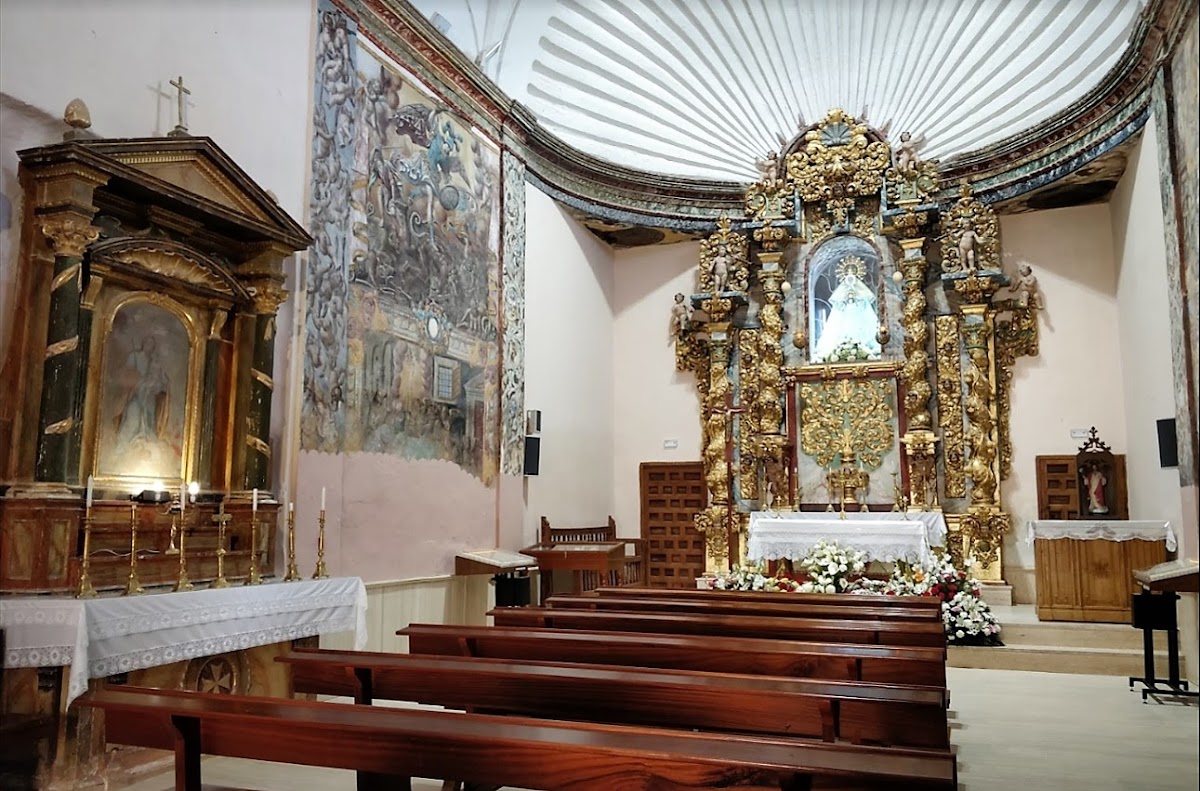
The present hermitage dates from the seventeenth century and displays a pronounced decadent Baroque character. Its interior includes paintings on both sides of the high altar, a richly decorated Churrigueresque altarpiece, a chamber for the Virgin, and a choir. Churrigueresque is an elaborate late Spanish Baroque style associated with richly ornamented architectural decoration and altarpieces. The hermitage also contains a seventeenth-century carving that originally stood in the Mercedarian convent of Argamasilla de Alba.
Earlier chapel
Before the current hermitage was built, a small chapel stood within the military courtyard. It was visible from the gorge and served the worship and prayers of the inhabitants. This earlier chapel formed part of the fortress’s religious life before the seventeenth-century sanctuary took its present form.
Archaeological features outside the castle
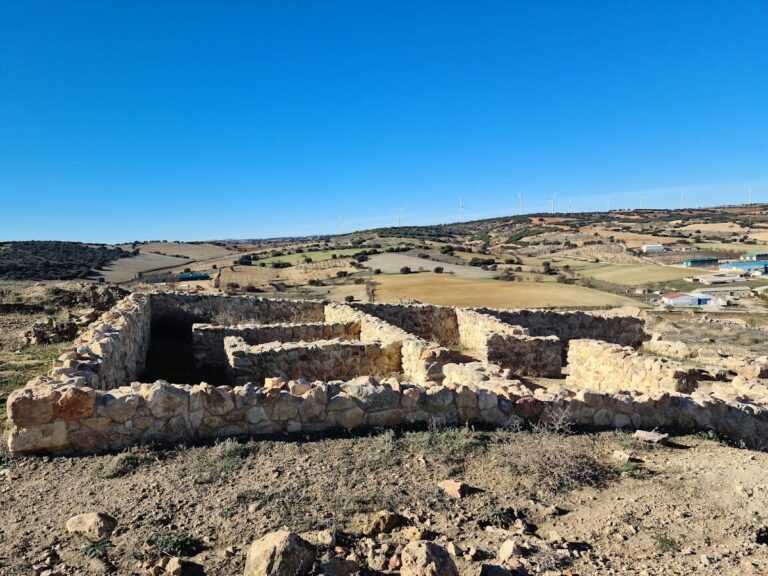
Recent identification of an Islamic-rite necropolis and a field of silos of undetermined date has expanded the archaeological setting beyond the fortifications. Together, these features add evidence of activity around the castle during periods not fully defined by the surviving medieval and later buildings.
Nearby sites