Castle of Contignaco: A Medieval Fortress Overlooking the Salsomaggiore Saltworks

Site at a Glance
- Rating
- 4.6
- Popularity
- Low
- Country
- Italy
- Primary era
- Medieval
- External website
- Open
- Eras represented
- Medieval
- Civilizations
- Holy Roman Empire
- Site type
- Military
- Remains
- Castle
On this page11 sections
History
The Castle of Contignaco is a medieval fortress in Italy, near Contignaco, a hamlet of Salsomaggiore Terme. Marquis Adalbert of the Obertenghi family built the original castle during the first half of the eleventh century, probably including the high tower beside the entrance around 1030. The fortress was established to defend and control the nearby saltworks, installations for extracting salt from saline water or brine, at Salsomaggiore.
The Obertenghi lordship
The castle formed part of a defensive network associated with the Castello di Gallinella on the opposite side of the valley. Around 1025, Adalbert also established the nearby Castello di Scipione as the center of his lordship, on the remains of a Roman villa associated with the Scipiones. Through Adalbert’s grandson Oberto, known as “il Pelavicino,” the lordship passed to his descendants, the Pallavicino family.
Conflict and changing ownership
In 1315, the Pallavicino capitulated after troops deployed by the Aldighieri family of the Parma branch violently attacked the fortress. Around the middle of the fifteenth century, the Aldighieri of Contignaco became connected with the Pallavicino through the marriage of Giberto and Agnese, the daughter of Rolando Pallavicino.
The Contignaco line ended with the death of Gian Matteo in 1537. The Ducal Chamber of Milan, the administrative body responsible for managing ducal property, assigned the fief, a territory held under a feudal arrangement, to Sforza Pallavicino. It later passed to his sister Ottavia and then to his niece Isabella Gambara. After Isabella Gambara died in 1633, the castle was absorbed by the ducal administration.
In 1660, Duke Ranuccio II Farnese assigned the castle to his cousin Anna Maria Farnese of Latera, wife of Count Antonio Maria Terzi of Sissa. When the male line of the Terzi of Sissa became extinct in the mid-eighteenth century, the fief returned to the Ducal Chamber of Parma. Duke Philip of Bourbon sold it in 1762 to Marquis Silvestro Antonio Ponticelli of Sasso, whose descendants subsequently inherited it.
From decline to restoration
The castle was in very poor condition when it was sold during the nineteenth century to Captain Alberto Leva. He converted it into an agricultural estate specializing in wine production. It later belonged to Luigi Boschi and passed through the marriage of Maria Boschi and Luigi Vicini to the heirs of Luigi Vicini. The Romanini family now owns the completely restored castle as a wine-producing estate.
Since 2017, the Castle of Contignaco has belonged to the circuit of the Association of the Castles of the Duchy of Parma, Piacenza and Pontremoli. It is also identified as Italian national heritage.
Remains
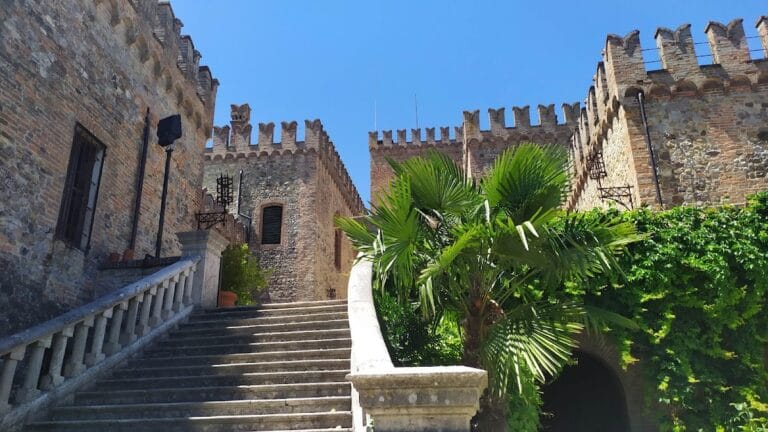
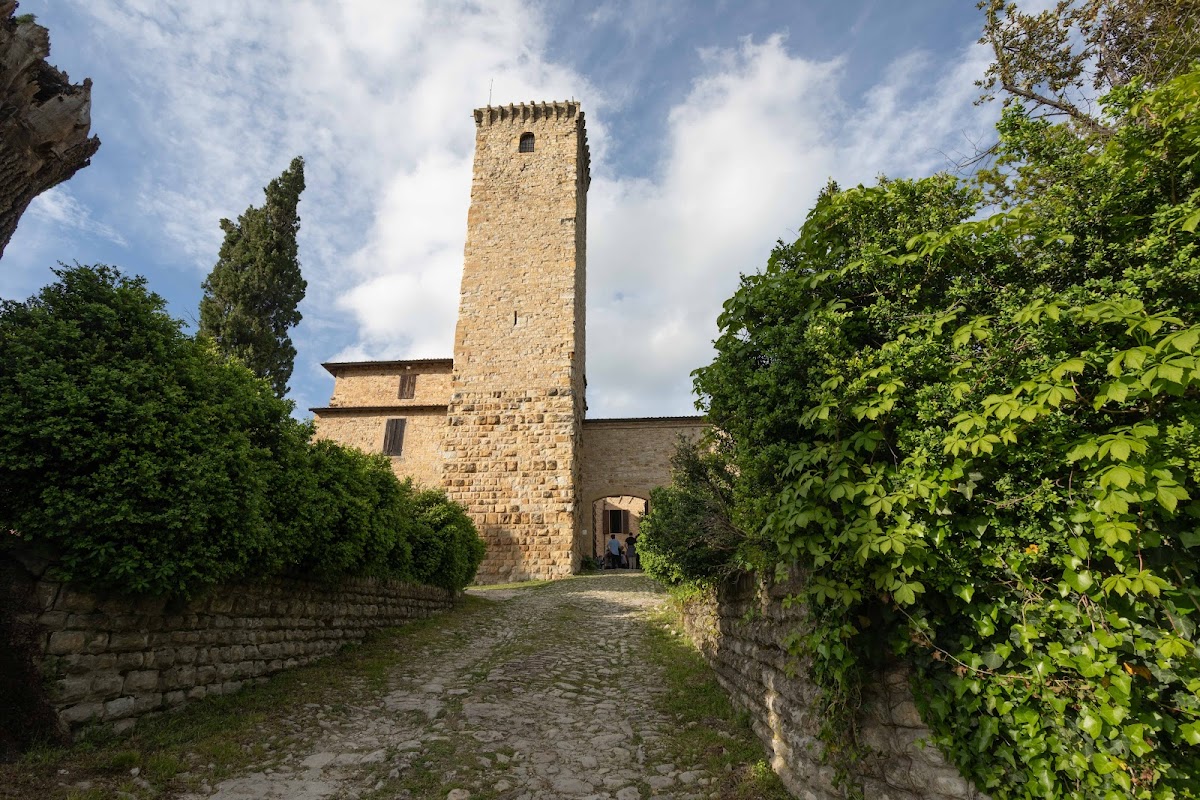
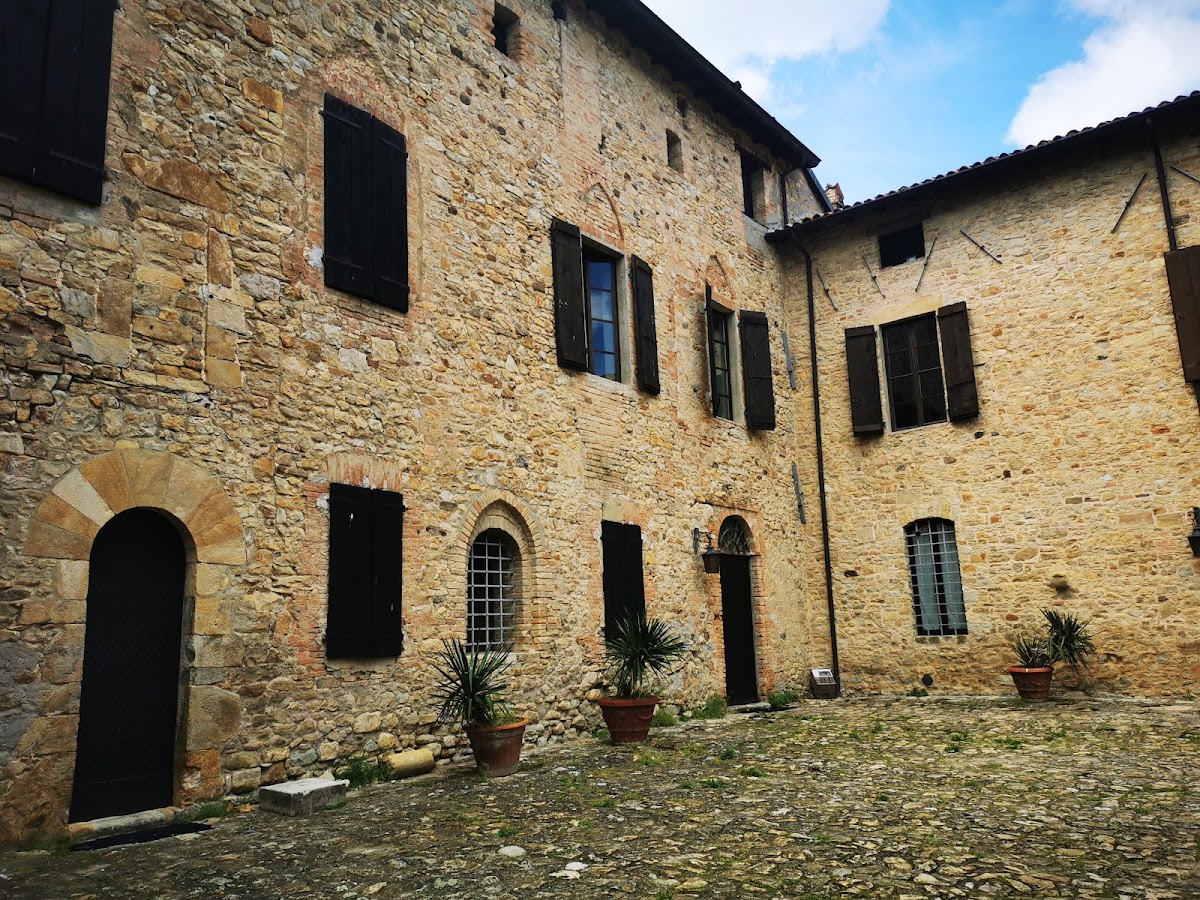
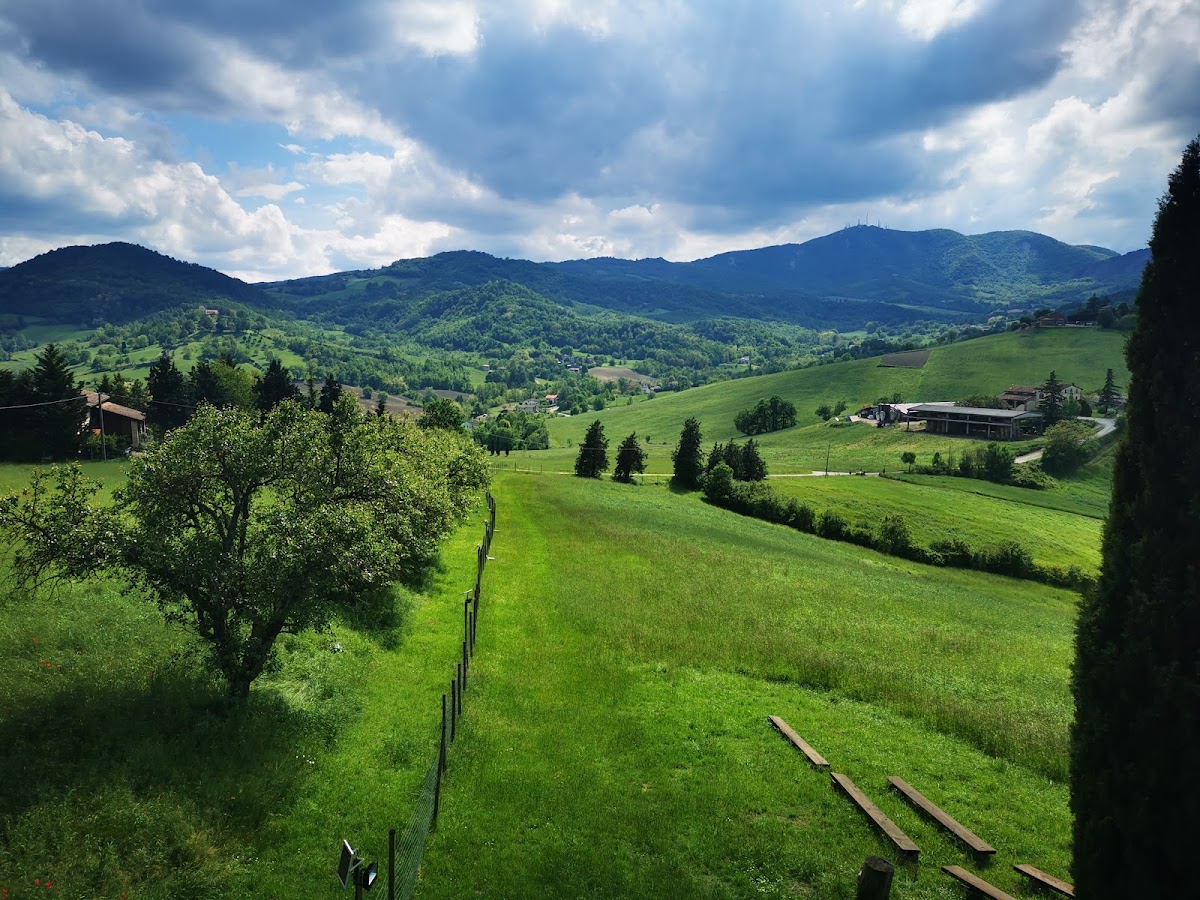
The castle occupies the summit of a hill at approximately 307 metres above sea level. Its regular quadrangular plan is arranged around a square internal courtyard. Stone facades, including rubble stone construction, reflect the many reconstructions carried out over the centuries. The limited number of windows gives the complex a severe appearance.
Entrance and keep
Entrance portal
A large entrance portal stands beside the medieval keep, the principal fortified tower of a castle. The keep has a projecting square plan and rises more than 30 metres, overlooking the surrounding valleys.
Interior rooms and grounds
Named rooms
The Arrow-Slit Room, Heraldic Room, and Fireplace Room are named interior spaces within the castle. Their inclusion in the documented route reflects the survival of distinct rooms inside the restored complex.
Small prison
A small prison occupies the base of the tower, linking the keep’s lower level with the castle’s former defensive function.
Park
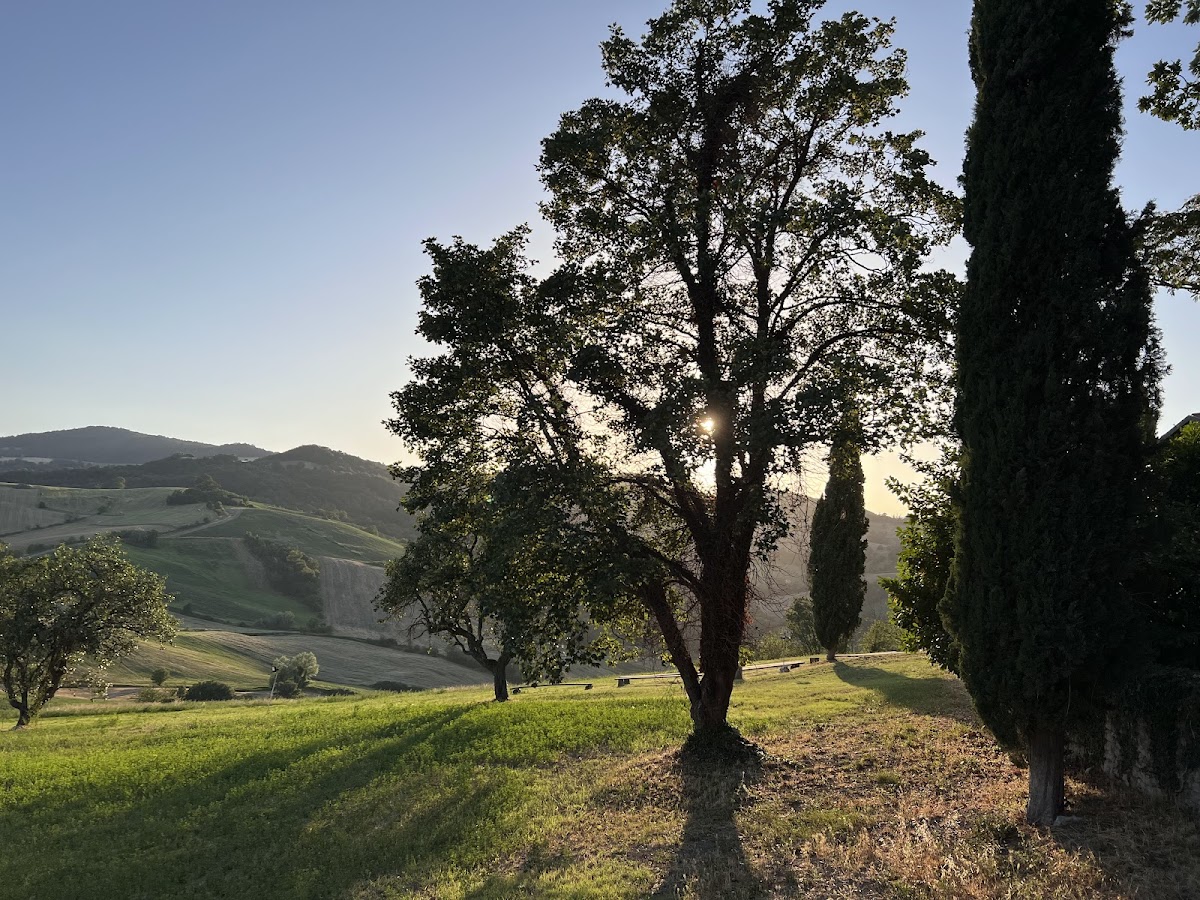
An extensive park surrounds the castle, with mature oaks, cedars, cypresses, and laurels. Near the entrance stands an oak more than a century old, measuring over 2 metres in diameter. The restored buildings and grounds form part of the wine-producing agricultural estate.