Castillo de Lanjarón: A Medieval Fortress in Granada, Spain


Site at a Glance
- Rating
- 4.2
- Popularity
- Low
- Country
- Spain
- Primary era
- Medieval
- External website
- Open
- Eras represented
- Medieval, Early Modern
- Civilizations
- Crown of Castile, Nasrid
- Site type
- Military
- Remains
- Castle
On this page8 sections
History
Castillo de Lanjarón is a medieval fortress in Spain, situated near the town of Lanjarón in Granada. Dated broadly from the thirteenth to the sixteenth centuries, it began within the defensive system of the Nasrids, the Muslim dynasty that ruled the Emirate of Granada until the Christian conquest of Granada in 1492. The surviving remains are predominantly Christian in date, while pottery and archaeological evidence suggest that an earlier occupation or fortification may have existed before the castle that survives today.
Nasrid and Christian Fortification
Construction has been associated with the reign of Yusuf I or that of his son Muhammad V. Both sultans developed defensive works across the Nasrid kingdom. The fortress occupied a strategic position because it controlled important routes toward Sierra Nevada and La Alpujarra. Its setting also lay near an archaeological site of prehistoric date and another associated with the Roman period, indicating the long-standing importance of the location.
Ferdinand II seized the fortress in 1494, two years after the conquest of the Nasrid kingdom. Rather than ordering its destruction, as happened at other castles in the area, he appointed an alcaide, a governor responsible for administering and defending a castle, together with a garrison. Despite this continued military role, the fortress had relatively little connection with the town of Lanjarón itself.
Decline and Archaeological Study
By the time of the Morisco revolt, an uprising involving Muslims who had converted to Christianity or their descendants in Christian-ruled Spain, the castle was already seriously deteriorated. It was gradually abandoned afterward and never recovered a military function.
Archaeological interventions between 1993 and 1995, followed by further work in 2007, confirmed the strategic importance of the site. They recovered material dating from the late antique and early medieval periods through the twelfth century, concentrated mainly in the first defensive enclosure. Restoration was also undertaken in 2007. The castle is protected under Spain’s decree of 22 April 1949 concerning castles and has held Property of Cultural Interest status in the monument category since 22 June 1993.
Remains
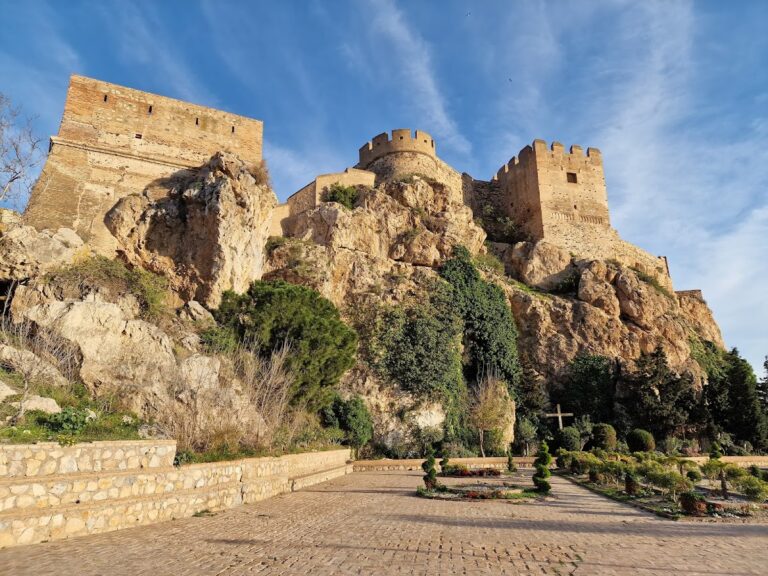
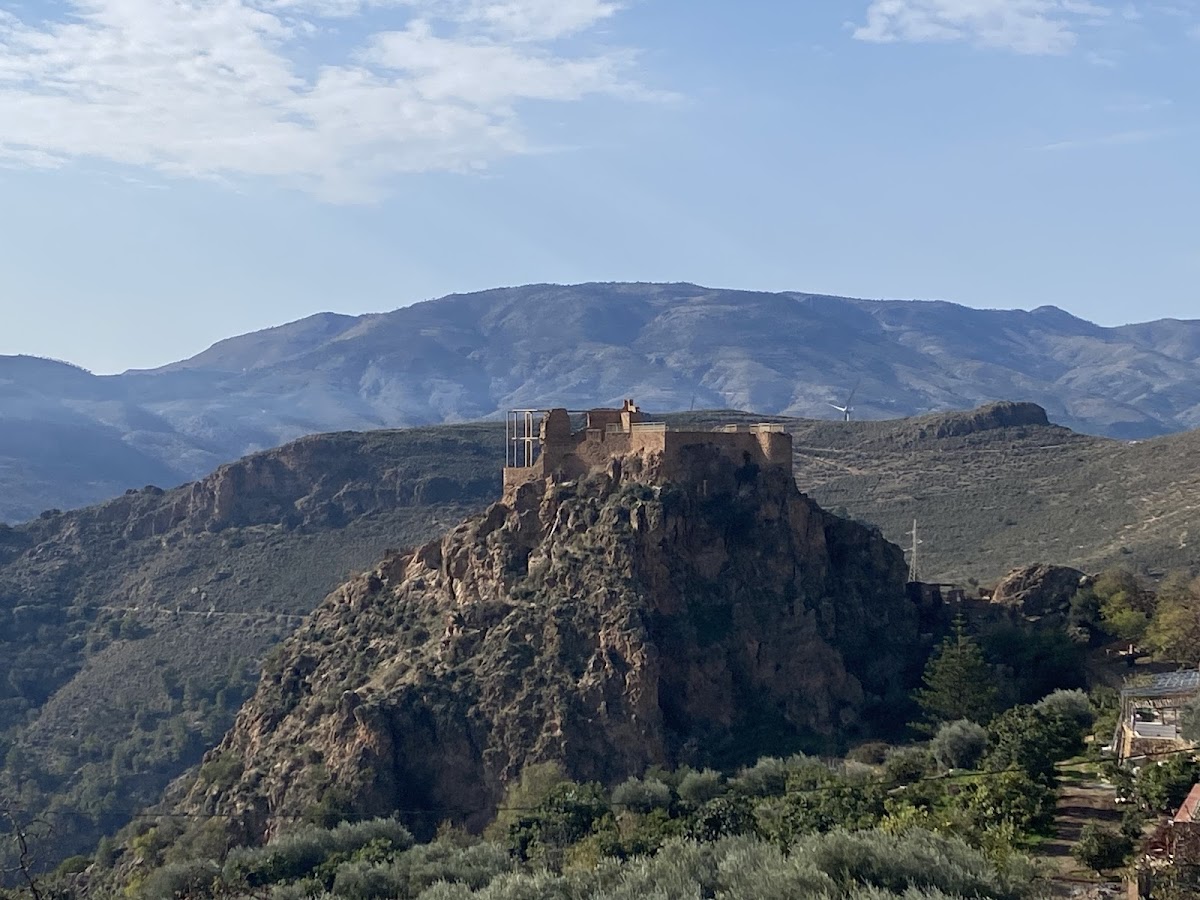
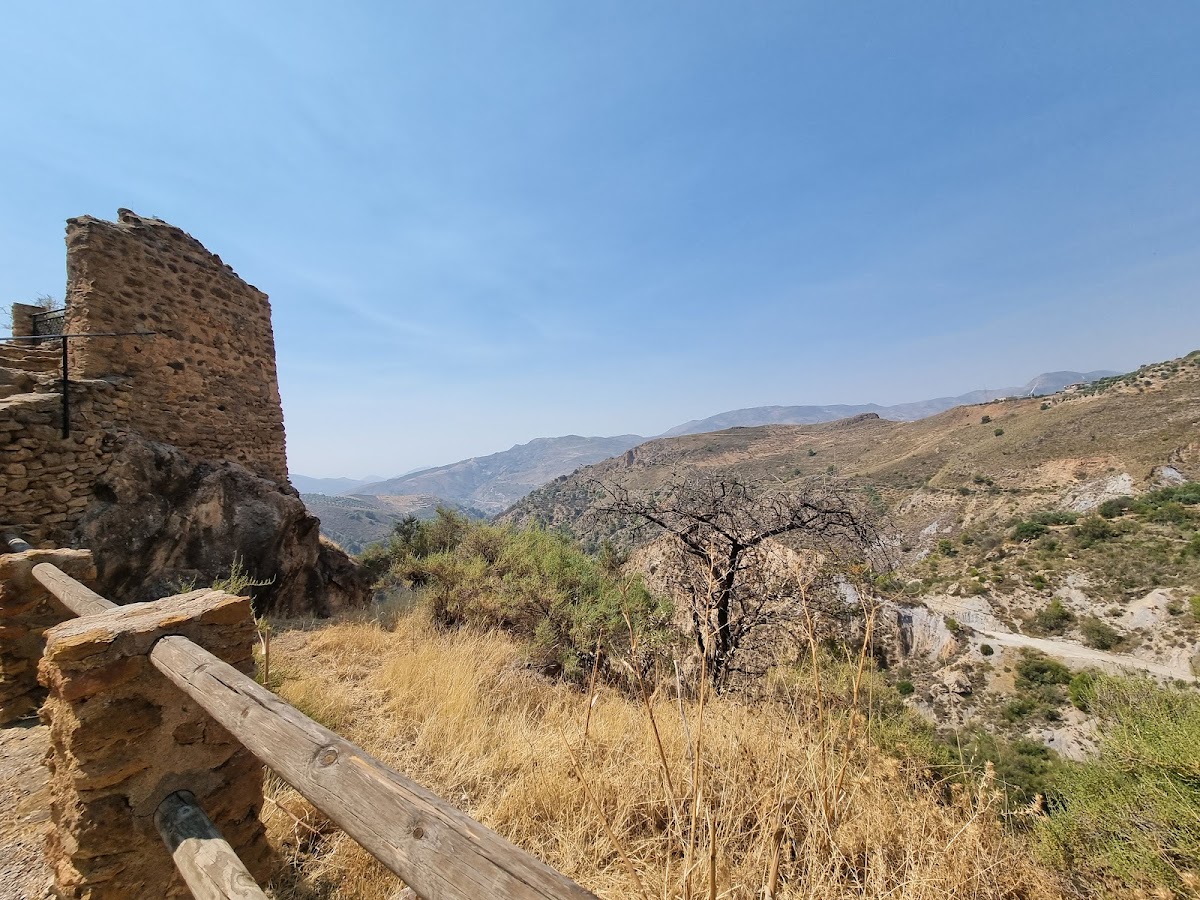
Castillo de Lanjarón stands on an isolated rocky promontory approximately 400 metres from Lanjarón, south of and below the settlement. At an elevation of 619 metres, it overlooks the Lanjarón River valley beside the Salado Ravine. Its irregular plan follows the uneven surface of the rock and is arranged in two defensive enclosures.
Defensive Enclosures and Southern Stronghold
Outer Enclosure
Only small and highly deteriorated sections of the outer wall survive. The remains include indications of a tower, preserving evidence of the enclosure’s defensive organization despite the fragmentary condition of its walls.
Southern Keep
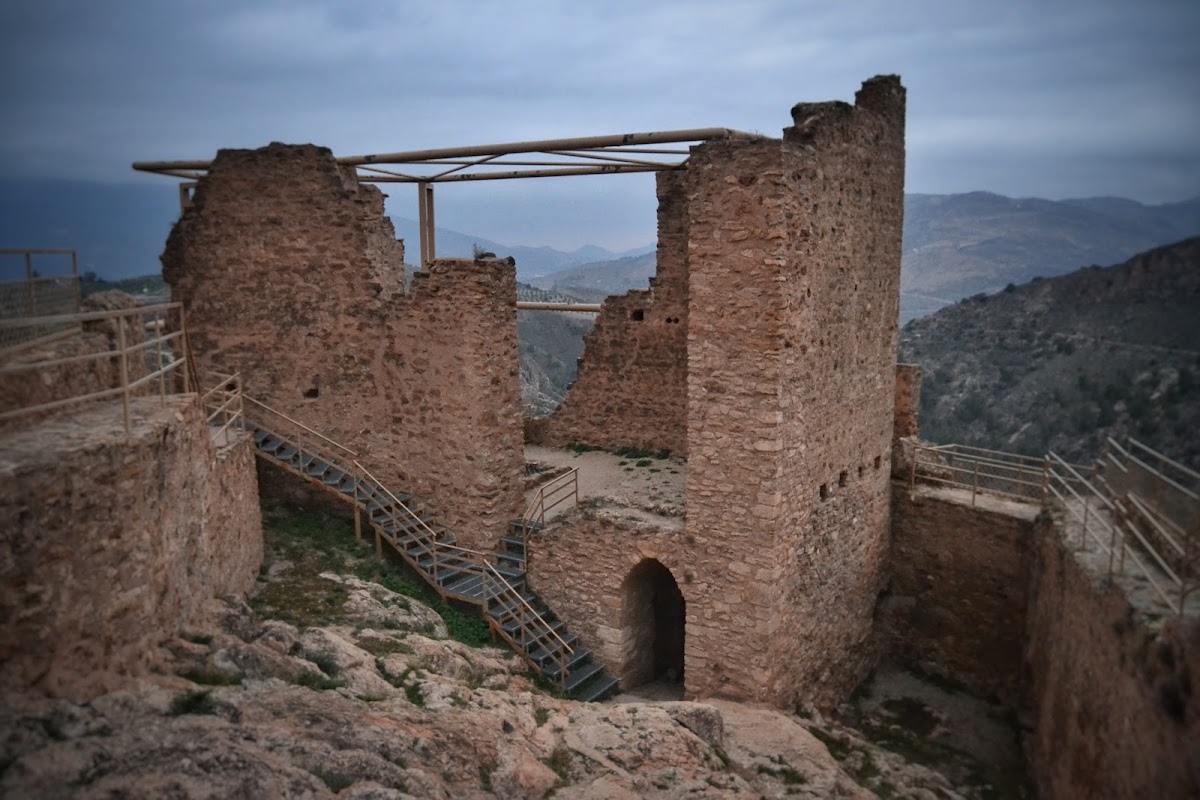
A rectangular bastion or keep occupies the southern part of the complex. Its lower section consists of rubble masonry, while the upper part was built with rammed earth, a technique in which compacted earth is formed into walls. The structure rose approximately two storeys and may have been finished with a roof terrace.
Subterranean Cistern
A cistern lies below ground within the fortress. It measures 5.25 by 2.60 metres and is covered by a vault made from masonry and mortar. Demolition debris from the castle prevents its depth from being determined.