Burg Baldenau: A Medieval Moated Castle in Germany
Site at a Glance
- Rating
- 4.6
- Popularity
- Low
- Country
- Germany
- Primary era
- Medieval
- Eras represented
- Medieval
- Civilizations
- Holy Roman Empire
- Site type
- Military
- Remains
- Castle
On this page10 sections
History
Burg Baldenau is a medieval moated castle ruin in Germany, near Morbach in Rhineland-Palatinate. Construction began around 1315 under Balduin, Archbishop and Elector of Trier, to secure the territory of the Electorate of Trier and chiefly to counter the rival Counts of Sponheim. As an ecclesiastical principality, the Electorate of Trier was governed territorially as well as religiously by the Archbishops of Trier. Balduin, one of the leading German prelates of the fourteenth century, was also an elector entitled to participate in the election of the Roman-German king.
Administrative Role
The castle became the namesake of the Electoral-Trier district of Baldenau. This administrative area comprised fifteen surrounding settlements. In the fifteenth century, Rulmann von Partenheim and Clas von Nattenheim served as its district administrators.
In 1332, Emperor Louis granted Balduin a collective privilege to establish a town near Baldenau. The planned settlement was never founded, leaving the castle as the principal expression of the territorial project associated with the privilege.
War and Destruction
Baldenau suffered serious damage during the Thirty Years’ War, the European conflict that devastated much of Central Europe between 1618 and 1648. Repairs were completed in 1649. During the War of the Palatine Succession, a late-seventeenth-century conflict in which French forces under Louis XIV attacked territories in the western German lands, French troops destroyed the castle permanently in 1689.
Later Preservation
Securing work on the ruins began in 1982 and continued thereafter. Burg Baldenau is a protected cultural monument. Its associated Stumpfer Turm, built above Hinzerath along the former Roman road, served as an observation and warning post. Approaching dangers along the ridge could be detected there and reported to the castle.
Remains
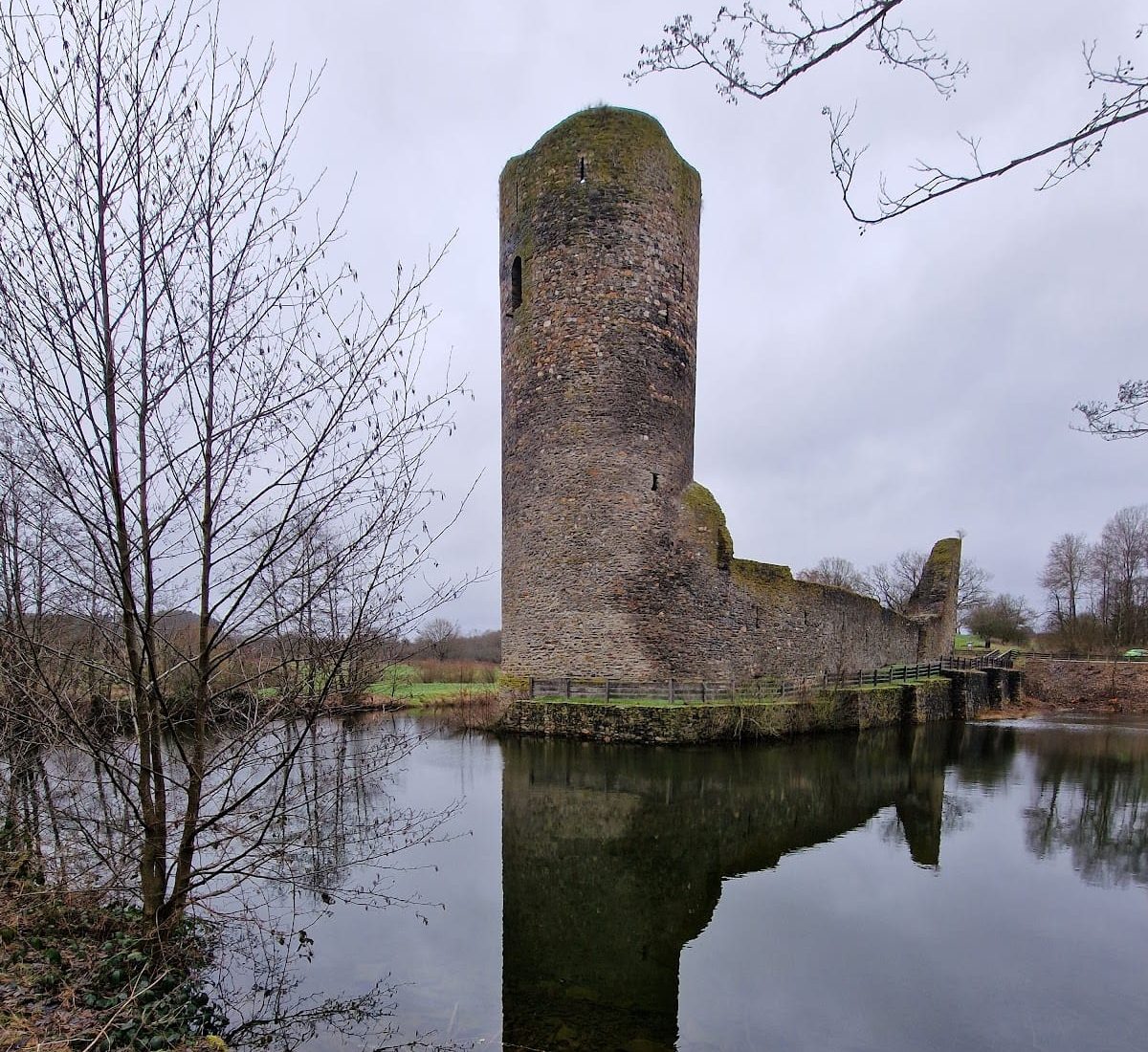
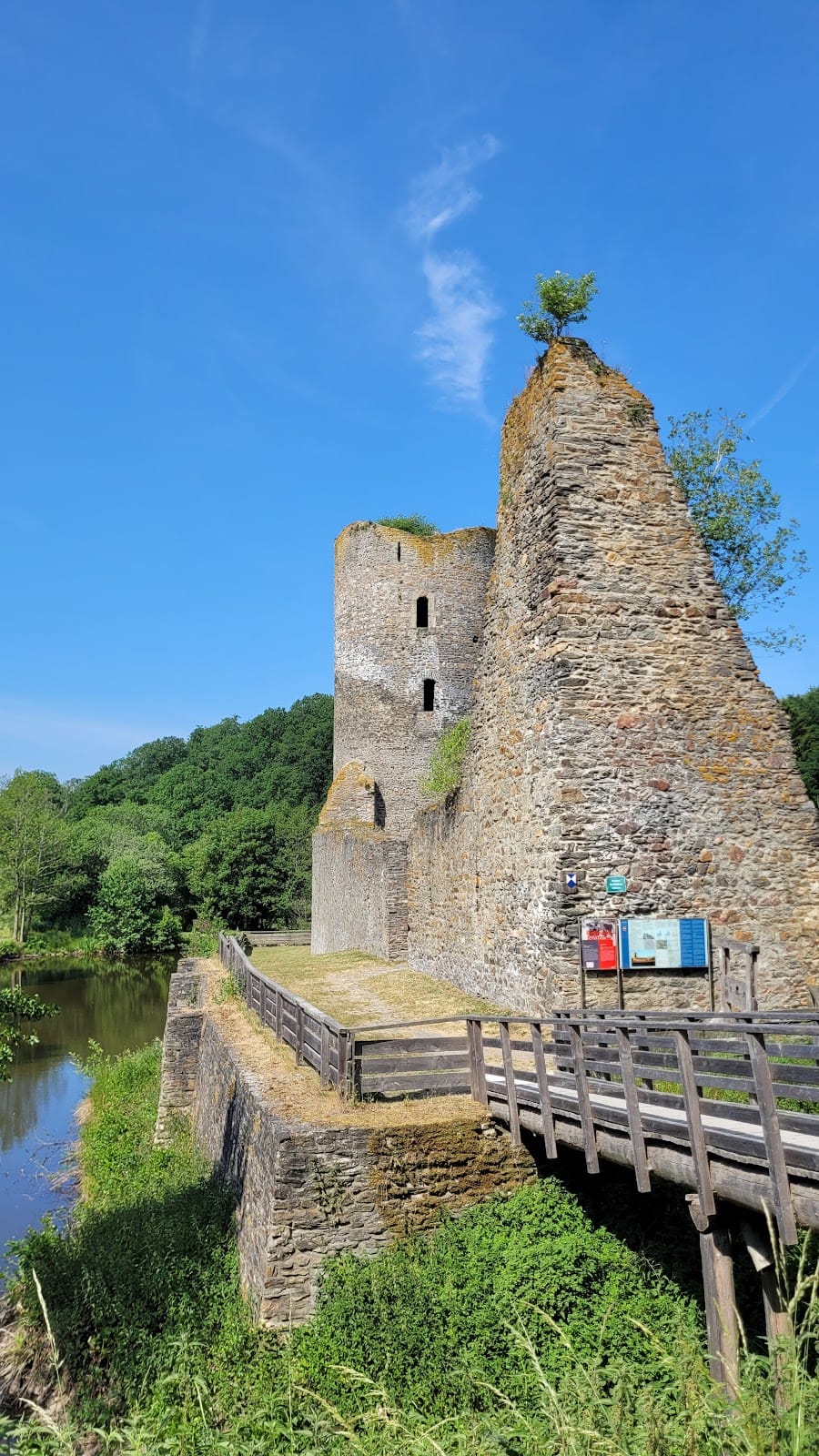
The ruins stand in a high valley at about 465 metres above sea level, on the northern edge of the Idar Forest between Hundheim and Hinzerath, now districts of Morbach. The castle occupies marshy ground near the upper Dhron and its left tributary, the Rehbruchbach. Its wedge-shaped enclosure measures approximately 52 metres in length and up to 20 metres in width. A water-filled artificial moat surrounds it, supplied by the upper course of the Dhron. Slate is the principal material identified for both the castle and its associated tower.
Castle Enclosure
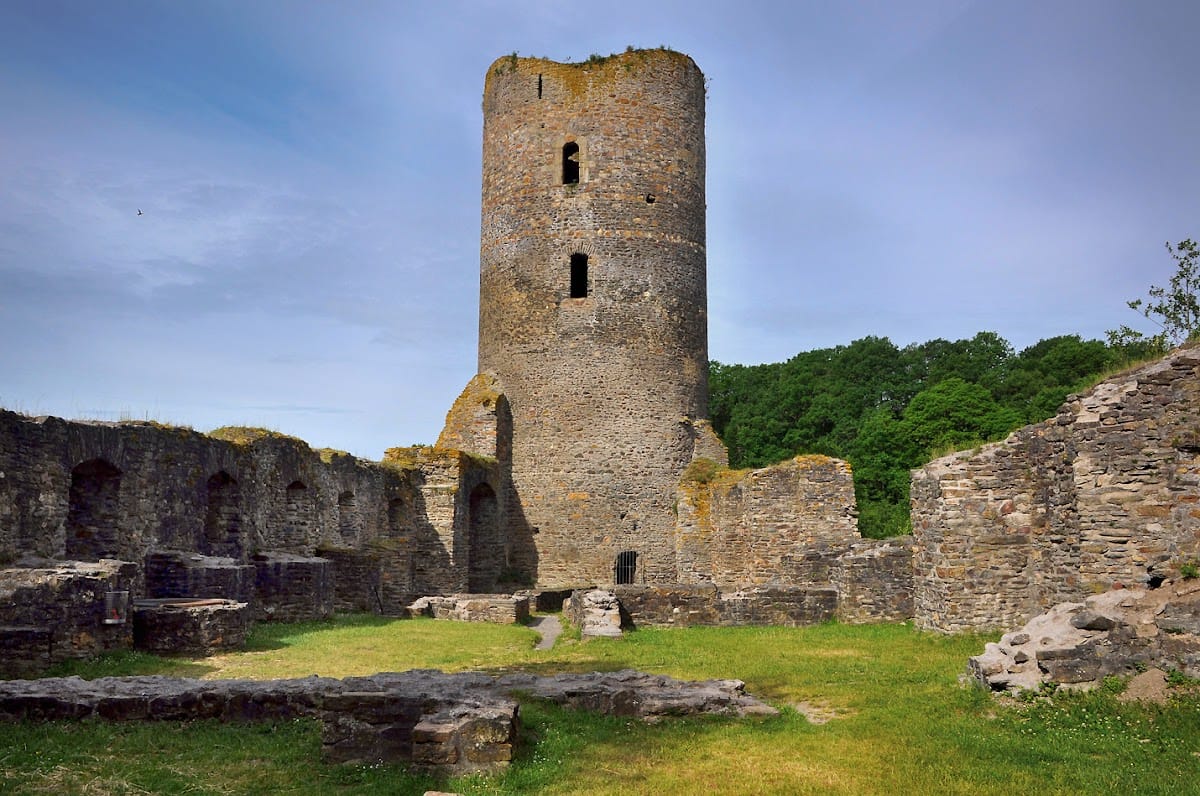
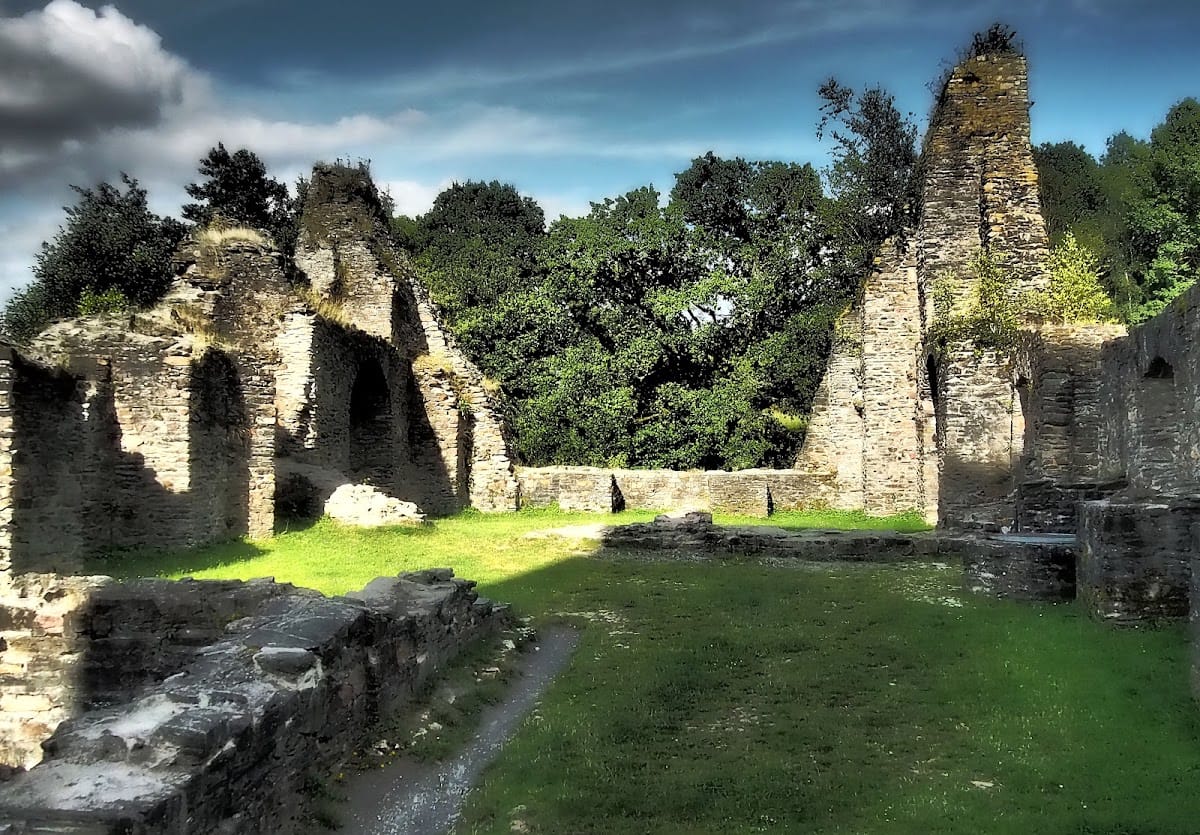
The long sides of the enclosure are bordered by a ring wall. Slit loopholes pierce the wall, which formerly carried a defensive wall-walk and was originally crenellated. An entrance ramp led into the castle, with a well beside the entry providing the water supply. Smaller buildings occupied the courtyard, and their remains were uncovered during archaeological excavation and clearance work.
Bergfried
A round, three-storey bergfried, a fortified tower used chiefly for defense and refuge, occupies the pointed southwestern part of the enclosure. The tower rises about 24 metres, measures approximately 10.5 metres across, and has walls up to 3.2 metres thick. Its position forms the most prominent surviving element of the castle ruin.
Main Building
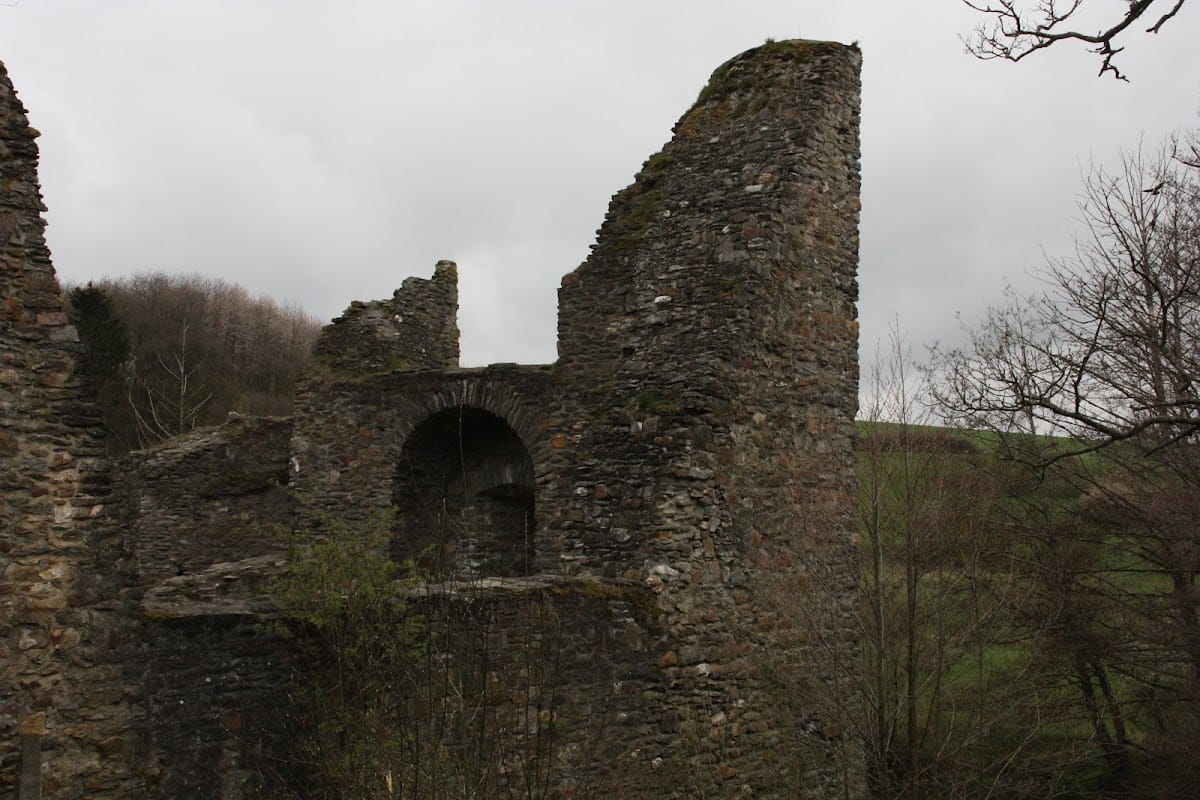
At the opposite end of the enclosure are sparse but unusually tall remains of the main building. It had at least three storeys and was reached by a stair tower. The ground floor contained the kitchen, identified by the remains of a kitchen fireplace on the eastern side.
Stumpfer Turm
The separate Stumpfer Turm is a round tower approximately six metres in diameter and ten metres high. Like Burg Baldenau, it was built of slate. Positioned above Hinzerath along the former Roman road, it functioned as an observation and warning post connected to the castle’s defensive system.
Condition of the Ruins
The surviving masonry has required securing work since 1982. Vandalism removed at least 400 stones from the ruin, and the gate leading to the Stumpfer Turm was forced open several times. These losses and the continuing preservation work form part of the modern condition of the castle remains.