Château d’Hénonville: A French Historic Monument

Site at a Glance
- Rating
- 4.4
- Popularity
- Low
- Country
- France
- Primary era
- Early Modern
- External website
- Open
- Eras represented
- Medieval, Early Modern
- Civilizations
- French
- Site type
- Domestic
- Remains
- Castle
On this page12 sections
History
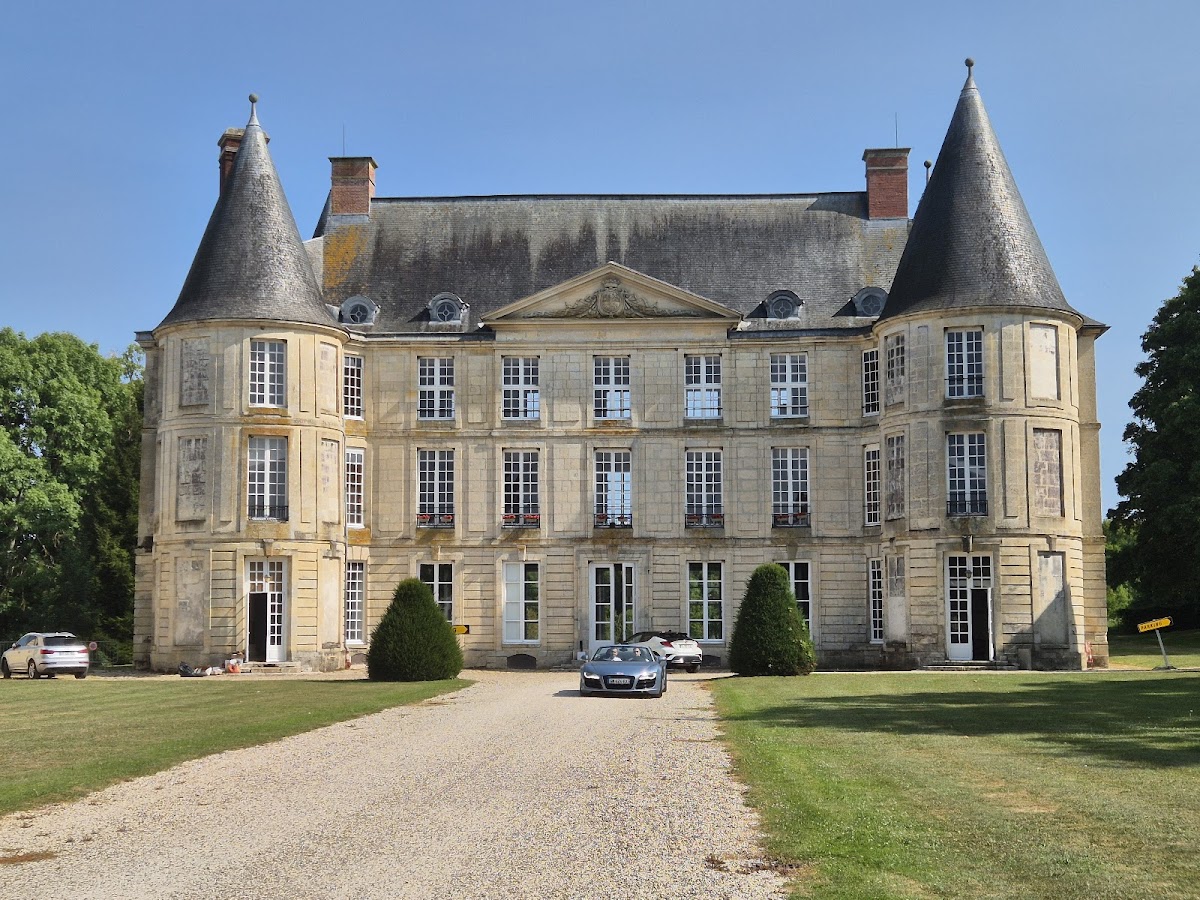
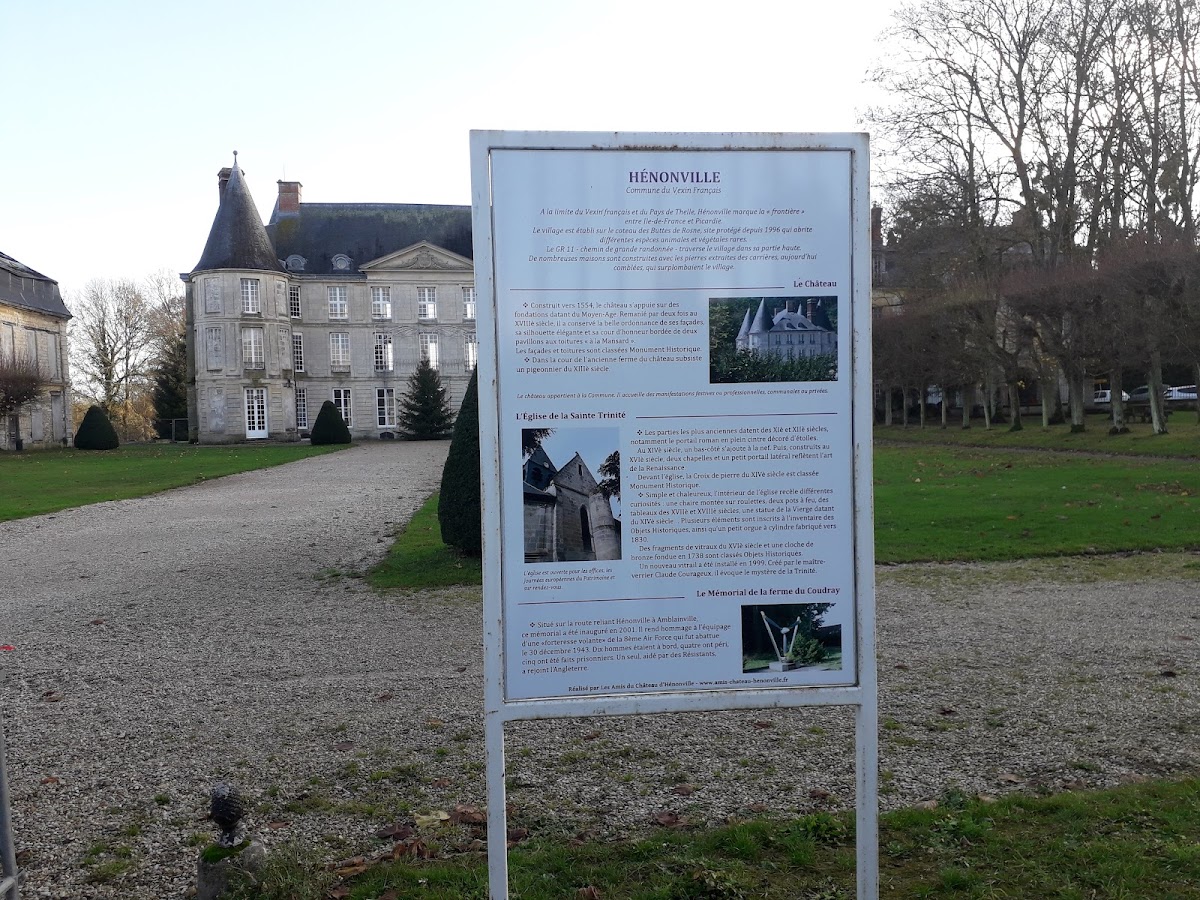
Château d’Hénonville is a historic château in France, rebuilt in 1554 and substantially transformed in the eighteenth century. It developed from a castle first attested in the thirteenth century and later became the residence of several prominent officers, financiers, and noble families. Its façades and roof received legal protection as a historic monument in 1960.
From medieval castle to the Bucy family
The seigneurie of Hénonville, a feudal lordship, belonged in the sixteenth century to François de Rouville, master of the waters and forests of Normandy and Picardy and a royal household officer. In 1535, he and his wife, Louise d’Aumont, sold it to René de Bucy. The earlier castle had been demolished during the Jacquerie, a major peasant revolt in northern France in 1358 during the Hundred Years’ War. René de Bucy rebuilt the residence in 1554, largely establishing the foundations incorporated into the present château.
The estate remained with the Bucy family before passing by inheritance to Léon Cirier, Marquis of Neuchelles. A brigadier in the royal armies and governor of Saint-Menehould, Cirier sold Hénonville in 1714 to Pierre-François Ogier, receiver-general of the clergy and grand audiencier of France, a senior officer of the royal chancery.
Eighteenth-century rebuilding
Ogier rebuilt the château in 1722, largely following the foundations of the earlier castle. His son, Jean-François Ogier, became president of the Parlement of Paris, superintendent of the Dauphine’s household, and French ambassador to Denmark. He sold the estate in 1751 to Edme Joseph Roslin, Lord of Ivry and a fermier-général, a private tax farmer who collected certain royal taxes under contract with the monarchy.
Roslin was ennobled through an office as counsellor-secretary to the king in the Great Chancery and died in 1760. His son, Jean-Baptiste Roslin d’Ivry, also a fermier-général, commissioned the Parisian architect Jean-Benoît Barré to modernize the château between 1765 and 1771. Barré altered both the exterior and the interior, while the grounds, farm buildings, entrance grille, and park walls were also renewed.
Revolution, recovery, and twentieth-century use
Jean-Baptiste Roslin d’Ivry died in 1790, five years after the death of his son, Jean-Marie Roslin d’Ivry. Jean-Marie’s widow was guillotined in 1794 during the Reign of Terror, the period of intensified revolutionary government and political repression in France chiefly from 1793 to 1794. The estate was seized during this period.
Jean-Marie’s son, Jean-Baptiste Roslin d’Ivry (1775–1839), later recovered possession of Hénonville and was made a Baron of the Empire in 1809. His son, Léopold Roslin d’Ivry (1801–1883), lived at the château until his death, after which its furnishings were sold. The building was later rented by the banker Henri Bamberger, one of the founders of the Bank of Paris and the Netherlands, who ultimately purchased it in 1900.
Raymond Bamberger emptied the château in 1939. During the Second World War, German forces occupied it first, followed by American forces. In 1946, M. Lejbel established a residential centre there for Jewish deportees and refugees. Administered from 1946 to 1952 by the Joint, an international Jewish relief organization, together with ORT and Agudath Israel, the centre included a Lithuanian yeshiva, a home for Jewish orphans, and a kibbutz, a collective community traditionally organized around shared work and property.
Municipal preservation
After the centre’s operation ended, the château ceased to be inhabited and part of its interior decoration was lost. M. and Mme Van Themsche acquired the property in 1952. The commune of Hénonville purchased it in 1975, and the Friends of Hénonville Castle association was established the following year. Major restoration work began in 1978. The château is classified as a French historic monument and is listed in the Ministry of Culture’s Mérimée architectural-heritage database under reference PA00114712.
Remains
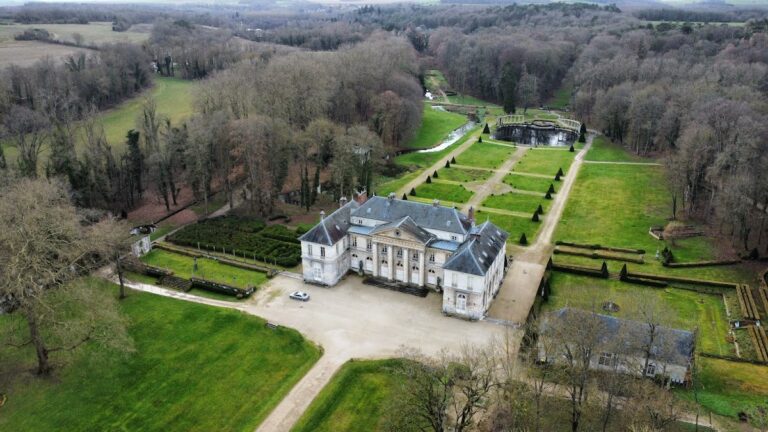
The present château combines foundations inherited from the earlier castle with the exterior and interior changes made in the eighteenth century. Its principal building retains four corner towers, while the surrounding estate includes renewed farm buildings, an entrance grille, and park walls.
Château and grounds
Main château
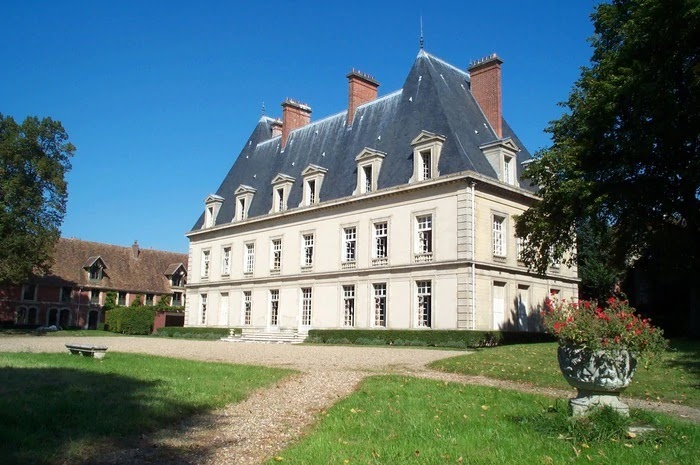
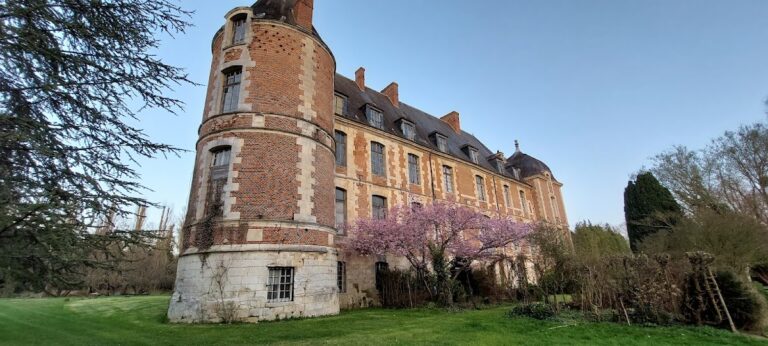
Much of the current structure stands on the foundations of the earlier castle. During the modernization of 1765–1771, Jean-Benoît Barré reclad the façades but retained the four corner towers. This treatment was compared with Germain Boffrand’s work at the Château of Haroué in Lorraine. A medieval tower survives behind wood panelling on the second floor, providing a visible element of the older building within the later château.
Estate grounds
The eighteenth-century transformation extended beyond the main building. The grounds were reorganized, the farm buildings were rebuilt, and both the entrance grille and the walls enclosing the park were renewed. These elements form part of the surviving estate setting associated with the château’s later architectural arrangement.
Interior decoration and paintings
Interior decoration
Barré remodelled the interior and renewed its decoration during the 1765–1771 modernization. Later changes to the building’s use affected this work, and part of the interior decoration was removed or lost after the château ceased to be inhabited.
Paintings and collections
Jean-Baptiste Roslin d’Ivry decorated the château with paintings by François Boucher, an eighteenth-century French painter. One of these works, The Washerwomen, is now in the Metropolitan Museum of Art in New York. Roslin d’Ivry was also among the early collectors of Jean-Honoré Fragonard, another eighteenth-century French painter.