Château du Sou: A Fortified Manor House in Lacenas, France


Site at a Glance
- Rating
- 4.7
- Popularity
- Low
- Country
- France
- Primary era
- Medieval
- External website
- Open
- Eras represented
- Medieval, Early Modern, Modern
- Civilizations
- French
- Site type
- Military
- Remains
- Castle
On this page9 sections
History
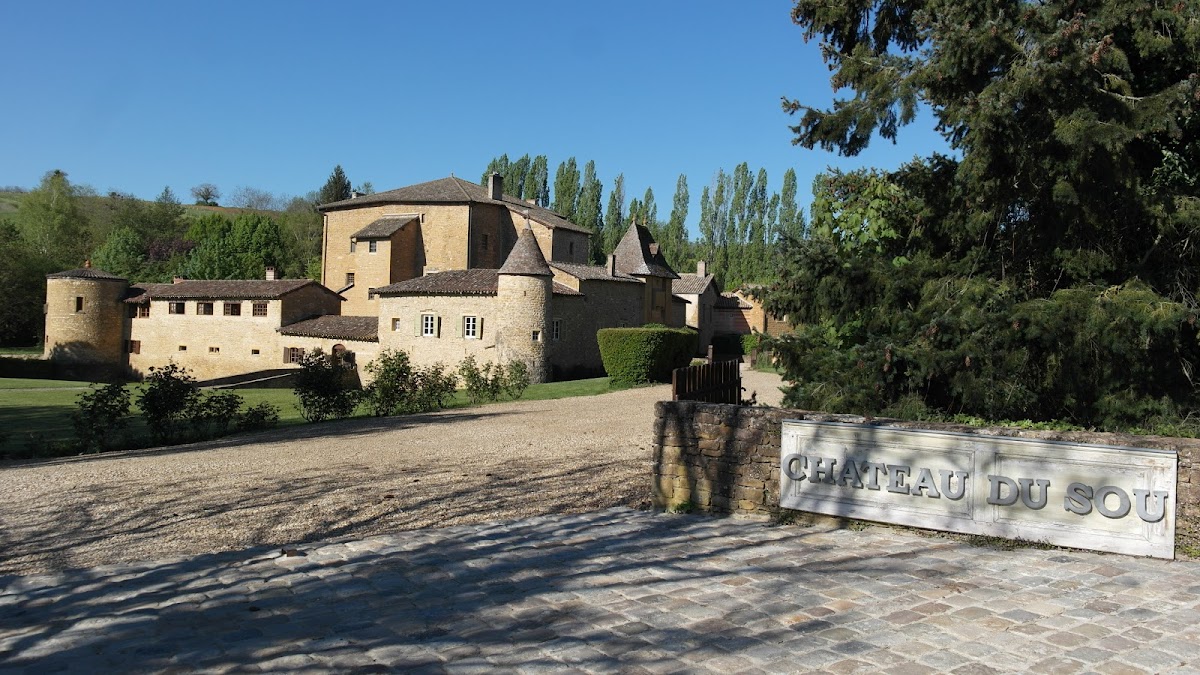
Château du Sou is a former fortified manor house in Lacenas, France, in the Morgon valley west of Villefranche-sur-Saône. Probably built around 1369, during the medieval period, it is associated with Jean de Thélis-L’Espinasse, who became governor and lieutenant-general of Beaujolais that year. The property was first recorded in 1368, and Jean de Thélis, described as a damoiseau, formally acknowledged the authority of the lord of Beaujeu in 1400.
The Thélis and Lespinasse families
During the fifteenth century, Sou belonged to the Lespinasse family. Jocerand, the nephew and successor of Jean’s son, rendered homage for the property to the lord of Beaujeu in 1475. His nephew and successor Antoine repeated the act in 1506, maintaining the estate’s feudal connection with the lordship.
The Gaspard estate
Louis de Thélis sold Château du Sou to Claude de Gaspard in 1539. The property then remained connected with the Gaspard family through the sixteenth and seventeenth centuries. Jean de Gaspard, a descendant and lieutenant-general of the Beaujolais bailliage, a royal judicial and administrative district, married Claudine de Tenay. Claude de Gaspard, lord of Sou, married Marguerite de la Porte in 1577 and served the king as a counsellor and as general receiver of taxes in the Lyon généralité, a major fiscal and administrative division of the French monarchy.
In the seventeenth century, Marc de Gaspard, lord of Sou, commissioned the heraldic gateway. His son Jean married Sibylle de Saint-Amour around 1690. In 1766, Jean gave the château to his brother Joseph Marie, a superior priest at the seminary of Orléans. Joseph Marie transferred it to their cousin Mignot de Bussy the following year.
Revolution and later changes
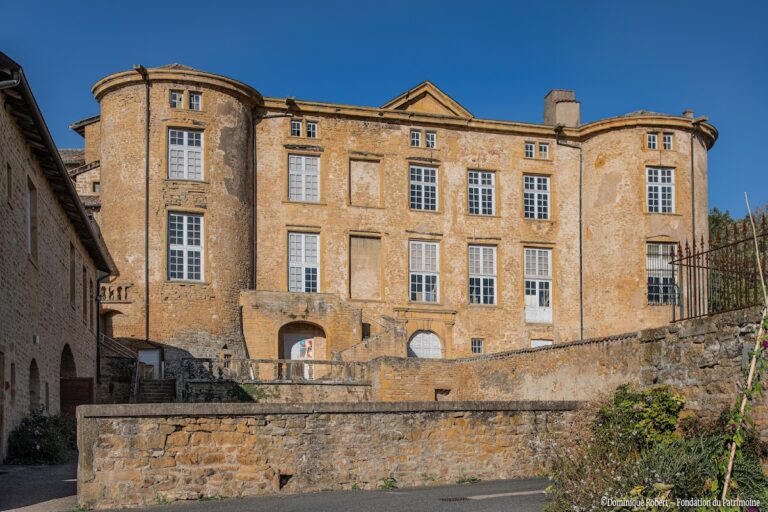
Aimé Antoine, Count of Sou, emigrated during the French Revolution. The château was subsequently sold as a national property, meaning property confiscated and sold by the state during the Revolution. The estate is now divided among several private proprietors. The buildings were heavily remodeled during the nineteenth century, while the fortified gateway received classification as a historic monument by decree on 21 February 1933. This national heritage designation applies specifically to the gateway.
Remains
Fortified enclosure and gateway
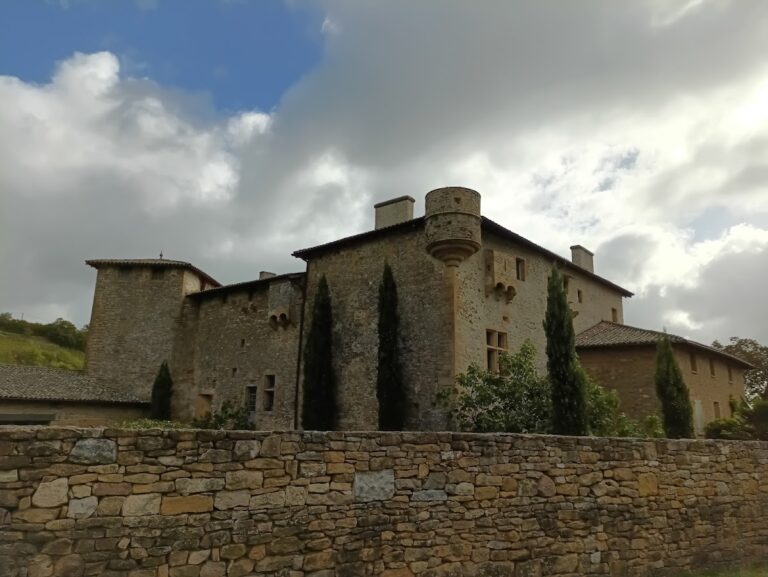
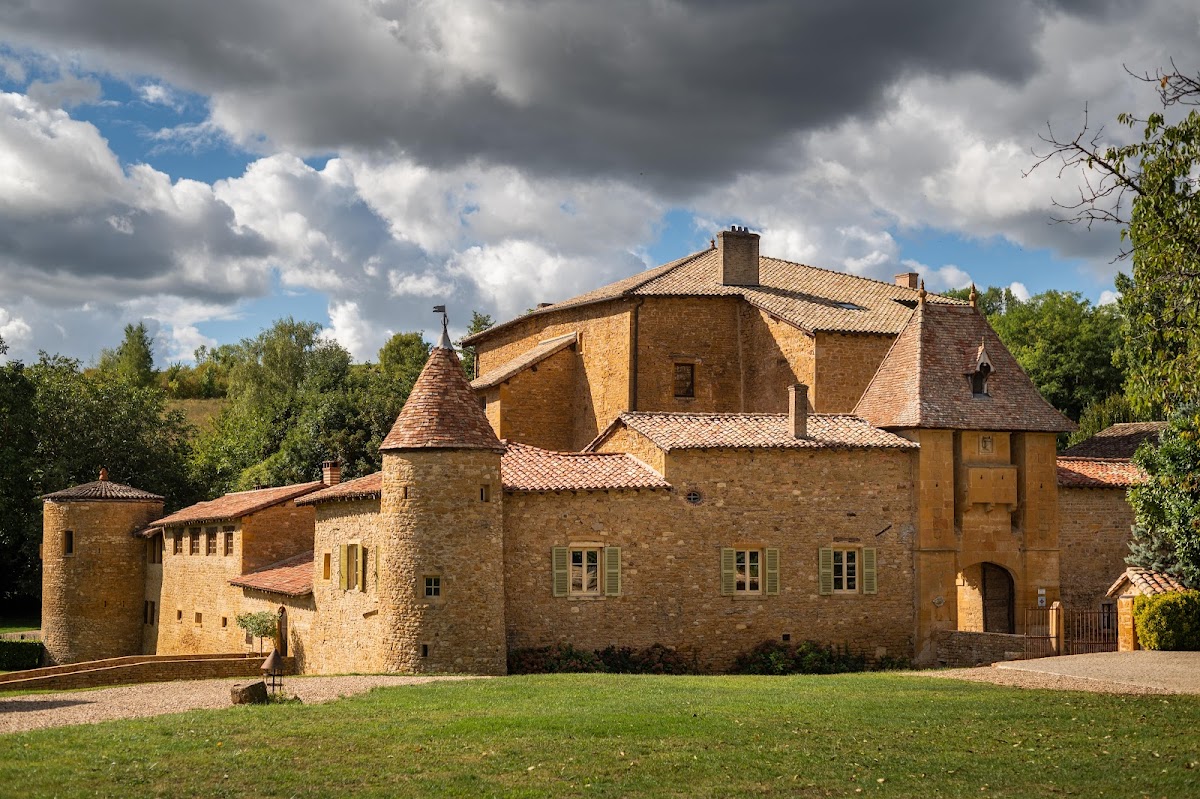
The main construction uses the golden stone characteristic of Beaujolais and is approximately dated to 1369. A fortified enceinte, or enclosed defensive boundary, forms an almost perfect square around the keep. Round towers reinforce its corners, and the south and east sides of the enclosure are specifically identified. Entry was controlled by a fortified gate tower and drawbridge. A projecting corbelled breteche, a defensive structure built out over a gate or passage, protected the entrance between the two grooves used to raise the drawbridge. Traces of these grooves and of the surrounding moats survive.
Keep and chapel
The keep is a square residential tower with a ground floor and three upper storeys. Corbelled échauguettes, small projecting watch turrets, occupy its corners, while one façade is preceded by a small square projecting forebody. A Gothic chapel contains sculptures, including two angel heads.
Heraldic gateway
The northern gateway carries thirteen coats of arms. The Gaspard arms appear above the entrance, with six repetitions of the same arms arranged on the left. Six additional coats of arms associated with the family’s wives occupy the right side. The heraldic carvings were damaged by hammering during the French Revolution.
Gardens and water features
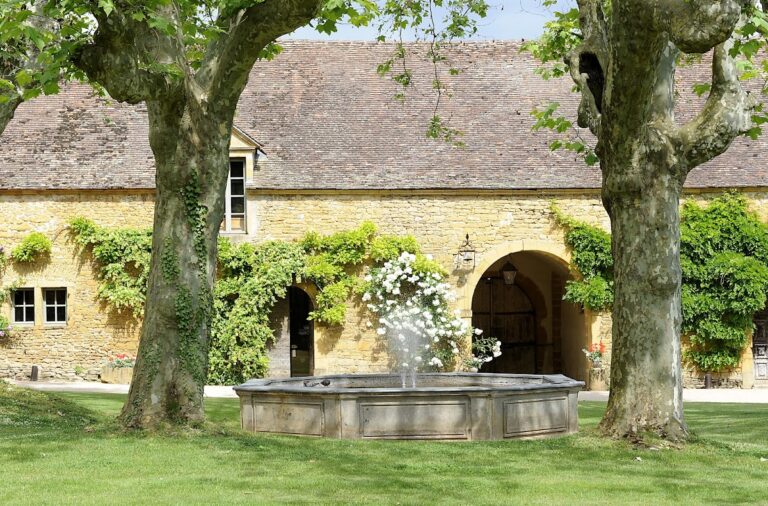
The grounds include a park with a medieval garden, a garden and fountain, and a lavoir at the entrance to the lane leading to the château. The lavoir is fed by the fountain.