Château de la Sône: A Medieval Fortified Castle in France
Site at a Glance
- Rating
- 3.8
- Popularity
- Very Low
- Country
- France
- Primary era
- Early Modern
- External website
- Open
- Eras represented
- Medieval, Early Modern
- Civilizations
- French
- Site type
- Domestic
- Remains
- Castle
On this page7 sections
History
Château de la Sône is a medieval fortified castle in France, at La Sône, whose construction began in the fourteenth century. Its position above the Isère controlled the river towpath and a bridge crossing that had existed since the Roman period. The site therefore combined defensive value with command of an important route across the river.
Early fortified site
The site was first occupied by a Gallic oppidum, a fortified settlement associated with the Iron Age peoples of Gaul. This was later replaced by a fortified house. In 1210, letters patent issued by Emperor Otto IV confirmed Montmajour Abbey’s rights over the lands of La Sône and referred to the fortified property.
During the first half of the fourteenth century, Ardanchon de la Reffrairie, also known as Reffreyrie, enlarged the house and reinforced its defenses. He rendered homage for the property to Humbert II, the last Dauphin of Viennois. The Dauphin of Viennois was the heir to the Dauphiné, a principality in southeastern France. In 1448, Louis, then Dauphin of France and later King Louis XI, stayed at La Reffrairie while hunting in the nearby Forest of Claix.
Wars of Religion and the Boffin period
The fortified house suffered major damage during the sixteenth-century Wars of Religion, the conflicts between Catholics and Protestants that convulsed France during that period. Both sides contested the property, and the nobleman and military commander Lesdiguières besieged it.
In 1603, the property passed to Félicien de Boffin, advocate general of the Parlement of Grenoble. He had also acquired the lordship of La Sône from Horace du Rivail. Boffin repaired the damage caused by the conflicts and carried out extensive alterations and embellishments. His family retained the property for almost two centuries, during which La Reffrairie became known as Château de la Sône. The park is also attributed to Boffin and is believed to date from the seventeenth century.
Later owners and twentieth-century restoration
In 1820, the château passed to the Jubié family, prominent silk manufacturers who had established the royal manufactories at La Sône about a century earlier. Their industrial enterprise later collapsed, leaving them unable to pay the purchase price, and the sale was annulled on 3 December 1848. Later owners included the Baron de Jarente in 1875, Doctor Collignon, physician to the princes of Monaco, in 1890, the Anglo-Swedish Thomas Huss in 1931, and the Morel family in 1952.
Charles and Viola Morel had lived at the château since 1939. Between 1952 and 1975, they improved the roofs, electrical systems, sanitation, and gardens, while furnishing the residence with antique furniture and paintings by master artists. Their period also included a landscaped ornamental garden, a maintained park with rare species, and a large kitchen garden.
The château received distinguished guests, among them the French novelist and playwright Françoise Sagan, whose family was close to the Morels. She stayed at La Sône many times and drew inspiration from it for her novel Château en Suède. The Jubié family’s manufactories were inspected by Jacques de Vaucanson, an eighteenth-century French inventor known for mechanical devices and industrial machinery. Some of his machines were probably tested at the château.
After Viola Morel’s death, the property could no longer be maintained, and her children transferred it to Mr. Pons in 1976. He undertook substantial restoration, including work on the roofs in glazed tiles. The château was sold in February 2017, after which Clothilde Vermont began full-time restoration of the château and park, including the utility networks, interiors, and decoration. Restoration remains ongoing. A snowstorm in 2019 severely damaged the long-neglected park, which subsequently regained its former appearance.
The façades, roofs, and chapel were registered as historic monuments by an order of 6 November 1968. The park received a separate historic-monument registration on 30 June 1995.
Remains
Castle buildings
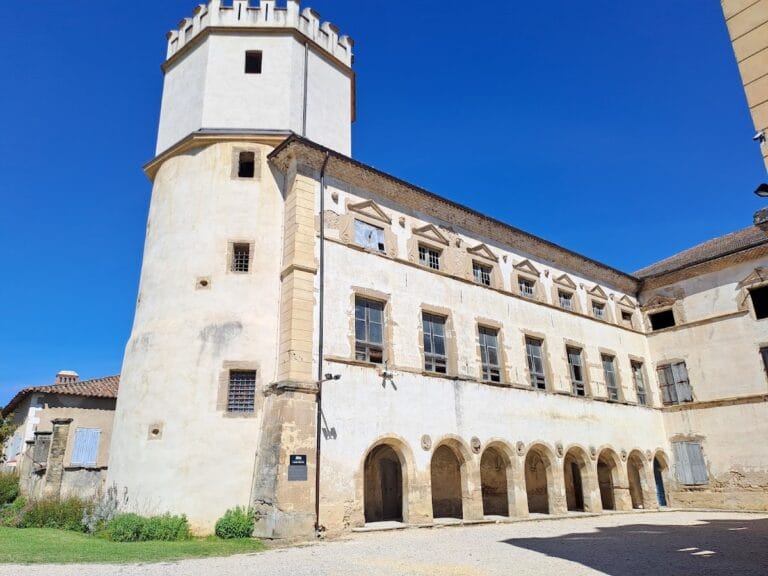
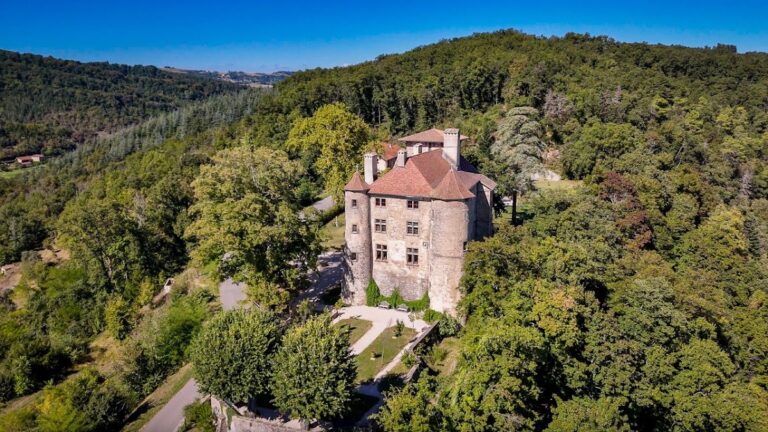
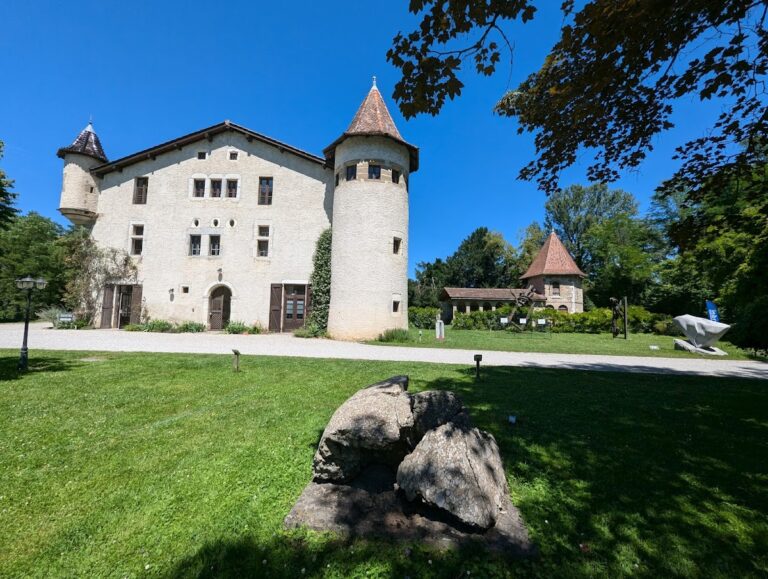
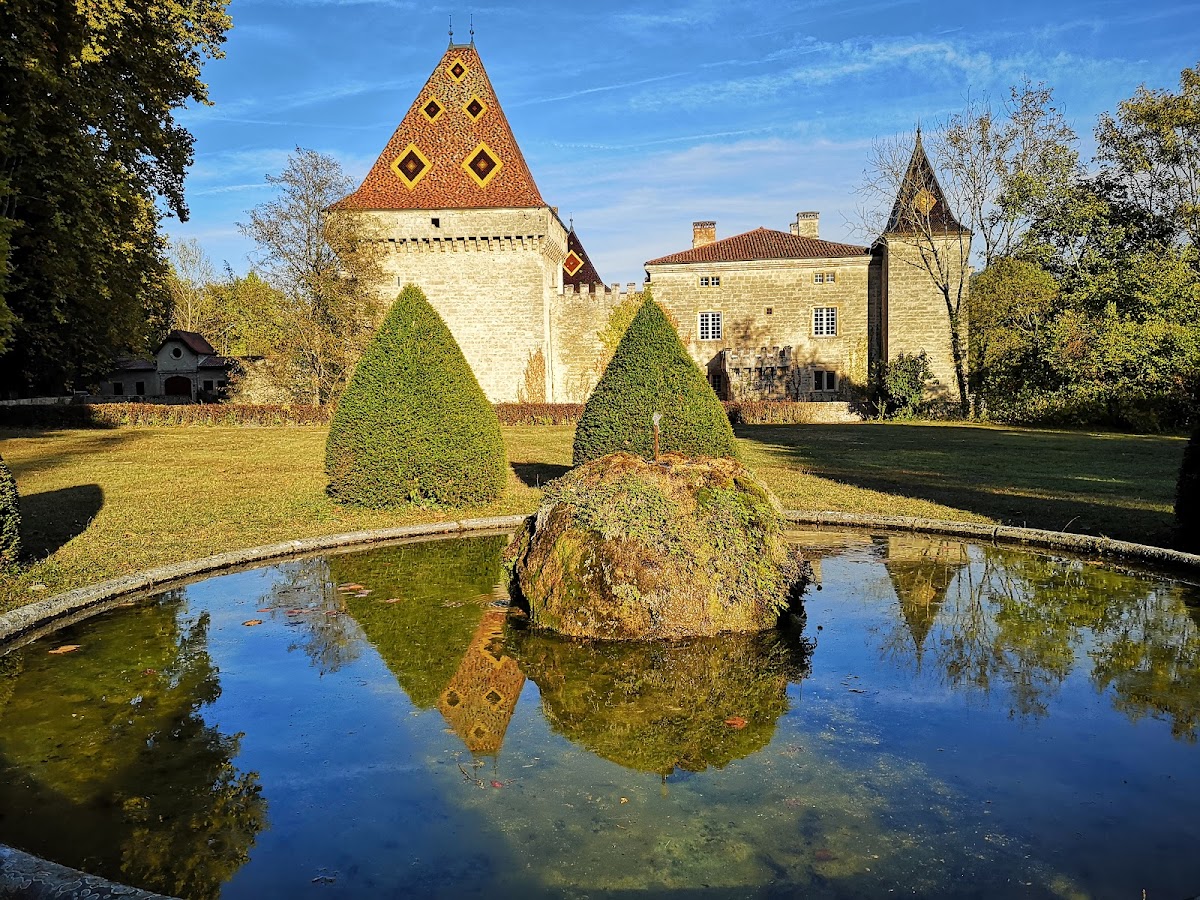
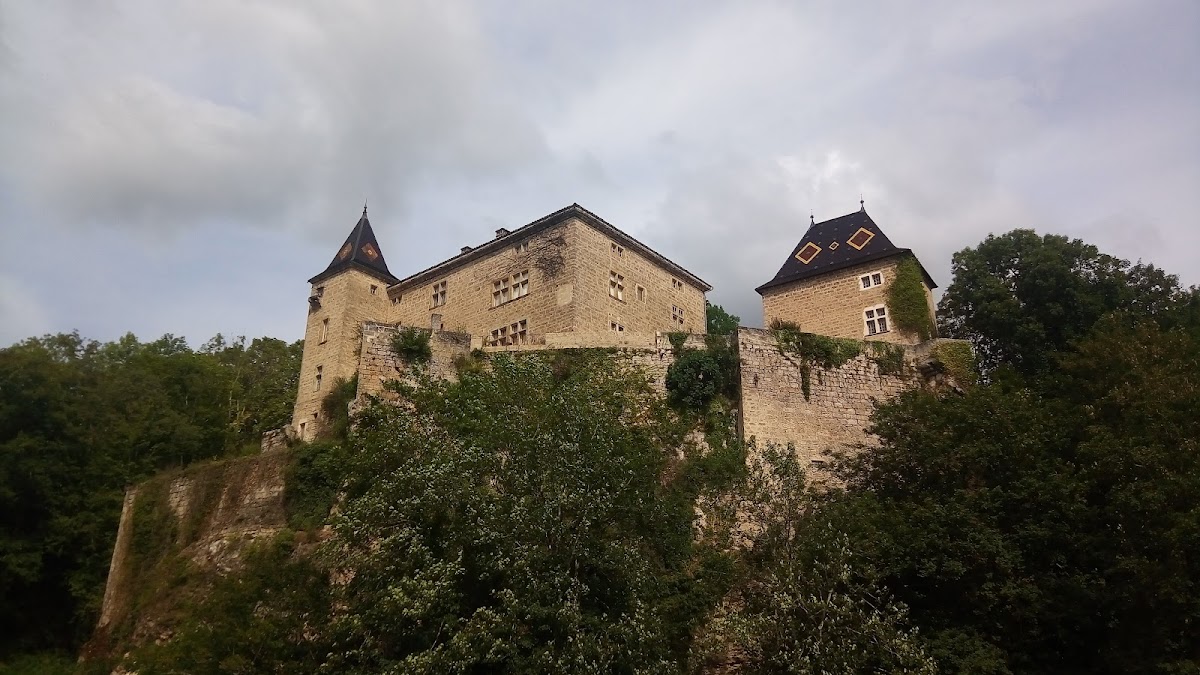
Château de la Sône stands on a rocky spur on the right bank of the Isère, above the river, the former towpath, and the bridge. The oldest surviving structure is a tall tower from the second half of the fourteenth century. Its upper defenses are formed by machicolations, projecting openings through which defenders could drop stones or other materials, supported on corbels, which are projecting blocks carrying the structure above them.
The west tower was rebuilt during Félicien de Boffin’s early-seventeenth-century alterations, and the principal building acquired its present appearance through those works. The large main building occupies a terrace and dates from the sixteenth century; it was renovated at the end of the nineteenth century. The chapel contains seventeenth-century paintings.
Park and gardens
The gardens cover approximately four hectares. A rockery faces the bridge leading to the château, while an avenue of plane trees runs beside a lawn containing a round Louis XIV basin. At the far end of the lawn, a belvedere overlooks the Isère and the village of La Sône.
The rear of the park contains centuries-old trees, including Virginia tulip trees, ginkgoes, yews, sequoias, purple beeches, cedars, and pagoda trees. A path returns toward the château through more recent plantings of purple hazels, soapberries, ornamental apple trees, and sweetgums. The park’s landscaped form, rare plantings, ornamental features, and kitchen garden also reflect the improvements made during the Morels’ residence.
Nearby sites